







Key Points
- CL-OIL traded at 99.194, up 2.582 points, or 2.67%, after reaching a session high of 100.684.
- Brent crude futures for June rose 52 cents, or 0.47%, to $111.78 a barrel at 0154 GMT, climbing for an eighth day.
- WTI futures for June rose 57 cents, or 0.57%, to $100.50 a barrel after gaining 3.7% in the previous session.
- API data showed US crude stocks fell by 1.79 million barrels in the week ended April 24, while gasoline inventories fell by 8.47 million barrels and distillates fell by 2.60 million barrels.
Oil prices extended their multi-day rally on Wednesday after reports said the US would extend its blockade of Iranian ports. The move raises the risk that supply disruptions from the Middle East will last longer than markets had priced only days ago.
US President Donald Trump has instructed aides to prepare for an extended blockade of Iran, according to reports citing US officials. The plan would continue to squeeze Iran’s economy and oil exports by preventing shipping to and from its ports. Brent crude futures for June rose 52 cents, or 0.47%, to $111.78 a barrel at 0154 GMT, climbing for an eighth day.
The June contract expires on Thursday, while the more active July contract traded at $104.84, up 0.4%. WTI futures for June rose 57 cents, or 0.57%, to $100.50 after gaining 3.7% in the previous session, climbing for seven out of the last eight days.
This keeps crude in a headline-driven market. Traders are not only reacting to current supply loss. They are also pricing the chance that the blockade forces more shipping delays, higher insurance costs, wider freight spreads, and deeper inventory draws.
If Trump extends the blockade, supply disruptions could worsen and keep pressure on crude prices upward.
Hormuz Keeps The Supply Shock Alive
The ceasefire in the US-Israeli war with Iran has not delivered a clean peace path. The conflict remains deadlocked as both sides push for a formal end to the fighting. Iran continues to shut shipping flows through the Strait of Hormuz, while the US keeps its blockade on Iranian ports.
Hormuz remains one of the most important energy chokepoints in the world. The strait carries about 20% of global oil and liquefied natural gas supplies. The IEA said LNG transiting the Strait of Hormuz reached just over 112 bcm in 2025, equal to almost 20% of global LNG trade, with no alternative route for Qatar or the UAE to supply global LNG markets through existing liquefaction facilities.
The US wants an end to what it calls Iran’s nuclear weapons programme. Iran is demanding some form of reparations from the latest round of fighting, an easing of economic sanctions, and some form of control over the Strait of Hormuz. That gap leaves oil exposed to every diplomatic headline.
For traders, this means the ceasefire is not enough by itself. Crude needs signs of real maritime reopening, not just lower military activity. Until then, each failed negotiation can feed a fresh risk premium into Brent and WTI.
Inventory Draws Tighten The Market
The supply story is now showing up in inventories. Market sources said the American Petroleum Institute reported that US crude oil inventories fell for a second week. Crude stocks fell by 1.79 million barrels in the week ended April 24. Gasoline inventories fell by 8.47 million barrels, while distillate inventories fell by 2.60 million barrels.
Those numbers sharpen the bullish case for oil. A crude draw points to tighter supply. A large gasoline draw points to stronger fuel pressure ahead of the summer driving season. A distillate draw adds stress to diesel, freight, industry, and heating-linked demand.
The market may now treat any fresh inventory draw as confirmation that the Hormuz shutdown is pulling barrels out of the system. If official data confirms the API trend, crude may find stronger support on dips. If the data reverses and shows a surprise build, traders may take profit after the sharp run higher.
Inflation Risk Spreads Across Assets
Oil above $100 changes the market conversation. Higher crude can lift transport costs, production costs, power costs, and fuel prices. That can slow the path back toward lower inflation, even if demand starts to cool.
The World Bank has forecast a 24% surge in energy prices in 2026 due to the Middle East war. It also projected Brent crude could rise to $115 if the conflict persists or deepens, while developing economy inflation could average 5.1%, or reach 5.8% if the conflict continues.
That gives crude a wider market impact. A sustained oil rally can support energy shares, but it can pressure airlines, logistics firms, consumer stocks, and rate-sensitive equities. It can also support the US dollar if traders think the Federal Reserve will keep policy tighter for longer.
This does not mean every oil rally will hurt stocks at once. If higher crude prices reflect supply risk rather than stronger growth, equity traders usually become more cautious. If oil prices keep rising while central banks sound cautious about inflation, risk appetite may weaken.
Technical Analysis
CL-OIL is trading near 99.20, rebounding strongly from recent lows and pushing back toward the upper end of its short-term range after a period of consolidation. The bounce comes after a corrective phase from the 119.40 peak, with price now attempting to rebuild momentum just below the 100 psychological level.
From a technical standpoint, the structure is shifting back toward bullish in the near term. Price has reclaimed the 5-day (97.42) and 10-day (92.95) moving averages, both of which are now sloping higher and providing immediate support. The 20-day (96.55) sits just below current price and is beginning to stabilise, suggesting the broader pullback may be losing strength.
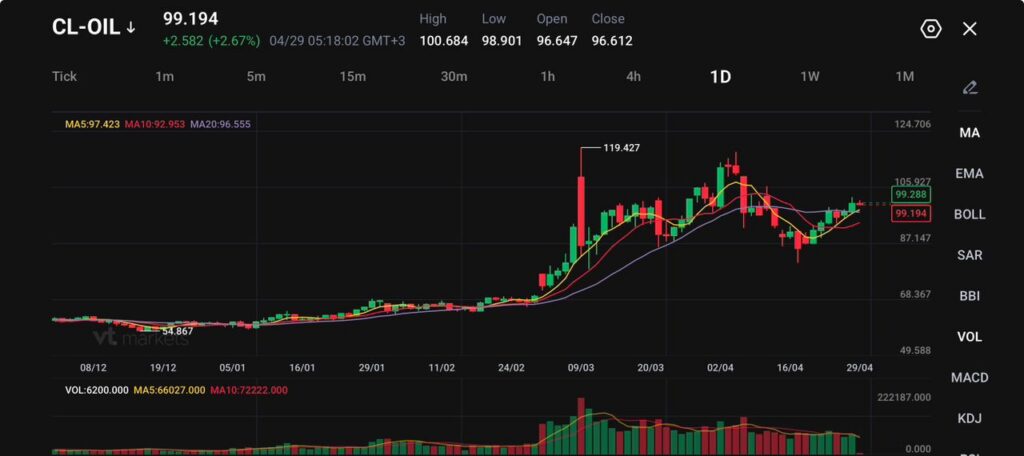
Key levels to watch:
- Support: 97.40 → 96.50 → 92.90
- Resistance: 100.00 → 105.90 → 110.00
Price is now pressing into the 100.00 resistance zone, which is acting as a key pivot. A clean break and hold above this level could open a move toward 105.90, where previous highs and supply sit. Momentum through that region would suggest a broader continuation back toward the 110 area.
On the downside, 97.40 is the first level to watch for support. A break back below this zone would weaken the current recovery and expose 96.50, with deeper downside risk if sellers regain control.
Overall, oil is attempting to re-establish upward momentum after a pullback, with the 100 level acting as the immediate battleground. Price action around this zone will likely dictate whether the market resumes its broader uptrend or slips back into consolidation.
Cautious Forecast
The near-term bias stays bullish while CL-OIL holds above 96.555 and 97.423. A daily close above 100.684 would strengthen the case for a move toward 105.927, especially if the US confirms a longer blockade and inventory draws continue.
A failed break above $100 would warn that traders are taking profit after the seven-out-of-eight-day WTI rally and the eighth straight gain in Brent. A drop below 96.555 would shift focus back to 92.953. If peace talks improve or the Strait of Hormuz starts reopening, crude may lose part of its supply-risk premium quickly.
Learn more about trading Energies on VT Markets here.
Trader Questions
Why Are Oil Prices Rising?
Oil prices are rising because traders expect the US blockade of Iranian ports to last longer. Reports said President Donald Trump instructed aides to prepare for an extended blockade, which could further restrict shipping to and from Iran.
This comes while Iran continues to shut shipping flows through the Strait of Hormuz, a key route for about 20% of global oil and liquefied natural gas supplies.
How High Did Oil Prices Move?
Brent crude futures for June rose 52 cents, or 0.47%, to $111.78 a barrel at 0154 GMT. The June contract expires on Thursday, while the more active July contract traded at $104.84, up 0.4%.
US West Texas Intermediate futures for June rose 57 cents, or 0.57%, to $100.50 a barrel after gaining 3.7% in the previous session.
Why Is The Strait Of Hormuz So Important?
The Strait of Hormuz is one of the world’s most important energy routes. Around 20% of global oil and liquefied natural gas supplies usually move through it.
If shipping remains blocked, buyers may face tighter supply, higher freight costs, higher insurance costs, and longer delivery delays. That can add a supply-risk premium to oil prices.
What Does The US Blockade Mean For Oil Supply?
An extended US blockade of Iranian ports could prevent shipping to and from Iran for longer. That would make it harder for Iranian oil exports to reach the market and could deepen supply disruption across the Middle East.
Haitong Futures analyst Yang An said if Trump extends the blockade, supply disruptions could worsen further and continue to push oil prices higher.
Why Is Oil Rising Even Though There Is A Ceasefire?
Oil is rising because the ceasefire has not produced a final peace deal. The US-Israeli war with Iran remains deadlocked, and both sides are still negotiating the terms for a formal end to fighting.
Iran wants reparations, sanctions relief, and some form of control over the Strait of Hormuz. The US wants an end to what it claims is Iran’s nuclear weapons programme. The gap between both sides keeps oil exposed to fresh headline risk.
Start trading now – Click here to create your real VT Markets account







