Back

Bank of America sees rising stagflation risk in the US, yet predicts a mild impact.

Economists from Bank of America indicate an increasing risk of stagflation in the US. They reference various “growth negative policies,” including deportations of undocumented workers, government job cuts, and threats of higher tariffs.

They point out that the modest and delayed fiscal stimulus is influenced by the narrow Republican majority in the House of Representatives. However, Bank of America anticipates that stagflation will be mild, with growth expected to remain in the low 2% range and inflation rising but staying below 3%.

The economists suggest that should growth decline further or inflation rise excessively, there may be a reversal in tariffs and immigration restrictions.

We see a clear warning from Bank of America’s economists about a growing risk of stagflation in the US, though they expect it to be relatively mild. They argue that current government policies—such as deporting undocumented workers, cutting public sector jobs, and discussing possible tariff hikes—could slow economic growth. These measures, according to them, weigh on the economy, making it harder for businesses to maintain costs and productivity.

At the same time, an underwhelming fiscal stimulus adds to the challenge. With Republicans holding only a slim majority in the House, any stimulus measures that do pass are likely to be modest and delayed. That means the economy doesn’t get much of an extra boost, making it harder to offset any slowdown from other policies. Despite that, the expectation is that growth will still hover around the low 2% range. Inflation, meanwhile, is expected to climb but not spiral out of control, staying under 3%.

The economists do leave room for adjustment. If growth falters more than expected or inflation climbs too fast, there’s a chance that policymakers will rethink some of these measures. Tariffs could be eased, and immigration restrictions might be softened, particularly if industries start struggling with labour shortages or higher supply chain costs. That possibility suggests a level of flexibility in economic policy, even if the current direction leans towards tightening.

For those of us watching market trends, these projections shape expectations for the coming weeks. Inflation rising—while still under control—suggests that we shouldn’t expect dramatic shifts in monetary policy just yet. The Federal Reserve is unlikely to take drastic action unless inflation accelerates beyond forecasted levels. Growth holding steady in the low 2% range also implies that the economy is slowing but not collapsing, which means markets will be keeping an eye on consumer spending and business investments.

One key factor to monitor is how these policies unfold in practice. Government actions sometimes take longer to filter through the economy than expected, and businesses tend to adjust more gradually. That means the direct effects of immigration limits or tariff changes may not be fully visible right away. However, if industries reliant on immigrant labour begin to struggle or manufacturing firms face higher costs due to trade pressures, we may start seeing clearer economic shifts.

Another point worth considering is how policymakers react to changing conditions. If inflation starts rising above expectations, we may see stronger pushback against further fiscal tightening. Likewise, if growth deteriorates beyond what Bank of America projects, discussions around trade and immigration could take a different turn.

In the meantime, the expectation of mild stagflation suggests a more cautious approach when evaluating economic momentum. While inflation remains a concern, it’s not yet at a level requiring aggressive intervention. At the same time, growth isn’t strong enough to offset concerns over policy decisions that could act as a drag on economic performance.


US tariffs on imports from Canada and Mexico will proceed as planned, according to President Trump.

US President Donald Trump announced that tariffications on imports from Canada and Mexico will proceed when a one-month delay ends next week. He confirmed this during a joint press conference with French President Emmanuel Macron.

As of the latest data, the USD/CAD currency pair showed a decrease of 0.01%, trading at 1.4270. Tariffs, which are customs duties on imported goods, are implemented to enhance the competitiveness of local producers.

In 2024, Mexico, China, and Canada accounted for 42% of US imports, with Mexico being the leading exporter at $466.6 billion. Trump plans to use revenues from these tariffs to reduce personal income taxes.

When Donald spoke alongside Emmanuel, he reiterated what markets had already suspected—the additional levies on goods from the neighbouring nations would not be postponed any further. Traders had priced in some level of uncertainty over whether the delay could be extended, but his statement removed that doubt.

With the US dollar barely moving against the Canadian counterpart following this, we see that currency markets had largely braced for this decision. A drop of just 0.01% suggests that traders were already positioned for the tariffs to be implemented. This also indicates that unless further details emerge or an unexpected policy shift arises, exchange rates may not react markedly in the immediate term.

Looking at the trade figures, the reliance on goods from these three markets cannot be overstated—nearly half of all foreign purchases came from Mexico, China, and Canada last year. Mexico’s lead position at $466.6 billion underscores why any shifts in trade policy with the country will inevitably have repercussions across multiple sectors.

Donald’s intention to allocate tariff revenues towards reducing personal income taxes adds another element to the discussion. If implemented as suggested, the effects could be twofold: potential relief for households but also the possibility of inflationary pressure if businesses pass the added costs on to consumers. It will be important for traders to watch for any confirmation of how these tariff collections are used, as signals on tax policy could shape expectations around consumer spending and business investment.

We should also consider the knock-on effects of this approach. If the administration depends on tariffs to offset tax reductions, changes in trade volumes could directly impact the amount collected. If imports fall due to these higher rates, revenue projections might not align with actual collections. This could lead to adjustments in fiscal policy, which markets would need to assess carefully.

With these factors in motion, derivative traders should track shifts in sentiment closely. Option pricing on affected currency pairs, commodities that rely on cross-border supply chains, and even equity markets tied to international trade will be areas where volatility could surface. Watching for any immediate retaliatory measures from Canada or Mexico would also be advisable, as such moves could introduce rapid shifts in pricing.

The Australian consumer sentiment index rose to 89.8, reflecting reduced pessimism due to strong job growth.

The ANZ-Roy Morgan Australian Consumer Confidence index has increased to 89.8, the highest since May 2022, rising from 85.1. While the index is still below 100, it indicates a noticeable improvement in consumer sentiment.

This rise in confidence is linked to recent interest rate cuts by the Reserve Bank of Australia and positive job numbers. Consumers appear to be responding to these economic changes, leading to a shift in overall sentiment.

A lift in sentiment like this suggests people are feeling more assured about their financial prospects. Although the index remains under 100, which indicates continued caution, this is the strongest reading in nearly two years. That in itself conveys a shift in how the public perceives the economy. When we see an upswing of this scale, it’s not just a number—it reflects changing expectations about household finances and spending habits in the months ahead.

Driving this improvement are two key factors: lower borrowing costs and steady employment growth. The Reserve Bank’s decision to reduce rates has eased financial pressure, particularly for households with variable-rate loans. At the same time, job figures have remained resilient, reinforcing confidence in income stability. When these two elements move in the same direction, they create a noticeable impact on spending behaviour, which influences various markets beyond just consumer goods.

The latest confidence boost isn’t occurring in isolation; it follows months of economic data pointing towards stabilisation after a period of doubt. People tend to adjust decisions based on their outlook on inflation, employment, and credit conditions. When rate cuts take effect, the response isn’t immediate—it unfolds in stages, first through improved sentiment, then gradually showing up in actual purchasing decisions.

For those assessing market movements, sentiment shifts of this kind always deserve attention. When consumers start feeling less uncertain about the future, the effects ripple through multiple sectors. Discretionary spending can pick up, borrowing appetite can increase, and savings behaviour can alter. Each of these dynamics has the potential to steer certain market trends more clearly than headline figures may initially suggest.

Given that this index is one of the earliest indicators of changing economic sentiment, it serves as an advance signal for what may lie ahead. If confidence continues to rise in the coming weeks, it could point towards further momentum in economic activity. On the other hand, should external pressures—such as cost-of-living concerns or global market shifts—intensify, this improvement may face hurdles. Tracking how sentiment translates into actual consumer behaviour will be the next measure of whether this shift gains further strength.

A slight rebound in AUD/JPY could not alter its prevailing bearish trend following recent declines.

AUD/JPY has shown a modest recovery after experiencing sharp losses last week. Despite this recovery, the currency pair remains below its 20-day Simple Moving Average (SMA), indicating a prevailing bearish outlook.

The Relative Strength Index (RSI) continues to linger in negative territory, reflecting limited buying strength. The MACD histogram remains flat, indicative of a lack of momentum for an upward trend.

A decisive break above the 20-day SMA could change the current sentiment. Conversely, if selling pressure persists, the pair may return to lows around the 94.50 mark. Resistance is noted around 96.00, which could suggest a potential shift if surpassed.

The latest movement in AUD/JPY suggests a temporary breather from its prior decline, though it has yet to clear levels that would indicate a stronger recovery. Remaining below the 20-day SMA keeps a cautious tone in place, and traders will be watching to see if sentiment changes. When the RSI stays in negative territory, it underlines weak buying interest, meaning any rallies could struggle for follow-through. Meanwhile, a flat MACD histogram shows that momentum is lacking, which adds weight to the idea that markets are waiting for a stronger catalyst before committing to a direction.

If the pair manages to push above the 20-day SMA, it might encourage more buying, but without additional confirmation, scepticism will remain. On the flip side, should selling pressure intensify again, recent lows around 94.50 would re-enter the picture, as previous price action has shown support in that region. Resistance at 96.00 means that if buyers step in more decisively, a move beyond that point could reshape near-term expectations.

Given these conditions, traders should be prepared for shifts depending on whether strength builds or weakness returns. Watching for confirmation signals such as RSI breaking higher or MACD turning positive will be key before adjusting positions.

Ethereum has declined further, now trading below US$2600, influenced by recent tariff announcements.

Ethereum (ETH) has fallen below US$2600 as market conditions worsen. This decline is part of a broader trend affecting multiple assets.

The recent announcement by former President Donald Trump regarding the continuation of tariffs on Canada and Mexico has contributed to market volatility. This development underscores ongoing concerns about trade relations and their impact on various cryptocurrencies.

Traders have responded swiftly, adjusting their positions as uncertainty increases. Donald’s statement has reinforced existing investor anxiety, leading to more cautious behaviour across markets that are already under pressure. Ethereum’s decline mirrors broader sentiment, with other digital assets also slipping as traders reassess risk exposure.

Beyond trade concerns, Federal Reserve policy expectations have played a role in shaping short-term movements. Rising speculation about delayed interest rate cuts has weighed on risk assets, cryptocurrencies included. A more restrictive monetary stance reduces liquidity, which in turn pressures valuations. Market participants are watching for central bank signals that might clarify the timing of any policy shifts. Jerome Powell’s recent comments about inflation staying above target for longer than expected have only added to these concerns.

Speculation about regulatory developments has also affected sentiment. Ongoing discussions within US and European legislative bodies have kept traders alert to possible rule changes. Recent enforcement actions further highlight the uncertain environment in which digital assets operate. Shifting regulations influence participation levels and liquidity, meaning even small shifts in policy language can lead to outsized reactions.

Market behaviour suggests many traders are adjusting their strategies in response to these pressures. Recent liquidation data indicates leveraged positions have been unwound at an increasing pace. The resulting price action hints at forced selling, where traders exit positions not necessarily by choice but due to margin requirements. This only intensifies downward momentum, at least in the short term, as automated trades accelerate selling activity.

Looking ahead, volatility is expected to remain elevated. External factors such as macroeconomic news and shifting investor sentiment will continue shaping price action. Any new announcements from policymakers, particularly regarding interest rates or trade restrictions, could trigger further movements. Because of the heightened sensitivity to such developments, traders are likely to remain defensive until clearer signals emerge.

We see these shifts reflected in options markets, where implied volatility has risen. Traders have shown a preference for downside protection, with demand for put options increasing. This suggests hedging activity as investors prepare for potential further declines. At the same time, liquidity pockets have thinned, which may contribute to sharper price swings in response to news events.

In the coming weeks, price action will be closely tied to institutional activity. The positioning of large market participants could provide hints about sentiment shifts. If accumulation trends emerge, that may suggest renewed confidence, while continued outflows would reinforce the cautious tone currently prevailing. Trading volumes will also serve as an indicator of conviction behind any price moves.

We will be monitoring key levels, particularly near previous support zones, to gauge whether buyers step in aggressively or remain hesitant. If selling pressure persists, it could lead to further declines, but if defensive positioning starts unwinding, it may set the stage for recovery attempts. These dynamics will play out alongside broader economic developments, making the next phase particularly reactive to external influences.

The AUD/USD attempted to recover near 0.6400 but faced quick rejection from buyers.

The AUD/USD pair attempted to recover from a significant decline but faced resistance near 0.6400. Following US tariff announcements, market participants are closely monitoring Australian inflation data, expected to rise by 2.6% for January.

The Reserve Bank of Australia recently reduced its cash rate, emphasising its ongoing effort against inflation. This cautious monetary policy has contributed to a careful trading environment for the Australian Dollar.

Currently, the AUD/USD is encountering solid resistance at the 100-day Simple Moving Average, with a potential for fluctuation influenced by upcoming economic data and trade developments.

The Australian Dollar struggled to gain traction after its initial recovery attempt, finding itself restricted by sellers near the 0.6400 mark. The pressure on the currency mounted following tariff decisions from the United States, which have shifted investors’ focus to domestic inflation data. January’s figure is anticipated to come in at 2.6%, a figure that will either reinforce or challenge expectations about Australia’s pricing pressures.

Philip Lowe’s team at the Reserve Bank recently opted to lower the cash rate, a move signalling a softer stance amidst concerns about economic growth. This approach reflects an effort to balance inflation management with economic stability, keeping traders keenly aware of potential shifts in monetary outlook. Markets remain watchful for any rhetoric from policymakers that could sway sentiment further.

At present, traders are observing how the Australian Dollar reacts to resistance at the 100-day Simple Moving Average. This technical barrier has proven to be a sticking point, with buyers needing stronger economic backing to push through. A weaker-than-expected inflation reading could trigger additional selling interest, whereas an elevated figure might support another retest of resistance.

Short-term direction is also linked to wider trade policies, particularly how tariff strategies unfold between major economies. Commodity-related influences, always a key factor for the Australian Dollar, will continue to affect positioning. Traders should weigh incoming data carefully, managing risk as volatility could persist in response to economic releases and external pressures.

UBS predicts S&P 500 will hit 6,600 by 2025, citing robust economy and corporate earnings.

UBS forecasts continued market volatility due to concerns over tariffs. However, they project gains for the S&P 500, predicting it will reach 6,600 by the end of the year.

The firm identifies a strong US economy, robust corporate earnings growth, and advancements in AI as factors supporting this potential rally. These elements are expected to contribute positively to market performance.

This outlook signals both opportunities and risks for traders. On one hand, a healthy economy and rising earnings create conditions that could support further gains. On the other, trade policies may inject short-term instability that could unsettle investors.

With UBS projecting the S&P 500 to climb to 6,600, we should pay attention to how corporate earnings continue to develop. Growth remains a central factor behind their optimism, particularly with firms benefiting from artificial intelligence advancements. As businesses integrate these technologies, market confidence may strengthen—especially in sectors directly tied to AI infrastructure and applications.

At the same time, tariffs remain a pressing issue. Trade restrictions can influence supply chains, raise costs, and alter consumer demand. If further measures are introduced, they could lead to swift adjustments in valuations. Traders should monitor any announcements that impact key industries, particularly those that depend on global supply networks.

Volatility is likely to persist in the coming weeks, making it necessary to stay aware of any shifts in investor sentiment. Although UBS expects gains by year-end, short-term price swings could be sharp. Those with exposure to derivatives should be prepared for the potential effects on pricing and leverage. Moves driven by policy changes or earnings surprises could create heightened fluctuations, requiring close attention to risk management.

The AI sector stands out as a major element of this forecast. If companies continue accelerating investments in automation and data processing, valuations in certain industries may keep rising. However, regulatory scrutiny and competition could challenge some of these expectations. Traders should assess whether current pricing already reflects future growth or if there is still room for upside.

With these factors at play, the outlook remains both promising and uncertain. Staying informed on earnings trends, trade policy decisions, and AI developments will be essential. Movements in key sectors could bring new opportunities, but they may also require swift adjustments to trading strategies.

Minggu Ini: Potongan Kadar Mempengaruhi Mata Wang

Wang mengalir ke medium dengan pulangan tertinggi, tetapi apa berlaku apabila bank pusat mula memotong kadar? Sementara Federal Reserve, European Central Bank, dan Bank of Canada bersiap-sedia untuk langkah polisi seterusnya, pasaran forex terperangkap di antara jangkaan kadar dan ketegangan geopolitik. Risiko semakin meningkat, begitu juga dengan volatiliti.

Sejak awal tahun, bank-bank pusat global telah mengambil tindakan tegas terhadap kadar faedah. Federal ReserveEuropean Central Bank, Bank of England, Bank of Japan, Reserve Bank of Australia, dan Reserve Bank of New Zealand telah menyatakan pendirian mereka, menetapkan nada untuk bulan-bulan yang akan datang.

Namun, tumpuan telah beralih kepada keputusan kadar akan datang dari European Central Bank, Swiss National Bank, dan Bank of Canada. Tanda-tanda awal mencadangkan pemotongan kadar lebih meluas, mengukuhkan trend ke arah pelonggaran monetari.

Jika pemotongan kadar ini dilaksanakan seperti yang dijangkakan, Federal Reserve dan Bank of England akan kekal sebagai bank pusat utama dengan kadar faedah tertinggi di dunia.

Gencatan Senjata Dan Tarif Berleluasa

Selain dari polisi bank pusat, keadaan geopolitik juga memainkan peranan yang penting dalam mengemudi pasaran.

Dalam jangka pendek, optimisme terhadap perjanjian gencatan senjata US-Rusia di Ukraine telah meningkatkan sentimen risiko, membolehkan mata wang tradisional lemah seperti euro, pound British, dollar Australia, dan dollar New Zealand pulih berbanding dollar US.

Selain itu, ancaman tarif US yang menjadi punca volatiliti telah terhenti buat masa ini dan mencetuskan rali.

Walau bagaimanapun, menganggap kelemahan dollar akan kekal adalah tidak realistik. Dengan beberapa tarikh akhir semakin hampir, masing-masing berpotensi mengubah sentimen pasaran secara drastik.

Pada 4 Mac, tarif 25% ke atas produk Mexico dan Kanada di bawah International Emergency Economic Powers Act dijadualkan berkuat kuasa. Beberapa hari kemudian, pada 12 Mac, pusingan baru tarif 25% ke atas import keluli dan aluminium di bawah Section 232 akan bermula.

Detik paling tidak menentu mungkin akan terjadi pada 1 April, apabila Presiden Trump dijangka mengumumkan tarif timbal balik ke atas beberapa rakan perdagangan. Jika dilaksanakan, tarif ini boleh mencetuskan gelombang baru konflik perdagangan global, memaksa pedagang beralih ke mata wang safe haven seperti dollar US dan yen Jepun.

Prestasi Pasaran Minggu Ini

Dengan bank pusat menghampiri keputusan polisi kritikal di sebalik situasi ketegangan perdagangan global, volatiliti akan kembali memainkan peranan dalam kelas-kelas aset utama. Dengan konsolidasi harga di sesetengah kawasan dan pergerakan tajam di tempat lain, kami memerhatikan sama ada trend ini akan bertahan atau pecah dalam sesi mendatang.

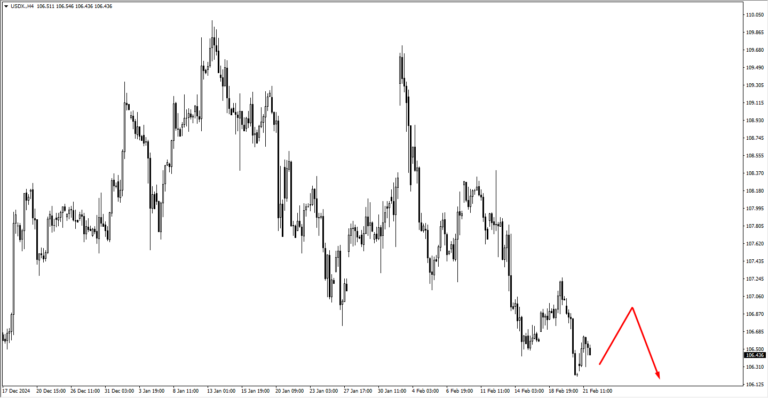
Dalam forex, US Dollar Index (USDX) masih di bawah tekanan menurun meskipun ada pemulihan sementara. Indeks menemui sokongan sekitar 106.05, tetapi kami memantau sama ada ia dapat bertahan atau jika penurunan ke 104.90 atau 104.50 mungkin berlaku.

Jika sentimen pasaran terus condong ke arah risiko, kelemahan dollar mungkin berterusan. Dengan tarikh akhir tarif pada Mac dan April, sebarang kebimbangan perang perdagangan boleh membuat dollar melonjak sebagai aset perlindungan nilai.

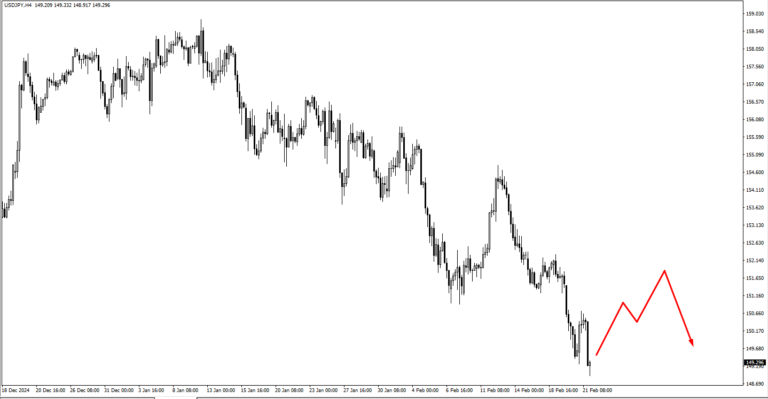
Yen Jepun berpotensi untuk menjadi pemenang jika ketidakpastian global berterusan. Kini didagangkan sekitar paras 149.20, USD/JPY mungkin mengalami momentum menurun jika penghindaran risiko kembali.

Pergerakan bearish boleh dicetuskan pada paras 151.70, terutamanya jika pedagang beralih semula ke aset perlindungan nilai.

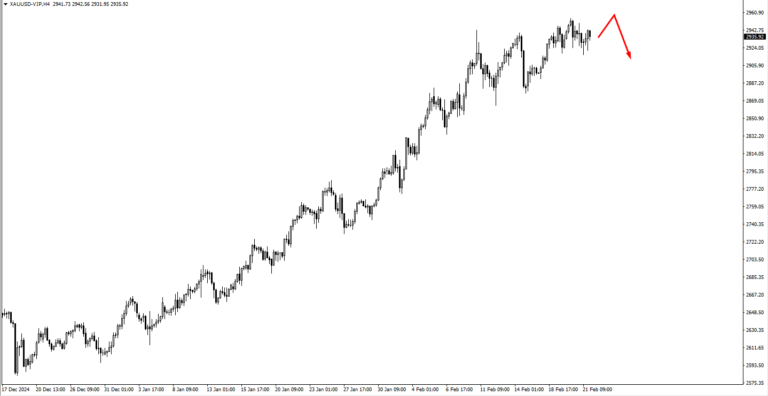
Komoditi juga merasai kesan turun naik mata wang. Emas kekal dalam zon jualan berhampiran 2945, dengan momentum menurun lebih kuat diperlukan untuk menarik lebih penjual. Jika harga meningkat, pedagang akan melihat 3070 sebagai potensi paras rintangan.

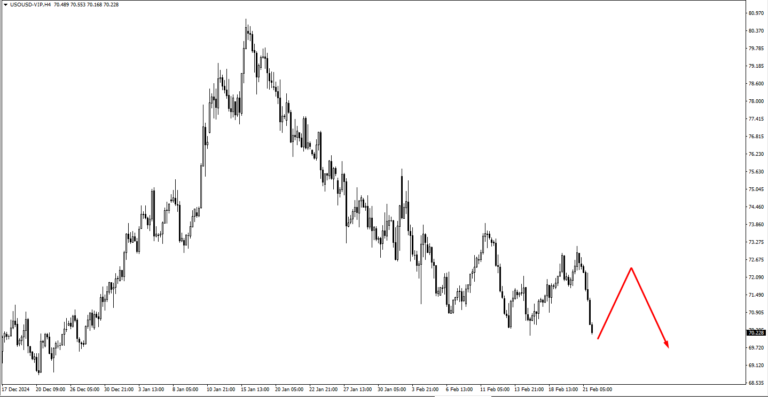
Sementara itu, harga minyak bertindak balas kepada sentimen pasaran, dengan minyak mentah didagangkan di bawah 73.50 dan menghadapi paras sokongan utama pada 71.85 dan 68.20.

Bitcoin, sering dilihat sebagai lindung nilai terhadap ketidakpastian ekonomi, juga menunjukkan tanda-tanda pembetulan. Jika BTC/USD jatuh di bawah 94,066 atau 93,381, ia mungkin mencetuskan lonjakan menaik. Walau bagaimanapun, pembetulan lebih dalam mungkin berlaku jika Bitcoin jatuh melepasi paras 89,146 dan bergerak mendatar, berpotensi menguji sokongan sekitar 80,000.

Pasaran Minggu Ini

Pada hari Rabu, 26 Februari, tumpuan tertumpu pada Consumer Price Index (CPI) Australia tahun-ke-tahun, diunjurkan pada 2.60% berbanding 2.50% sebelumnya. Kami percaya data ini akan menjadi pendorong utama untuk AUD/USD, terutamanya jika inflasi melebihi jangkaan.

Jika dollar Australia bergerak mendatar sebelum pelepasan data, corak bullish mungkin muncul, mendorong mata wang naik. Walau bagaimanapun, angka lebih lemah daripada dijangkakan boleh menyemai spekulasi pemotongan kadar lanjut dari RBA, mengekalkan tekanan menurun ke atas mata wang.

Beralih ke hari Khamis, 27 Februari, GDP awal US suku-ke-suku dijangka kekal pada 2.30%. Kami percaya angka ini penting dalam membentuk jangkaan terhadap polisi Federal Reserve.

Jika data mengejutkan ke atas, ia boleh mengukuhkan keengganan Fed untuk memotong kadar dalam jangka terdekat, berpotensi mengukuhkan dollar US. Sebaliknya, jika pertumbuhan GDP perlahan, ia mungkin menyemarakkan spekulasi pemotongan kadar menjelang akhir tahun, melemahkan dollar dan menyokong aset risiko. Kami akan memantau reaksi dollar terhadap data ini, terutamanya paras sokongan USDX.

Jumaat, 28 Februari, memberikan data ekonomi dari eurozone, Kanada, dan US, yang boleh memberi implikasi besar ke pasaran mata wang.

Preliminary CPI Jerman dijangka pada 0.40% berbanding -0.20% sebelumnya. Jika angka sebenar selari dengan unjuran, kami percaya ia akan positif untuk euro, mengukuhkan pendirian European Central Bank terhadap inflasi. Walau bagaimanapun, jika inflasi kekal lemah, ia mungkin memberi tekanan ke atas euro dan meningkatkan kemungkinan pemotongan kadar lanjut dari ECB.

Buka akaun live VT Markets anda sekarang dan mula berdagang.

The Dow Jones Industrial Average regained around 300 points, attempting to recover from previous losses.

On Monday, the Dow Jones Industrial Average (DJIA) rose approximately 300 points as it attempted to recover from recent losses linked to a drop in consumer confidence. Market sentiment remains cautious, with uncertainties still present in various sectors.

Consumer sentiment data from February raised concerns, shifting focus toward earnings reports from Home Depot and Lowe’s this week. Additionally, the US Personal Consumption Expenditure (PCE) inflation figures are anticipated, as traders seek confirmation regarding January’s higher-than-expected Consumer Price Index (CPI) and Producer Price Index (PPI) inflation.

Despite mixed sentiments, over two-thirds of DJIA’s components gained ground on Monday, although Microsoft shares fell about one percentage point due to reduced data centre spending. The Dow remains in bear territory, with price movement constrained below the 50-day Exponential Moving Average (EMA) at around 43,930.

The Dow experienced a roughly 2.75% decline across two days but is now climbing back from four-week lows. Price action continues to stay above the long-term 200-day EMA, near 42,000.

The Core Personal Consumption Expenditures (PCE) measures price changes for consumer goods and is the Federal Reserve’s preferred inflation indicator. The month-on-month figures assess price variations from the previous month, while the core reading excludes volatile food and energy prices.

Following the GDP report, the US Bureau of Economic Analysis releases PCE Price Index data, along with Personal Spending and Personal Income updates. The Core PCE annual index serves as a key inflation gauge for Federal Open Market Committee (FOMC) policymakers, with unexpected strong readings potentially bolstering the USD against its counterparts.

Monday’s upswing in the Dow provided a bit of relief after last week’s pressure, but sentiment remains careful. With consumer confidence showing weakness, traders appeared to zero in on earnings reports from Home Depot and Lowe’s for insight into consumer resilience. At the same time, market participants are waiting for the latest Personal Consumption Expenditures (PCE) figures to see whether inflationary trends from January’s Consumer Price Index (CPI) and Producer Price Index (PPI) carry through.

Although the majority of stocks in the index advanced, Microsoft’s dip stood out. A reduced appetite for cloud infrastructure investment put some weight on its shares, causing them to slip by around one per cent. The Dow has yet to push past its 50-day Exponential Moving Average (EMA), hovering under 43,930. Nonetheless, it remains above the critical 200-day EMA, which sits closer to 42,000. The recent two-day decline of nearly 2.75% placed the index at a four-week low before Monday brought some recovery.

With Core PCE data approaching, we acknowledge its weight in guiding Federal Reserve policy. This particular measure strips out food and energy costs, enabling policymakers to focus on underlying inflation. Since the Federal Open Market Committee (FOMC) already analysed Gross Domestic Product (GDP) figures, attention now turns to the PCE Price Index, alongside reports on Personal Income and Spending. Should the data exceed expectations, traders will likely reposition themselves accordingly, and the US dollar could strengthen as a result.

Keeping an eye on how these events unfold will provide better perspective on what to expect next. Whether equities hold their ground or give way to further pullbacks may come down to inflation trends and subsequent adjustments in interest rate expectations.

Trump stated tariffs on Canada and Mexico will proceed, expressing grievances about foreign exploitation.

During a press conference, Trump discussed the tariffs on Canada and Mexico, which are postponed until March 4, 2025, at 12:01 a.m. EST. He asserted that the tariffs will proceed as planned, voicing concerns about the U.S. being exploited by foreign countries.

He mentioned the intention to address perceived imbalances and also indicated the possibility of reciprocal tariffs. His statements influenced risk assets, resulting in major stock indexes closing lower on Monday, reflecting market reactions to his policy announcements.

Trump’s remarks sent ripples through financial markets, setting the stage for heightened uncertainty among traders. His firm stance on tariffs—particularly the insistence that they will take effect without modification—reinforced expectations of tighter trade conditions. Investors responded swiftly, with equities losing ground as market participants reassessed the potential economic impact.

Our focus now turns to how this will affect derivative markets. With major stock indexes already showing strain, volatility is likely to persist. Price swings have been more pronounced, suggesting that traders are adjusting positions in anticipation of further developments. Any signs that policymakers may reconsider or refine these measures would be closely examined, though at this stage, such changes seem unlikely given Trump’s rhetoric.

Beyond equities, commodities and currency markets are also absorbing the news. The potential for strained trade relations raises questions about demand for raw materials and the strength of North American currencies. If tariffs proceed without exemptions or delays beyond the March deadline, knock-on effects on supply chains could introduce additional complexity. Hedging activities appear to be increasing as traders seek protection against unforeseen shifts in policy sentiment.

Given these uncertainties, monitoring official statements from both U.S. and foreign officials will be paramount. Any response from Canada or Mexico—such as countermeasures or diplomatic negotiations—may affect expectations. At this point, the market is largely trading on Trump’s firm tone, but any deviation from this trajectory could bring swift adjustments across multiple asset classes.

As the deadline approaches, traders need to be prepared for fast-moving scenarios. Reactionary positioning has already been visible, but further recalibrations may take shape as institutional players digest upcoming developments. For now, the market dynamic remains reactive, with sensitivity to policy updates running high.

Back To Top
server

Hai 👋

Bagaimana saya boleh membantu?

Segera berbual dengan pasukan kami

Chat Langsung

Mulakan perbualan secara langsung melalui...

  • Telegram
    hold Ditangguh
  • Akan datang...

Hai 👋

Bagaimana saya boleh membantu?

telegram

Imbas kod QR dengan telefon pintar anda untuk mula berbual dengan kami, atau klik di sini.

Tidak ada aplikasi Telegram atau versi Desktop terpasang? Gunakan Web Telegram sebaliknya.

QR code