







Key Takeaways
- Oil is one of the most direct drivers of inflation, as it feeds into transport, production, and everyday goods
- When oil prices rise, costs ripple throughout the entire economy, pushing consumer prices higher
- A weaker US dollar typically supports higher oil prices, reinforcing the inflation cycle
- Unlike gold (which hedges fear), oil performs during growth-driven or supply-driven inflation
- Oil gives traders real-time exposure to inflation expectations, making it a highly responsive macro instrument
- However, if oil rises too much, it can slow demand and trigger recession, eventually reversing its own trend
Why Oil Matters More Than Gold in Today’s Inflation
As the real value of money steadily erodes and currencies lose purchasing power under mounting inflation pressures, hedging has become essential.
While gold has traditionally dominated the safe-haven narrative, oil is increasingly emerging as the market’s most direct and influential inflation-linked asset. Unlike gold, which reacts to fear and uncertainty, oil sits at the core of the real economy. It doesn’t just reflect inflation—it helps create it.
In today’s environment of geopolitical tension, unstable energy supply, and unpredictable central bank policy, oil has evolved beyond a simple commodity. It has become a real-time barometer of inflation and a strategic tool for navigating it.
How Do Oil Prices Drive Global Inflation?
Oil is the backbone of global economic activity. From manufacturing to transportation, its influence runs through nearly every layer of the economy.
When oil prices rise, the effects are immediate and widespread:
- Fuel costs increase (gasoline, diesel, aviation fuel)
- Transportation becomes more expensive across land, sea, and air
- Production costs rise for factories and energy-intensive industries
This creates a cascading effect. Higher transportation and production costs feed directly into consumer prices, pushing inflation higher across the board.
In simple terms: When oil goes up, almost everything else follows.
Empirical data support this relationship. A 10% rise in oil prices can add roughly 0.3%–0.5% to inflation in advanced economies, with an even stronger impact on emerging markets that rely heavily on energy imports.
The inflation surge between 2021 and 2023 offered a clear example. Energy costs were a major driver behind the highest inflation levels seen in decades across the US and Europe.
The Dollar, Commodities, and the Inflation Loop
Oil’s role as an inflation hedge becomes even more powerful when viewed through the lens of the US dollar.
Because oil is priced globally in dollars, a weaker dollar makes oil cheaper for foreign buyers, increasing demand and pushing prices higher. At the same time, rising inflation erodes the dollar’s purchasing power, reinforcing this upward pressure.
This creates a feedback loop:
- Inflation weakens the dollar
- A weaker dollar lifts commodity prices
- Higher oil prices fuel further inflation
In this cycle, oil transforms into more than just an energy asset — it becomes a store of real value. Unlike fiat currencies, oil is a tangible, demand-driven resource with intrinsic economic importance.
Oil vs Gold: Two Very Different Hedges
Both oil and gold are considered hedges, but they respond to completely different market conditions.
| Feature | Gold (Safe-Haven) | Oil (Inflation Hedge) |
| Primary Driver | Fear, crisis, and instability | Economic growth and rising costs |
| Market Condition | Loss of confidence in the system | Strong demand or supply shocks |
| Economic Role | Store of value/Safe haven | Core driver of production/transport |
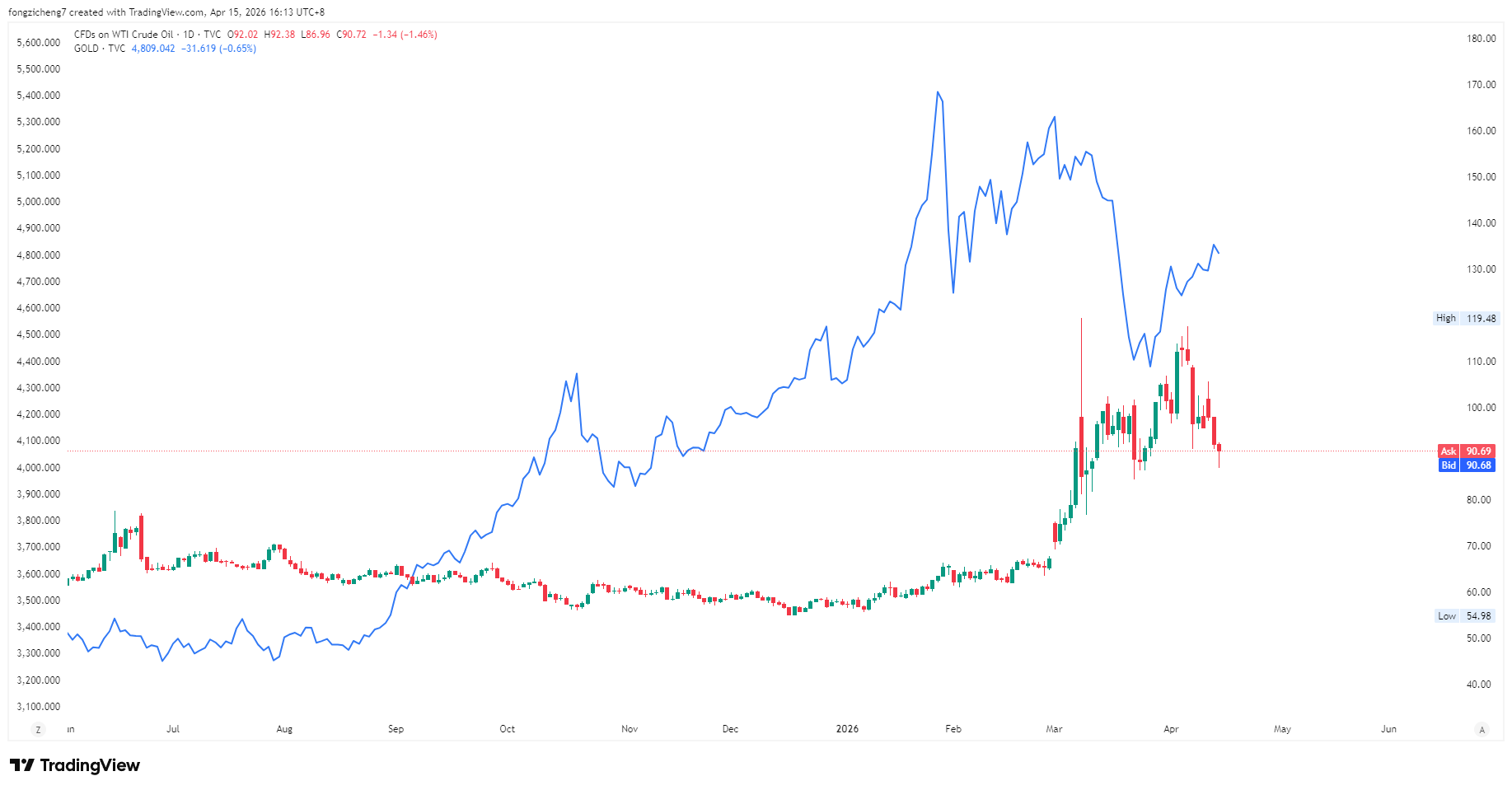
Reference:
Blue: Gold
Candlesticks: US Oil
The New Layer: Energy-Driven Tech Inflation
A major shift in today’s inflation landscape is the growing link between energy and technology.
Data centres are massive energy consumers. As demand for digital infrastructure grows, so does energy dependence, much of which still comes from fossil fuels.
This creates a new reality:
The cost of technology is now tied to the cost of energy.
When energy prices rise, operating costs for data centres increase, feeding into higher costs for businesses and, ultimately, consumers. What was once seen as a deflationary sector is now contributing to inflation through energy demand.
This structural shift makes oil even more relevant in modern inflation dynamics.
Oil as a Trading Instrument
For traders, oil offers something unique: direct exposure to inflation expectations in real time.
Trading crude, whether Brent or WTI, is no longer just about supply and demand. It reflects:
- Inflation expectations
- Central bank policy outlook
- Currency strength (especially the US dollar)
In this sense, trading oil is effectively trading the market’s view on future price pressures.
One of the clearest cross-market relationships appears in USD/CAD. As a major oil exporter, Canada benefits from rising oil prices, which strengthen the Canadian dollar. At the same time, inflation dynamics can pressure the US dollar.
The result: Rising oil often leads to a falling USD/CAD.
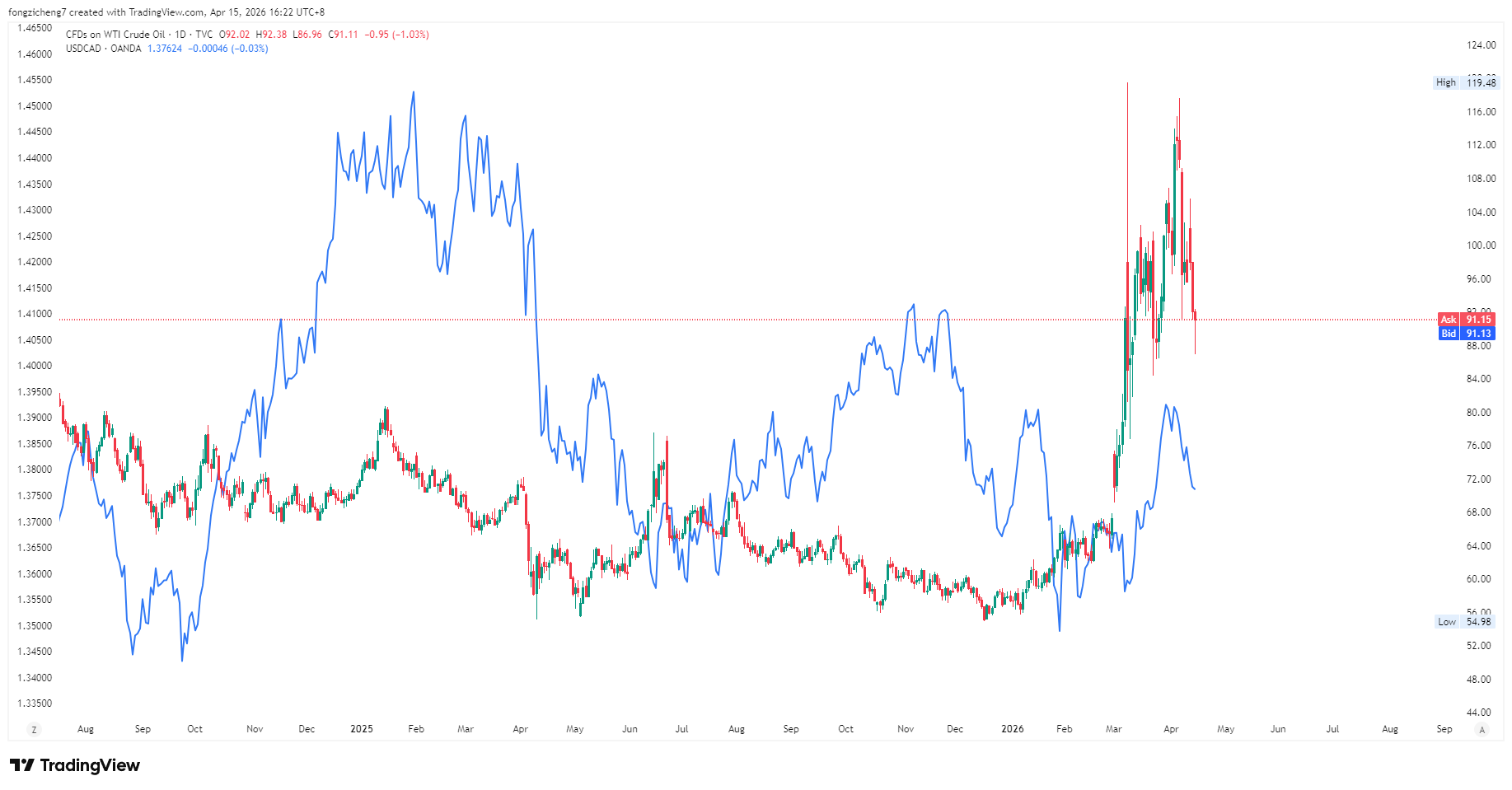
Reference:
Blue: USD/CAD
Candlesticks: US Oil
This makes commodity currencies a powerful extension of the oil-inflation trade.
The Limits of Oil as a Hedge
Despite its strengths, oil is not a perfect hedge.
At extreme price levels, oil can shift from being an inflation driver to a growth killer. When energy costs rise too far, they begin to suppress demand, slow economic activity, and eventually trigger recessionary pressures.
At that point:
- Demand falls
- Oil prices decline
- The inflation narrative breaks down
This is why oil cycles are often sharp and self-correcting.
Additionally, aggressive interest rate hikes can disrupt the relationship. Higher rates strengthen the US dollar, making oil more expensive globally and reducing demand even if inflation remains elevated.
This creates periods where:
Inflation stays high, but oil prices fall.
The Bottom Line
Oil sits at the centre of the inflation story and continues to drive it.
It reflects real economic activity, feeds directly into costs across industries, and responds quickly to shifts in supply, demand, and policy. Unlike traditional hedges, oil moves with the broader macro landscape, linking geopolitics, growth expectations, and market pricing in real time.
At the same time, it introduces volatility. Its cyclical nature and sensitivity to policy shifts mean it does not just signal inflation trends; it actively shapes them.
That is why traders and investors can no longer treat oil as optional. They need to track it closely to understand how inflation evolves and how markets react.
In today’s environment, if you understand oil, you understand inflation.
The Big Questions
1) How does oil act as a direct driver of inflation?
Oil is the backbone of global economic activity, feeding directly into production, transportation, and everyday goods. When prices rise, fuel costs for gasoline, diesel, and aviation fuel increase immediately. These higher costs create a cascading effect where transportation and manufacturing expenses are passed on to consumers, pushing prices higher across the entire economy.
2) Why is oil considered a better inflation hedge than gold?
While both are hedges, they respond to different market drivers. Gold is primarily a hedge against fear, performing best during financial instability or a loss of confidence in the system. In contrast, oil is a hedge against growth and rising costs. Because oil sits at the core of the real economy and helps create inflation rather than just reflecting it, it is often a more direct and influential asset for navigating rising prices.
3) What is the relationship between the US dollar and oil prices?
There is a powerful feedback loop between the two. Since oil is priced globally in US dollars, a weaker dollar makes oil cheaper for foreign buyers, which increases demand and lifts prices. Simultaneously, rising inflation erodes the dollar’s purchasing power, reinforcing the upward pressure on oil. This cycle transforms oil into a store of real value during periods of currency devaluation
4) How do energy prices impact technology and AI sectors?
Modern digital infrastructure, including cloud computing and AI data centres, is a massive energy consumer. This has created a new reality where the cost of technology is now tied to the cost of energy. When energy prices rise, operating costs for these data centres increase, feeding into higher costs for businesses and consumers. This shift means that technology, once seen as deflationary, can now contribute to inflation through energy demand.
5) Can oil prices actually cause a recession?
Yes. While oil is an inflation driver, it is also cyclical and self-correcting. If prices reach extreme levels, they begin to suppress demand and slow economic activity. At this point, the growth killer effect takes over, high costs trigger recessionary pressures, demand falls, and oil prices eventually decline, breaking the inflation narrative.
6) How does oil influence the USD/CAD currency pair?
One of the clearest market relationships exists in USD/CAD because Canada is a major oil exporter. Rising oil prices typically strengthen the Canadian dollar. When combined with inflation dynamics that may pressure the US dollar, rising oil often leads to a falling USD/CAD exchange rate.
Start trading now – Click here to create your real VT Markets account







