







Key Takeaways
- Markets are looking 6 to 18 months ahead, pricing at the end of interest rate hikes and potential future cuts.
- Large-cap tech companies are driving the rally through resilient profit margins, cost discipline, and strong pricing power.
- Investors are prioritising long-term AI and digital transformation trends over short-term macroeconomic risks.
- High levels of sideline cash and fear of missing out help sustain market momentum even amid negative headlines
- Geopolitical tensions and inflation are increasingly treated as “background noise” unless they directly impact corporate earnings.
Forward-Looking Markets: 7 Factors Driving the S&P 500 to Record Highs
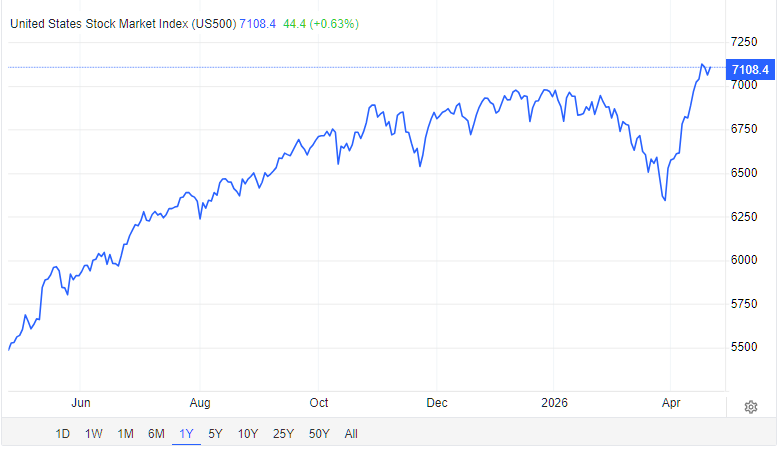
When you look at the US markets making new record highs in the current environment, it doesn’t really make sense. Geopolitical tensions remain, concerns over global growth and inflation remain, and central bank policy, including from the Federal Reserve, continues to create uncertainty in financial markets. Yet, despite all of this, the S&P 500 and Nasdaq have recently pushed to new record highs.
This disconnect between macroeconomic issues and equity market strength is not as irrational as it may seem. Markets are forward-looking, selective in what they price, and often driven by forces much more complex than pure headline risks. Several key factors help explain why equities continue to rally despite the current uncertainty.
1. How Forward-Looking Markets Price in the Next 18 Months
One of the most fundamental principles of financial markets is that they price for the future, not the present. While current conditions may appear fragile, investors are constantly attempting to anticipate what the world will look like in 6 to 18 months’ time.
Even amid concerns about inflation and restrictive monetary policy, there is a growing expectation that the peak of policy tightening has been reached or at least towards the end of the cycle. Markets are increasingly pricing in rate cuts or, at least a stabilisation in interest rates. These expectations when applied to future earnings supports higher equity valuations.
So, the markets are not ignoring the obvious risks, they are pricing in that the worst outcomes will be avoided.
2. Earnings Resilience, Especially in Large-Cap Tech
A major driver of the rally has been the continued strength of corporate earnings, particularly among large-cap tech companies. The Nasdaq is heavily weighted toward technology and has benefited hugely from this trend.
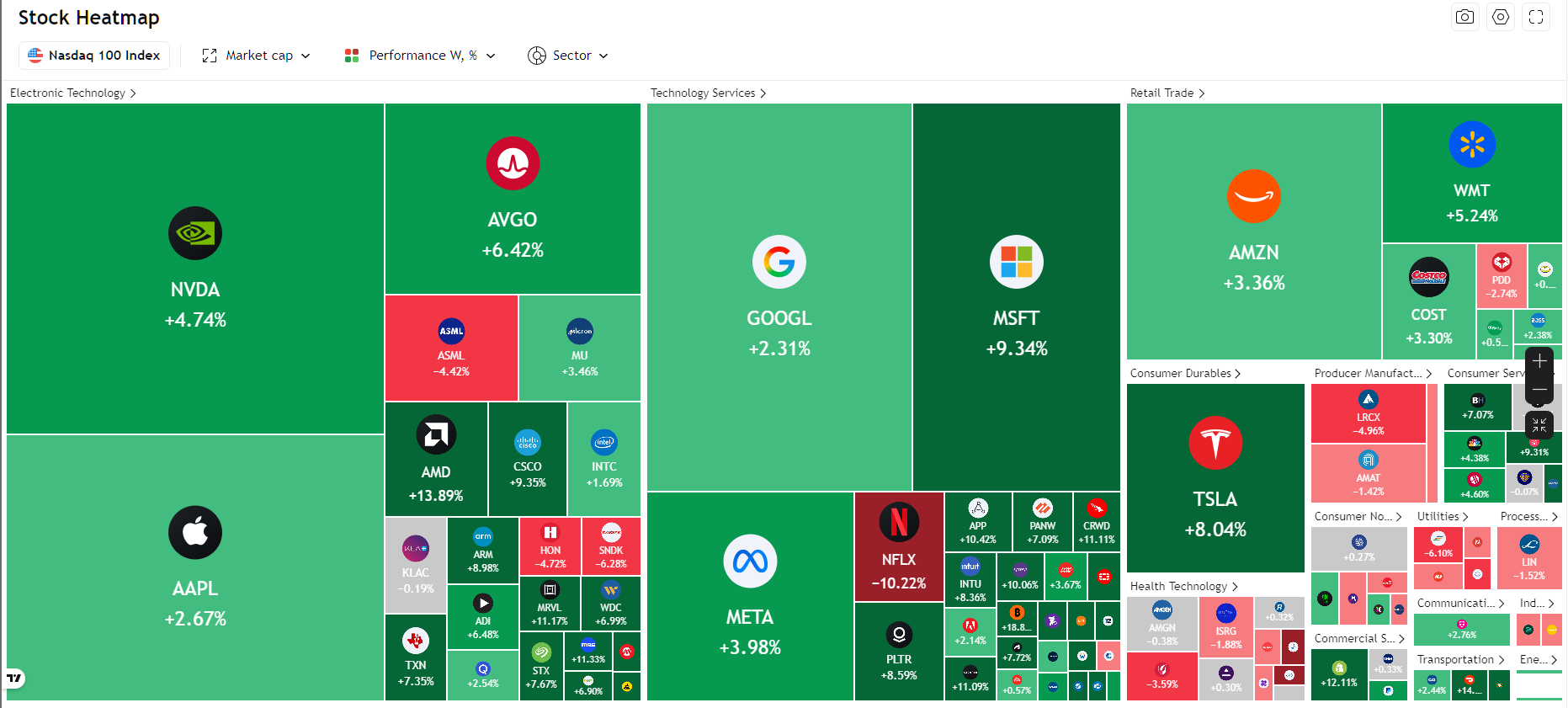
Despite higher borrowing costs and macro uncertainty, many leading companies have demonstrated remarkable pricing power, cost discipline, and revenue growth. Margins have held up better than expected, and in some cases, improved due to efficiency gains and restructuring efforts.
This resilience matters. Equity markets can tolerate macro uncertainty as long as earnings remain strong. For most investors, the main question they are concerned about is whether companies can continue to generate profits, and so far, the evidence from the large tech companies has generally been that they can.
3. Structural Growth: Why AI is Driving S&P 500 Performance
Another crucial factor is the market’s focus on long-term structural trends rather than short-term concerns. The focus for the markets has been the rapid advancement of artificial intelligence and digital transformation.
Companies that are well-positioned to take advantage of these trends are seen as beneficiaries of multi-year and potentially multi-decade growth opportunities. Investors are willing to pay a premium for companies that are perceived to be resilient for the future, even if the broader economic outlook is uncertain in the near-term.
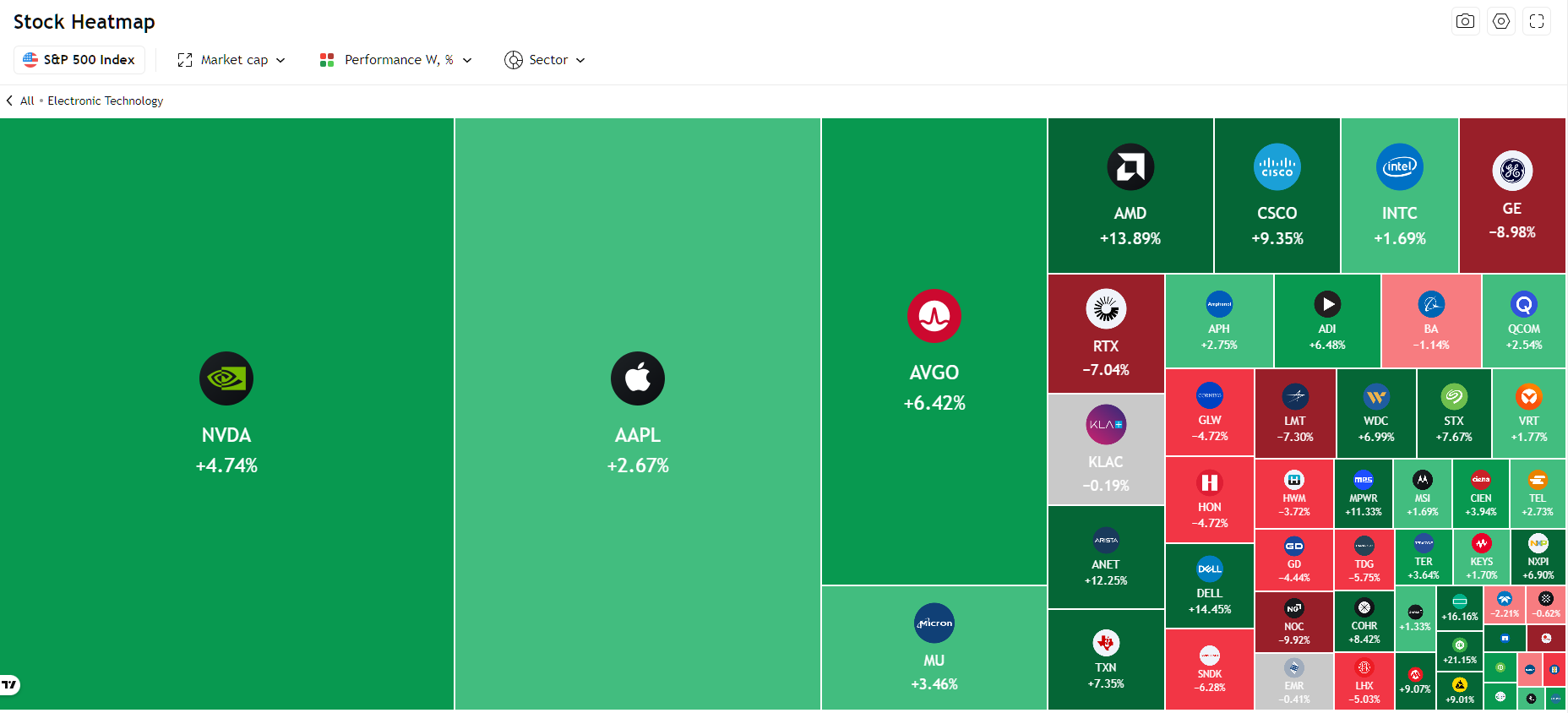
This drives capital flows into a relatively small group of high-growth names and has had an outsized impact on the performance in the Nasdaq and, increasingly, the S&P 500.
4. Liquidity Still Matters More Than Headlines
While central banks have tightened policy, global liquidity has not disappeared. Financial conditions, although more restrictive than in the ultra-loose period following the pandemic, are still supportive.
Additionally, large institutional investors continue to allocate capital to equities as part of long-term strategies. This steady demand provides a structural base for demand in the markets, even during periods of volatility.
5. The “Wall of Worry” Effect
Markets have a history of rising in the face of significant economic fears, negative news, or geopolitical tensions, a phenomenon often described as “wall of worry effect.”
When investor sentiment is risk-off, there is often significant cash sitting on the sidelines, which means negative sentiment can actually support markets.
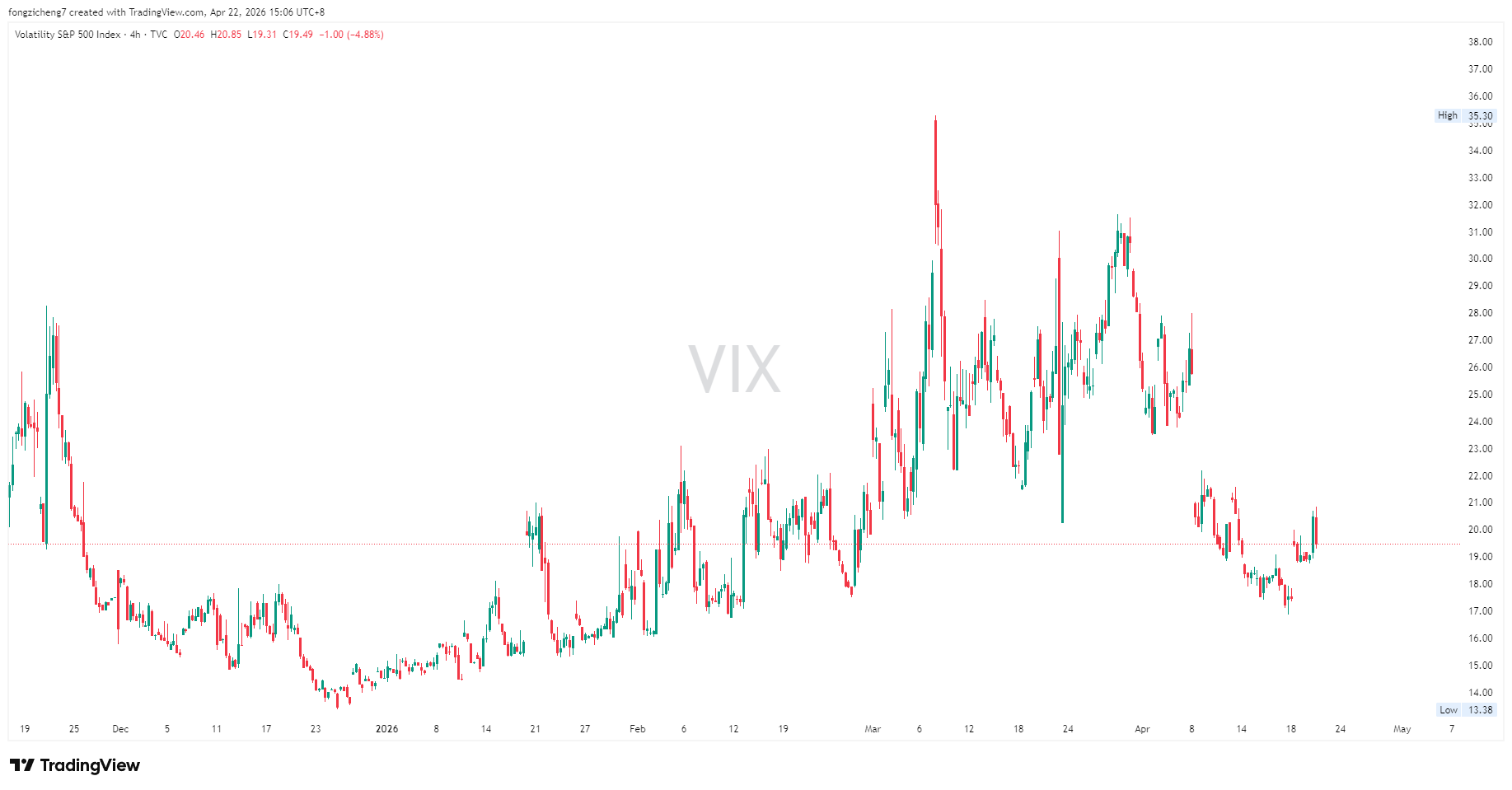
When prices start to rise, those who are underinvested feel pressure to increase exposure, leading to incremental buying. This can help extend rallies beyond what fundamentals alone might justify.
In contrast, markets are often most vulnerable when they are full of optimism and positioning is fully stretched.
6. Inflation Is Easing—Even If Not Fully Tamed
While inflation remains a concern, it has been on a downward trajectory from peak levels. Markets are sensitive to direction and momentum, and the perception that inflation is gradually coming under control has eased some of the pressure on valuations.
Lower inflation expectations also reduce the likelihood of further aggressive tightening by central banks. Even if policy remains restrictive, the absence of additional shocks can be enough to sustain market confidence.
7. Geopolitical Risks Are Being Discounted
Geopolitical tensions are clearly significant, but markets tend to react to them in a specific way. Unless such risks translate into immediate and measurable economic disruption, they are often treated as background noise.
Investors have become less sensitive to geopolitical headlines, particularly when past events have not led to sustained market downturns. This has created an environment where investors tend to look past geopolitical uncertainty unless it directly impacts earnings or financial conditions.
Conclusion: Rational Optimism or Fragile Confidence?
The rally in the S&P 500 and Nasdaq is not that the markets are ignoring all of the obvious risks. It reflects a more complicated view of forward-looking expectations, earnings strength, structural growth themes, and liquidity dynamics.
That said, the current environment is not without risks. Valuations in certain segments are stretched, whilst market concentration can create vulnerability if earnings in mega caps start to come under pressure. Shifts in inflation or policy expectations could quickly alter sentiment as well.
At the moment markets are choosing to focus on resilience over risk, on future potential rather than the current uncertainty. Whether this optimism proves justified will depend on how the economic and geopolitical landscape plays out.
The recent record highs suggest that investors remain willing to believe in a positive outcome.
The Big Questions
1) Why is the stock market hitting record highs despite high inflation and geopolitical tension?
Stock markets are forward-looking mechanisms that price in expectations for the next 6 to 18 months rather than current headlines. In 2026, the S&P 500 and Nasdaq are rallying because investors anticipate a stabilization of interest rates and see resilient corporate earnings that can outpace inflationary pressures.
2) Is the 2026 Nasdaq rally driven by an AI bubble?
While valuations are high, the current rally is increasingly supported by monetization and profitability rather than pure speculation. Unlike the dot-com bubble, today’s tech leaders are showing strong cash flows and efficiency gains from AI integration, leading many analysts to view this as a structural shift rather than a temporary bubble.
3) How do geopolitical risks like the Iran conflict affect the S&P 500?
Geopolitical tensions often create a “Wall of Worry.” Historically, unless a conflict causes a direct and sustained disruption to global energy supplies or corporate earnings, markets tend to discount these events as background noise. This creates a “risk-off” environment where sidelined cash eventually flows back into equities, supporting record highs.
4) What is Forward-Looking Pricing in the stock market?
Forward-looking pricing is the market’s tendency to value stocks based on future earnings potential rather than past performance. Even when the Federal Reserve maintains a restrictive policy, if investors believe rate cuts or economic stabilization are on the horizon, they will buy equities now to capture that future value.
5) Are large-cap tech stocks still a safe haven in 2026?
Large-cap tech companies are currently viewed as quality growth plays. Due to their massive cash reserves, pricing power, and low debt-to-equity ratios, they are better positioned to withstand high interest rates and economic uncertainty than smaller, more leveraged companies.
Start trading now – Click here to create your real VT Markets account







