






After two quiet years for major US tech listings, the IPO market is loud again. AI is the reason.
Cerebras Systems, the maker of the wafer-scale chip that powers OpenAI’s inference infrastructure, became the first major test of public-market appetite for AI hardware names this week. It priced its IPO at $185 per share on May 13, above the marketed range of $150–$160. The company sold 30 million Class A shares, raising $5.55 billion. It begins trading today on Nasdaq under the ticker CBRS.
The IPO was oversubscribed 20 times. Pre-IPO trades on Hiive rose from $187.53 on Monday to $220.25 by Thursday, a 17% jump in four days before public trading even began. Demand is strong and backed by AI support all around.
Cerebras is the third major IPO story in 2026. The first highlighted China’s curated market revival. The second involves the anticipated mega-listings from OpenAI and Anthropic. While these events all relate to IPOs, they represent two fundamentally different markets in the scene.
Two Distinct Markets
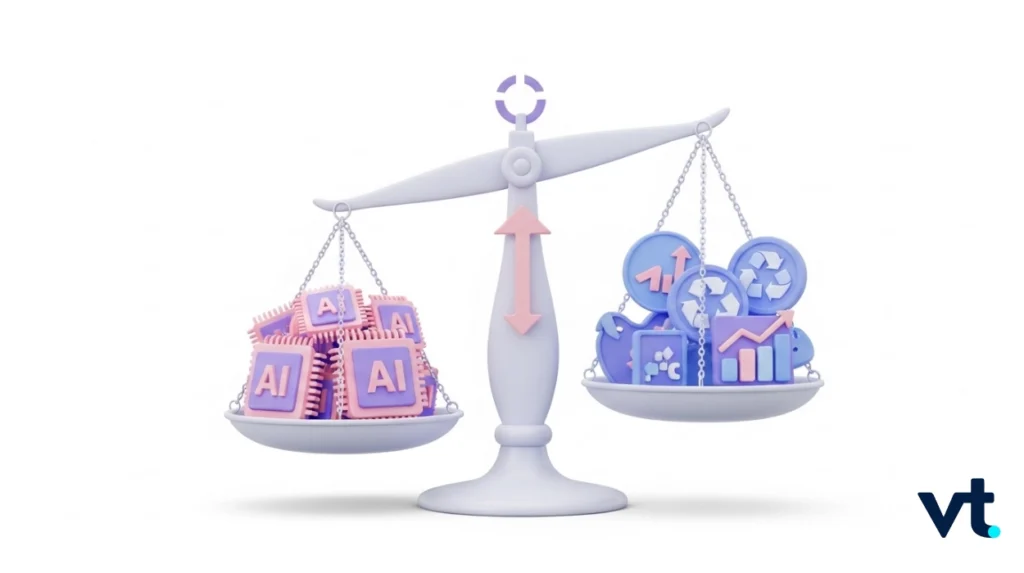
The 2026 IPO recovery is real, but it is not one market. Each has its own mechanism.
China — state-curated. Capital flows where policy directs. Mainland IPO fundraising hit 25.7 billion yuan in Q1 2026, up from 16.5 billion the year prior. Hong Kong’s proceeds rose 231% in 2025 to $37 billion. Semiconductors, AI, robotics, and biotech dominate the pipeline. Red-chip companies face restructuring requirements before listing. Sponsors face tighter inspection of documents. The door is open, but the state decides who enters. The market rewards strategic alignment over pure commercial growth.
US — demand-driven. Investor appetite decides who lists, at what price, and with what float. The 2026 wave is dominated by AI infrastructure. Cerebras is the live data point. OpenAI and Anthropic — valued privately at $840 billion and $380 billion, respectively — are preparing listings later in 2026. SpaceX and OpenAI alone could raise $135 billion combined, 25 times Cerebras’ raise.
Two markets. Two different mechanisms. One sectoral theme: AI.
What each market values
These markets reflect distinct bets on AI infrastructure.
- China prices strategic fit. A company aligned with national industrial policy gains access. The state limits upside but enforces discipline. Circular customer-investor arrangements seen in the US are not tolerated.
- US AI IPOs price embedding. Cerebras’ $10 billion contract with OpenAI anchors the story, with $5 billion in warrants issued back to OpenAI. The playbook mirrors AMD’s deal with OpenAI, which tripled AMD’s shares. By the time OpenAI and Anthropic list, it is expected that Microsoft, Alphabet, and Amazon will act as leverage proxies. Public markets reward companies embedded in AI capex cycles, where suppliers and customers hold equity in each other.
These frameworks are not minor variations; they reflect entirely different approaches to valuing AI infrastructure.
What Cerebras Indicates
In the markets, Cerebras (CBRS) is small compared with upcoming listings. Yet its debut is critical because it’s the first public-market data point on whether the demand-curated US model holds.
A strong opening for CBRS validates the embedding logic in the US AI IPOs. It tells investors the public market is comfortable paying premium multiples for companies whose biggest customer is also a major shareholder. Bigger US AI listings then come to the market on more aggressive terms of lower float, higher pricing, and more circular structures.
Public markets are now being asked to value companies not just for their products but for how deeply they are integrated into the AI ecosystem. Investors are paying for this embedded relationship, the combination of revenue, customer commitment, and financial stake.
A weak debut, or a strong open followed by a fade, could force larger US IPOs to adopt more conservative terms. It would also make China’s state-curated approach appear more disciplined, since it avoids customer-investor entanglements.
The 20x oversubscription and Hiive re-rating suggest investors expect the embedding model to succeed. 14 May is the first public test.
The core question
UBS data shows only 17% of surveyed companies have deployed AI at scale, up from 10% a year ago. This figure underpins all three markets. Cerebras’ $510 million in 2025 revenue, AMD’s rerating on OpenAI deals, the Chinese semiconductor pipeline, and the eventual OpenAI and Anthropic listings all rely on the same question: how much AI infrastructure spending is durable versus speculative?
If adoption grows steadily, both IPO frameworks hold. China’s strategic bets land, US infrastructure trades continue, and mega-listings come to market on defensible terms. If adoption stalls, markets reprice. The state-curated market has policy support to cushion declines. The US AI IPO trade is most exposed, as valuations depend heavily on ongoing AI capex.
What to Watch
- Cerebras (the next eight weeks). Today’s open will be the obvious moment, but what happens over the following weeks matters more. A sustained move above the Hive-implied $220 level would harden the US AI infrastructure trade. A fade back toward the IPO price suggests the pre-IPO bid front-ran a move that didn’t survive contact with public investors.
- OpenAI and Anthropic. S-1 filings are reportedly being prepared. Float terms, when announced, will tell traders how much volatility they expect on day one. A previous article on these anticipated listings noted that a 3-7% float would be roughly half the normal range, which would amplify whatever Cerebras debut signals.
- China. Whether the Q1 IPO pipeline converts into consistent listings. Whether hard-tech sectors stay dominant in the queue. Post-listing performance of recent Chinese tech IPOs.
The 2026 IPO revival is real. But it is not a single market. It is two, one state-curated and one demand-driven, each with different rules yet asking the same question about AI infrastructure. Cerebras provides the first public-market answer. How it trades today and over the next eight weeks will shape the pricing of the rest of 2026’s IPO wave — in San Francisco, in Hong Kong, and everywhere in between.
Download the VT Markets app to monitor real-time CFD price action on AI-related stocks.
Tap for Trader’s Recap!
Why is Cerebras’ IPO considered a test for AI hardware markets?
Cerebras is the first major US AI hardware IPO after two quiet years. Its pricing and early trading reveal how investors value AI infrastructure and the relationships between suppliers and customers.
What does “embedding logic” mean in the Cerebras IPO?
Embedding logic refers to the financial alignment between Cerebras and OpenAI. OpenAI holds warrants in Cerebras, so both companies benefit if the other succeeds, creating a linked incentive structure.
How do China and US IPO markets differ?
China’s IPO market is state-curated, rewarding companies aligned with national policy. The US market is demand-driven, where investor appetite and strategic embedding relationships determine pricing and float.
What is the key metric underlying AI infrastructure valuations?
Only 19% of surveyed companies have deployed AI at scale. This adoption rate is central to evaluating whether AI infrastructure spending is durable or speculative.
Why does the Cerebras debut affect other AI IPOs?
Cerebras provides the first public-market benchmark. Its performance will influence investor confidence, pricing, and float decisions for upcoming US mega-listings and even affect sentiment toward Chinese AI IPOs.
Create a live VT Markets account today to access our platform features, including market insights and educational content.
Start trading now – Click here to create your real VT Markets account







