Dividend Adjustment Notice – Dec 15 ,2025

Dear Client,

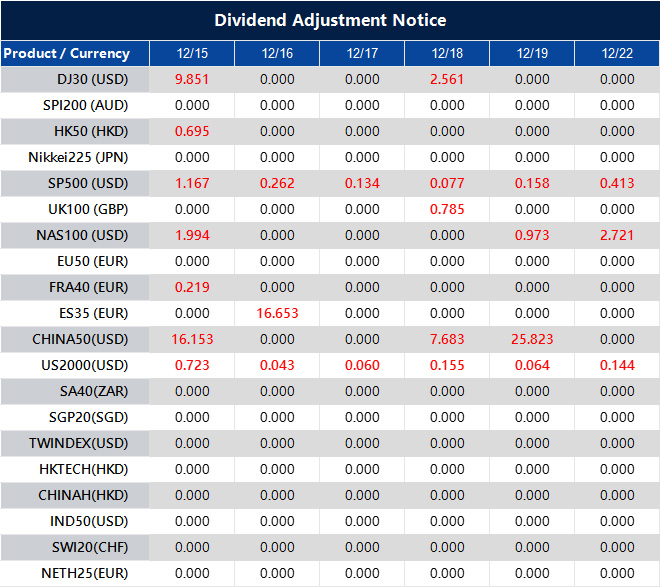
Please note that the dividends of the following products will be adjusted accordingly. Index dividends will be executed separately through a balance statement directly to your trading account, and the comment will be in the following format “Div & Product Name & Net Volume”.

Please refer to the table below for more details:

Dividend Adjustment Notice

The above data is for reference only, please refer to the MT4/MT5 software for specific data.

If you’d like more information, please don’t hesitate to contact [email protected].

Fresh buyers boost silver market, reversing Friday’s losses and stabilizing around $62.50

Silver trading started the week positively, bouncing back from Friday’s drop, where it peaked around $64.65. During the Asian session, silver was priced in the mid-$62.00s, showing a 1.25% increase and hinting at continued upward momentum. Technically, XAG/USD found support at the 100-hour Simple Moving Average, allowing it to stay above $62.00 and confirming the positive trend. However, with neutral hourly metrics and a slightly overbought daily RSI, traders should watch for challenges near $63.00. If momentum continues, XAG/USD may rise toward $63.80 and potentially surpass $64.00, challenging its recent peak near $64.65.

Downward Trends and Support Levels

If silver falls below $62.00, this could create a buying opportunity near the 100-hour SMA at $61.45. If prices drop further, they may slide under $61.00, heading toward $60.80, the previous low, which could lead to additional losses if broken. Silver, a precious metal used for both investment and industrial purposes, experiences price shifts driven by factors such as geopolitical events, interest rates, and the strength of the US Dollar. It is significantly affected by demand in electronics and solar energy and often moves in sync with gold prices. Traders use the Gold/Silver ratio to assess the value difference between these two metals. Recent price action shows that silver has a solid foundation near the 100-hour moving average, indicating that declines are being bought. For derivative traders, this may suggest selling out-of-the-money put options or implementing bull put spreads to collect premium as the uptrend continues. However, the overbought signal on the daily chart calls for caution, so it’s wise to avoid being overly aggressive with long positions at this time.

Bullish Momentum and Market Sentiment

The fundamental backdrop supports this bullish trend, boosting our confidence. Recent data from the Silver Institute for Q3 2025 showed industrial demand rising by over 7% year-over-year, fueled by increased solar panel and electric vehicle manufacturing. Additionally, the US Dollar Index (DXY) fell below 98 last week, following the Federal Reserve’s indication of pausing its rate hikes, providing a strong boost for dollar-denominated assets like silver. This rally bears some resemblance to the speculative excitement that drove silver to a record high in 2011, a time also marked by a weak dollar and monetary policy concerns. As we take advantage of the current trend, using options to manage risk is smart in case of a sharp, unexpected downturn. For immediate price targets, any sustained move above $63.00 could encourage adding to long positions, potentially targeting the next resistance at $63.80. However, if the $61.45 support level fails to hold, it may signal a slowdown in the rally. A decisive break below this level could indicate a deeper correction, making protective puts worth considering for anyone holding long futures contracts. The Gold/Silver ratio has dropped significantly, hitting a 15-year low of 48 last month, indicating silver’s recent strong performance. While this reflects strong momentum, it also suggests that silver may be becoming overpriced compared to gold. Some may consider setting up pairs trades, predicting that gold may start to outperform silver as the ratio reaches a bottom. Create your live VT Markets account and start trading now.

here to set up a live account on VT Markets now

AUD/USD pair falls to around 0.6650 due to disappointing Chinese retail sales and industrial production figures

Recent Labor Market Data

New labor market data reveals that Australia’s economy lost 21,300 jobs in November, missing the expected gain of 20,000. The outlook for the US Dollar remains weak, with expectations for future interest rate cuts by the Federal Reserve. Current projections suggest a Federal Funds Rate of 3.4% by 2026. The value of the Australian Dollar (AUD) relies on several factors, including interest rates set by the Reserve Bank of Australia (RBA), the prices of commodities like Iron Ore, and the health of China’s economy. The RBA’s decisions and Australia’s Trade Balance also play a role in determining the AUD’s value. Generally, stronger economic conditions in China or rising Iron Ore prices support the Australian Dollar. Currently, the AUD is under pressure from disappointing data out of China, our largest trading partner. In November, both retail sales and industrial production fell short of forecasts. Additionally, the Caixin Manufacturing PMI for that month showed a contraction at 49.5. As a result, the AUD/USD pair is fluctuating around 0.6650.

Fed Expectations Versus Market Reality

In Australia, last week’s labor market data revealed unexpected weakness, with over 21,000 jobs lost in November. This has led markets to bet on a possible interest rate cut by the RBA in 2026. Now, swap markets indicate nearly a 50% chance of a rate cut by mid-next year, a notable change. Even with these challenges for the Australian economy, the US Dollar is also facing difficulties. There’s a significant gap between the Federal Reserve’s recent guidance and market predictions for 2026. The Fed’s dot plot suggests only one rate cut for next year, while the fed funds futures are forecasting at least two or three. All attention is now on tomorrow’s US Nonfarm Payrolls report for November. Analysts expect about 150,000 new jobs to be created. If the actual number is much lower, it could strengthen the dovish narrative from the Fed and push the AUD/USD higher. Conversely, a strong report could challenge this view and likely drive the pair lower. Traders dealing in derivatives should be prepared for increased volatility around this release. We also need to keep an eye on commodity prices, a critical factor for the value of the AUD. For example, Iron Ore futures have dropped from their late October highs and are now trading below $130 per tonne. If commodity prices continue to fall, it could add more pressure on the AUD in the coming weeks. This situation feels similar to late 2023 when expectations for central bank shifts often overshadowed local data. During that time, we experienced increased fluctuations as traders balanced international and domestic influences. This indicates that managing positions during crucial data releases will require careful consideration of event risks. Create your live VT Markets account and start trading now.

here to set up a live account on VT Markets now

Weakened Chinese economic data leads to a drop in the New Zealand Dollar to around 0.5780 against the US Dollar

The NZD/USD pair fell to about 0.5780 during the Asian trading session on Monday. This decline was due to weak economic data from China. China’s Retail Sales increased by just 1.3% year-on-year in November, missing the expected 2.9%. Chinese Industrial Production grew by 4.8% year-on-year, slightly lower than the forecast of 5.0%. These numbers have put pressure on the New Zealand Dollar because China is New Zealand’s biggest trading partner. Reserve Bank of New Zealand Governor Anna Breman stated that the economic outlook meets expectations, and the Official Cash Rate remains at 2.25%.

Monetary Policies and Their Effects

The US Federal Reserve recently lowered interest rates by 25 basis points to a range of 3.50% to 3.75%. Traders are waiting for the US October Nonfarm Payrolls report, due on Tuesday, which may influence expectations for the Fed’s next meeting. Economic factors like New Zealand’s dairy prices and trade ties with China also affect the NZD’s value. The Reserve Bank of New Zealand’s methods for handling inflation and interest rates play a role in how the currency performs. General market sentiment impacts the strength of the NZD; it tends to rise when risks are low but may weaken during uncertain economic times. We are noticing a familiar trend with NZD/USD, although the levels have shifted. We remember the struggles below 0.5800 when weak Chinese retail sales were a key issue. As of December 15, 2025, worries about China’s slow consumer demand are again limiting the pair’s growth, even with it trading around 0.6150. The interest rate situation has changed significantly since we last discussed the RBNZ rate at 2.25% and the Fed rate near 3.75%. We now have an Official Cash Rate of 5.50%, closely matching the US Fed’s 5.25-5.50% range, which removes the interest rate advantage for the Kiwi. Derivative traders should expect volatility with upcoming inflation data, as surprises could indicate which central bank might cut rates first in 2026.

Currency Market Trends

While we previously awaited a delayed October NFP, our attention now shifts to the evident cooling trend in the US labor market. The latest November Nonfarm Payrolls report indicated a gain of only 150,000 jobs, which was below expectations and shows that the Fed’s rate hikes are having an effect. This puts downward pressure on the US Dollar, offering some support for NZD/USD, suggesting that options to bet against the USD could be a smart move. The Kiwi is currently in a complicated situation, a typical scenario for options traders. On one hand, recent Global Dairy Trade auctions have indicated stable prices, with Whole Milk Powder prices rising over 3% in the last event, which usually supports the NZD. On the other hand, a cautious risk-averse mood is settling in as traders consider the potential for a global economic slowdown in 2026. Create your live VT Markets account and start trading now.

here to set up a live account on VT Markets now

Breman indicates that the economic outlook matches the Monetary Policy Committee’s expectations and signs of recovery.

The Reserve Bank of New Zealand (RBNZ) has shared its positive economic outlook, matching the Monetary Policy Committee’s predictions, showing signs of recovery. The Official Cash Rate (OCR) is expected to remain at 2.25% if current conditions hold steady, with a small chance of a rate cut in the future. Financial markets have tightened more than expected since November, affecting the NZD/USD exchange rate, which is currently at 0.5787, down by 0.27%. The RBNZ aims to keep inflation between 1% and 3% while also supporting sustainable job levels.

Influence of Monetary Policy

Monetary policy from the RBNZ impacts the New Zealand Dollar. Higher interest rates typically strengthen the currency by providing better returns. In contrast, lower rates usually weaken it. The RBNZ is focused on employment, as it can influence inflation, striving to ensure maximum sustainable employment without driving up prices. Quantitative Easing (QE) is another tool the RBNZ might use, especially in extraordinary situations like the Covid-19 pandemic. QE means increasing the money supply by buying assets, often leading to a weaker New Zealand Dollar, and is used when lowering interest rates isn’t enough to achieve the bank’s goals. The RBNZ is indicating a period of stability, which is important. With the OCR at 2.25 percent, it is likely to stay there for a while. This lowers the risk of unexpected rate hikes, helping to set short-term interest rate expectations more firmly. The latest economic data supports this steady approach. For example, inflation for the third quarter of 2025 is at 2.8 percent, comfortably within the RBNZ’s target range of 1 to 3 percent. With unemployment stable at around 4.1 percent, there is little need for the bank to take sudden action.

Outlook for Financial Markets

For traders in derivatives, the outlook points to less volatility in the New Zealand dollar in the upcoming weeks. Options strategies that work well in a stable currency environment, like selling straddles, might be beneficial. The market has reduced expectations for aggressive policy changes, meaning the NZD/USD might not break away significantly from its current rate around 0.5787. It’s important to note that financial markets have tightened more than the RBNZ predicted. This means market interest rates and borrowing costs have risen independently, relieving some pressure on the bank. This condition reinforces the idea that the OCR will likely stay unchanged until at least early 2026. Reflecting on the post-pandemic period of 2023 and 2024, the central bank was increasing rates to combat inflation. Now, we are in a different phase of cautious observation. The mention of a possible rate cut, even if far off, shouldn’t be overlooked. A serious downturn in global economic data, particularly from major trading partners like China, could increase the chances of that rate cut. This is a key risk to monitor, as it could put downward pressure on the kiwi dollar. While stability is currently expected, keeping an eye on global growth indicators is crucial for signs of trouble. Create your live VT Markets account and start trading now.

here to set up a live account on VT Markets now

Week Ahead: AI Capital Spending Steers Risk Appetite

Artificial intelligence remains the dominant theme in equity markets, but the narrative is evolving. Investor focus has shifted away from lofty expectations around productivity gains and towards the underlying economics of the AI build-out.

This stage of the cycle is increasingly about infrastructure: data centres, energy demand, and chip supply, rather than software breakthroughs or headline innovation.

Large US technology firms are set to spend more than $400 billion this year on AI-related hardware, facilities, and power capacity, even as the revenue generated directly from AI remains relatively modest.

That gap has left valuations more exposed to earnings guidance and capital expenditure discipline. Traders are growing more cautious, mindful that AI adoption could take longer to translate into profits than current share prices suggest.

This backdrop goes some way towards explaining why US equity indices have struggled to hold breakouts.

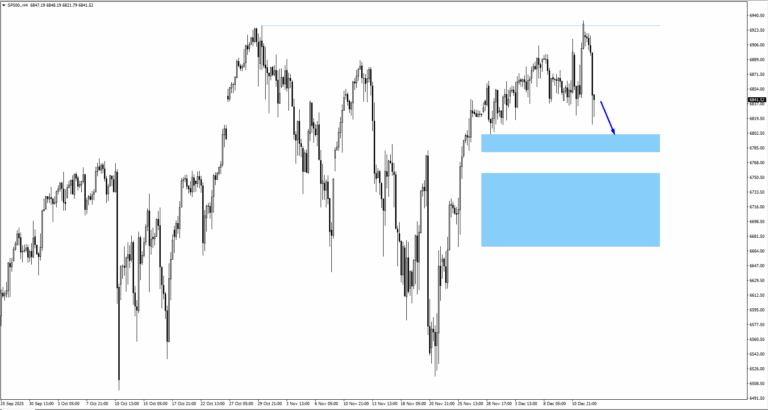
The S&P 500 recently notched a fresh record high before retreating, signalling rising hesitation rather than a clear shift into risk aversion. Momentum is still positive, but tolerance for disappointment is narrowing.

For traders, AI continues to underpin the broader equity trend, while also acting as a potential volatility catalyst when expectations are revised lower.

Dollar Weakness Builds Ahead Of Key US Data

The US dollar starts the week under pressure, with the Dollar Index finding a base around the 97.90 area. Recent price action reflects growing confidence that the Federal Reserve may need to deliver further easing as labour market conditions cool.

This week’s Non-Farm Employment Change is expected to come in at 50K, down sharply from the previous 119K, while the unemployment rate is forecast to edge up to 4.5% from 4.4%.

An outcome close to these projections would reinforce concerns about slowing US growth and could extend downside pressure on the dollar.

While a softer dollar continues to support selected risk assets, traders remain hesitant to chase moves ahead of firm data confirmation.

Central Banks Add Cross-Currents To FX Markets

Monetary policy decisions elsewhere are adding complexity to currency markets. The Bank of England is widely expected to cut its Official Bank Rate to 3.75% from 4.00%, placing the emphasis on forward guidance rather than the decision itself.

Sterling’s reaction is likely to hinge on whether policymakers open the door to further easing in early 2026.

In Japan, the Bank of Japan is forecast to lift its policy rate to 0.75% from 0.50%. Any signal that policy normalisation will continue could support the yen and limit upside in USDJPY, particularly if US economic data disappoints.

Market Movements Of The Week

SP500

– The index made a fresh all-time high before pulling back sharply.
– AI-heavy stocks continue to drive direction, but valuations face tighter scrutiny.
– A sustained hold above 6,790 keeps upside open; failure may accelerate profit-taking.

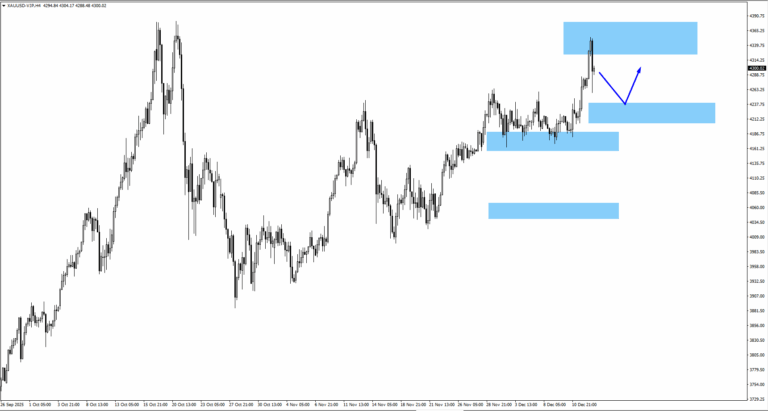
Gold (XAUUSD)

– Gold retreated from 4,360 and now consolidates near 4,220.
– Holding above this zone may open a move back toward 4,300.
– US data remains the primary short-term catalyst.

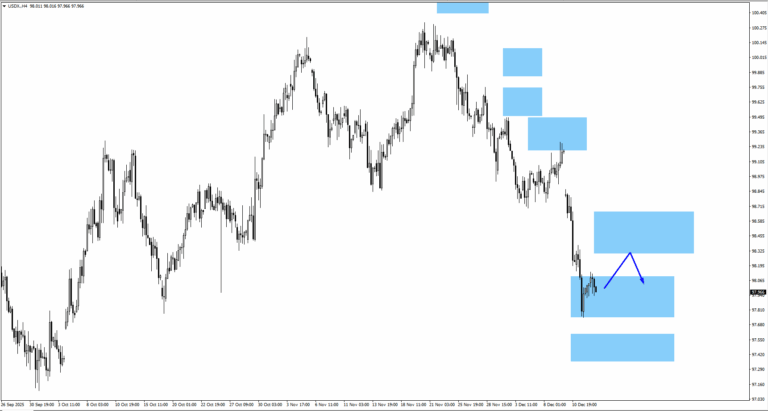
US Dollar Index (USDX)

– USDX found support near 97.90 after last week’s decline.
– Resistance sits near 98.30 and 98.55.
– Weak labour data could expose the 97.40 area.

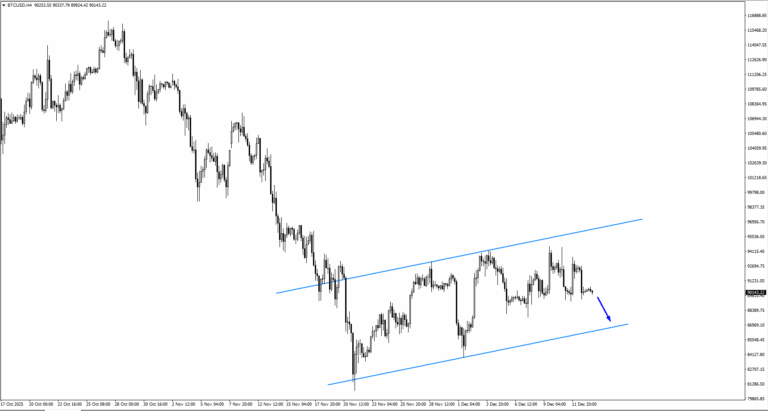
Bitcoin (BTCUSD)

– Bitcoin continues to consolidate within a descending channel.
– A close below 87,712 could expose lower levels near the 70K handle.
– Recovery attempts depend on stabilising risk sentiment.

Key Events Of The Week

16 December

1. US Non-Farm Employment Change, Forecast: 50K, Previous: 119K

Soft data may extend USD weakness.

2. US Unemployment Rate, Forecast: 4.50%, Previous: 4.40%

Rising unemployment supports easing expectations.

18 December

1. UK Official Bank Rate, Forecast: 3.75%, Previous: 4.00%

Focus on BoE guidance beyond the cut.

2. US CPI y/y, Forecast: 3.00%, Previous: 3.00%

Stable inflation keeps policy outlook unchanged.

19 December

1. JP BOJ Policy Rate, Forecast: 0.75%, Previous: 0.50%

Hawkish signals may strengthen JPY.

Bottom Line

AI continues to provide a structural tailwind for US equities, but investors are becoming more selective as infrastructure costs rise and earnings expectations come under closer scrutiny.

Upcoming US labour and inflation data, alongside key central bank decisions, will be critical in determining whether current easing expectations remain justified.

A run of softer data could keep the dollar on the back foot while supporting gold and risk assets, whereas any upside surprise may trigger sharper pullbacks as positioning adjusts.

Create your live VT Markets account and start trading now.

In November, China saw a 1.3% increase in retail sales and a 4.8% rise in industrial production.

In November, China’s Retail Sales rose by 1.3% compared to last year, falling short of the expected 2.9% and matching October’s figures. Industrial Production increased by 4.8%, slightly below the predicted 5.0% but up from 4.9% in October. Fixed Asset Investment for November showed a year-to-date drop of 2.6%, worse than the expected -2.3% and down from -1.7% in October. This data had little effect on the Australian Dollar, which edged up by 0.03% against the US Dollar.

Australian Dollar Performance

The Australian Dollar performed differently against major currencies, weakening significantly against the Japanese Yen. If Chinese economic data exceeds expectations, the AUD/USD pair could rise, facing resistance at 0.6680 and 0.6707. The Australian Dollar’s value is influenced by the Reserve Bank of Australia’s interest rates, prices of resource exports like Iron Ore, and China’s economic health. A positive Trade Balance and good market sentiment can also boost the AUD. The Chinese economic data for November was weaker than expected, especially in consumer spending. Usually, this would suggest caution for the Australian Dollar due to Australia’s close trade ties with China. However, the market is currently more focused on other global factors. The Australian Dollar is stable mainly because the US Dollar is losing strength. There are widespread expectations that the US Federal Reserve will start to lower interest rates next year, a view that has dominated the markets recently. This situation creates a conflict for the AUD, balancing weak local data against a favorable global monetary policy outlook.

Iron Ore and Interest Rate Dynamics

Iron ore futures have been strong, recently trading above $130 per tonne on the Singapore Exchange, providing support for the Aussie currency. The Reserve Bank of Australia kept its cash rate steady at its meeting on December 2nd, signaling no new dovish stance. This stability at the RBA contrasts with the potential for the Fed to cut rates, currently supporting the AUD/USD pair. We have seen this situation before, particularly in late 2024. At that time, concerns about China’s economy were often overshadowed by the market’s focus on changing interest rate policies in the US and Europe. This pattern suggests that global central bank actions can temporarily overshadow local economic data. For traders of derivatives, this mix of signals suggests that range-trading or increased volatility may happen in the next few weeks. Weak Chinese data could limit the AUD/USD’s upside, while the likelihood of US rate cuts provides good support. This creates opportunities for strategies that profit from either a stable market or sudden breakouts, like selling strangles or buying straddles. Given this outlook, it’s wise to use options to manage risk during the holiday period. Buying AUD/USD put options with a strike price around 0.6600 could be a smart way to protect against rising concerns over China’s slowing growth. This approach provides downside protection if market sentiment shifts. In the future, we should closely watch upcoming US inflation and employment figures, as any changes in these could significantly impact currency pairs like AUD/USD. We will also keep an eye out for any new stimulus from Beijing, as major policy moves could quickly alter the outlook. Create your live VT Markets account and start trading now.

here to set up a live account on VT Markets now

China’s industrial production for November was 4.8%, below the 5% forecast

China’s industrial production rose by 4.8% in November compared to last year, which is below the expected 5% growth. This suggests that industrial growth is slowing more than anticipated. In other news, the market saw a mix of trends. The GBP/USD pair stayed stable in the mid-1.3300s, while gold prices climbed to $4,330 as investors anticipated important US economic data.

Cryptocurrency Market Developments

In the cryptocurrency world, Solana’s price is nearing a potential breakout, thanks to nearly $1 billion in spot ETF inflows from institutional investors. Aave (AAVE) also looks like it might break out, trading above $204. The S&P 500 rose following a US Federal Reserve rate cut earlier in the week, which many viewed as cautious. This helped boost non-tech sectors of the market. Investors should thoroughly research before making decisions, as there are risks and emotional stress involved. FXStreet and its authors do not offer personalized investment advice; all information should be reviewed carefully. China’s industrial production growth for November was at 4.8%, lower than the 5% expected, indicating ongoing economic slowdowns. This marks the third month of slowing growth, which could negatively impact industrial commodities. It’s a good time to consider buying put options on commodity-linked assets, like Australian dollar futures or major mining stocks, to hedge against further declines.

Federal Reserve Rate Cut and Market Impact

The recent Federal Reserve rate cut has pushed the S&P 500 up, but this increase could be fragile amid signs of a global slowdown. The US 2-year yield is around 3.50%, and derivatives markets suggest a 65% probability of another rate cut by March 2026, signaling the Fed’s concerns about growth. Traders should prepare for higher volatility by buying VIX call options or using index option straddles for potential sharp moves in either direction. There’s a significant split in the commodities market that traders can take advantage of. WTI crude oil is struggling to stay above $57 a barrel, reflecting weak manufacturing data from China, while gold has surged past $4,300 an ounce. This difference suggests a stagflationary environment, and a pair trade of long gold futures against short crude oil futures might be a smart strategy in the coming weeks. In currency markets, the weakness of the Japanese Yen is a major factor, supporting pairs like AUD/JPY even as Australia faces challenges from China. The Bank of Japan’s commitment to its loose monetary policy, confirmed in November 2025, continues to burden the Yen. Therefore, using options to establish a bearish position on the Yen against a basket of currencies could provide opportunities, despite slowdowns in other markets. Create your live VT Markets account and start trading now.

here to set up a live account on VT Markets now

China’s retail sales for November grew by 1.3%, below the expected 2.9% increase.

**As A Global Economic Influencer** This important development could affect global markets and trading strategies. Changes may be needed, especially in the consumer goods and services sectors. The retail sales data indicates a call for economic reforms and possible stimulus measures to encourage consumer spending and support growth in China. The November 2025 retail sales figure of 1.3% is a significant disappointment and is much lower than the expected 2.9%. This poor data highlights our growing worries about the fragile state of China’s consumer recovery. As a result, we are preparing for increased downside risk in assets tied to China over the next few weeks. **Recent Economic Indicators** This cautious outlook is backed by other recent numbers. China’s Producer Price Index for November 2025 also showed a year-over-year drop of 0.8%. With the CSI 300 index trading below its 50-day moving average at around 3,450, it may be wise to consider buying put options on major China-focused ETFs. These options can protect against market declines or serve as a direct bet on falling prices. This situation reminds us of the ongoing economic sluggishness we saw in 2023 and 2024, where optimism for recovery was frequently met with disappointing domestic data. During that time, government stimulus often had a limited and short effect on market outlook. This history warns us to be cautious about expecting a quick recovery driven by policy changes this time. We also need to rethink our views on industrial commodities, as China is the largest consumer globally. Iron ore futures, currently around $105 per tonne, face challenges due to a potential slowdown in construction and manufacturing. Traders might consider using short futures positions or buying puts on key mining stocks. This economic weakness may push the People’s Bank of China to pursue further monetary easing, which could weaken the yuan. The USD/CNH currency pair has already risen to 7.31 in response to the data. We see an opportunity in buying call options on USD/CNH to benefit from any further depreciation of the Chinese currency as we enter the new year. With the possibility of unexpected policy announcements from Beijing, we predict increased market volatility. Implied volatility on Hang Seng options has already increased by 2% this morning. This environment is suitable for strategies like long straddles, which can profit from significant market shifts in either direction without making specific predictions. Create your live VT Markets account and start trading now.

here to set up a live account on VT Markets now

China’s year-to-date fixed asset investment in November decreased by 2.6%, missing expectations.

In November, China’s fixed asset investment for the year was down 2.6% compared to last year, which was worse than the expected drop of 2.3%. This measure includes investments in infrastructure like roads, bridges, factories, and utilities, highlighting ongoing economic difficulties in the country.

Investment Trends and Economic Challenges

These numbers give us insight into the overall economic landscape and suggest issues such as reduced industrial activity. Changes in investment may be a response to market conditions or policy changes. Studying this data helps us understand the investment situation in China and can provide clues about future infrastructure and industrial projects. These statistics are important for policymakers and companies involved in large construction projects. The disappointing investment figure confirms our concerns about a significant economic slowdown. The November 2025 report shows that government efforts to boost the economy have not been effective. We should prepare for ongoing weakness in Chinese assets and those linked to China. The main issue lies in the property sector, which has seen over thirty months of declining investments, negatively affecting the overall numbers. Recent statistics from the National Bureau of Statistics indicate that new home prices dropped 1.2% year-over-year, the biggest fall since the property crisis began in 2022. This instability in the housing market is hurting confidence among businesses and consumers.

Strategic Moves for Traders

For derivatives traders, this is a chance to short industrial metals futures, especially copper and iron ore. We might also look into buying put options on commodity-linked currencies like the Australian dollar (AUD). This situation is similar to the global commodity downturn in 2015, also driven by worries over China’s growth. In the equity markets, buying puts on broad China ETFs like the FXI is a straightforward move. The CBOE China ETF Volatility Index (VXFXI), which was around 22 last week, is likely to rise sharply. This makes long volatility strategies, like buying VIX call options, a smart hedge against wider global issues. We expect the People’s Bank of China to cut its key lending rates again in the first quarter of 2026. However, with youth unemployment still high at about 14%, the effects of additional monetary easing may be limited. Any rallies from stimulus efforts should be seen as opportunities to create short positions. Create your live VT Markets account and start trading now.

here to set up a live account on VT Markets now

Back To Top
server

Hello there 👋

How can I help you?

Chat with our team instantly

Live Chat

Start a live conversation through...

  • Telegram
    hold On hold
  • Coming Soon...

Hello there 👋

How can I help you?

telegram

Scan the QR code with your smartphone to start a chat with us, or click here.

Don’t have the Telegram App or Desktop installed? Use Web Telegram instead.

QR code