



Dollar Index rises above 99.50 as optimism grows for an end to the US shutdown
The US Dollar Index (DXY), which measures how the US Dollar compares to six major currencies, has risen to about 99.65 during early trading on Monday in Asia. This increase is inspired by hope that the US government shutdown may soon end, as the Senate prepares to vote on a funding bill.
Senate Majority Leader has shared that there’s progress in bipartisan discussions aimed at resolving the federal shutdown. The Senate plans to vote on a plan that would keep certain government departments funded through January 30. Any moves toward ending the shutdown could boost the DXY.
In September, manufacturing output in the Netherlands fell to 0.1%, down from 1.7% previously.
Manufacturing output in the Netherlands fell from 1.7% to 0.1% in September, showing a clear decline from earlier levels.
Gold prices climbed above $4,050 as concerns about global growth and expectations for US interest rate cuts arose. Traders are worried about the US economy, influenced by weak private job data and a poor consumer sentiment survey.
The US Dollar Outlook
The US Dollar strengthened against the Euro and the British Pound following reports that a US government shutdown might be ending. The EUR/USD and GBP/USD pairs depreciated, trading around 1.1550 and 1.3150, respectively. Cryptocurrencies like Bitcoin, Ethereum, and Ripple began to recover on Monday. After reaching key support levels last week, these digital currencies traded higher, suggesting a potential end to the recent downtrend. This week could challenge the US Dollar’s current strength. Factors such as Federal Reserve announcements, a US Supreme Court decision, and economic data may shift market sentiment. Meanwhile, the economies of Australia and Britain are likely to take different paths as their central banks meet next week. The slowdown in the Netherlands signals ongoing weakness in the European manufacturing sector. Last month, broader Eurozone data revealed that the Manufacturing PMI still struggles below the 50 mark, currently at 49.1. This indicates a mild and persistent contraction, suggesting that traders might want to consider bearish positions, perhaps by buying put options on the Euro Stoxx 50 index to prepare for further declines.Federal Reserve Rate Cuts Impact
The market is pricing in US Federal Reserve rate cuts, driven by worries about global growth. The revised US GDP growth for the third quarter of 2025 stands at 1.4%, significantly below trends. This situation suggests selling US Dollar index futures, as a proactive Fed could weaken the currency in the medium term. Focusing on the EUR/USD pair, it remains technically weak below its 100-day moving average at around 1.1550. The combination of a struggling European economy and the current market sentiment favors continued strength of the dollar in the short term before any rate cuts happen. Selling EUR/USD call options with a strike price near 1.1550 may be a smart strategy for the coming weeks. Gold’s price above $4,050 per ounce indicates significant market anxiety and a shift to safer investments. This current price is much higher than the ~$2,000 range from 2023, reflecting ongoing inflation and geopolitical instability that have shaken confidence in fiat currencies. With central banks continuing to buy gold—215 tonnes added to official reserves in Q3 2025, according to the World Gold Council—buying long-term call options on gold appears to be a wise decision. We are also observing the British Pound weaken, with the Bank of England caught between tackling inflation, currently at 3.8%, and stimulating a stagnant economy. The UK’s economic growth has remained nearly flat for the past year, resembling the stagflation pressures seen in the early 2020s. This uncertainty makes strategies like a long straddle on GBP/USD appealing ahead of any central bank announcements. Create your live VT Markets account and start trading now.The Australian dollar strengthens against the US dollar, continuing its upward trend for a second session.
The Australian Dollar increased as the Reserve Bank of Australia addressed challenges in its policies, focusing on strict measures to control inflation. A temporary lift by China on exporting dual-use items to the US also boosted the Australian currency. Meanwhile, the US Dollar remained stable with the US Senate moving towards approving government funding, hinting at a possible end to the shutdown.
Australia’s Monetary Policy Phase
The Australian Dollar’s strength continued for a second session, aided by comments from RBA Deputy Governor Hauser. He described the current monetary policy situation in Australia as challenging, as demand is outpacing potential output. This situation leaves little opportunity for monetary easing without increasing inflation. Improving relations between the US and China have further supported the Australian Dollar. China’s recent lifting of the export ban on dual-use items, such as gallium and antimony, could influence this dynamic. Since China is a major trading partner for Australia, shifts in its economy can significantly impact the AUD. In September, Australia’s Trade Surplus expanded with exports up by 7.9% from the previous month. The AUD/USD trading pair shows promise for further growth while remaining above important support levels. On that day, the Australian Dollar was particularly strong against the Japanese Yen. Key factors affecting the AUD include interest rates, China’s economic status, and iron ore prices. The Reserve Bank of Australia’s careful approach indicates interest rates will stay high, which supports the Australian Dollar’s strength. Earlier this month, the RBA maintained its cash rate at 4.35% but emphasized its commitment to fighting inflation. Futures markets are now predicting a higher likelihood of another rate hike by early 2026, a significant change from just weeks ago. Conversely, the US economy is showing signs of slowing down, which may weaken the US Dollar. The Federal Reserve has held steady since mid-2023, and recent weak consumer sentiment data suggests that a rate cut might be next. This widening gap in interest rate expectations between Australia and the US makes the AUD more appealing.China’s Impact on Australian Trade
We are also witnessing positive developments from China, Australia’s largest trading partner. The temporary lifting of the export ban on crucial materials to the US is a positive step that eases global trade tensions. This change has contributed to rising iron ore prices, an essential Australian export, which recently climbed back above $130 per tonne. This environment indicates a potential for further strength in the AUD/USD in the upcoming weeks. Traders might consider buying call options on the AUD/USD to take advantage of a possible move toward the 0.6630 resistance level. Implied volatility has been rising, so employing strategies like bull call spreads could help offset the costs of these options. However, it is important to monitor technical levels for signs of a reversal. A significant drop below the 0.6500 psychological level could indicate that momentum is weakening. Any negative surprises from Chinese economic data could quickly alter the positive outlook for the Australian Dollar. Create your live VT Markets account and start trading now.Week Ahead: Will S&P’s Momentum Hold?

The S&P 500’s four-quarter winning streak on profits has kept the bulls in control, but this week’s inflation data could prove a crucial test of whether that momentum still has legs.
With nearly all companies in the S&P 500 having reported their third-quarter results, overall earnings are up about 13.1% year on year, far surpassing the earlier forecast of 7.9%. Roughly 82% of firms exceeded earnings-per-share expectations, marking the fourth straight quarter of double-digit profit growth.
Technology and financial stocks were standout performers, each delivering over 20% earnings growth, supported by surging AI investment, healthy fee income, and prudent cost controls. Industrial and utility companies followed with solid double-digit gains, while healthcare and consumer discretionary sectors posted more modest single-digit increases.
Still, projections for the final quarter of the year suggest some cooling ahead. Earnings growth is expected to ease to around 7–8%, with revenue growth moderating to about 7.1%. Analysts are pencilling in 11.6% full-year EPS growth for 2025, though the slower pace heading into year-end reflects more cautious forward guidance.
Roughly 58% of companies providing Q4 outlooks have trimmed their expectations, a pattern consistent with past years.
Valuations Stretched As Risks Mount
The S&P 500’s forward price-to-earnings ratio stands at around 22.7, notably higher than the five-year average of 20. This elevated valuation suggests continued confidence that robust profit margins will hold, yet with margins already hovering near post-pandemic highs of 13%, there’s limited scope for further expansion.
If upcoming inflation figures remain stubbornly above the 3% annual mark, traders may begin to rethink the timing of Federal Reserve rate cuts, which could weigh on stretched valuations. On the other hand, a softer CPI reading might revive risk appetite and sustain momentum in technology and cyclical sectors.
Market Movements Of The Week
S&P 500 (SPX)
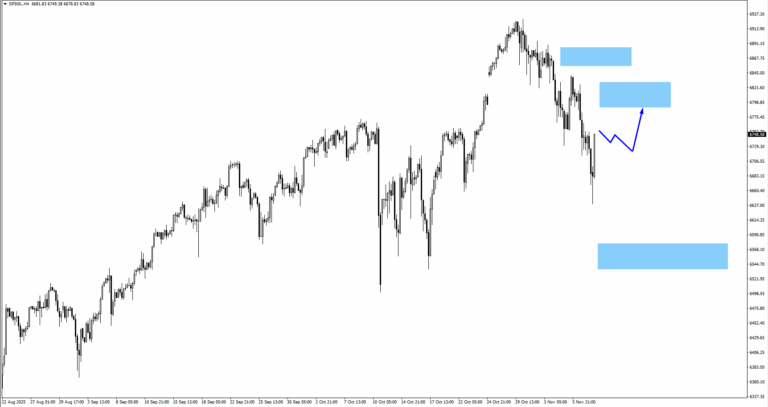
– The index extended gains after strong earnings, testing near-term resistance around 6810.
– Sustained strength above this level could open the way toward 6900, while initial support sits near 6640.
– Traders should watch CPI results for confirmation of sentiment direction.
Gold (XAUUSD)
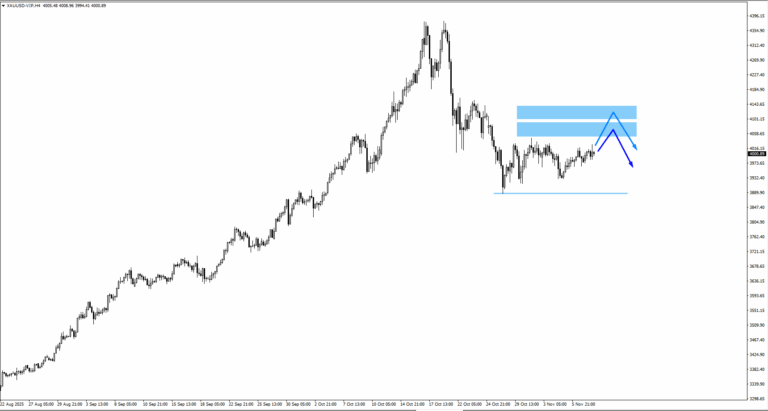
– Gold remains range-bound near $4,000, consolidating after last week’s rally.
– Bearish price action may emerge near $4,070 or $4,120.
– A weak CPI print could lift gold as the dollar softens.
GBPUSD
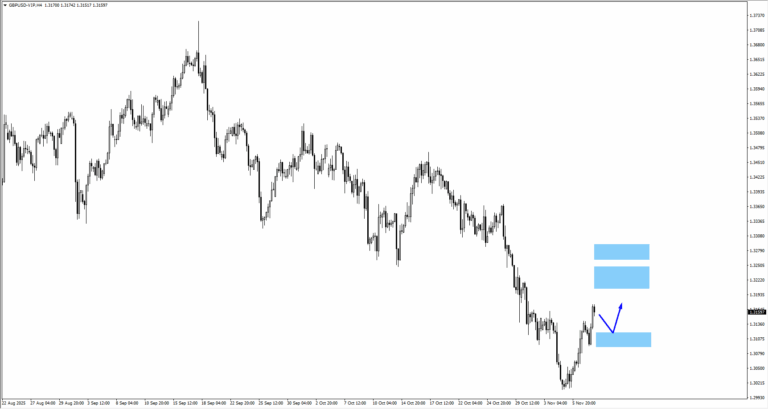
– Cable traded above 1.3120, with potential consolidation around 1.3100.
– UK GDP and next week’s CPI could set the tone for the pound’s short-term bias.
– Bullish momentum holds if prices sustain above 1.3225.
Bitcoin (BTCUSD)
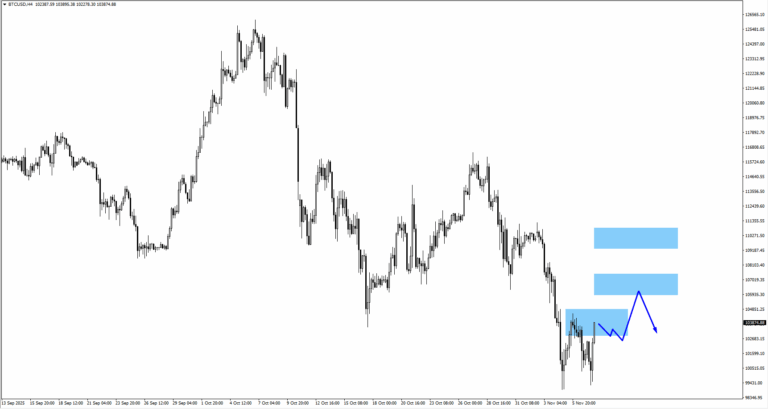
– Bitcoin rebounded from 100,770, eyeing 104,552 resistance.
– A clean break above that level could lead to a correction before further upside.
– Watch for risk-on cues following CPI data for volatility spikes.
Key Events This Week
13 November
1. UK GDP m/m, Forecast: 0.00%, Previous: 0.10%
Markets are watching for signs of stagnation in UK growth after Q3 softness. Any contraction could pressure GBP.
2. US CPI y/y, Forecast: NA, Previous: 3.00%
Inflation remains in focus for Fed policy outlook. A softer print could reinforce rate-cut expectations.
14 November
1. US PPI m/m
Tentative release; traders watching for producer-cost trends feeding into consumer inflation.
19 November
1. UK CPI y/y
Inflation remains key to Bank of England policy; elevated readings may dampen rate-cut bets.
For a full view of upcoming economic events, check out VT Markets’ Economic Calendar.
Market Snapshot
The S&P 500’s recent rally has been fuelled by a strong earnings season, but with valuations running hot and key inflation data due, traders are bracing for potential volatility. The upcoming CPI and PPI releases could determine whether optimism over corporate profits is enough to counter lingering concerns about interest rates, or if lofty valuations start to curb enthusiasm.
Should inflation remain subdued, risk sentiment could stay buoyant into year-end, keeping tech and financials in favour. A hotter reading, however, might quickly change the tone, boosting the US dollar and prompting investors to reassess their equity exposure ahead of December’s key policy meetings.
Japan’s coincident index registered at 114.6 in September, up from 112.8 previously
Gold Surges Above 4050
Bitcoin, Ethereum, and Ripple Show Signs of Recovery
Create your live VT Markets account and start trading now.
Japan’s leading economic index reaches 108 in September, exceeding expectations of 107.9
Japan’s leading economic index hit 108 in September, beating the prediction of 107.9. This shows a stronger performance than expected, indicating that the Japanese economy is holding up well despite global issues. This result may influence the Bank of Japan’s future monetary policy, especially concerning interest rates.
In foreign exchange, the US dollar gained strength after news that a government shutdown might be avoided. Currency pairs like EUR/USD and GBP/USD moved as traders adjusted their positions based on the latest data and political events.
Gold Prices Rise
Gold prices increased due to worries about global growth and shifting expectations for Federal Reserve interest rates. Cryptocurrencies, such as Bitcoin, Ethereum, and Ripple, began to recover as market sentiment improved. Traders should stay updated as economic indicators and geopolitical events change. Market conditions remain dynamic, influenced by economic data, central bank policies, and global events. These elements play a vital role in shaping trader sentiment and require careful monitoring of the economic landscape. With Japan’s strong index of 108 in September, there’s an increased chance of a policy shift by the Bank of Japan. As core inflation has remained close to 2.5% for the last two quarters, traders may want to use options to prepare for a stronger yen. This could mean targeting a drop below 145 for the USD/JPY pair in the upcoming weeks.US Dollar Strength
The recent strength of the US dollar, partly due to progress in avoiding a government shutdown, presents opportunities in major currency pairs. The Dollar Index (DXY) has risen to 107.5, its highest in three months. Derivative traders might consider selling EUR/USD call options to take advantage of this trend. This strategy serves as a smart hedge against further gains in the dollar while political negotiations continue. The rise in gold prices reflects growing concerns about global growth, especially after manufacturing PMI figures from the Eurozone fell below 50, indicating contraction. This trend supports safe-haven investments in gold, which has just surpassed $2,200 per ounce. Therefore, buying call options on gold futures could be a wise strategy to benefit from ongoing uncertainty around the Federal Reserve’s next interest rate decision. The recovery of cryptocurrencies is a tentative sign of renewed risk appetite, but caution is warranted. After crossing the $85,000 mark, we recall the sharp rallies following the downturn from 2022 to 2023, which often led to high volatility. Traders may want to use futures for direct exposure or opt for option spreads to manage risk effectively on these assets. Create your live VT Markets account and start trading now.Unclear Bank of Japan policies keep USD/JPY near 154.00 levels
USD/JPY is holding steady around 153.90, close to its eight-month high of 154.49 reached on November 4. The Yen faces pressure due to uncertainty surrounding the Bank of Japan (BoJ) policies.
BoJ board member Junko Nakagawa emphasized the need for cautious policymaking, especially given global trade uncertainties. Japanese corporate profits might struggle due to tariffs, but they are likely to improve as overseas economies recover and domestic consumption increases.
Bank Of Japan’s Policy Outlook
The latest summary from the BoJ meeting indicates uncertainty about future policies, although changes could happen if economic conditions stabilize. The BoJ is ready to adjust interest rates based on economic performance and market trends, particularly if businesses continue with active wage-setting. The US Dollar may gain strength as the US Senate moves forward with a government funding bill to end the shutdown. This bill requires final approval and President Trump’s signature and aims to extend enhanced Affordable Care Act subsidies. The value of the Japanese Yen is affected by BoJ policies and the yield differences between Japanese and US bonds. The Yen often appreciates during turbulent times due to its safe-haven status. The BoJ’s easing of its ultra-loose policy is also helping the Yen by reducing yield gaps with the US. The USD/JPY trading pair remains strong near the 154.00 level, partly because of the BoJ’s unclear stance on interest rates. This uncertainty from the central bank is creating significant market tension. Current conditions suggest that implied volatility could rise, making options strategies particularly relevant in the upcoming weeks.Inflation And Interest Rates
Recent data show Japan’s core inflation in October held steady at 2.9%, remaining above the BoJ’s target for more than a year. However, wage growth is not keeping up, supporting the cautious approach mentioned by Nakagawa. This makes an aggressive policy shift by the BoJ unlikely in the near term. On the US side, the Federal Reserve seems to be pausing after a series of rate hikes earlier this year, which keeps the dollar strong. The interest rate difference is crucial, with the gap between US and Japanese 10-year bonds at about 350 basis points. This situation continues to favor holding US Dollars over Japanese Yen. It’s important to recall the significant currency interventions seen in late 2022 and 2023, when the Ministry of Finance acted to support the yen. With current trading levels higher, the risk of a rapid intervention by authorities is increasing. This potential for a sudden shift suggests that long volatility strategies, like buying straddles, may be wise to capture significant price movements in either direction. Choosing a direction in the coming weeks is risky due to mixed signals. A more attractive approach might be to position for a breakout from the current trading range, as pressure on policymakers continues to mount. We will closely monitor any subtle changes in the statements from BoJ officials or unexpected inflation data as potential triggers. Create your live VT Markets account and start trading now.Gold prices rise above $4,050 during early European trading amid US economic uncertainty.
Gold prices have risen above $4,050 due to worries about global growth and uncertainty about the US economy. This rise was triggered by weak private job data and a low Consumer Sentiment Index from the University of Michigan. Lower interest rates may support gold prices because they make holding gold, which does not earn interest, less costly.
On the other hand, progress in resolving the US government shutdown could reduce the demand for gold as a safe investment. US senators are discussing a deal that might end this shutdown, which is the longest in history. Additionally, reduced tensions in US-China trade could also impact gold prices soon.
Investors Analyze Economic Data
Investors are looking at the US Consumer Price Index (CPI) inflation reports, which are expected to show a 0.2% increase in October. The core CPI is predicted to rise by 0.3% during the same period. Later this week, attention will shift to US Retail Sales data. Gold is showing positive signs, staying strong above the 100-day Exponential Moving Average, with a 14-day Relative Strength Index above 55. If gold trades consistently above $4,161, prices could rise to $4,200. However, trading below $4,000 might point towards a decline to $3,835 or even $3,705. As the week begins, gold is trading above $4,050 due to concerns about the US economy. The October jobs report indicated that only 150,000 jobs were added, which was below expectations. This weak data, alongside consumer sentiment hitting a low not seen since mid-2022, is leading traders to expect a Federal Reserve rate cut next month. Nonetheless, two major risks could push prices down. A potential agreement to end the longest government shutdown since the 2018-2019 break could lower the demand for safe-haven assets like gold. Furthermore, signs of improved relations between the US and China might also decrease gold’s attractiveness.Possible Effects of CPI Data
This week, we are focusing on the October CPI data, which will be released on Thursday, and Retail Sales on Friday. If inflation exceeds the expected 0.2% monthly rise, it could complicate the likelihood of a December rate cut, similar to how high inflation in 2022 forced the Fed to act aggressively. A stronger dollar could follow, creating immediate challenges for gold prices. For traders dealing in derivatives, this situation presents a classic opportunity for volatility. Buying call options with strike prices at $4,200 could be profitable if the economic data remains weak. This aligns with the current technical momentum, showing prices firmly above the 100-day moving average. However, if a deal to end the shutdown is confirmed, or if inflation data surprises positively, market sentiment could change quickly. In that case, we would consider buying put options to protect against a drop below the important $4,000 level. A significant dip below this mark could lead to a quick test of lower support near $3,835. Create your live VT Markets account and start trading now.VT Academy Unveils Free, Comprehensive Trading Education to Cater to Traders of all Levels

Sydney, Australia, 11 November 2025 – VT Academy, the educational platform from VT Markets, has officially relaunched its learning portal, marking the next chapter in its mission to close the global financial literacy gap and empower traders to thrive in an increasingly complex market environment.
Financial literacy remains a global challenge, with the OECD/INFE 2023 survey showing only 34% of adults in 39 countries meeting the minimum proficiency score of 70/100, which highlights that many are ill-equipped to navigate today’s complex financial environment. At the same time, the World Economic Forum reports 2.3 billion people remain underserved by traditional financial services, driving a surge in the adoption of alternative products such as cryptocurrencies. This shift underscores the urgent need for accessible, practical education to help individuals make informed decisions across both traditional and emerging financial markets.
These statistics emphasize the critical need for accessible, regionally relevant financial education. VT Academy is committed to addressing this gap by providing free tailored content that helps traders build skills, manage risks, and make informed decisions in today’s complex financial landscape.
This relaunch builds on the momentum of VT Markets’ The Trading Vault webinar series hosted by Ross Maxwell, Global Strategy Operations Lead at VT Markets, which has been widely praised for delivering clear, actionable insights to global traders. The series’ strong reception reaffirmed the demand for high-quality, accessible trader education and set the stage for VT Academy’s expanded curriculum.
“In today’s fast-moving financial landscape, knowledge is a trader’s most valuable edge,” said Ross Maxwell, Global Strategy Operations Lead at VT Markets. “The relaunch of VT Academy brings our commitment to the life by delivering tailored, practical education that empowers traders. From navigating market volatility to seizing opportunities in the digital asset space, we’re giving them the skills, strategies, and confidence to succeed,” he adds.
With a curriculum designed to cater to traders of all levels, VT Academy offers courses that range from beginner to advanced, providing localized, engaging, and practical content. As the global trading environment continues to evolve, VT Academy’s courses are continuously updated to reflect these changes.
GBP/USD falls to around 1.3150, marking the end of a three-day decline during Asian trading hours.
The Pound Sterling (GBP) is trading lower against the US Dollar (USD), sitting at about 1.3150 on Monday. This decline comes as the USD strengthens, with hopes rising that the US government shutdown may end soon. After three days of losses, GBP/USD saw a small recovery early Monday, as traders eagerly await a speech from Clare Lombardelli of the Bank of England.
Last week, the GBP hit a seven-month low near 1.3000 before bouncing back slightly. Concerns over market safety boosted the USD to its highest level in five months, impacting the GBP. This week has seen increased market volatility globally, mainly due to a drop in tech stocks driven by worries over high AI stock valuations, leading to a market correction.







