



OPEC+ plans output increase for December as WTI drops to $61.15
WTI crude oil prices dropped to about $61.15 during the Asian trading session. This decline is due to expectations that OPEC+ will increase oil output in December. They are proposing to raise production by an additional 137,000 barrels per day, but there is no agreement on how much to expand in the future.
US and Japan reach new trade agreement to enhance critical mineral supply security
US President Trump and Japan’s Prime Minister Sanae Takaichi met in Tokyo to talk about and sign a new agreement focused on securing critical minerals and rare earth supplies. Trump praised Takaichi for being Japan’s first female prime minister and noted her military equipment order.
The USD/JPY exchange rate is now at 152.40, down by 0.32%. The Japanese Yen, one of the most traded currencies globally, is influenced by Japan’s economic health, the Bank of Japan’s policies, and differences in bond yields between Japan and the US.
Role of the Bank of Japan
The Bank of Japan plays a key role in managing the currency. It sometimes intervenes to lower the Yen’s value. From 2013 to 2024, the BoJ’s loose monetary policy led to a weaker Yen, but recent changes now offer some support. A difference in policies between the ultra-loose stance of the BoJ and the actions of the US Federal Reserve has strengthened the US Dollar against the Yen. However, the BoJ’s plans to end its loose policy in 2024, along with interest rate cuts in other areas, is shrinking the gap in bond yields. The Yen is seen as a safe-haven investment, gaining strength during uncertain market times because it is considered stable compared to riskier currencies.Market Opportunities in the Options Market
The new agreement between the US and Japan is a positive step for their alliance, but our attention remains on the USD/JPY exchange rate. At 152.40, this level has often prompted direct action from Japanese officials. This was evident during the major intervention in the autumn of 2022, suggesting officials are ready to act if needed. This situation indicates that a period of low volatility may not last long, creating chances in the options market. The implied volatility for USD/JPY options has recently hit a low of 6.8% for one-month contracts, but it is likely to rise as the market anticipates a potential sudden move. We should consider strategies that benefit from significant price swings, especially given the increased risk of policy announcements from the Bank of Japan. We are also monitoring the decreasing yield gap between US and Japanese government bonds. After reaching over 400 basis points in 2023, the spread has been narrowing since the Bank of Japan ended its negative interest rate policy in March 2024. This important change makes borrowing Yen to buy Dollars less attractive, which has kept the Yen weak for years. The popular carry trade now looks riskier at current exchange rates. Recent data on speculative futures positions shows a high level of bearish bets against the Yen, with net short contracts exceeding 100,000. Such crowded positioning means that any sign of Yen strength could lead to a swift reversal, potentially causing a sharp decline in the USD/JPY rate. Create your live VT Markets account and start trading now.PBOC sets USD/CNY central rate at 7.0856, a decrease from previous levels
The People’s Bank of China (PBOC) set the USD/CNY reference rate at 7.0856, down from 7.0881. This change was lower than the Reuters estimate of 7.1029.
The PBOC aims to keep prices stable and boost economic growth. It also works on financial reforms to develop and open the financial market.
Central Bank Structure
The PBOC is state-owned and strongly influenced by the Chinese Communist Party. Mr. Pan Gongsheng serves as both the CCP Committee Secretary and Governor. The PBOC uses a variety of monetary policy tools, unlike Western economies. These tools include the seven-day Reverse Repo Rate, Medium-term Lending Facility, foreign exchange interventions, and Reserve Requirement Ratio. The Loan Prime Rate is the main interest rate, affecting loans, mortgages, and savings. There are 19 private banks in China, but the financial sector is mainly state-controlled. The two largest private banks, WeBank and MYbank, are backed by tech giants Tencent and Ant Group. Since 2014, fully private domestic banks can operate. Today’s stronger Yuan rate from the PBOC is a clear indication that the central bank is managing the currency’s value to counter market pressures that could weaken it. This shows their commitment to stability.Yuan Stability Signal
This action comes as the economy shows mixed recovery signs. In the third quarter of 2025, GDP growth was a modest 4.9%, while recent export figures dropped over 6% year-on-year. A stable currency helps prevent capital outflows and boosts confidence, especially when economic data isn’t strong. We have seen this approach before, especially during economic challenges in late 2023 and early 2024. Back then, the PBOC consistently fixed the daily rate stronger than market expectations to control the Yuan’s decline against a strong US dollar. This suggests that the current policy is a long-term strategy, not just a short-term reaction. For derivative traders, the reinforced ceiling on the USD/CNY pair makes selling call options or implementing bear call spreads appealing. With the central bank limiting volatility, there’s a higher chance of keeping the premiums from these options. We can expect that implied volatility for the pair will likely decrease soon. This move also affects equity derivatives. A stable Yuan often attracts foreign investment and calms local markets. This could provide support for Chinese equity indices, making it a good time to consider purchasing call options on ETFs that track the FTSE China A50 Index. Thus, we should not see this as a sign of a major Yuan surge, but rather as a way to maintain a trading range. In the coming weeks, we should focus on strategies that benefit from low volatility and a capped upside in the USD/CNY rate. The daily fix will be our key indicator of the central bank’s intentions. Create your live VT Markets account and start trading now.The US Dollar Index is trading around 98.70, declining due to expectations of an interest rate cut.
The US Dollar Index (DXY) has dropped to about 98.70 during the early Asian session on Tuesday. This decrease comes as the Federal Reserve is likely to lower interest rates by 25 basis points on Wednesday, bringing the benchmark rate down to 3.75-4.00%.
Investors are almost certain—about 97%—that this rate cut will happen, according to the CME FedWatch tool. Policymakers are discussing rate changes while the US government is facing a shutdown. They are also considering a slow labor market and inflation rates above the Fed’s 2% target.
US-China Trade Talks
The US Treasury Secretary has announced a preliminary agreement on critical issues between the US and China. A final deal may be reached during Trump’s meeting with Xi Jinping in South Korea, which could boost the US Dollar. The US Dollar (USD) is vital worldwide, making up over 88% of foreign exchange trading, influenced by the Fed’s policies like rate changes and quantitative easing. Quantitative easing, used during the 2008 financial crisis, usually weakens the Dollar, while tightening can strengthen it. These policies are key to the USD’s value globally. Today’s market is very different from when the US Dollar Index was below 99. As of October 28, 2025, the DXY is stable around 106.50, showing a significantly higher interest rate compared to earlier times. This illustrates how central bank policies have greatly evolved. The Federal Reserve now faces new challenges, with the benchmark rate at 4.50-4.75% and a decision expected next week. Recent data reveals that the core CPI for September 2025 remains at 3.1%, while unemployment has increased to 4.2%. This conflicting information makes the Fed’s next actions hard to predict, unlike the certainty of past rate cuts.Market Volatility and Trading Strategies
Traders are anticipating significant volatility ahead of next week’s Fed announcement, leading to the Cboe Volatility Index (VIX) rising above 18 this month. Unlike previous times when there was a 97% chance of a rate change, current trading suggests an equal split—50/50—between holding rates steady or raising them by another 25 basis points. This uncertainty provides chances for those betting on price swings. For traders unsure of the Fed’s move, strategies like straddles or strangles on currency ETFs like UUP could be wise to capitalize on large price changes in either direction. If the Fed signals an end to its rate hikes, buying DXY puts might be a smart choice for profiting from a potential dollar drop. On the other hand, call options would be the strategy if inflation data surprises the Fed into raising rates again. Apart from the Fed’s decisions, we are also tracking ongoing trade talks with the European Union about digital services taxes, which could add volatility. A favorable outcome may boost risk sentiment and diminish the dollar’s value as a safe-haven asset. However, if the talks fall through, the dollar could strengthen, presenting another factor for traders to consider. Recent CFTC data shows that large speculators have slightly decreased their net-long positions on the US dollar. This indicates that while many still prefer the dollar, confidence is decreasing ahead of the Fed’s important decision. Derivative traders should watch this trend closely for signs of a bigger shift in sentiment in the weeks ahead. Create your live VT Markets account and start trading now.Minoru Kiuchi emphasizes the need for stable foreign exchange movements to match economic fundamentals.
Japan’s Economics Minister Minoru Kiuchi stressed the need for stable foreign exchange (FX) rates that align with the economy’s fundamentals. He plans to examine how changes in FX rates affect Japan’s economy. A weak yen can raise domestic inflation by increasing the cost of imports, which can lower the purchasing power of households and businesses.
Although a weak yen can benefit exporters and encourage investment, stability in FX rates is essential. The government aims to tackle inflation-related living costs with an economic package. Currently, the USD/JPY is trading 0.27% lower at 152.47.
The Japanese Yen’s Value
The value of the Japanese Yen is shaped by Japan’s economic health, the Bank of Japan’s policies, the differences in bond yields, and market attitudes. The Bank of Japan’s approach to managing currency significantly impacts the Yen, often intervening cautiously in currency markets. The Bank of Japan’s previous ultra-loose monetary policy created wider yield gaps with other central banks, favoring the US Dollar. However, this recent shift away from such a policy is now helping the Yen. As a safe-haven currency, the Yen tends to attract investment during market turmoil, enhancing its value against riskier currencies. Minister Kiuchi’s focus on stability delivers a clear message to the market. His comments serve as a verbal intervention to encourage traders to be cautious about pushing the dollar much higher against the yen. This raises the risk in the market for the coming weeks. With the USD/JPY around 152.50, these warnings are significant, especially since Japan’s core inflation for September 2025 remained at 2.7%. Additionally, the US-Japan 10-year yield gap is over 400 basis points, providing a strong reason for the yen’s weakness. This data supports the minister’s concerns regarding rising import costs affecting households.Strategies for Market Uncertainty
We recall the intense interventions in 2022 and 2024 when the yen weakened past similar points. The market remembers these sudden, significant yen moves that followed similar official warnings. This historical context suggests that the Ministry of Finance may respond quickly if they believe the yen’s decline becomes too chaotic. Amid this increased uncertainty, we should explore strategies that can profit from large price shifts in either direction. One approach could be to buy volatility through options, like a long straddle on USD/JPY, which can benefit from a sharp movement, whether from official intervention pushing the pair lower or a breakthrough to higher values. For those holding long USD/JPY positions, now is the time to secure profits. Buying out-of-the-money put options can effectively hedge against a sudden change in direction. This provides a safety net if the government decides to take direct action rather than relying solely on verbal warnings. Looking forward, we must closely monitor upcoming US inflation reports and any shifts in the Bank of Japan’s tone. The yield differential is the key driver, so any data that could influence Federal Reserve policy is crucial. A sudden rise in global market stress might also drive investment towards the yen, creating an unpredictable factor for its strength. Create your live VT Markets account and start trading now.UK BRC Shop Price Index falls to 1% from 1.4% year-on-year
The UK’s BRC Shop Price Index saw a decrease in prices, falling from 1.4% to 1% in October. This indicates a shift in pricing trends in British retail.
In the gold market, prices bounced back from a two-week low. This change was influenced by a weaker USD and hopes for interest rate cuts from the Federal Reserve.
Surge In Cryptocurrency
In cryptocurrency news, the official Trump memecoin surged over 20% after American Bitcoin purchased 1,414 BTC, worth more than $160 million. Market sentiment changed as confidence in the USD declined, leading investors to switch to assets like gold and Bitcoin. The USD/CAD pair remained below 1.4000 due to the Federal Reserve’s cautious approach. In energy markets, WTI crude oil prices fell to around $61.00, with expectations of OPEC+ increasing production in their next meeting. The latest UK shop price index shows inflation slowing to 1.0%, confirming a trend of decreasing prices we’ve seen for months. This follows the Consumer Price Index data from the ONS for September, which reported a headline rate of 2.1%, down from 2.4% the previous month. For traders, this easing price pressure suggests the Bank of England might keep interest rates steady, which could limit gains in the GBP/USD pair, currently near 1.3300.Dominant Market Driver
The main force in the market is the expectation that the Federal Reserve will cut rates in its next meeting. According to the CME FedWatch Tool, futures markets show an over 85% chance of a 25-basis-point cut. This is leading to widespread weakness in the US Dollar and contributing to gains in pairs like EUR/USD and AUD/USD. The Fed’s cautious stance is supportive of gold, even though progress in US-China trade talks may limit its potential. We’re keeping an eye on whether gold can hold support at $3,973 and regain the 21-day moving average near $4,061. Since gold broke its all-time highs in 2024, dips related to risk-on sentiment have often presented buying opportunities. In energy, crude oil is showing signs of weakness, with WTI falling towards $61 a barrel. This drop is not due to a lack of demand but signals that OPEC+ is likely to boost production quotas at their next meeting. After maintaining production levels for much of the year, this would represent a significant policy change, potentially driving prices down in the short term. We’re also seeing signs of a “Great Debasement” trade as trust in the US Dollar wanes, pushing investors toward alternatives. The recent $160 million Bitcoin purchase by American Bitcoin exemplifies this shift. This trend suggests that call options on assets like Bitcoin and gold could be smart strategies for anticipating further long-term devaluation of the US Dollar. Create your live VT Markets account and start trading now.Week Ahead: Rates, Risk, And Rotation

Markets begin the week on a cautious note as traders brace for a packed schedule of central bank meetings, featuring the Federal Reserve, the Bank of Japan, and the European Central Bank. The US Dollar Index (USDX) holds near 98.80 after retreating from 99.28, while gold steadies around USD 4,190 following a modest correction.
The coming days could bring heightened volatility if the Fed delivers its much-anticipated 25–50 basis-point rate cut, and if the Bank of Japan hints at a possible lift-off in December. Meanwhile, equity markets will keep a close watch on the quarterly earnings reports from major tech giants: Apple, Microsoft, Alphabet, Meta, and Amazon, which could set the tone for broader market sentiment.
Central Banks In Focus
Federal Reserve: Policy Pivot Approaching
Investors are largely expecting a 25-basis-point rate cut from the Fed at its October meeting, though a 50-basis-point move remains on the table. The upcoming Advance GDP figures (forecast at 3.0% quarter-on-quarter versus 3.8% previously) and Core PCE data (expected at 0.2% month-on-month) will be key in determining whether the Fed’s dovish stance remains warranted.
A softer tone from the Fed could add further downward pressure on the dollar while supporting gold and risk assets. However, traders may stay restrained until Chair Jerome Powell’s post-meeting comments shed light on how aggressive the easing cycle might be.
Bank Of Japan: December Hike In Sight
Japan’s inflation remains above target, with September’s core CPI holding at 2.9% year-on-year and the October services PMI coming in at 52.4, evidence that domestic demand remains firm. On the other hand, manufacturing activity continues to lag, with the PMI slipping to 48.3, justifying the Bank of Japan’s cautious tone.
Markets now expect a “hawkish hold” at this week’s meeting, with the first interest rate increase, potentially to 0.75%, becoming a more probable scenario in December.
Should the Fed begin cutting rates while the BoJ tightens policy later in the year, the resulting divergence could narrow the yield gap between the US and Japan, placing additional downward pressure on the USD/JPY pair as we head towards year-end.
Key Symbols To Watch
– XAUUSD
– USDJPY
– SP500
– USOIL
– USDX
Market Movements Of The Week
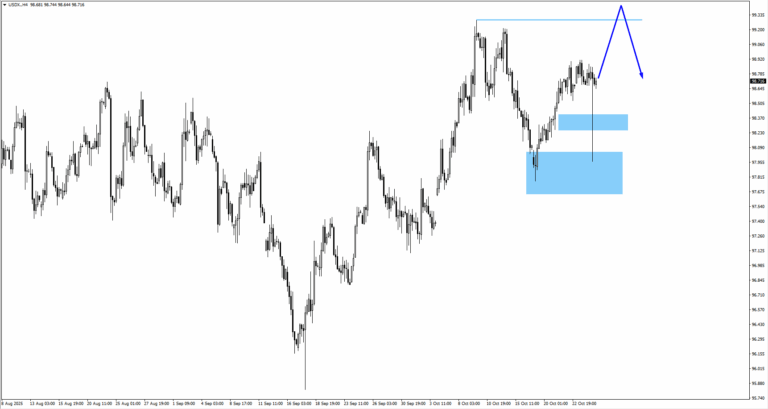
USDX is currently around 98.80, facing resistance at 99.28 and 99.80. A dovish Fed cut could push USDX below 98.50. However, a surprise 25 bps cut or cautious tone may stabilise it above 99.00.
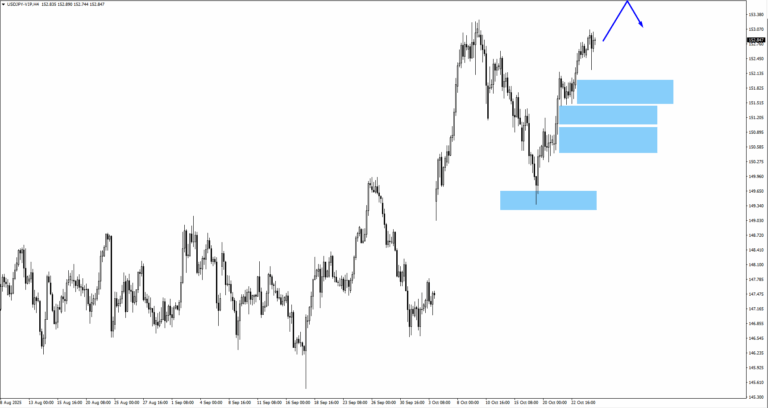
USDJPY is trading above 153.20; a hawkish BOJ could drive the pair lower toward 151.80. If the Fed cuts aggressively, downside pressure could intensify. Resistance seen near 153.80–154.00 if BOJ holds steady.
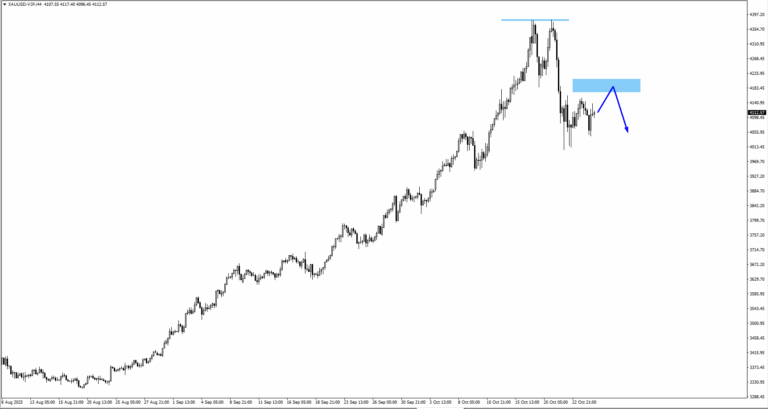
Gold retreated after testing USD 4,190 resistance. A move above USD 4,200 could reopen gains toward USD 4,275. Support lies near USD 4,000. Watch PCE data for direction.
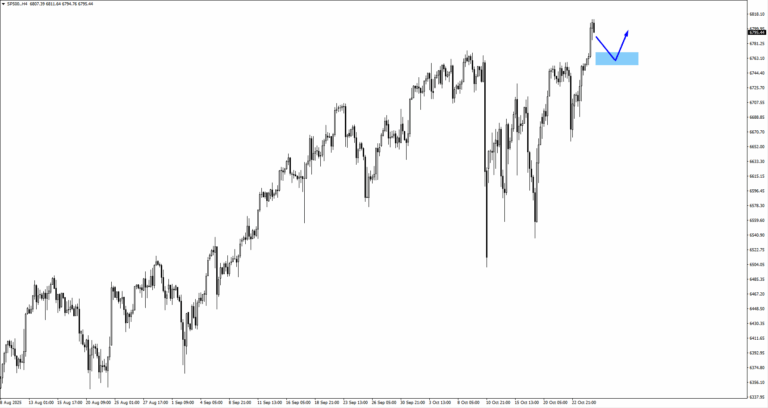
SP500 printed new highs with immediate support at 6,750. Earnings from big tech will guide sentiment. Sustained breakout above 6,800 keeps the uptrend intact.
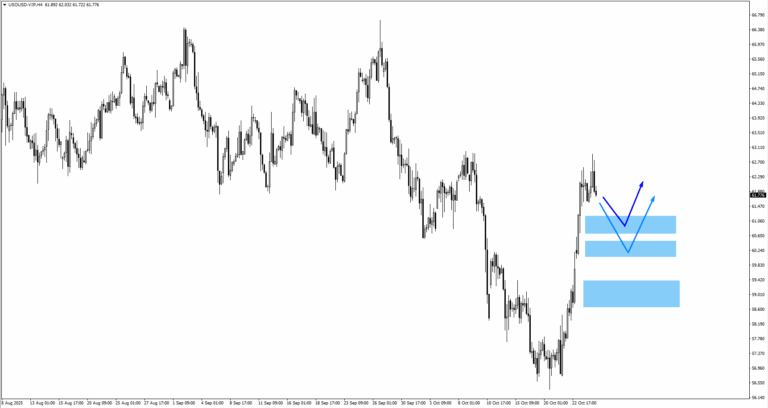
USOil is consolidating near $61.00–60.30 support zone. A break above $62.50 could target $65.00. Demand concerns remain tied to global growth data.
Key Events This Week
27 October
1. RBA Gov Bullock Speaks
Watch tone for policy bias amid inflation pressures.
29 October
1. Australian CPI y/y, Forecast: 3.10%, Previous: 3.00%
A hot print could extend AUD gains ahead of the Nov meeting.
2. Canadian Overnight Rate, Forecast: 2.25%, Previous: 2.50%
BoC likely to pause. Focus on forward guidance.
30 October
1. US Federal Funds Rate, Forecast: 4.00%, Previous: 4.25%
25–50 bps cut expected. The tone will steer the USD reaction.
2. Japanese Policy Rate, Forecast: 0.50%, Previous: 0.50%
Hawkish hold expected. Watch for December hints.
3. US Advance GDP q/q, Forecast: 3.00%, Previous: 3.80%
Growth cooling could validate Fed easing bias.
4. European Main Refinancing Rate, Forecast: 2.15%, Previous: 2.15%
ECB on hold. Focus on inflation commentary.
31 October
1. US Core PCE Price Index m/m, Forecast: 0.20%, Previous: 0.20%
Key inflation gauge for Fed trajectory.
Gold falls towards $4,000 during early Asian trading after US-China trade agreement news
Gold prices dropped to a two-week low, nearing $4,000 early on Tuesday in Asia. This decline followed a US-China trade agreement that has traders focused on the Federal Reserve’s upcoming decision on Wednesday. If the trade deal goes through, it could change how investors view gold as a safe-haven asset.
The US Treasury Secretary announced that the agreement would prevent a 100% tariff on Chinese imports and include a deal for TikTok. Trump and Xi Jinping are scheduled to meet in South Korea on Thursday during an Asian summit. Meanwhile, markets are anticipating a US interest rate cut, with a 97% chance of a quarter-point reduction, which could help support gold prices.
Gold As A Safe Haven
Gold has been a reliable store of value throughout history and is often seen as a safe-haven investment. In 2022, central banks bought 1,136 tonnes of gold worth $70 billion to strengthen their currencies. Gold usually rises when the US Dollar and Treasuries weaken. During geopolitical tensions or fears of a recession, gold prices tend to increase, while a stronger dollar keeps gold prices steady. Many factors influence gold prices, with global economic conditions being crucial. Gold is currently retreating to a two-week low near $4,000. This is due to two opposing forces in the market. Positive news about a US-China trade framework is putting pressure on gold prices. However, the expected interest rate cut from the Federal Reserve this Wednesday provides some support. The potential trade deal is important because trade disputes have affected global growth for years. In 2023, US goods imports from China fell by over 20%. A formal agreement could lead to a significant rally in equities, pulling money away from gold investments. Traders may consider shorting gold futures or buying put options ahead of the Trump-Xi meeting on Thursday. On the other hand, the market is giving a 97% chance that the Fed will cut interest rates this week. With core inflation finally dropping below 3% this year and recent economic growth showing signs of slowing, a rate cut seems likely. Lower interest rates make cash and bonds less appealing, which could draw some investors towards gold.Upcoming Market Volatility
This situation sets the stage for significant volatility in the coming days, with two strong, opposing forces at play. The Fed’s decision on Wednesday and the outcome of the presidential meeting on Thursday will likely cause sharp fluctuations in the gold price. Traders in derivatives might explore strategies to profit from significant price movements in either direction. It’s also important to keep in mind gold’s inverse relationship with the US Dollar and stocks. The S&P 500 has performed very well over the last 18 months, which helps explain some of the challenges gold has faced even at these levels. However, the large gold purchases made by central banks—reaching record levels since 2022—provide a solid long-term support for gold prices. Create your live VT Markets account and start trading now.GBP/USD rebounds from 1.3300 after six days of decline, approaching the 200-day EMA
GBP/USD has bounced slightly from the 1.3300 level, marking its first upward movement in six trading sessions. However, the upcoming interest rate decision from the Federal Reserve is expected to keep trends steady, with a likely quarter-point rate cut anticipated on Wednesday.
The currency pair faces pressure, remaining below the 50-day EMA at 1.3428 and finding support near the 200-day EMA at 1.3278. Despite a small rebound from last week’s low of 1.3250, the long-term downward trend continues. Momentum indicators like the RSI are around 43, indicating a lack of movement.
Pound Sterling Background
The Pound Sterling (GBP) is the oldest currency in the world and ranks fourth in global foreign exchange trading, making up 12% of transactions. The Bank of England’s monetary policy, especially regarding interest rate changes, significantly influences the currency’s value, with a goal of keeping inflation at 2%. Economic data releases, such as GDP and employment figures, also affect GBP’s strength. A positive Trade Balance boosts the Pound by increasing demand for British exports from international buyers. On the other hand, negative economic data or a Trade Balance deficit can lead to depreciation. GBP/USD has struggled to find direction, hovering around the 1.2450 level. A recent attempt to test the 50-day Exponential Moving Average (EMA) at 1.2510 was quickly rejected, indicating that sellers remain in control during rallies. This price action keeps the pair in a narrow range, similar to the volatile periods experienced back in 2019 before the Fed began its cutting cycle. Currently, the key focus is on the growing gap between the Bank of England (BoE) and the Federal Reserve. With UK inflation recently reported at 2.5% and third-quarter GDP showing a slight contraction of 0.1%, the BoE faces pressure to consider rate cuts by the end of the year. In contrast, the US economy appears more robust, allowing the Fed to maintain higher interest rates for a longer period.Strategies for Derivative Traders
For derivative traders, the ongoing policy uncertainty suggests that buying volatility could be a smart strategy. Options straddles or strangles might benefit from a significant breakout, especially with the upcoming BoE meeting in November. The current implied volatility for GBP/USD is relatively low at 6.8% for 3-month options, which may not fully reflect the risks of a dovish stance from the BoE. Key technical levels are being monitored closely, with immediate support around 1.2380, the low from early October. A decisive break below this level could open the door to the 1.2250 mark, a level not reached since the economic uncertainty of mid-2024. Momentum indicators are bearish but not yet oversold, indicating that further downside is possible. Any recovery in prices will likely meet strong resistance around the 1.2510 region, where the 50-day EMA aligns with previous support. To change the current bearish outlook, a sustained move above 1.2600 would be necessary. Such a rally would likely require an unexpectedly weak US jobs report or a strong shift in direction from the BoE, neither of which is considered likely at this time. Create your live VT Markets account and start trading now.USD/JPY faces slight declines around 152.75 due to trade deal optimism
The USD/JPY pair saw some losses, trading around 152.75 in early Tuesday’s Asian session. Optimism about a possible US-China trade deal might keep these losses in check. US President Trump will meet Japan’s Prime Minister Sanae Takaichi, and the Federal Reserve’s interest rate decision is expected on Wednesday.
A preliminary agreement between the US and China aims to avoid new tariffs and secure the supply of rare earth minerals to the US. Trump has expressed hope for a deal with China, which could ease tensions. Positive developments in trade could boost risk-taking, which often weakens safe-haven currencies like the Japanese Yen.







