



Pound Sterling remains stable against major currencies after August GDP and factory data release
NZD/USD stabilizes around 0.5750 after a seven-day decline amid US-China trade tensions
NZD/USD is stable around 0.5750, benefiting from ongoing US-China trade tensions, while the US Dollar struggles due to market caution. After a seven-day decline, the pair is trading near 0.5740 in early European trading on Thursday.
US President Donald Trump described the situation as a trade war with China, although US Treasury Secretary suggested pausing high tariffs. Fed Chair Jerome Powell mentioned that the central bank plans another quarter-point rate cut this month, complicating the US Dollar’s position.
CME FedWatch Tool Outlook
The CME FedWatch Tool indicates a 96% chance of a Federal Reserve rate cut in October and a 95% chance of another in December. Meanwhile, the NZD could weaken further as the Reserve Bank of New Zealand (RBNZ) keeps a dovish outlook. The RBNZ has hinted at possible easing based on incoming data, expecting a rate cut in November and a drop to 2.0% by 2026. Economic ties with China and dairy prices heavily influence the NZD, significantly affecting New Zealand’s trade. During times of optimism, the NZD tends to strengthen, but it weakens amid uncertainty, as investors seek safer assets. Macroeconomic data will play a key role in determining whether the NZD strengthens or weakens based on New Zealand’s economic performance. As of October 16, 2025, the NZD/USD pair has a slight bounce near 0.5750, but this should not be seen as a sign of strength for the Kiwi. This modest gain is mostly due to a weaker US Dollar, pressured by ongoing trade tensions and a high likelihood of a Federal Reserve rate cut this month. The pair has been in a downward trend since failing to stay above 0.61 earlier this year; this pause looks like a temporary blip.Central Banks Race to Cut Rates
We are observing a race between central banks keen to lower interest rates. The CME FedWatch Tool shows a 96% chance of a Fed rate cut, driven by US inflation data from the second quarter of 2025, which indicated a drop to 2.9%. This makes holding US Dollars less appealing, significantly impacting the currency’s current struggles. At the same time, the Reserve Bank of New Zealand holds a dovish stance, with expectations for a rate cut in November. New Zealand’s economic links to China pose a major risk, especially as the trade war continues. In 2024, the US trade deficit with China narrowed by 8%, but this reduced overall trade volume, harming Kiwi exporters. Commodity prices are also putting pressure on the New Zealand Dollar. The Global Dairy Trade (GDT) index, crucial for New Zealand’s main export, has fallen by 4.1% over the last three months. This decline in dairy prices mirrors a trend from mid-2023, directly affecting the country’s export revenue and weakening the NZD’s fundamentals. Given the competing weaknesses and uncertainty, we think options strategies will be the best way to manage risks in the weeks ahead. For traders expecting the downtrend to continue, buying NZD/USD put options with a date past the RBNZ’s November policy meeting is a viable opportunity. This lets us profit from a potential drop while clearly defining our maximum risk based on the premium paid. For a more cost-effective strategy, we could implement a bear put spread. This involves buying one put option while selling another at a lower strike price, lowering the upfront costs. This method is well-suited for aiming at a cautious decline, perhaps targeting the 0.5600 support level we tested earlier this year. Create your live VT Markets account and start trading now.Investors await India’s decision on Russian oil as the rupee struggles against the US dollar
The Indian Rupee (INR) is holding steady against the US Dollar (USD) as we wait to see how India will respond to President Donald Trump’s statements about stopping Russian oil purchases. The relationship between the US and India is tense because of tariffs imposed by Washington on imports from India related to Russian oil trade.
Minutes from the Reserve Bank of India (RBI) suggest that further interest rate cuts may happen due to inflation concerns. Meanwhile, the US Dollar is losing value, partly because of expectations that the Federal Reserve (Fed) will cut interest rates due to worries in the labor market.
Impact of US Government Shutdown
The US government is now in its third week of shutdown, which is costing around $15 billion each week. This situation could escalate trade tensions between the US and China, with Trump urging China to stop buying oil from Russia. The USD/INR pair is showing weakness, remaining below the 20-day Exponential Moving Average (EMA) of 88.58. The Indian Rupee is facing pressure from trade deficits and changes in oil prices, which can affect the demand for USD. Additionally, inflation and seasonal demand for the US Dollar influence the Rupee’s value. The growth of the Indian economy is attracting foreign investments, which also affects the Rupee as the demand for Dollars changes its exchange rate. Currently, the market is in a holding pattern, waiting for a clear statement from New Delhi regarding Russian oil. This uncertainty has kept the USD/INR pair around the 87.70 mark. Any sudden policy change from India could significantly impact the Rupee.Implications of New Delhi’s Decision
The stakes are high because India became one of Russia’s largest oil customers after 2022. In fiscal year 2024, India imported nearly 1.6 million barrels of Russian crude each day. If India stops these purchases, it would need to buy more expensive oil from other sources, likely increasing demand for US Dollars and weakening the Rupee. With this important event coming up, we can expect implied volatility for USD/INR options to rise shortly. Traders might want to consider strategies that benefit from big price movements, regardless of the direction. A long straddle or strangle with near-term options could be a good way to prepare for a potential breakout after India makes its official announcement. If New Delhi confirms a halt to Russian oil imports, we can expect the USD/INR to jump sharply. This move would likely push the pair above the 20-day EMA at 88.58 and towards the previous range near 89.00. Buying call options or call spreads would be an effective way to capitalize on this potential scenario. On the other hand, if India chooses to ignore the US pressure, the Rupee might experience a temporary rally, with the pair moving towards the August low of 87.07. However, this uptrend could be short-lived due to the RBI’s dovish outlook, especially after September’s inflation numbers dropped to 4.8%. The market is already expecting possible rate cuts from the RBI, which may limit any significant appreciation of the Rupee. We also need to acknowledge the ongoing weakness of the US Dollar, which is under pressure from the government shutdown and strong expectations for a Fed rate cut. The market is anticipating a 94.6% chance of a 50-basis-point cut, which is impacting the dollar index. This scenario makes shorting USD/INR more complicated, as the overall dollar weakness could offset any Rupee-specific issues. Create your live VT Markets account and start trading now.The UK’s Index of Services holds steady at 0.4% for three months.
The UK’s Index of Services held steady at 0.4% over the three months leading to August. During this time, the UK GDP rose by 0.1%, which met initial expectations.
Manufacturing In The UK
In August, UK Manufacturing Production exceeded predictions, helping to support the Pound Sterling as the US Dollar continued to recover. In financial markets, the EUR/USD stayed above 1.1650 as traders awaited central bank meetings. Gold remained strong, trading close to an all-time high due to economic worries, including a potential US government shutdown and ongoing US-China trade issues. Meanwhile, Dogecoin stabilized around $0.19, noted a 5% drop this week, but on-chain data suggested it might recover soon. After a 2.7% drop, the S&P 500 showed an “inside day” pattern, indicating market uncertainty despite some recent recoveries. This raises questions for traders about the right time to re-enter the market. This financial information is for educational purposes only. Invest wisely, as all investments have risks. Conduct thorough research before making decisions. The views shared do not necessarily represent FXStreet’s official stance or that of its advertisers. With the UK Index of Services showing no growth, the economy appears stagnant. This follows the technical recession at the end of 2023, indicating any recovery has been quite weak. Derivative traders should think about using protective put options on the FTSE 100, as negative data could easily push the index lower.Central Bank Divergence
We need to pay attention to the differing directions of central banks. The European Central Bank is indicating it’s nearing the end of its rate-cutting cycle, which started in mid-2024. This hints at a stronger Euro. On the other hand, ongoing concerns about US growth are leading to expectations for more cuts from the Federal Reserve, which supports the EUR/USD staying above 1.1650. Uncertainty is high in the US stock markets, evident in the S&P 500’s unpredictable trading patterns. Tensions from the upcoming 2024 election and ongoing trade disputes have kept the CBOE Volatility Index (VIX) around 19, significantly above its average. This environment favors traders using options strategies like straddles to profit from anticipated price fluctuations. The search for safety is pushing gold prices toward their all-time high of $2,500 an ounce. This trend is fueled by consistent gold purchases by central banks, which hit record levels in 2024 and continue into 2025. Buying call options on gold futures seems like a smart move to take advantage of this rising trend. Despite weak domestic data, the British Pound remains strong above 1.3400 against the US Dollar, showing resilience. In Australia, rising unemployment hasn’t yet forced the Reserve Bank of Australia to cut rates, which supports the Aussie dollar. This situation makes currency pairs like AUD/JPY appealing, especially as it approaches 98.50. Create your live VT Markets account and start trading now.UK manufacturing production declines by 0.8% year-on-year, surpassing predictions
In August, the UK’s manufacturing production fell by 0.8% compared to last year, which is better than the predicted drop of 1%. This indicates a small improvement for the manufacturing sector.
Financial markets are reacting to various news articles. The GBP/USD currency pair stayed above 1.3400 after the UK data was released. Gold prices remain high due to worries about the global economy, such as a possible US government shutdown and ongoing US-China trade issues.
Dogecoin Price Stability
In other news, Dogecoin’s price has stabilized around $0.19 this week. An on-chain report shows that major investors, or whales, are accumulating the cryptocurrency. If it holds this support level, there may be a chance for recovery. Recent analyses shed light on global economic trends and future market movements. Discussions include the European Central Bank (ECB) decisions, oil inventory updates, and the impact of rising unemployment in Australia. The trading patterns of Dogecoin and the S&P 500 are also explored for emerging trends. There are detailed guides on top brokers that focus on costs, leverage, and regional specifics. These resources aim to help traders make informed decisions as they navigate various financial markets through 2025. The better-than-expected UK manufacturing data is providing some support for the Pound, keeping GBP/USD stable above the 1.3400 level for now. However, September data shows UK inflation stubbornly above 3% while GDP growth stagnates, making any strength in the Pound likely short-lived.US Dollar Outlook
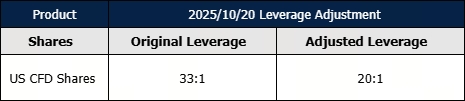
Looking ahead, we think the US Dollar will remain under pressure in the coming weeks. The latest Non-Farm Payrolls report added only 155,000 jobs, with an expectation of 190,000. This weak labor data gives the Federal Reserve a reason to maintain a dovish approach, increasing market expectations for potential rate cuts in early 2026. Fears of a possible US government shutdown and ongoing trade tensions are causing investors to flock to safe assets like Gold. We saw a similar trend during the banking turmoil in 2023, and Gold is nearing its record high of over $2,400 per ounce reached in 2024. This suggests that while many are investing in Gold, it remains a wise choice to hedge against market risks. In this climate, we are considering options strategies to manage the expected market fluctuations. Buying puts on the US Dollar Index (DXY) or call options on Gold could be effective ways to bet on continued Dollar weakness and risk aversion. Implied volatility in major currency pairs is on the rise, signaling that the market anticipates larger price movements ahead of upcoming central bank announcements. We are also closely monitoring EUR/USD, which is holding firm above 1.1650. The ECB’s comments suggest it may be finished with rate cuts, contrasting sharply with the Fed’s current mood. This difference in policies could provide more upside for the pair as we approach the end of the year. Create your live VT Markets account and start trading now.Modifications on Leverage for Shares (33 > 20) – Oct 16 ,2025
Dear Client,
To provide a favorable trading environment to our clients, VT Markets will modify the trading setting of all Shares products. Please refer to the following details:
1. All US Shares products leverage will be adjusted to 20:1.
2. MT5 All Shares products dynamic leverage: New positions opened within 30 minutes before market closing and after market opening will start with a leverage of 5:1. After the mentioned period, the leverage will be resumed to original leverage and will not be adjusted back to 5:1.
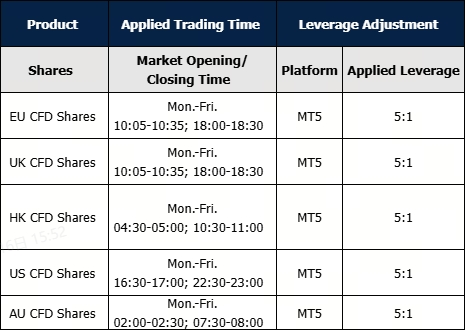
The above data is for reference only, please refer to the MT4/MT5 software for specific data.
Friendly reminders:
1. All specifications for Shares CFD stay the same except leverage during the mentioned period.
2. The margin requirement of the trade may be affected by this adjustment. Please make sure the funds in your account are sufficient to hold the position before this adjustment.
If you’d like more information, please don’t hesitate to contact [email protected].
In August, UK industrial output increased by 0.4%, surpassing expectations of 0.2%
In August, the UK’s industrial production rose by 0.4% compared to the previous month, which was better than the expected increase of 0.2%.
The UK’s gross domestic product (GDP) also grew by 0.1% in August, meeting forecasts. Manufacturing production performed even better that month, boosting the Pound Sterling during a stable recovery of the US Dollar.
Exchange Rate Movements
The EUR/GBP exchange rate is falling, now at 0.8673, following strong UK economic data. The GBP/USD has rebounded to above 1.3400 after the UK data was released. Gold remains strong, trading near record highs amid economic uncertainty and rising geopolitical risks. Ongoing trade tensions with China and possible US government shutdowns have increased expectations for Federal Reserve rate cuts, supporting gold prices. Dogecoin is stabilizing around $0.19 after dropping nearly 5% this week. There is significant buying by large holders, hinting at a possible price recovery if current support levels hold. The S&P 500 had an “inside day” after recent volatility, showing market indecision despite a temporary bounce. Recent trends highlight the persistent uncertainty and the need for caution.Potential Impact on Currency and Commodity Strategies
The unexpected strength in UK industrial production suggests the Pound could continue to rise. This comes after a period of slow growth throughout much of 2024, making this increase significant. We might consider buying call options on GBP/USD, aiming for a rise above 1.3400, or put options on EUR/GBP to capitalize on the difference. At the same time, the market anticipates a dovish Federal Reserve, which is putting pressure on the US Dollar and supporting assets like Gold. The recent US jobs report for September showed only 140,000 new jobs added, weaker than expected, suggesting the Fed may need to cut rates soon. This situation favors strategies that profit from a weaker dollar, like buying calls on Gold or the Euro. Overall uncertainty remains high due to ongoing geopolitical risks and trade tensions, which is why Gold is trading near its all-time highs. The VIX, a measure of stock market volatility, has been above 20 for the past month, indicating investor nervousness after recent tariff fluctuations. This suggests buying protective put options on major indices like the S&P 500 could be a smart way to guard against sudden downturns in the near future. Create your live VT Markets account and start trading now.In August, the UK’s trade balance with non-EU countries was £-8.294 billion, an improvement from £-10.158 billion.
The United Kingdom had a trade deficit of £8.294 billion in August with countries outside the European Union. This is an improvement from the previous deficit of £10.158 billion. This information is part of a larger economic report that also noted a 0.1% rise in UK GDP and better-than-expected Manufacturing Production for the month.
The GBP/USD exchange rate stayed above 1.3400 after the economic report, as investors reacted to a recovery in the US Dollar. In the financial markets, gold continued to perform well, influenced by ongoing US-China trade tensions and geopolitical risks.
Dogecoin Price Stabilization
Dogecoin’s price stabilized around $0.19, after a 5% drop earlier in the week. Support came from significant whale accumulation, which offers a positive outlook for the cryptocurrency. Meanwhile, the S&P 500 had an “inside day” after some turbulent trading sessions, indicating uncertainty among traders. Financial experts assessed forex brokers, pointing out different services available for traders in 2025. It’s crucial to conduct personal research when investing, as the economic indicators and market trends mentioned come with risks and potential losses. The smaller-than-expected UK trade deficit for August 2025 suggests the economy is performing better than anticipated. This is supported by other positive data, like recent manufacturing figures. With UK inflation at 3.1% last month, it may encourage the Bank of England to keep rates steady, which is beneficial for the pound.Buying Call Options
We believe purchasing call options on GBP/USD can be a smart move, aiming for strikes above the 1.3400 level noted in recent analysis. The recent strength leads to dips being bought, so using options can help manage downside risk while taking advantage of potential gains. Consider short-dated contracts to leverage the current momentum. The EUR/USD situation revolves around the differences in central bank policies, which are becoming clearer. The Federal Reserve’s September 2025 meeting indicated a continued cautious approach, while some ECB members are resisting further rate cuts. This policy divergence could help support the euro against the dollar. Gold remains a key focus due to the search for safety and a weaker outlook for the US dollar. The recent drop in US 10-year Treasury yields to below 3.5% makes holding bonds less attractive compared to gold. This situation resembles what we observed in 2020, right before gold surged. We must also recognize the broader market uncertainty, seen in the recent volatility of the stock market due to trade news. The VIX, which measures market volatility, has been high, staying above 20, indicating that traders are still uneasy and anticipating sudden movements. This situation suggests that buying protection, like put options on major indices, could be a wise hedge for any long positions. Create your live VT Markets account and start trading now.Dividend Adjustment Notice – Oct 16 ,2025
Dear Client,
Please note that the dividends of the following products will be adjusted accordingly. Index dividends will be executed separately through a balance statement directly to your trading account, and the comment will be in the following format “Div & Product Name & Net Volume”.
Please refer to the table below for more details:
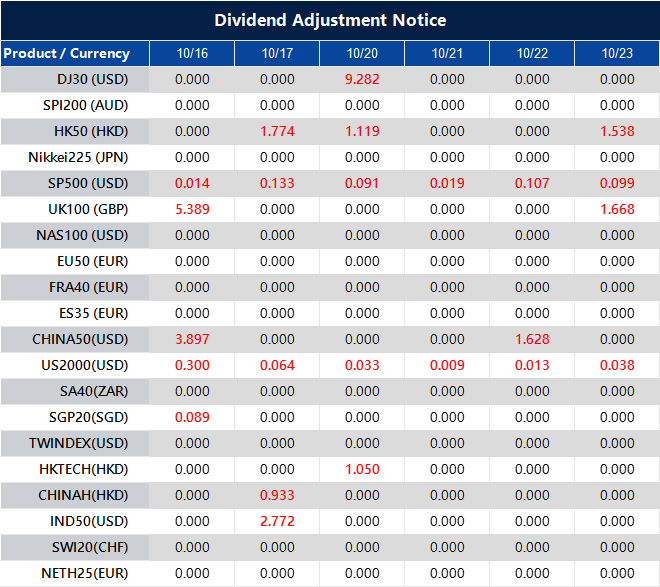
The above data is for reference only, please refer to the MT4/MT5 software for specific data.
If you’d like more information, please don’t hesitate to contact [email protected].
Naoki Tamura from the BoJ suggests adjusting monetary easing to reach neutral rates
Naoki Tamura from the Bank of Japan (BoJ) said the central bank wants to adjust interest rates to a neutral level. When asked about a possible rate increase in the October meeting, he did not provide a comment.
Tamura highlighted the importance of observing how U.S. tariffs might affect the Japanese economy, emphasizing that we should avoid making fixed assumptions. The true impact of tariffs remains uncertain and needs careful analysis of data.







