



As the US dollar weakens, the Canadian dollar strengthens, trading around 1.3560 after a trend shift
The Canadian Dollar rose against the US Dollar at the beginning of the week, with USD/CAD dropping by 0.65%. The pair was around 1.3560, showing a downward trend after breaking a long-term uptrend.
The Canadian Dollar gained strength following a strong jobs report that lowered the unemployment rate to 6.5%. The Bank of Canada’s (BoC) cautious approach to monetary policy also supported the currency. On Monday, USD/CAD fell below 1.3600, while 1.3680 served as resistance due to reduced short-term buying interest.
HSBC analysts note that the Reserve Bank of Australia’s cash rate increase signals a hawkish outlook
The Reserve Bank of Australia (RBA) has raised its cash rate by 25 basis points, bringing it to 3.85%. It has also updated its growth and inflation forecasts. By June 2026, the RBA predicts growth will be at 2.1% and inflation at 4.2%, assuming the cash rate climbs to 4.2% by the year’s end.
Economists at HSBC suggest that the RBA’s approach might lead to further rate hikes and expect an additional increase of 25 basis points in the third quarter of 2026. The Australian Dollar is considered to be overextended compared to the US Dollar, having increased about 3.5% year-to-date as of early February.
Market Analysis and Predictions
In the upcoming weeks, the AUD/USD is expected to stabilize, mainly influenced by external factors. The article emphasizes that rates alone may not drive the AUD’s immediate direction. The insights are provided by FXStreet’s Insights Team, which includes market observations from experts. Readers should perform careful research before making financial decisions, as all markets come with risks. This article is for informational purposes only, and the author has no business ties disclosed. The RBA’s recent rate hike to 3.85% highlights its ongoing battle against inflation. The latest quarterly Consumer Price Index (CPI) data from late January 2026 shows inflation at 4.3%, significantly above the RBA’s target range. This justifies the RBA’s strict approach. Markets are now pricing in another rate hike for the third quarter. Even with the RBA’s clear hawkish tone, the Australian Dollar’s increase of over 3.5% against the US Dollar since the year’s start seems excessive. We anticipate a period of consolidation in the coming weeks, where AUD/USD will trade within a set range. This situation may be suitable for strategies like selling short-dated strangles or straddles to benefit from falling volatility.Influence of External Factors
US economic data is likely to be the main external driver affecting the market and the Federal Reserve’s policies. Last week’s Non-Farm Payroll report showed a strong addition of 215,000 jobs, putting pressure on the Fed to keep its restrictive policy in place. This strength in the US dollar could hinder any further gains for AUD/USD. We are also monitoring developments in China. January’s Caixin Manufacturing PMI was just 50.5, suggesting minimal growth. This has tempered the recent surge in iron ore prices, which have stalled around $135 per tonne after a strong increase. Weak demand signals from China will limit the potential rise of the Australian Dollar. Our cautious outlook is influenced by experiences from 2025 when a similar rally was cut short due to global growth concerns in the latter part of the year. Traders who held on to long positions in the AUD at that time faced steep losses. This memory may encourage taking profits now rather than risking a further price chase. Create your live VT Markets account and start trading now.Gold rises above $5,070 as China’s suggestion to reduce US Treasury holdings affects the dollar
Gold prices have risen above $5,070 as the US Dollar weakens, following China’s decision to cut its investment in US Treasuries. Currently, the gold price (XAU/USD) is at $5,074, up by 2.16%. This increase is supported by China’s Central Bank, which has been buying gold for 15 months straight to diversify its reserves.
The financial situation is mixed, with stable US Treasury yields limiting gold’s price increase. The US Dollar Index has decreased by 0.76% to 96.94, influenced by expectations of more interest rate cuts from the Federal Reserve. Investors are also waiting for employment data in January, which could affect gold prices.
Impact of the Federal Reserve
US consumer inflation expectations have slightly decreased, while views on economic policy among Fed officials vary. Christopher Waller and Stephen Miran are seen as more lenient, while Raphael Bostic is concerned about inflation, taking a tougher stance. Gold has maintained its price in a range between $4,800 and $5,100, aiming for resistance levels at $5,200 and higher. Central banks, which hold a lot of gold, have significantly increased their reserves in 2022, particularly in China, India, and Turkey. Gold’s price often moves opposite to the US Dollar and Treasuries, reflecting changes in global politics and the economy, including market volatility and interest rate changes. With gold surpassing the key $5,000 mark, it signals US Dollar weakness is driving this increase. This shift is linked to reports of China moving away from US Treasuries, causing the Dollar Index to drop to 96.94, much lower than the 103-104 levels seen in 2024 and 2025. Traders might find success with volatility strategies on gold, such as straddles or strangles, due to the metal’s fluctuations in response to Dollar dynamics.Trading Strategies
The overall trend remains strong, backed by ongoing physical buying from central banks eager to diversify their reserves. The People’s Bank of China has raised its gold holdings for 15 months in a row, while late 2025 data revealed that China’s official US debt holdings have reached a 15-year low. This change reflects a long-term trend rather than a temporary market reaction, creating a solid support level for gold prices. Focus is now on the Federal Reserve, with the market anticipating nearly 57 basis points of rate cuts this year. This is a stark shift from last year’s hawkish policies. The upcoming Nonfarm Payrolls and CPI data are crucial; any signs of economic strength or persistent inflation could delay rate cuts and lead to a quick drop in gold prices. Given the range of $4,800 to $5,100, traders in derivatives should monitor these levels closely. A consistent breach above $5,100 could prompt buying call options or bull call spreads, aiming for the next resistance at $5,200 and a peak near $5,600. On the other hand, if a strong jobs report pushes gold back towards $4,800, purchasing protective put options may safeguard against further declines. Additionally, market positioning seems extended, with recent Commitment of Traders reports from early February 2026 showing speculative net long positions at multi-year highs. This indicates a crowded bullish trade, increasing the risk of a rapid reversal with any negative news. It’s wiser to manage risk using defined-risk option strategies instead of taking on unlimited risk with futures contracts. Create your live VT Markets account and start trading now.VT Markets Powers Reliable Gold Trading Amid Extreme Market Volatility
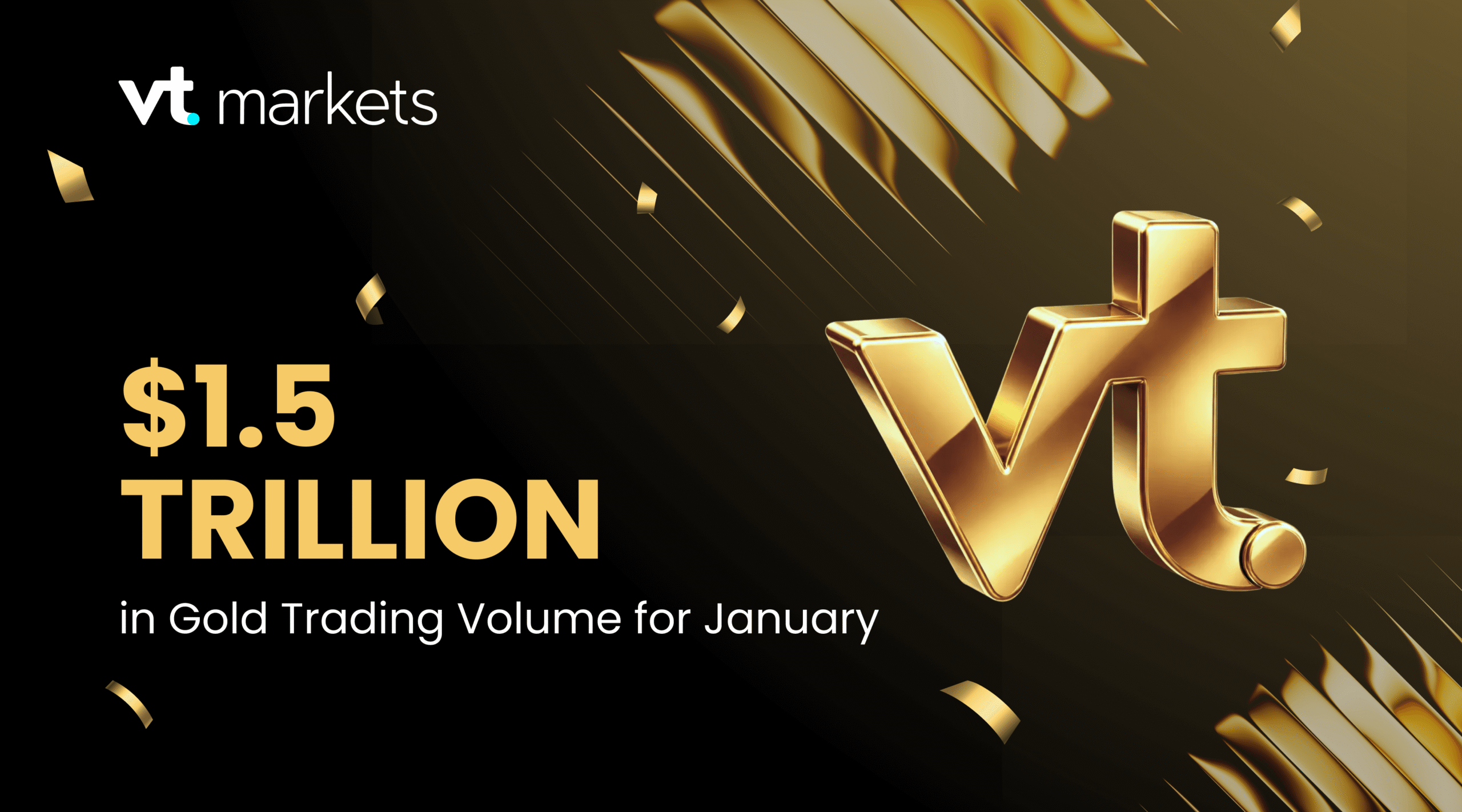
Sydney, Australia, 5 February 2026 — Amid heightened volatility in global precious metals markets ,VT Markets has proven the strength of its trading infrastructure, maintaining stable execution and uninterrupted access during periods of intense market stress.
During the recent market volatility, VT Markets recorded USD1.5 trillion in gold trading volume in January, underscoring strong client engagement and sustained confidence in its trading environment. Notably, 20% of gold traders were new to the platform, highlighting VT Markets’ ability to attract new traders eager to seize opportunities amid heightened market fluctuations.
The platform experienced its highest gold trading volume on 29 January 2026, a day when global gold markets saw dramatic price swings-gold futures surging past $5,500 per ounce and then exhibiting sharp intraday volatility amid geopolitical and macroeconomic pressures.
Crucially, VT Markets’ deep and diversified liquidity pool enabled the platform to maintain consistent pricing and high order fill rates, even during peak volatility. Average spreads on gold and silver remained competitive, while execution stability was preserved during fast-market conditions that challenged liquidity across the industry.
Ross Maxwell, Global Strategy Operation at VT Markets shares: “Volatile conditions inevitably test market infrastructure. While some platforms pulled back to manage their own risk, our systems performed exactly as designed- keeping gold and silver trading open and accessible for clients. That ability to stay operational during extreme conditions is what sets us apart from other brokers.”
This performance underscores VT Markets’ commitment to providing traders with dependable market access when it matters most. In volatile conditions where execution speed, liquidity depth, and platform resilience are critical, VT Markets has demonstrated its capability to perform under pressure- turning market uncertainty into opportunity for its global trading community.
Analysts note significant growth in German manufacturing orders and expect a recovery in construction.
German manufacturing orders increased by 7.8% in one month, fueled by demand in defense and transport. Orders that excluded major items also went up by 1%, signaling growth in the sector.
On the other hand, the construction industry struggled due to bad weather, as shown by the January PMI dropping to 44.7. Despite this setback, the sector is hopeful for a recovery in the spring, backed by solid order books.
Industrial production fell in December, especially in the automotive and machinery sectors. However, defense-related output helped cushion these losses, providing some stability.
Looking back to early 2025, German manufacturing orders surged, raising hopes for an economic improvement. This increase was largely due to major defense and transport contracts. The data led to expectations that Germany’s industrial base would become stronger throughout the year.
However, data from late 2025 and into January 2026 indicate this strength is not widespread. The latest figures from Destatis show that industrial production struggled, with a 0.7% decline in December 2025, as energy-intensive industries remained weak. This suggests that the initial enthusiasm from large orders did not lead to a broader recovery.
The expected rebound in construction didn’t happen fully either, due to high borrowing costs and low housing demand. The January 2026 HCOB Construction PMI stood at 43.1, reflecting nearly two years of ongoing contraction in the sector. This points to deeper structural issues beyond last year’s bad weather.
In the upcoming weeks, this situation calls for caution regarding the overall German market. We recommend selling call options on the DAX index with strike prices above recent highs. This way, we can pick up premiums while betting that the weak economy will limit any significant uptrend. This strategy benefits from a sideways or slightly declining market.
The defense sector remains a clear outperformer, a trend that started in 2024 and has accelerated. Traders should consider buying call options on defense companies like Rheinmetall to benefit from their full order books. On the flip side, buying put options on major construction or building material firms can safeguard against further sector weakness.
This ongoing weakness in Germany, the largest economy in the Eurozone, is likely to affect the Euro. We expect the European Central Bank may need to adopt a more cautious approach than the US Federal Reserve. Therefore, using options to position for a lower EUR/USD exchange rate in the next month or two seems wise.
Japan’s election results impact markets as USD/JPY falls with a weakening US dollar boosting JPY demand
The Japanese Yen (JPY) is gaining strength against the US Dollar (USD) as the dollar faces widespread selling. Currently trading around 155.92, the USD/JPY has dropped nearly 0.75% after a six-day winning streak. The Liberal Democratic Party (LDP) in Japan has secured 316 out of 465 seats, giving them a supermajority. This allows them to push a fiscal agenda that includes suspending the 8% consumption tax on food for two years to increase household spending.
Impact of Government Policies on Yen
Investors are wary about funding these initiatives without accruing new debt. The government’s plans could lead to inflation, which might force the Bank of Japan (BoJ) to raise interest rates. The Yen remains weak, prompting authorities to consider currency interventions. Japan’s government is concerned about rapid Yen fluctuations and is closely watching market trends. In the US, uncertainty surrounding trade policies and interest rate expectations is negatively impacting the USD. The market is predicting that the Federal Reserve (Fed) will cut interest rates twice this year. Investors are waiting for delayed economic data for insight, with White House officials hinting at slightly lower job numbers. The Yen is affected by Japan’s economic performance and BoJ policies, often acting as a safe-haven investment during market turbulence due to its reliability. The political shift in Japan in 2025 has significant consequences. The LDP’s supermajority win has paved the way for fiscal expansion, including the anticipated consumption tax cut on food. This has marked a turning point for the Yen’s direction. This fiscal move sparked speculation that the BoJ would need to address inflation. The BoJ began to adjust its ultra-loose monetary policy late last year, giving the Yen a strong boost. Meanwhile, the US Federal Reserve implemented two interest rate cuts in 2025, creating strong pressure on the dollar.Interest Rate Differential and Market Strategy
These changes resulted in a notable reduction in the interest rate gap that historically favored the dollar. The difference between 10-year government bonds in the US and Japan, which was over 400 basis points in early 2025, has narrowed to about 350 basis points as of early February 2026. This shift is the main reason USD/JPY has dropped from above 155. Recently, this downward movement seems to have stabilized, with USD/JPY settling around the 147 mark. Data from January 2026 shows Japan’s core inflation at a steady 2.4%, putting pressure on the BoJ. Meanwhile, US job numbers have remained stable, pushing markets to adjust their expectations for aggressive Fed rate cuts. This has resulted in a temporary balance in the market. In the upcoming weeks, a range-bound trading strategy is advisable rather than pursuing the established downtrend. Derivative traders may consider selling volatility through short-dated strangles on USD/JPY, anticipating the pair to remain between approximately 146 and 150. Look for options with low implied volatility, as the market is awaiting the next significant catalyst from either the BoJ or the Fed. Create your live VT Markets account and start trading now.Standard Chartered warns that recent AI developments may increase macroeconomic risks as commercial adoption speeds up.
Standard Chartered’s Global Research Team is looking into how quickly businesses are adopting AI. Recent advancements, like Anthropic’s Claude Opus 4.6 and GPT 5.3-Codex, could significantly affect job markets, company profits, and GDP growth, especially in software-exporting countries like Ireland and India.
New AI updates are shifting focus from benefiting consumers to enhancing commercial use. These new models could change the market landscape, especially for companies that have previously thrived on software and data services. Tools in the latest AI, such as Claude Opus 4.6, are designed to make tasks easier across various fields like legal, finance, and marketing.
Stock Market Worries from New AI Developments
While these advancements are a cause for excitement, they have raised concerns in the stock market, particularly in sectors that depend on traditional software services. As AI models continue to improve, they may streamline operations across industries, potentially altering key economic indicators. These changes could signal the start of a new era for commercial AI applications. This shift may have far-reaching economic impacts, as AI’s role extends beyond consumer benefits and influences the overall economy. The introduction of AI models like Claude Opus 4.6 and GPT 5.3-Codex represents a vital change from consumer-focused tools to serious commercial automation. This change threatens the business models of established software and data service companies. The market is already beginning to account for these risks, creating clear opportunities for traders dealing in derivatives. In the upcoming weeks, it may be wise to consider buying put options on companies and sector ETFs at risk of disruption from these new AI tools. For example, the iShares Expanded Tech-Software Sector ETF (IGV) has dropped 4% over the past week, as investors doubt the long-term profitability of its traditional members. This trend is likely to gain momentum as models like Opus 4.6 become more integrated into everyday business operations.Market Volatility and Opportunities
This uncertainty is leading to increased anxiety in the market, which traders should pay attention to. The implied volatility of major software ETFs has reached a six-month high, with the Cboe’s tech-focused VXN index rising to 28.5 just yesterday. This situation suggests that option straddles or strangles could help investors benefit from the significant price fluctuations we expect, regardless of their final direction. We’ve seen a similar situation occur in early 2025 after the first enterprise rollout of GPT-5. This rollout caused a sharp divide between AI-native companies and those lagging behind. History shows that the market can swiftly penalize companies that seem to be lagging in technology. The current wave of AI advancements is expected to deepen the divide between the successful and those left behind. The effects of these changes extend beyond individual companies and impact entire economies, particularly those that rely heavily on software exports, such as Ireland and India. This economic risk might lead to new volatility in currency markets, indicating a need to hedge or speculate on currency pairs like EUR/USD and USD/INR. For instance, the Indian Rupee may struggle if global demand for traditional IT services declines in favor of AI-driven automation. Create your live VT Markets account and start trading now.West Texas Intermediate oil rises to around $64.60 per barrel as US-Iran tensions decrease
WTI US Oil is currently trading around $64.60, up about 2% due to easing tensions between the US and Iran. These tensions had raised concerns about oil supply, but ongoing talks about Iran’s nuclear program have lowered the risk of conflict in the Middle East.
US sanctions on Iran limit its energy sector and exports. This helps prevent a significant drop in crude oil prices, keeping WTI Oil stable at its current levels.
Impact Of Federal Reserve
Expected rate cuts from the Federal Reserve could boost oil demand, as the US is the largest consumer of crude oil. A less strict monetary policy might stimulate economic activity and lead to higher oil consumption. WTI prices are supported by reduced supply fears and slight improvements in demand linked to these monetary expectations. This stability keeps prices steady, even without strong factors pushing them back to recent highs. WTI Oil, or West Texas Intermediate, is high-quality crude oil known for its low gravity and sulfur content, making it easy to refine. Key factors affecting prices include supply and demand, global economic growth, political situations, and decisions from OPEC. Inventory reports from the API and EIA influence prices, with changes reflecting supply and demand dynamics. While both agencies often report similar findings, the EIA is generally seen as more reliable.Current Market Dynamics
WTI crude is hovering around $64, reflecting a market with mixed signals. We see a fragile balance between renewed supply fears and a complex demand outlook. In the coming weeks, this stability will be tested, leading to potential volatility. Easing US-Iran tensions observed throughout 2025 have recently shifted to caution. A naval incident near the Strait of Hormuz has introduced geopolitical risks, causing shipping insurance premiums for tankers in that region to rise by 5% in just two weeks. On the demand side, traders are reassessing expectations for further Federal Reserve rate cuts. After two cuts in late 2025 supported prices, last month’s inflation data, which was slightly higher than expected, has made traders uncertain about the timing of future rate changes. This uncertainty is currently capping significant price increases. Despite the uncertainty, tight conditions in the physical market are helping to keep prices from falling too low. Last week’s EIA report showed an unexpected crude inventory drop of 2.5 million barrels, while a small increase was predicted, indicating strong underlying demand. This follows OPEC+’s disciplined production cuts in the second half of 2025, which have kept global stockpiles low. For the next few weeks, we suggest that traders prepare for stable prices with the potential for sharp spikes driven by news events. Strategies like short strangles or iron condors could help capitalize on the current market uncertainty. Focus on options expiring before the next major central bank meetings. Create your live VT Markets account and start trading now.Analysts at Danske Bank note that low core inflation complicates the Riksbank’s interest rate policy.
The Riksbank has decided to keep interest rates steady, but meeting minutes show Jansson is considering a cut and might hold back his vote in March. Flash CPIF core inflation has dropped to 1.7% year-on-year, which defies expectations and puts pressure on short-term rates. However, strong economic conditions suggest a rate cut is not coming soon.
Although the decision was unanimous, Jansson hinted at the possibility of a reservation or rate cut. Thedéen mentioned that the Riksbank should not react to short-term inflation changes. He noted that both inflation and economic performance would need to fall below expectations for a cut to happen. Recent inflation figures came in lower than expected: CPI is at 0.4% year-on-year, CPIF at 2.0%, and CPIF excluding energy at 1.7%. These numbers could increase pressure, especially after Jansson’s comments.
This article includes insights from the FXStreet Insights Team, which gathers market observations from many analysts. It features commercial notes and other insights, all reviewed by an editor.
With core inflation at 1.7%, significantly below the Riksbank’s target, there is a clear divide among board members. Jansson is signaling a potential push for a rate cut as soon as March, creating an opportunity for traders who are betting on lower short-term Swedish interest rates.
Traders should consider positioning themselves for a more dovish Riksbank than what the market expects. This might involve receiving the fixed side on short-end interest rate swaps, anticipating a decrease in future rate expectations. The recent data adds significant downward pressure on the short end of the curve.
This surprising drop in inflation also impacts the Swedish Krona, which could weaken if the Riksbank cuts rates before the ECB does. We are considering long EUR/SEK positions, possibly using call options to minimize downside risk. The uncertainty from the divided board could also lead to increased volatility, making options strategies more attractive.
Reflecting on recent data, Sweden’s GDP growth surprised many by staying strong in the last quarter of 2025, growing by 0.7%. However, inflation has been steadily decreasing since last summer. Official reports show that CPIF excluding energy fell from over 4% in mid-2025 to the current level. This significant drop in inflation likely weighs more heavily on doves like Jansson than the robust growth figures.
History shows that the Riksbank can act decisively if it fears missing its inflation target on the downside. For example, following 2014, they cut rates deeply into negative territory to counter deflation. If the next inflation readings confirm this downward trend, the board’s determination to keep rates steady could easily waver.
The main focus now is the upcoming March meeting. Any derivative positions should be planned with this event in mind, as Jansson’s possible dissent could lead to significant market changes. We will closely monitor labor market and wage data for signs of economic weakness that could sway the decision toward a rate cut.
USD/CHF trades below 0.77, indicating a consistent downtrend with lower highs and lows
The USD/CHF currency pair dropped about 1% on Monday, reaching its lowest level in 15 years. The Swiss Franc has pushed the pair down, continuing its steady decline since November 2025. Currently, USD/CHF is trading at 0.7683, having formed a strong bearish candle and remaining below the 50 and 200 Exponential Moving Averages.
On the 1-hour chart, USD/CHF has broken out of the range between 0.7750 and 0.7790, indicating ongoing bearish momentum. The Stochastic Oscillator shows that the pair is oversold, suggesting a chance for a short-term bounce. However, if it cannot recover, prices may fall further. To shift to a neutral position, the pair needs to move back above 0.7792.







