


 Insights
  VT
VT 





The macroeconomic backdrop is straightforward, though far from reassuring. Market participants are looking for evidence of softer labour conditions without triggering another wave of inflationary pressure. This week’s economic releases will determine whether expectations of Federal Reserve rate reductions gather momentum or slip back into uncertainty.
There are already indications that the labour market is easing at the margins. US job vacancies declined to their lowest level in over five years in December, reinforcing the view that demand for workers is moderating. This places particular emphasis on Friday’s payrolls report and wage figures.
Inflation expectations also remain in focus. Even with the Consumer Price Index release still a week away, markets often adjust positioning early if employment data provides a decisive signal.
Why it matters: Expectations surrounding Federal Reserve rate cuts shape the direction of the USDX, which in turn tends to influence XAUUSD and overall risk sentiment.
Oil Climbs Above $80 As Hormuz Disruption Fears Intensify
This stage of the week often brings heightened sensitivity in energy markets. Oil prices do not require confirmed supply disruptions to rally. It is sufficient for traders to perceive an elevated risk of interruption, and that perception alone can sustain support for USOIL beyond the initial headlines.
Stronger crude prices are significant because they feed into inflation expectations and tighten financial conditions. They may also alter how markets assess the timing and scale of potential Federal Reserve rate cuts, even if labour data shows signs of weakness.
Gold behaves differently under such conditions. XAUUSD is typically viewed as a hedge. When geopolitical or macroeconomic uncertainty increases, inflows into gold can materialise before economic data is released. Provided the US dollar remains contained, this support may continue.
Should oil maintain its premium, markets may scale back expectations for rate reductions, generating two-way volatility in XAUUSD.
Market Movements Of The Week
Gold (XAUUSD)
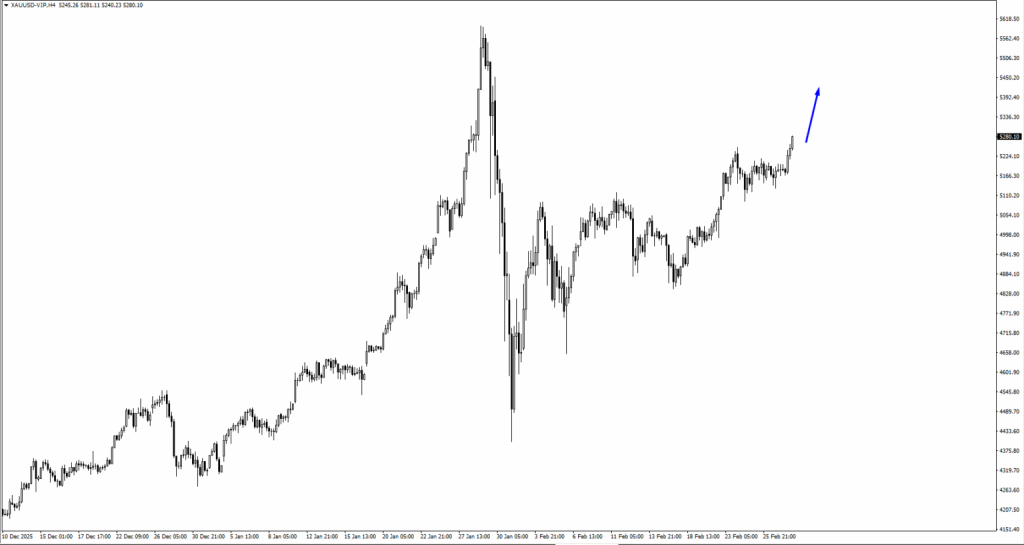
– XAUUSD bid on geopolitics, with 5455 defining extension risk.
– XAUUSD may pause if USDX breaks above 98.651 after wages surprise.
– XAUUSD reacts hardest to NFP as Fed rate cut expectations reset into next week.
Oil (USOUSD)
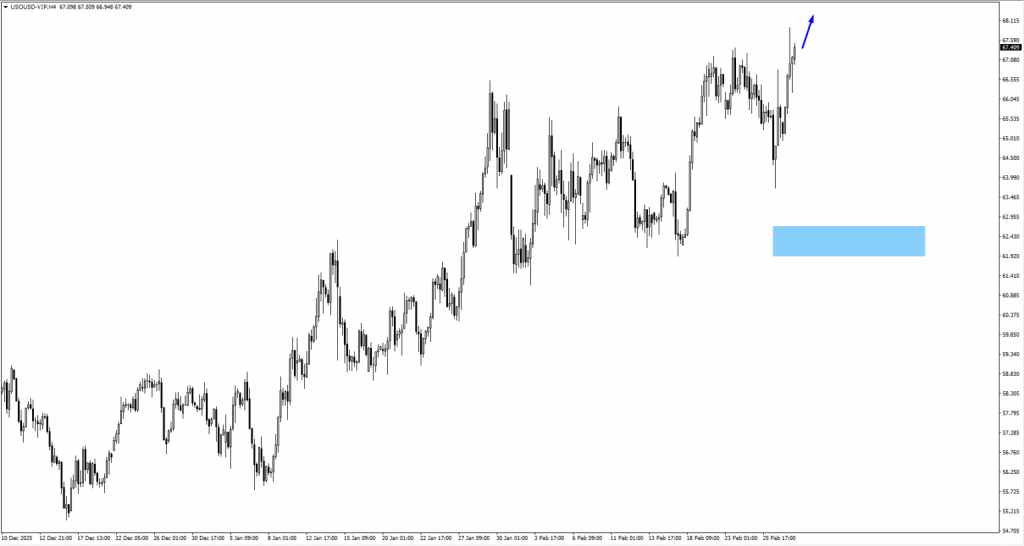
– USOUSD holds a risk premium, with 71.181 the breakout level on Iran headlines.
– USOUSD volatility stays elevated while traders price disruption risk through the Strait of Hormuz.
– USOUSD strength can tighten conditions and complicate Fed rate cut expectations into payrolls.
US Dollar Index (USDX)
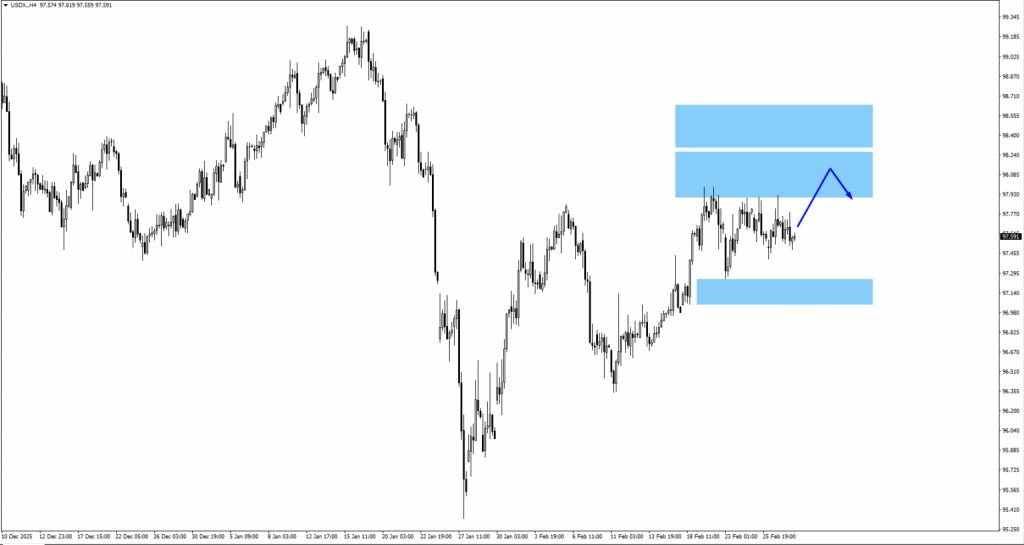
– USDX rejected 98.10 and now ranges, with 98.50 the next area on a push higher.
– USDX above 98.651 invalidates bearish setups and can pressure XAUUSD intraday.
– USDX direction will follow payrolls and wages as Fed rate cut expectations stay sensitive.
S&P 500 (SP500)
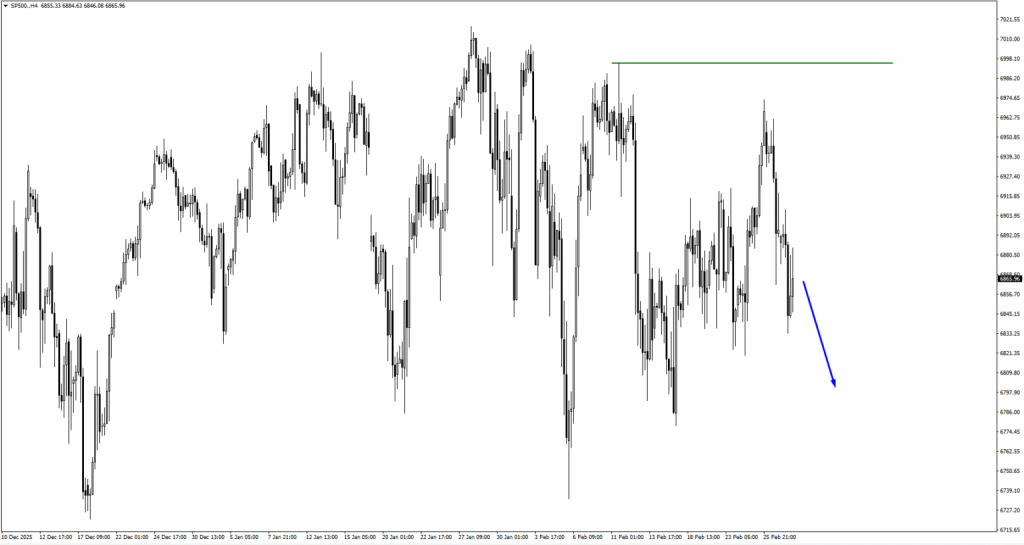
– SP500 downside opens if 6777.90 breaks during NFP volatility.
– SP500 can struggle if USOil stays bid and the market trims Fed rate cut expectations.
– SP500 weakness can keep XAUUSD supported through hedge demand.
Key Events This Week
2 March 2026
1. US ISM Manufacturing PMI, Forecast: 51.7, Previous: 52,6
A softer print can rebuild Fed rate cut expectations and keep USDX heavy into Friday’s labour data.
4 March 2026
1. US ADP Nonfarm Employment Change (Feb), Forecast: 49K, Previous: 22K
Early labour signals that can shift Fed rate cut expectations into Friday.
2. US ISM Services PMI (Feb), Forecast: 53.5, Previous: 53.8
Services strength can keep the Fed cautious and support USDX.
6 March 2026
1. US Nonfarm Payroll, Forecast: 58K, Previous: 130K
The main trigger for Fed rate cut expectations, USDX direction, and SP500 volatility.
2. US Unemployment Rate, Forecast: 4.30%, Previous: 4.30%
A surprise rise can hit SP500 and lift demand for XAUUSD hedges.
3. Average Hourly Earnings MoM (Feb), Forecast: 0.30%, Previous: 0.40%
Sticky wages can trim Fed rate cut expectations fast and cap gold’s follow-through.
Bottom Line
XAUUSD begins the week underpinned by geopolitical tension and continued demand for defensive positioning. The key question is whether rate cut expectations strengthen following the US employment report, or whether wage growth compels the Federal Reserve to remain cautious.
Oil remains the decisive variable. If USOIL sustains its elevated levels, inflation pressures could persist, complicating the timing of the initial rate cut even with softer payroll data.







