
Back

Baden-Württemberg’s monthly CPI rose to 0.9%, accelerating from 0.2% previously in Germany, March

Baden-Württemberg’s consumer price index (CPI) rose by 0.9% month on month in March. This was up from 0.2% in the previous period. The March reading shows faster monthly price growth in the state than in the prior month. No further breakdown was provided in the update.

Inflation Shock Raises ECB Pressure

This surprisingly high 0.9% month-on-month inflation figure from a key German state is a major red flag for us. It strongly suggests the upcoming German and Eurozone-wide inflation numbers will also beat expectations. The European Central Bank cannot ignore such a significant jump, which complicates their path forward. We should immediately adjust our interest rate positions to reflect a more hawkish ECB. This means considering selling short-term interest rate futures, like those based on EURIBOR, as the market will quickly price out the possibility of any near-term rate cuts. Looking back at the persistent inflation surprises we saw throughout 2025, this data suggests that pattern may not be over. This development is bullish for the Euro, especially with recent US data showing annual wage growth moderating to 3.8%. This policy divergence makes buying call options on the EUR/USD pair an attractive strategy for the coming weeks. We are looking for the Euro to gain strength as rate cut expectations between the ECB and the Fed shift. On the equity side, the prospect of higher-for-longer interest rates is a clear negative for German stocks. We should look at buying put options on the DAX index as a direct hedge against rising borrowing costs hitting corporate profitability. In tandem, selling German Bund futures is a direct play on rising government bond yields.

Positioning For Higher Volatility

The unexpected nature of this data will likely increase market uncertainty and volatility. We saw volatility indices like the VSTOXX spike during the second half of 2025 when the market underestimated the ECB’s resolve. Buying some cheap, out-of-the-money calls on the VSTOXX could serve as an effective portfolio hedge against a sharp market repricing. Create your live VT Markets account and start trading now.

Start trading now – Click here to create your real VT Markets account
Baden-Württemberg’s year-on-year consumer price inflation in Germany rose from 1.8% to 2.5% in March

Baden-Württemberg’s annual consumer price inflation rose to 2.5% in March. This was up from 1.8% in the previous reading. The change shows a 0.7 percentage point increase in the year-on-year CPI rate. No further breakdown of price categories was provided.

Inflation Surprise Challenges Ecb Path

This morning’s inflation reading from Baden-Württemberg is a significant jolt, showing a jump to 2.5% and reversing the cooling trend we saw for most of 2025. This number is a critical leading indicator for nationwide German inflation, which makes up over a quarter of the entire Eurozone HICP. Because of this, we must question the market’s consensus that the European Central Bank was on a clear path to cut rates later this year. The immediate derivative play is in short-term interest rates, as the probability of a summer rate cut from the ECB has now fallen dramatically. We should expect German 2-year bond yields, which are highly sensitive to ECB policy, to rise sharply from their current 2.8% level, mirroring the rapid yield increases we last saw in early 2025 when inflation proved stickier than expected. Traders should look to sell Euribor futures contracts or adjust interest rate swaps to reflect a higher-for-longer rate environment. This uncertainty will directly fuel market volatility, which had been trending lower for months. We should anticipate the VSTOXX index, Europe’s main fear gauge, to climb from its recent lows around 14 back towards the 19-20 range. This makes buying options more attractive, and traders should consider purchasing puts on the Euro Stoxx 50 index as a hedge against a market pullback driven by renewed inflation fears. For foreign exchange markets, this surprise inflation data is bullish for the Euro. As other central banks like the Federal Reserve are still signaling potential rate cuts, a more hawkish ECB will increase the Euro’s yield advantage. We should consider positioning for EUR/USD strength, potentially targeting a move back towards the 1.10 level last seen in late 2025, using call options to limit risk. Create your live VT Markets account and start trading now.

Start trading now – Click here to create your real VT Markets account

Hesse’s German year-on-year CPI climbed from 2.2% to 2.9%, indicating higher inflation pressures in March

Germany’s Hesse consumer price index (CPI) rose by 2.9% year-on-year in March. It was 2.2% in the previous reading. The data shows inflation in Hesse increased compared with the prior period. No further breakdown was provided in the release.

Implications For The Inflation Trend

The surprise jump in inflation from Germany’s most populous state to 2.9% is a significant warning sign for us. This data point, a leading indicator for the nationwide figure, suggests that the disinflationary trend we saw for much of 2025 may be reversing. It directly challenges the European Central Bank’s expected path towards potential rate cuts later this year. We should now anticipate a more hawkish stance from the ECB in the coming weeks. Traders should consider positioning for higher interest rates by selling German Bund futures, as rising inflation expectations will likely push bond yields higher, causing prices to fall. The market is already reacting, with the German 10-year yield jumping 8 basis points to 2.65% this morning on the news. For equity markets, this is a headwind, as higher rates make borrowing more expensive and bonds more attractive. We should look at buying put options on the German DAX index to hedge against or profit from a potential downturn. Last year, in 2025, the DAX rallied on hopes of rate cuts, but this new data puts that narrative in serious doubt. This development could also strengthen the Euro, as interest rate differentials shift in its favor. A more aggressive ECB relative to the US Federal Reserve would make the currency more attractive to hold. We can express this view by buying call options on the EUR/USD, positioning for a move higher from its current level of around 1.0950. Finally, the uncertainty surrounding the ECB’s next move will increase market volatility. We saw volatility, measured by the VSTOXX index, fall to multi-year lows late in 2025 as the policy path seemed clear. This inflation surprise injects doubt, making it prudent to buy VSTOXX futures or options to protect against wider market swings.

Positioning For Higher Volatility

Create your live VT Markets account and start trading now.

Start trading now – Click here to create your real VT Markets account

Bavaria’s annual CPI inflation in Germany climbed to 2.8% in March, up from 1.9%

Bavaria’s consumer price inflation rose to 2.8% year on year in March. This was up from 1.9% in the previous reading. The change shows inflation in Bavaria increased between the two periods. The figures are year-on-year rates for March.

Implications For Eurozone Inflation

This sharp increase in Bavarian inflation to 2.8% signals that the upcoming German and broader Eurozone inflation figures will likely come in hotter than expected. The disinflationary trend we saw through most of 2025 may be reversing, catching many off guard. We must adjust our positions for the possibility that inflation is becoming sticky above the European Central Bank’s target. We need to quickly reprice the path of ECB interest rates for the remainder of the year. Overnight index swaps had been pricing in at least two more rate cuts in 2026, but this data puts even the next scheduled cut in jeopardy. Traders should consider selling Euribor futures contracts or buying interest rate swaps to position for rates staying higher for longer. This inflation surprise is a negative catalyst for equity markets, particularly the interest-rate-sensitive German DAX index. Higher for longer rates will pressure corporate earnings and valuations, which have benefited from the easing cycle that began last year. We should consider buying put options on the DAX or Euro Stoxx 50 as a hedge against a potential downturn in the coming weeks. Market volatility is set to rise as this data forces a wide-scale re-evaluation of ECB policy. The VSTOXX, which measures volatility on the Euro Stoxx 50, is currently trading near multi-year lows around 14, but we saw similar data surprises in 2025 cause it to spike towards the 20 level. Buying VSTOXX futures or call options is a direct way to trade this expected increase in market uncertainty. For currency markets, this development is bullish for the Euro, as it suggests the ECB will be more hawkish relative to other central banks like the U.S. Federal Reserve. The interest rate differential, which had been narrowing, may now widen again in the Euro’s favor. We can express this view by buying EUR/USD call options or establishing long positions in EUR futures.

Key Takeaways For Traders

Create your live VT Markets account and start trading now.

Start trading now – Click here to create your real VT Markets account

Bavaria’s month-on-month CPI in Germany rose to 1.2%, increasing from the prior 0.2% level

Bavaria’s consumer price index (CPI) rose by 1.2% month on month in March. This was up from a 0.2% rise in the previous month. This sharp rise in Bavarian inflation to 1.2% is a significant surprise, blowing past the consensus analyst forecasts of just 0.4%. As Bavaria is a bellwether state, this strongly suggests the full German and subsequent Eurozone inflation reports due next week will be much hotter than expected. We must now prepare for a far more hawkish stance from the European Central Bank.

Market Implications And Policy Outlook

The probability of an ECB rate cut before the third quarter has collapsed, with pricing in the overnight index swap market now showing less than a 10% chance. We should look to position accordingly by selling short-term interest rate futures, like those tied to EURIBOR, to hedge against or profit from the expectation of rates staying higher for longer. This is a rapid reversal from last week when the market was pricing in a near 50% chance of a summer cut. This development is bullish for the Euro, as higher rate expectations will attract capital. We are already seeing the EUR/USD pair rally towards the 1.0950 level, a key resistance point from February. Traders should consider buying near-term call options on the Euro, as a break of this level could see a quick move higher. For equities, this is a negative signal, as persistent inflation and higher rates squeeze corporate margins and discount future earnings. We should expect increased volatility and consider buying protective put options on the German DAX and the wider Euro Stoxx 50 index. The VSTOXX, Europe’s volatility index, has already spiked 12% this morning, indicating rising market anxiety. We saw a similar pattern in late 2025 when a series of inflationary surprises forced the ECB to delay its widely expected policy pivot. Back then, markets that were positioned for rate cuts suffered significant losses. This historical precedent suggests we should not underestimate the central bank’s commitment to fighting inflation, even if it comes at the expense of short-term economic growth.

Positioning And Risk Management

Create your live VT Markets account and start trading now.

Start trading now – Click here to create your real VT Markets account

Bob Savage says rising energy costs lift Eurozone inflation, stoking stagflation fears and ECB divisions

BNY’s Bob Savage says stagflation risks in the Eurozone are rising as energy costs lift headline CPI, while core inflation stays more contained. He expects the European Central Bank (ECB) to remain cautious and to monitor second-round effects, with markets likely to reduce aggressive pricing for near-term rate rises in the Eurozone and the UK. The International Energy Agency will brief EU finance ministers, with the briefing expected to prompt more national support for motorists and industry. It notes that shortages are less acute than in emerging markets, though some products may face supply limits.

Eurozone Inflation Signals And Energy Shock Context

If households cut spending, core inflation may rise less, which could reduce the need for rate rises to restrain demand. CPI figures due next week are framed as an early guide to how inflation is shifting. Over the last two years, Eurozone core inflation has run ahead of headline, while in the 2022–2023 energy shock headline led and then pushed core higher. That earlier period coincided with recovering global demand and strong wage bargaining power, which may be weaker now. ECB unity may be harder, after Governing Council member Muller said action may be needed without fully visible second-round effects. Wage data are expected to influence policy, and 2026 collective bargaining rounds had not been expected to show material increases. Risks of stagflation are growing in the Eurozone as energy costs push headline inflation higher while core inflation remains low. Markets are currently pricing in several aggressive interest rate hikes from both the European Central Bank and the Bank of England. This setup presents a clear opportunity for traders who believe this pricing is overdone.

Trading Implications From Rate Repricing Risk

The recent surge in Brent crude to over $95 a barrel in the first quarter of 2026 is fueling these fears. We’ve seen this reflected in the latest flash estimates for March, which show headline inflation climbing to 2.8% while core inflation has barely moved from 2.1%. This divergence is key to understanding the ECB’s likely path forward in the coming weeks. We are not seeing a repeat of the 2022-2023 energy shock, when global demand was roaring back and strong wage growth, which peaked near 4.7% in 2023, pushed all prices higher. This time, household purchasing power is weaker and wage bargaining rounds in early 2026 have been far more subdued. This underlying economic weakness could prevent inflation from becoming broad-based. Because of this, the ECB is unlikely to hike rates as aggressively as the market currently expects. Central bankers will be cautious about tightening policy into a slowing economy, especially if rising energy bills force households to cut back spending anyway. This could naturally cool the economy without the need for multiple rate increases. This suggests traders should position for a repricing of rate expectations, betting that fewer hikes will be delivered than are currently priced in. Given the expected volatility as the market digests this, using options to express this view could be a prudent strategy. This allows for participation in the move while managing the risk from sharp, unexpected swings. In the coming weeks, we will be watching the Eurozone HICP inflation figures very closely for any signs of second-round effects. Wage negotiation data will be equally critical, as it will signal whether inflation is truly becoming embedded. These data points will likely be the primary catalysts for the market to adjust its current pricing. Create your live VT Markets account and start trading now.

Start trading now – Click here to create your real VT Markets account

During European trading, EUR/JPY retreats after modest prior gains, hovering near 183.60 around its 50-day EMA

EUR/JPY eased after small gains, trading near 183.60 in European hours on Monday. The daily chart keeps the pair near the upper edge of an ascending triangle. The cross stays above the 50-day EMA at 183.37, with the nine-day EMA above it. This follows a rebound from 180.81 and a run of higher lows that supports the wider uptrend.

Momentum Signals And Near Term Bias

RSI has slipped back towards 50, pointing to softer upside momentum. It does not yet point to clear bearish pressure while price holds above nearby support. Resistance sits at the nine-day EMA of 183.91, then the triangle cap near 184.60. A move above that area could open a route towards the record 186.88, set on 23 January. Support is first seen at the 50-day EMA at 183.37, then the triangle base around 182.50. A break below this zone may bring 180.81 back into view, the three-month low from 12 February. The technical analysis for this report used an AI tool.

Trade Setup And Key Levels

We see the EUR/JPY cross is holding above key moving averages, suggesting the broader uptrend is still in play despite some weakening momentum. The pair is consolidating within an ascending triangle, which often precedes a significant price move. This presents an opportunity to position for a potential breakout by buying on dips toward support. The fundamental picture supports a stronger Euro against the Yen, reinforcing the technical bias. Recent preliminary data shows Eurozone inflation for March 2026 holding firm at 2.7%, putting pressure on the European Central Bank to delay any potential rate cuts. This policy stance should keep the Euro supported in the near term. Meanwhile, the Bank of Japan remains cautious, having recently signaled that the pace of any further policy tightening will be slow due to sluggish wage growth figures. This policy divergence between a relatively hawkish ECB and a dovish BoJ creates a favorable environment for the EUR/JPY to appreciate. This is a dynamic we have seen before and can use to our advantage. For traders with a bullish outlook, we should consider buying call options or establishing bull call spreads if the price dips to and holds the 50-day EMA support at 183.37. The initial target for such a trade would be a test of the triangle’s upper boundary around 184.60. A clean break above this level could see a rapid move toward the January high. From our vantage point in 2025, we can recall the powerful multi-month rally in 2023 when similar central bank policy differences fueled a gain of over 15% in the pair. The current macroeconomic setup feels reminiscent of that period, suggesting the path of least resistance remains to the upside. This historical precedent gives us confidence in the current long bias. However, we must manage risk, as the fading RSI indicates the bullish conviction is not absolute. A decisive break below the triangle’s lower boundary at 182.50 would invalidate the immediate bullish thesis. In that scenario, we would pivot to buying put options, targeting the February low near 180.81. Given the consolidating pattern, implied volatility on options might be relatively low, presenting another opportunity. We could consider buying straddles to profit from a significant price move in either direction. This strategy would be particularly effective if a breakout from the triangle pattern occurs in the coming weeks. Create your live VT Markets account and start trading now.

Start trading now – Click here to create your real VT Markets account

USD/CAD climbs near 1.3930, hitting a two-month high, as safe-haven demand strengthens the US dollar

USD/CAD rose for a fifth day and reached about 1.3900 in Monday’s Asian session, marking a fresh two-month high. The move came as the US Dollar stayed firm on demand for safe-haven assets. The US Dollar Index traded slightly above 100.00 and was near a two-week high of 100.35. Reports said Middle East tensions involving the US, Israel, and Iran could escalate, with a claim that the Pentagon may send 10,000 more troops to Iran for a ground invasion.

Oil Prices And The Canadian Dollar

Higher oil prices were reported as a factor that could support the Canadian Dollar. Canada is the largest exporter of oil to the US, so rising oil prices can support the Loonie. On the charts, USD/CAD held above the rising 20-day EMA and continued higher closes from the 1.36 area. The 14-day RSI moved above 70.00, which points to strong momentum and also suggests the move may be stretched. Support sits at 1.3750 and then 1.3700, with a bearish signal on a daily close below 1.3760. Resistance is near 1.3895, and a break may target the 1.3930 area, described as an over three-month high. We recall last year when tensions involving Iran pushed the USD/CAD exchange rate toward a multi-month high near 1.3930. That spike was driven by a flight to the safety of the US Dollar as geopolitical risks flared up. Today, the situation is calmer, with the pair trading closer to the 1.3550 mark.

Interest Rate Differentials Drive The Pair

The primary driver now is less about global conflict and more about interest rate differentials. The US Federal Reserve has maintained a key interest rate of 3.5%, slightly above the Bank of Canada’s 3.25% rate, a spread that continues to attract capital to the US dollar. This fundamental support for the greenback was present last year but was overshadowed by the crisis headlines. While crude oil prices remain strong, with WTI currently trading around $85 a barrel, it isn’t providing the usual boost to the Canadian dollar. Historically, higher oil supports the loonie, but the market seems more focused on yield right now. The powerful influence of the interest rate spread is outweighing the positive effect of oil revenue for Canada. Market volatility is also significantly lower than it was during the peak of the Mideast tensions in 2025. With the VIX, a key measure of market fear, hovering near a low of 14, options pricing is much cheaper. This environment suggests it’s a cost-effective time for traders to buy puts to hedge against a sudden drop or purchase calls to position for a surprise rally. Recent data from the CFTC shows that large speculators have trimmed their net long positions in the US dollar by over 15% in the last quarter. This indicates that the extreme “safe-haven” premium from last year has largely been priced out of the market. Trading is now more influenced by economic data releases than by sudden geopolitical developments. Create your live VT Markets account and start trading now.

Start trading now – Click here to create your real VT Markets account

The DXY slips near 100.00 from 100.30 highs, while hawkish Fed expectations curb further declines

The US Dollar Index (DXY) slipped from a monthly peak near 100.30 and moved towards 100.00. Higher expectations for tighter US Federal Reserve policy, alongside rising energy prices linked to war, may curb further falls. On the 4-hour chart, the pullback forms a bearish double-top pattern. MACD stays above zero but is moving towards its signal line, while RSI is near 60, which suggests steady but not extreme strength.

Key Technical Levels

DXY remains above the rising 100-period EMA after forming a base around 99.10 in late December. If it drops below 100.00, support may appear near 99.70, with a lower support zone at 99.40 where the 100-period EMA meets a prior consolidation area. Resistance is seen at 100.20, followed by 100.50. A move above 100.20 would support further gains, while a break below 99.70 would shift focus back to 99.40. The technical section used an AI tool. A correction was made on March 30 at 05:20 GMT to confirm the asset name as DXY, not DXU. We recall seeing a similar technical setup around this time in 2025, when the US Dollar Index was defending the 100.00 level. The expectation then was for hawkish Federal Reserve policy to keep the dollar strong, which ultimately pushed the index significantly higher over the following year. That environment of straightforward tightening is now behind us.

Market Outlook And Strategy

The situation today is more complex, as the market shifts from pricing in rate hikes to anticipating rate cuts. With the DXY now hovering near 104.50, the latest February jobs report showed a modest cooling with 195,000 jobs added, taking pressure off the Fed. However, inflation remains sticky at 3.1%, making the timing of any policy pivot highly uncertain. This uncertainty suggests that long volatility strategies could be effective in the coming weeks. We see value in purchasing options on currency futures, such as straddles, which would profit from a significant price swing in either direction. The market is currently pricing in a 60% chance of a rate cut by September, and any data that shifts this timeline will likely inject volatility into the dollar. For those with a directional view, the 104.00 level has become the new key support, much like 100.00 was in early 2025. We believe a viable strategy is to sell out-of-the-money call options above the 105.20 resistance level. This approach allows traders to collect premium while betting that the dollar’s upward momentum will wane as the market continues to price in eventual policy easing. Create your live VT Markets account and start trading now.

Start trading now – Click here to create your real VT Markets account

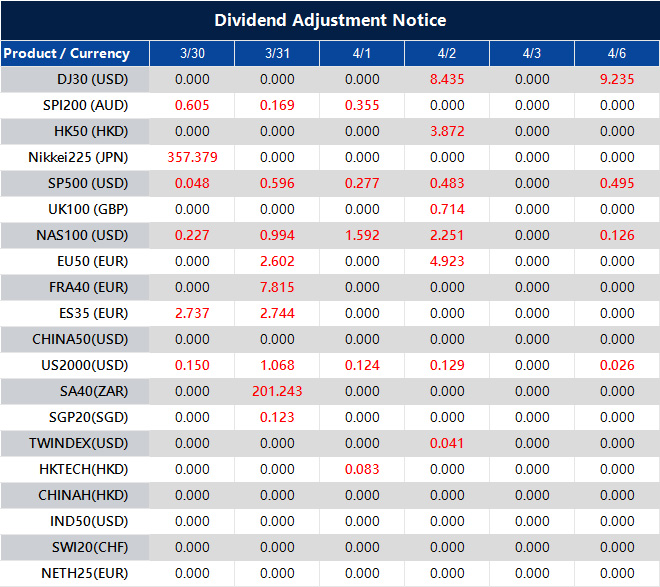
Dividend Adjustment Notice – Mar 30 ,2026

Dear Client,

Please note that the dividends of the following products will be adjusted accordingly. Index dividends will be executed separately through a balance statement directly to your trading account, and the comment will be in the following format “Div & Product Name & Net Volume”.

Please refer to the table below for more details:

Dividend Adjustment Notice

The above data is for reference only, please refer to the MT4/MT5 software for specific data.

If you’d like more information, please don’t hesitate to contact [email protected].

Back To Top
server

Hello there 👋

How can I help you?

Chat with our team instantly

Live Chat

Start a live conversation through...

  • Telegram
    hold On hold
  • Coming Soon...

Hello there 👋

How can I help you?

telegram

Scan the QR code with your smartphone to start a chat with us, or click here.

Don’t have the Telegram App or Desktop installed? Use Web Telegram instead.

QR code

