Back

Gold prices in the Philippines stayed largely unchanged, as compiled figures showed bullion holding steady today

Gold prices in the Philippines were broadly unchanged on Monday, based on FXStreet data. Gold was priced at PHP 8,780.94 per gram, compared with PHP 8,773.84 on Friday. Gold stood at PHP 102,419.60 per tola, up from PHP 102,336.40 on Friday. Other listed prices were PHP 87,812.91 for 10 grams and PHP 273,117.30 per troy ounce.

Philippine Gold Price Snapshot

FXStreet derives local gold prices by converting international prices using the USD/PHP exchange rate and local measurement units. The figures are updated daily at publication time and are for reference, with local rates able to differ slightly. Central banks are the largest holders of gold and use it as part of reserve diversification. According to the World Gold Council, central banks added 1,136 tonnes of gold worth around $70 billion in 2022, the highest annual purchase on record. Gold prices often move inversely to the US Dollar and US Treasuries and can also move opposite to risk assets such as shares. Price drivers include geopolitical risk, recession fears, interest rates, and changes in the US Dollar, as gold is priced in dollars (XAU/USD). Gold’s price is holding steady for now, but this masks a tense balance between a stronger US Dollar and underlying economic fears. The dollar’s recent firmness, following the Federal Reserve’s signal to pause the rate cuts we saw through 2025, is putting a cap on gold’s upward momentum. We see this creating significant potential energy for a sharp move in the near future.

Market Forces Behind The Tight Range

The core issue for traders is the persistent inflation that is proving difficult to control, with the latest US Consumer Price Index data for February 2026 showing a 3.1% annual increase. This sticky inflation challenges the view that interest rates will continue to fall, creating uncertainty for a non-yielding asset like gold. This environment is very different from the clear disinflationary trend observed in late 2024 and early 2025. Adding to the complexity are renewed geopolitical tensions, with reports of increased naval patrols in the South China Sea providing a solid floor for safe-haven demand. This is happening against a backdrop of historic central bank buying, which we saw continue through 2025, with nations like China and Poland adding significantly to their reserves. World Gold Council data confirms central banks bought over 1,037 tonnes in 2025, marking the second-highest year on record after 2022’s peak. Given these conflicting drivers, we expect implied volatility in gold options to increase over the next few weeks. Derivative traders should prepare for a breakout from the current tight range rather than a continuation of sideways trading. This makes strategies that profit from a large price swing, regardless of direction, particularly attractive. Specifically, we believe buying long-dated call options is a prudent way to position for an upside surprise fueled by geopolitical risk or a faltering dollar. To hedge against the risk of higher-for-longer interest rates, purchasing put options can provide valuable protection for existing portfolios. A move above $2,150 or below $2,050 per troy ounce seems increasingly likely before the end of April. Create your live VT Markets account and start trading now.

Start trading now – Click here to create your real VT Markets account

According to compiled data, gold prices in the United Arab Emirates stayed broadly steady and unchanged

Gold prices in the United Arab Emirates were little changed on Monday, based on data compiled by FXStreet. Gold was priced at AED 530.37 per gram, compared with AED 530.71 on Friday. Gold was priced at AED 6,186.12 per tola, down from AED 6,190.15 on Friday. Other listed prices were AED 5,303.54 for 10 grams and AED 16,496.32 per troy ounce.

Uae Gold Price Benchmark

FXStreet calculates UAE gold prices by converting international prices into AED using USD/AED and applying local measurement units. Prices are updated daily using market rates at the time of publication, and are provided for reference as local rates may vary slightly. Central banks are the largest holders of gold. World Gold Council data shows central banks added 1,136 tonnes of gold worth about $70 billion in 2022, the highest annual purchase on record. Gold prices can move with changes in the US Dollar, US Treasuries, interest rates, inflation concerns, and geopolitical risk. Gold is priced in US dollars as XAU/USD. Gold’s current stability around AED 530 per gram is a pause, not a peak, and presents a strategic moment for traders. We see this as a consolidation phase before the next move, driven by powerful underlying factors. This price level offers a valuable entry point for positioning ahead of expected volatility.

Drivers For The Next Move

Looking back, the US Federal Reserve’s pivot to easing rates in late 2025 provided the initial fuel for gold’s rally. With the latest US Consumer Price Index for February 2026 still hovering at a stubborn 3.1%, the market is pricing in further rate cuts despite persistent inflation. This environment is highly supportive for non-yielding assets like gold. We must not underestimate the immense and ongoing demand from central banks, which acts as a strong price floor. Following record purchases in the early 2020s, data showed that emerging market central banks accelerated their gold acquisitions throughout 2025. This institutional buying is a one-way street that limits significant downside risk. The inverse relationship with the US Dollar remains a key indicator for the coming weeks. As expectations for lower US interest rates weaken the dollar, gold’s appeal as a non-dollar asset grows. We observed this pattern clearly in the last quarter of 2025 when the Dollar Index fell below 102. Geopolitical instability continues to be a significant tailwind for gold’s safe-haven status. The unresolved global tensions we saw throughout 2025 ensure that any sell-offs in riskier assets, like equities, will likely trigger fresh inflows into gold. This dynamic provides a constant undercurrent of support for the precious metal. For derivative traders, this suggests that buying call options or establishing long futures positions on any price dips could be a prudent strategy. The combination of a dovish Fed, sticky inflation, and relentless central bank buying points towards a higher probability of upward price movement in the second quarter of 2026. We should view the current price calmness as an opportunity to build positions. Create your live VT Markets account and start trading now.

Start trading now – Click here to create your real VT Markets account

Japan’s potential currency intervention keeps AUD/JPY retreating, trading near 109.70 and remaining below 110.00

AUD/JPY eased after the prior session’s rise and traded near 109.70 in Asian hours on Monday. The Yen strengthened after Bank of Japan Governor Kazuo Ueda said authorities may act against excessive one-way currency moves. Ueda said exchange-rate moves affect Japan’s economy and inflation, and that the Bank will monitor trends. He added policy could be adjusted depending on effects on growth, the price outlook and risks.

Bank Of Japan Signals

Monday’s Summary of Opinions from the March policy meeting said several policymakers still see scope for further monetary tightening soon. One member said rate rises would be appropriate if economic and price forecasts are met, while another linked future timing to developments in the Middle East, wages, inflation and financial conditions. The Australian Dollar stayed under pressure as energy prices rose on supply concerns and reduced expectations of a quick end to the Iran conflict. Iran-backed Houthi forces in Yemen carried out their first strikes on Israel over the weekend and said attacks would continue until operations against Iran and its allies stop. The Houthis also threatened Red Sea shipping and Saudi energy infrastructure, adding to supply risks. Reports said the United States is preparing for an extended ground campaign in Iran and is deploying thousands of troops to the region. Australia’s Prime Minister Anthony Albanese said the National Cabinet approved a National Fuel Security Plan. Fuel excise on petrol and diesel will be halved for three months, and the heavy vehicle road user charge will be temporarily removed.

Recent Price Action Context

We are currently seeing AUD/JPY trade with significant volatility around the 104.50 level. This is a noticeable shift from this time last year, when the cross was pushing towards 110.00 before Bank of Japan commentary caused it to retreat. The market has since priced in a more assertive BoJ, making sustained Yen weakness less certain. Looking back, the warnings from BoJ officials in 2025 about further tightening were a clear signal of the policy shift that followed. We have since seen the BoJ make a historic move away from negative rates, with their policy rate now standing at 0.1%, and officials continue to signal a readiness to act against excessive currency weakness. This means the risk of sudden JPY strength is much higher now than it was a year ago. On the Australian side, the energy price pressures that were building in 2025 did contribute to persistent inflation. Australian CPI has remained stubbornly above target, currently sitting at 3.4%, forcing the Reserve Bank of Australia to maintain its cash rate at 4.35%. This wide interest rate differential continues to attract carry traders to the currency pair. The severe geopolitical risks in the Middle East that dominated headlines last year have since evolved into a state of chronic, low-level tension. While WTI crude oil has stabilized in the $78-$82 per barrel range, the threat to Red Sea shipping lanes remains, creating an environment where energy prices can spike on any given headline. This ongoing risk continues to weigh on the growth-sensitive Australian Dollar. For derivative traders, this environment suggests focusing on volatility rather than pure direction. Purchasing options strategies like straddles, which profit from a large price move in either direction, could be effective. This allows a trader to capitalize on a potential breakout without needing to predict if it will be triggered by BoJ intervention or a global risk-off event. The attractive yield differential still supports the long AUD/JPY carry trade, but the rapid reversals we witnessed in 2025 highlight its inherent risk. Traders maintaining long positions should consider hedging this downside exposure. Purchasing out-of-the-money JPY call options can provide a cost-effective insurance policy against a sudden surge in the Yen. Create your live VT Markets account and start trading now.

Start trading now – Click here to create your real VT Markets account

According to compiled figures, gold prices in Pakistan declined, with data indicating a fall earlier this week

Gold prices in Pakistan fell on Monday, based on FXStreet data. Gold was priced at PKR 40,265.47 per gram, down from PKR 40,323.70 on Friday. Per tola, gold fell to PKR 469,649.50 from PKR 470,327.70 on Friday. Other listed prices were PKR 402,655.60 for 10 grams and PKR 1,252,400.00 per troy ounce.

How FXStreet Calculates Local Gold Prices

FXStreet derives local gold prices by converting international prices using the USD/PKR rate and local units. The figures are updated daily using market rates at the time of publication, and local rates may vary slightly. Gold has been used historically as a store of value and a medium of exchange. It is also used in jewellery and is often viewed as a hedge against inflation and currency weakness. Central banks hold the most gold and may buy it to diversify reserves. Central banks added 1,136 tonnes of gold worth around $70 billion in 2022, the highest annual purchase on record. Gold often moves inversely to the US Dollar and US Treasuries, and can also be inversely linked to risk assets. Prices can be affected by geopolitical events, recession fears, interest rates, and US Dollar movements.

Safe Haven Demand And Market Drivers

An automation tool was used to create the post. Gold is widely seen as a safe-haven asset, which is especially important during turbulent times. Given the recent increase in geopolitical tensions in the South China Sea, we are reminded of its value as a store of value, much like we observed during the supply chain shocks of 2025. Derivative traders should be watching for signs that this instability could escalate, potentially driving a flight to safety. The inverse correlation with the US Dollar remains a key driver for the price of gold. The US Dollar Index (DXY) has recently softened to around 102.5 as the Federal Reserve has signaled a pause on interest rate adjustments for the near future. This shift away from the restrictive monetary policy that characterized last year makes holding a non-yielding asset like gold more attractive. We also see gold as a hedge against inflation, which, while lower, remains persistent with the latest CPI figures showing an annual rate of 2.8%. Looking back at the historical data, we see central banks continued the heavy buying trend from 2022, adding over 800 tonnes in 2025 according to World Gold Council reports. This consistent institutional demand provides a solid price floor. The relationship with risk assets is also critical, as a rally in the stock market tends to weaken gold. However, with the S&P 500 showing signs of stalling after a strong first quarter, any significant equity sell-off could benefit the precious metal. In this environment, traders might consider strategies like buying call options on major gold ETFs to position for potential upside in the coming weeks. Create your live VT Markets account and start trading now.

Start trading now – Click here to create your real VT Markets account

FXStreet-compiled data shows gold prices in India fell, with the metal lower compared with prior levels

Gold prices in India fell on Monday, based on FXStreet data. Gold was priced at INR 13,646.80 per gram, down from INR 13,662.27 on Friday. Gold decreased to INR 159,168.80 per tola from INR 159,354.10 per tola on Friday. Other listed prices were INR 136,454.50 for 10 grams and INR 424,462.70 per troy ounce.

India Gold Price Snapshot

FXStreet derives Indian gold prices by converting international rates into INR using USD/INR and local units. The figures are updated daily using market rates at the time of publication and are for reference, as local prices may vary. Central banks are the largest holders of gold. World Gold Council data shows central banks added 1,136 tonnes of gold worth about $70 billion in 2022, the highest annual purchase on record. Gold often moves opposite to the US Dollar and US Treasuries, and it can also move against risk assets such as equities. Prices may change due to geopolitical events, recession fears, interest rates, and shifts in the US Dollar, as gold is priced in dollars. Given the minor pullback in gold prices, we see this as a temporary pause in a larger upward trend. This slight dip offers a moment to assess positions before the next potential move higher. The market seems to be digesting recent gains, driven by shifting expectations around central bank policies.

Strategy Implications For Traders

Central bank buying continues to provide a strong floor for the market, a trend we watched build throughout 2025. The World Gold Council reported that central banks added a record 1,136 tonnes in 2022 and followed with another 1,037 tonnes in 2023, with the pace remaining robust. This consistent demand from official sources suggests that significant price drops will likely be met with strong buying interest. The macro environment remains favorable for gold, especially considering the U.S. Federal Reserve’s pivot away from the aggressive rate hikes of the 2023-2025 period. As we anticipate further rate cuts later this year, the U.S. Dollar is likely to face downward pressure, which historically benefits gold prices. The current federal funds rate, which held firm for much of last year, is now widely expected to decrease by at least 50 basis points before year-end. Ongoing geopolitical tensions also continue to underscore gold’s role as a safe-haven asset. Any escalation in global conflicts will likely send investors seeking shelter in the precious metal. We believe this underlying risk provides a permanent bid that limits the potential downside in the coming weeks. For derivative traders, this environment suggests that buying call options on price dips could be a prudent strategy to capture upside while limiting risk. Selling cash-secured puts at strike prices below the current market level could also be an effective way to generate income or enter a long position at a more favorable price. We would view any further weakness as an opportunity to build these positions rather than a reason to turn bearish. Create your live VT Markets account and start trading now.

Start trading now – Click here to create your real VT Markets account

Following a steep sell-off, Asian markets stayed directionless; Europe and the UK must assess impacts

Asian markets gave little guidance after the sell-off on Thursday and Friday, with attention shifting to Europe and the UK for the next move. The Yemen–Israel strike was mentioned as a possible factor that may already have been reflected in prices. The US dollar was described as firm, while the New Zealand dollar remained weak. A short-term corrective rebound was expected, without major breaks above resistance. Wide trading ranges in the S&P 500, Dow and Nasdaq put focus on Pivot Points during the session. For the Nasdaq, the long-term 38.2% Fibonacci level was cited as still holding, supporting the broader uptrend. A 5-month double top was noted, with a measured move target of 21,399, which sits below the 38.2% Fibonacci level at 22,494. The emphasis was that only daily closes, not intraday breaks, should be treated as confirmation. Price action was expected to stay subdued and corrective until the US market opens. Weekly and monthly charts were described as leaning lower, and the week ahead was framed as potentially volatile. We are still digesting the fallout from last week’s drone strike on Israel’s Eilat port, which has pushed Brent crude back above $95 a barrel for the first time since late 2025. This escalation is reigniting inflation fears that we thought were fading. The VIX, the market’s fear gauge, jumped over 25% last week to close at 18.5, its highest level this year. This geopolitical shock, combined with February’s hotter-than-expected 3.5% CPI print, has put the Federal Reserve in a tough spot. Consequently, we’ve seen fed funds futures price out a May rate cut, with probabilities collapsing from over 70% earlier this month to just 25% today. This explains why the Dollar Index (DXY) is bid, holding firmly above the 105 level. For Nasdaq traders, the structure looks increasingly heavy after forming a five-month double top near the 24,500 level back in October 2025 and again this February. We should watch for a weekly *close* below the long-term Fibonacci support at 22,494 to confirm a deeper correction towards 21,399. Buying puts or establishing bear put spreads could be a prudent way to hedge or speculate on this potential move. The wide trading ranges in the S&P 500 and Dow suggest volatility will remain high, making pivot points critical for intraday trades. Meanwhile, the Kiwi dollar remains weak, trading below 0.5800 against the USD, after New Zealand’s GDP data from last quarter confirmed a technical recession. In this environment, we must be selective, focusing on clear technical structures rather than chasing broad market moves.

Start trading now – Click here to create your real VT Markets account

USD/JPY slips from mid-160s peak after four-day rise, yet downside remains limited amid intervention warnings

USD/JPY pulled back from the mid-160.00s on Monday in Asia, after reaching its highest level since July 2024. It broke a four-day winning run and fell to about 159.70–159.65, with losses viewed as limited for now. Remarks from BoJ Governor Kazuo Ueda and Vice Finance Minister Atsushi Mimura raised expectations of action to curb Yen weakness. This led to short-covering in JPY and pushed USD/JPY lower, while Middle East conflict risks may limit further Yen gains. Technically, the pair remains above the rising 100-period EMA on the 4-hour chart and stays supported by an uptrend line from around 157.20. RSI is near 54, suggesting neutral-to-positive momentum and a steadier rise rather than a sharp move. MACD remains slightly above its signal line in positive territory, but the histogram is contracting, pointing to slower upside momentum. Support is seen near 159.40, then 159.00, and the 100-period EMA around 158.70. Resistance levels are 160.20 and 160.30, with a break above 160.30 targeting 160.80. A sustained fall below 158.70 would weaken the upside case and suggest a broader correction. We are seeing the USD/JPY pair retreat from the 160.50 area after Japanese officials signaled they might step in to support their currency. This verbal warning is causing traders to buy back the yen, but the potential for this dip is likely limited. The underlying trend still appears to favor a stronger dollar against the yen. We must take this intervention threat seriously, as it reminds us of the direct market action we analyzed back in 2025 when looking at the 2022 charts. Recent Japanese trade data for February 2026 showed a significant 12% year-on-year rise in import costs, providing a strong domestic incentive to prevent further yen weakness. The key question is whether officials will act before the pair establishes itself firmly above the 160.50 level. The dollar’s strength remains supported by monetary policy differences, especially after the latest US CPI figures released last week came in at a stubborn 3.1%, higher than expected. This reinforces the view that the Federal Reserve will be in no hurry to cut interest rates. This wide interest rate gap between the US and Japan continues to be the primary driver for a higher USD/JPY. Given the uncertainty, using options to define risk seems prudent for the coming weeks. Traders who believe the uptrend will resume could consider buying call options with strikes near 160.50 to target a move toward 160.80. This approach protects capital from a sudden drop caused by any surprise intervention from authorities. On the other hand, the technical support around 158.70 is a critical line to watch. A sustained break below this level would negate the immediate bullish bias. Traders could use this as a trigger to purchase put options to profit from a deeper correction towards the 157.00 handle.

Start trading now – Click here to create your real VT Markets account

FXStreet data shows Malaysia’s gold price holding steady, with prices broadly unchanged in the latest update

Gold prices in Malaysia were broadly unchanged on Monday, based on FXStreet data. Gold was priced at MYR 580.91 per gram, compared with MYR 581.05 on Friday. Gold was also steady at MYR 6,775.65 per tola, down from MYR 6,777.21 on Friday. Other listed prices were MYR 5,809.13 for 10 grams and MYR 18,068.26 per troy ounce.

How Fxstreet Calculates Local Gold Prices

FXStreet derives Malaysia’s gold prices by converting international prices using the USD/MYR exchange rate and local measurement units. Prices are updated daily at publication time and are provided as a reference, with local rates able to vary slightly. Gold is commonly used as a store of value and medium of exchange, and it is also used in jewellery. It is often used as a hedge against inflation and currency weakness, and is linked to periods of market stress. Central banks are the largest holders of gold. They added 1,136 tonnes, worth about $70 billion, to reserves in 2022, the highest annual total since records began. Gold often moves inversely to the US Dollar and US Treasuries, and can also move against risk assets. Its price can react to geopolitics, recession concerns, interest rates, and USD movements.

Key Drivers To Watch

Gold prices are currently showing stability, which often precedes a significant move, so we must remain vigilant. This price consolidation comes after a strong performance we saw through much of 2025. The market is now closely watching for shifts in central bank policy, particularly from the US, as that will dictate the dollar’s direction. We see that expectations for future interest rate cuts are beginning to build, which is a primary catalyst for gold. With the latest US inflation data from February 2026 showing the Consumer Price Index at 2.4%, the case for the Federal Reserve to maintain high rates is weakening. A lower interest rate environment reduces the opportunity cost of holding a non-yielding asset like gold. Central bank buying continues to be a major supporting factor for the price, a trend that has been incredibly strong since 2022. Looking back, World Gold Council data showed central banks added over 1,000 tonnes in both 2023 and 2024, and reporting from 2025 indicates another robust year of net purchases above 900 tonnes. This consistent demand from official sources provides a solid price floor and signals confidence in the metal. The inverse relationship between gold and risk assets remains a key consideration for us. The CBOE Volatility Index (VIX) has been hovering in the high teens, well above the lows we saw in early 2025, indicating that market participants are still nervous. In this environment, gold’s role as a safe-haven asset makes it a critical portfolio diversifier against potential stock market downturns. For traders in the coming weeks, using derivatives to position for a potential upward break seems prudent. Buying call options with expirations in the next two to three months offers a defined-risk way to capture gains if interest rate expectations soften further and push gold higher. This strategy allows us to capitalize on the upside while limiting potential losses if the price remains range-bound. Create your live VT Markets account and start trading now.

Start trading now – Click here to create your real VT Markets account

During Asian trading, WTI trades near $99 after gains, as Iran tensions sustain supply worries

WTI crude edged lower after three sessions of gains, trading near $98.90 a barrel in Asian hours on Monday. Prices may rebound due to concerns about supply risks, as expectations of a rapid end to the Iran conflict weaken. Iran-backed Houthi forces in Yemen carried out their first strikes on Israel over the weekend, widening the conflict. The group said attacks will continue until operations against Iran and its allies stop, and it also threatens Red Sea shipping and Saudi energy sites.

Escalation And Supply Risk

The US is reported to be preparing for a prolonged ground campaign in Iran, with thousands of troops being deployed to the region. President Donald Trump has also raised the idea of taking control of Iran’s oil resources, including the Kharg Island export terminal. Trump also indicated a shift on Cuba, saying he does not oppose countries supplying crude oil to the island. This comes as a sanctioned Russian tanker nears Cuba with a shipment described as critical, offering some relief amid an effective US-led oil blockade. The vessel, linked to Russia’s “shadow fleet”, has been tracked off Cuba’s eastern coast and is expected to dock soon, according to Reuters. The delivery is set to ease pressure on Cuba’s strained energy supplies. The brief dip in WTI to around $98.90 should be seen as a temporary pause, not a change in trend. We are now bracing for a significant spike in market volatility, likely pushing the CBOE Crude Oil Volatility Index (OVX) to levels not seen since the market panic of early 2022. This means option premiums are about to get much more expensive, making it costly to wait on the sidelines.

Positioning And Volatility

The potential for a prolonged US ground campaign in Iran directly threatens nearly 3.2 million barrels of daily crude production from the market. Any disruption to the Kharg Island terminal, which handles the vast majority of Iran’s exports, would represent a severe and immediate supply shock. We remember how prices surged past $120 a barrel after the conflict in Ukraine began, and this situation has the potential for a similar, if not greater, impact. Furthermore, the expansion of Houthi strikes introduces a broader risk to shipping that we have become all too familiar with since last year. These attacks on the Red Sea chokepoint, through which about 10% of global seaborne oil travels, will inflate insurance premiums and freight costs. This adds a geopolitical risk premium to every barrel, regardless of its origin. Given this outlook, traders should be actively buying out-of-the-money call options or establishing bull call spreads to capitalize on upward momentum while defining risk. We believe positioning for a move toward the $115-$125 per barrel range is now a prudent strategy. Waiting for further confirmation will likely mean paying significantly more for the same positions. It is critical to remember that any government response will be limited. After the historic drawdowns of 2022 and only partial replenishment efforts through 2025, the US Strategic Petroleum Reserve still sits near a 40-year low of around 365 million barrels. This leaves very little buffer to absorb a supply shock of this magnitude, leaving the market dangerously exposed. The policy shift on Cuba and the arrival of a sanctioned Russian tanker is a minor development. The volume involved is insignificant when compared to the millions of barrels per day at risk in the Persian Gulf. We should treat this news as market noise that does not alter the overwhelmingly bullish primary thesis for crude oil in the coming weeks. Create your live VT Markets account and start trading now.

Start trading now – Click here to create your real VT Markets account

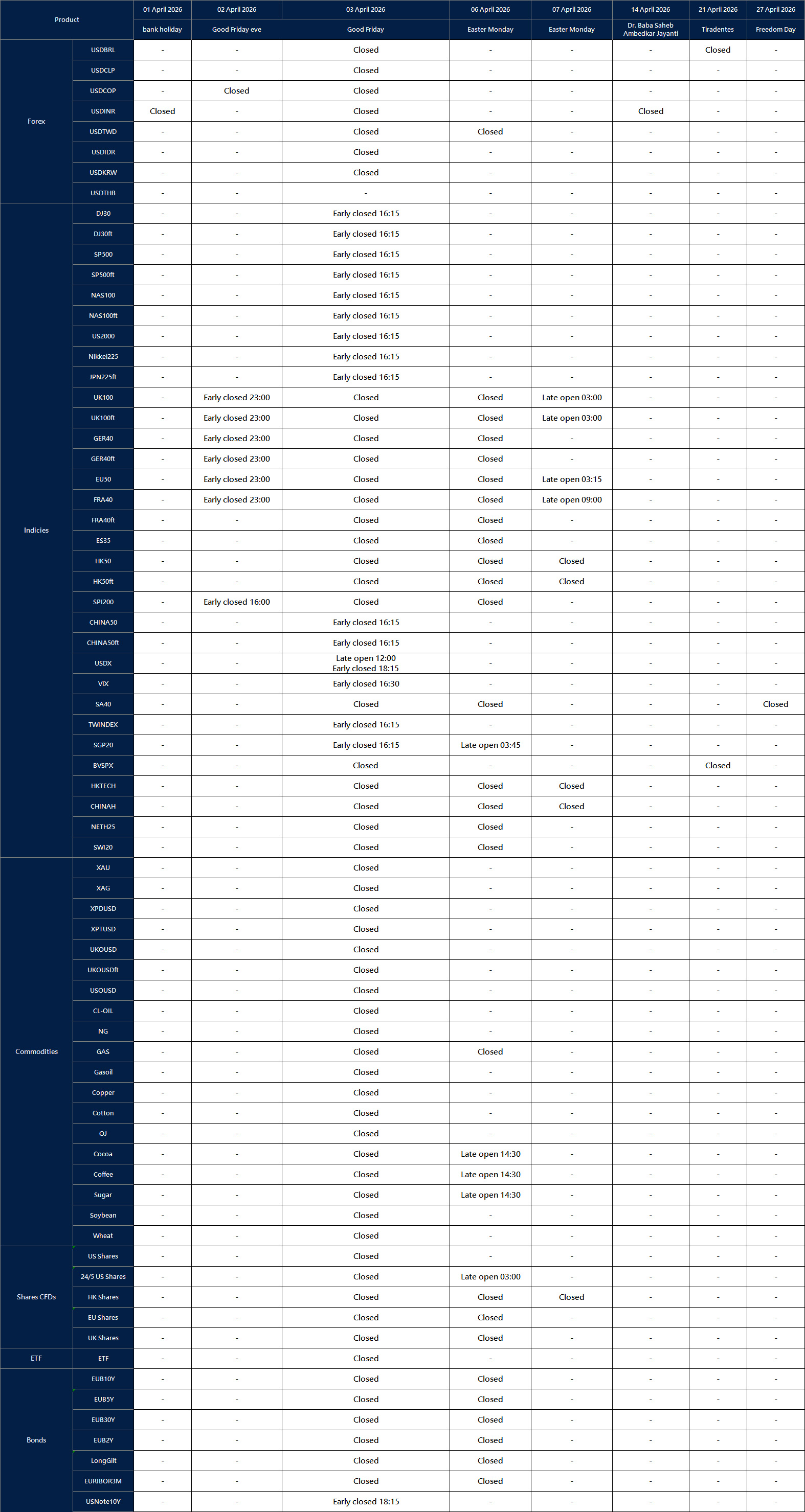
Holiday Trading Adjustment Notice – Mar 30 ,2026

Dear Client,

Affected by international holidays, the trading hours of some VT Markets products will be adjusted. Please check the following link for the affected products:

Holiday Trading Adjustment Notice

Note: The dash sign (-) indicates normal trading hours.

Friendly Reminder:
The above data is for reference only, please refer to the MT4/MT5 software for specific data.

If you’d like more information, please don’t hesitate to contact [email protected].

Back To Top
server

Hello there 👋

How can I help you?

Chat with our team instantly

Live Chat

Start a live conversation through...

  • Telegram
    hold On hold
  • Coming Soon...

Hello there 👋

How can I help you?

telegram

Scan the QR code with your smartphone to start a chat with us, or click here.

Don’t have the Telegram App or Desktop installed? Use Web Telegram instead.

QR code