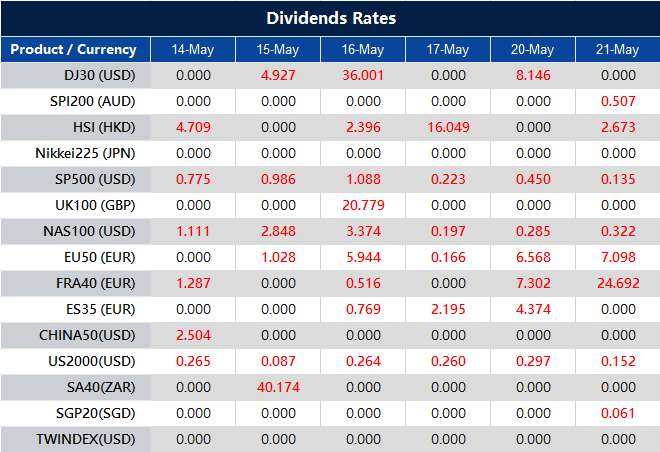
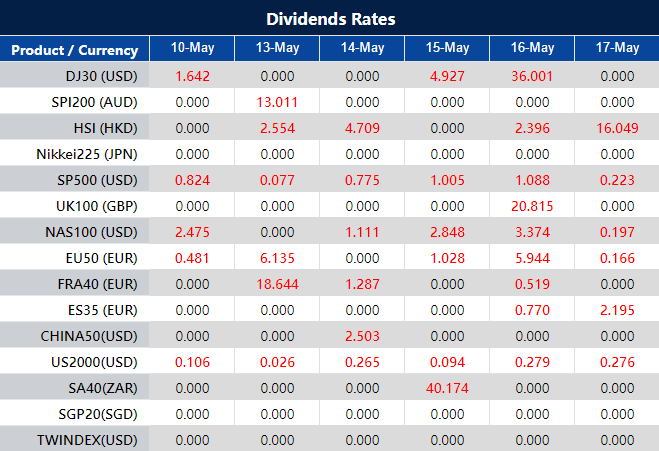
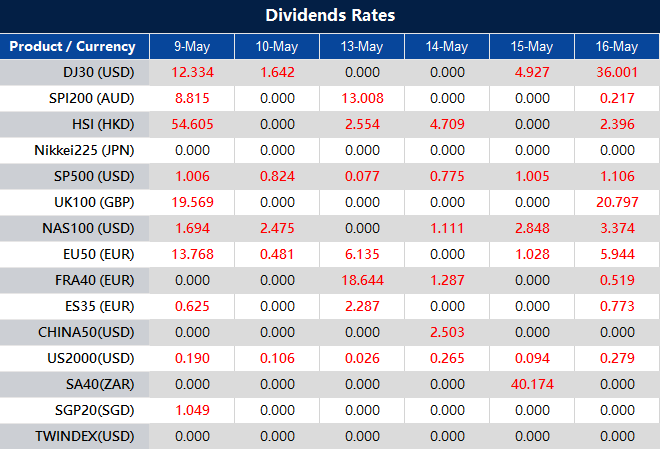
Please note that the dividends of the following products will be adjusted accordingly. Index dividends will be executed separately through a balance statement directly to your trading account, and the comment will be in the following format “Div & Product Name & Net Volume ”.
Please refer to the table below for more details:
The above data is for reference only, please refer to the MT4/MT5 software for specific data.
If you’d like more information, please don’t hesitate to contact [email protected].
The above data is for reference only, please refer to the MT4 and MT5 software for specific data.
Friendly reminders:
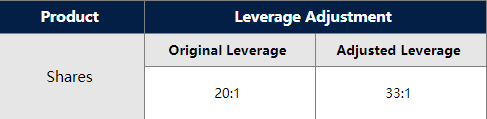
1. All specifications for Shares stay the same except leverage during the mentioned period.
2. The margin requirement of the trade may be affected by this adjustment. Please make sure the funds in your account are sufficient to hold the position before this adjustment.
If you’d like more information, please don’t hesitate to contact [email protected].
Imagine this: You’re seated before a bank of screens, each flickering with real-time market data. Your hands poised above the keyboard, ready to make your move. This is the world of scalping in trading—a fast-paced, high-stress arena where fortunes can be made in the blink of an eye.
Scalping isn’t just a trading strategy; it’s a course of quick decisions and minute market movements. But what exactly is scalping, and how do the events of the world impact it? Let’s delve deep into the rapid world of scalping and understand why some traders choose it over other strategies.
Wait.. what is scalping?
Scalping is a trading strategy primarily used in the CFD, forex, and stock markets where a trader engages in numerous trades to make small profits from each. The essence of scalping lies in its pace.
Scalpers aim to exploit small market inefficiencies, capturing profits from brief price gaps that occur when market orders are executed. The goal is to enter and exit positions quickly, capitalising on swift market movements.
Scalpers heavily rely on technical analysis, using tools that provide real-time data and enable quick decisions. The most common tools include high-frequency trading systems that facilitate rapid opening and closing of trades.
Naturally, these use of such tools underscores the need for precise timing and fast execution in scalping, distinguishing it from less intensive trading strategies. In the words of Tetris superstar Alex Thach – EYES WIDE OPEN.
Sounds like day trading, no?
While both scalping and day trading involve closing positions within the same day to avoid overnight market exposure, scalping is distinguished by the frequency and duration of trades.
Day traders might make a few trades per day based on extensive research and market analysis, holding positions for hours. In contrast, scalpers work on a much tighter timeline, often holding positions for just minutes or even seconds.
Risk and reward
The rapid nature of scalping allows traders to potentially earn profits daily, but it also demands constant market monitoring and quick reaction times. This strategy can be mentally and emotionally taxing — consider having to make hundreds of trading decisions each day!
For mere mortals like you and me, this usually results in decision fatigue. Decision fatigue is when making too many decisions over time wears down your ability to keep making good ones. Essentially, your brain gets tired of deciding, which can lead to quicker, less thought-out choices, or even avoiding decisions altogether.
As you get tired, you might make impulsive decisions or choose the easiest option, not necessarily the best one.
But some traders are just built different. Scalping is favored by those who prefer a dynamic trading environment and can manage stress effectively.
Scalpers accept lower profit margins per trade compared to other traders, but they compensate with a higher volume of trades.
Why choose scalping over other strategies?
Scalping provides immediate results, allowing traders to quickly know if their strategies are effective. This immediate feedback loop helps scalpers to refine their techniques in real-time.
Additionally, scalpers maintain a high level of control over their trades, choosing exactly when to enter and exit, minimising potential large losses that can occur from market overnight shifts.
There are also more opportunities for scalping. A scalper trading in the stock market may target stocks with high volatility. Throughout a trading session, such stocks might offer dozens of opportunities to enter and exit trades, each time aiming for a small profit. A scalper might decide to buy a stock at $10.50 and sell it at $10.55, making a small profit but doing so many times over the course of the day.
Scalping can be particularly satisfying for those who prefer seeing quick, frequent returns on their actions. Unlike strategies that aim for large gains over longer periods, scalping thrives on the accumulation of small wins, which can add up to quite a fair bit of profit by the end of the trading day.
Scalping isn’t for everyone
The scalping environment is fast-paced and requires a disciplined approach to manage the high volume of trades. Scalpers must make quick decisions, often under pressure, which can be mentally exhausting.
The necessity for high concentration levels and the constant monitoring of price movements demand a high degree of stamina and psychological resilience. Day in, day out, this can take a huge toll on the trader.
Another thing to note is that while the risk in individual scalping trades is typically lower than in longer-term trades, the cumulative risk can be substantial. Issues like market volatility, slippage, and even transaction costs can quickly add up and cost a scalper his trading portfolio.
Managing this cumulative risk requires a sound risk management strategy and consistent discipline. This includes setting strict stop-loss orders, adjusting trade sizes according to the prevailing market conditions, and monitoring overall exposure rather than assessing risk solely on a trade-by-trade basis.
While scalping generally focuses on quick trades within a single market, diversifying trading strategies can help manage cumulative risk. For example, using a combination of scalping during specific market hours and longer-term trades can offset the risks with just one approach.
Lastly, one common tactic employed by scalpers is to conduct regular performance reviews. This helps identify whether losses are indeed accumulating and whether the strategy needs tweaking. This ongoing analysis is crucial to stop the bleeding before it becomes unsustainable.
As you can see, while scalping is inherently speculative, successful scalpers utilise a method to overcome the almost arbitrary element of a speculative approach.
In today’s globalised market, international political events can quickly affect domestic markets. Scalpers need to be particularly attuned to the news that could influence market conditions. This includes not only obvious events like elections and fiscal policy changes but also subtler shifts such as regulatory changes in major economies, which could affect market sentiment and trading volumes.
How to do scalping in May 2024
Scalping is evergreen, namely because there are always some slight inefficiencies in the market. Successful scalpers adapt their strategies in real-time to cope with unexpected market movements caused by political events.
This might mean altering leverage, adjusting stop-loss orders, or temporarily reducing the number of trades. Flexibility and quick thinking are crucial traits for scalpers who need to thrive in an ever-changing political landscape.
Increased volatility
Political events such as elections, policy changes, or geopolitical conflicts can induce significant volatility in the markets. For scalpers, increased volatility can both pose risks and open opportunities. Rapid changes in price can lead to higher profits, but the unpredictable nature of such events can also result in losses if not navigated carefully.
During times of political uncertainty, some traders withdraw, reducing market liquidity. This can be a double-edged sword for scalpers: lower liquidity means larger price gaps, which can increase profit potential, but it also increases the risk of slippage—the difference between the expected price of a trade and the price at which the trade is actually executed.
Is scalping for you?
Scalping is not suitable for everyone. It suits those who thrive under pressure, can dedicate full attention to the markets during trading hours, and possess quick decision-making skills. If you find satisfaction in making multiple trades and seeing quick results, scalping could be a rewarding trading strategy for you. However, it’s essential to approach scalping with a robust understanding of its demands and risks, particularly in how global political events can impact market conditions.
Understanding and mastering scalping in the context of today’s fast-moving financial markets and political realities is more than just a skill—it’s an art. For those drawn to this vibrant trading strategy, it offers a thrilling path to potential profitability, shaped by the rapid rhythms of global events and market reactions.
By engaging with scalping on a deep level, traders can turn the minute-by-minute volatility of the markets into opportunities for growth, making it an exciting, though challenging, trading strategy in the modern financial landscape.
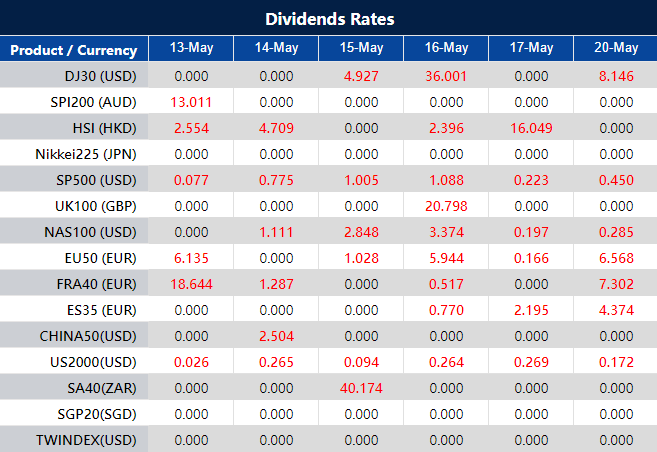
Please note that the dividends of the following products will be adjusted accordingly. Index dividends will be executed separately through a balance statement directly to your trading account, and the comment will be in the following format “Div & Product Name & Net Volume ”.
Please refer to the table below for more details:
The above data is for reference only, please refer to the MT4/MT5 software for specific data.
If you’d like more information, please don’t hesitate to contact [email protected].
Sydney, Australia, 13 May 2024 – Global multi-asset broker VT Markets recently attended in the Tokyo E Prix in March, where their partner, Formula E team Maserati MSG Racing, achieved a remarkable podium finish at Japan’s inaugural Formula E race event.
Amidst the electrifying atmosphere, representatives from VT Markets joined enthusiastic spectators in cheering for Maserati MSG Racing, underscoring the camaraderie and excitement of the partnership.
“We’re dedicated to curating exceptional experiences, aligned with our mission of fostering accessible trading,” stated Sarah Yamamoto, Japan Country Manager at VT Markets. “The determination showcased by Maserati MSG Racing reflects our shared values of innovation and accessibility in a fiercely competitive landscape.”
With the Tokyo event concluding on a high note, the next big race in Asia will be the Formula E race in Shanghai in May, showcasing the capabilities of electric motorsport technology in a metropolitan setting. Clients and staff of VT Markets will also be there to cheer on their partner in the grandstands. The award-winning broker looks ahead with excitement to future opportunities, providing its clientele and team with access to such exceptional experiences, an extension of the brokerage’s emphasis on accessible trading.
The award-winning brokerage sees distinct parallels in its tie-in with Maserati MSG. Sharing a focus on achieving reliability and performance, the partnership was first announced in October last year and lately reaffirmed through a highly successful media event in April, attended by the Maserati MSG Racing drivers Maximilian Günther and Jehan Daruvala, as well as Scott Swid, the Chairman and Principal Owner of Maserati MSG Racing. This was held by VT Markets as part of a series of exclusive experiences for guests and clients, in the same weekend as the Monaco E-Prix.
As VT Markets continues to expand its presence on the global stage, the company remains committed to driving innovation and sustainable growth, while delivering unparalleled experiences for its clients and partners alike.
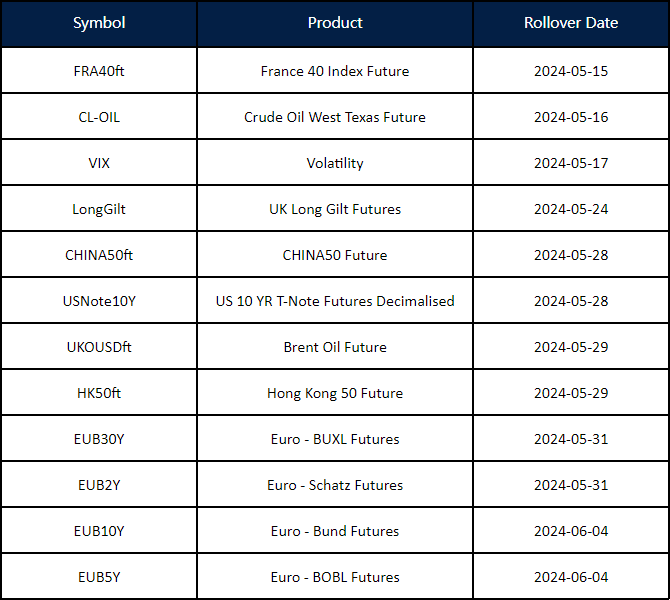
New contracts will automatically be rolled over as follows:
Please note:
• The rollover will be automatic, and any existing open positions will remain open.
• Positions that are open on the expiration date will be adjusted via a rollover charge or credit to reflect the price difference between the expiring and new contracts.
• To avoid CFD rollovers, clients can choose to close any open CFD positions prior to the expiration date.
• Please ensure that all take-profit and stop-loss settings are adjusted before the rollover occurs.
• All internal transfers for accounts under the same name will be prohibited during the first and last 30 minutes of the trading hours on the rollover dates.
If you’d like more information, please don’t hesitate to contact [email protected].
Please note that the dividends of the following products will be adjusted accordingly. Index dividends will be executed separately through a balance statement directly to your trading account, and the comment will be in the following format “Div & Product Name & Net Volume ”.
Please refer to the table below for more details:
The above data is for reference only, please refer to the MT4/MT5 software for specific data.
If you’d like more information, please don’t hesitate to contact [email protected].
Interest rates matter more than you think. Learn how the Fed’s policies can affect commodity prices.
Imagine starting your day with a warm, inviting latte. As you savor the rich aroma and creamy texture, you’re unwittingly experiencing the end result of complex global forces at play.
But what exactly is in a cup of joe? And how can abstract monetary policy affect what you might be enjoying?
Chaos theory suggests that even the smallest actions can have far-reaching effects, much like a butterfly fluttering its wings might eventually influence weather patterns miles away.
Not to be melodramatic, but similar subtle forces are at work in the global economy. Decisions made by the Federal Reserve—such as minute adjustments in interest rates or shifts in monetary policy—can resonate globally, ultimately affecting the price of the coffee you enjoy each morning.
Sounds impossible? Let’s explore how.
How supply meets demand for coffee
Our journey begins in the vast coffee plantations of Brazil, where a sudden frost threatens the next harvest.
Parts of Brazil saw rare snowfall overnight on Wednesday as a polar air mass moved over the centre-south of the country. Many people went on to the streets to marvel at it, however the cold conditions have brought a frost threat to coffee, sugarcane and orange crops. pic.twitter.com/WWJc0ew51z
As news reaches the market, global coffee prices start to twitch, preparing for a leap. It’s a simple lesson in supply and demand, but one that has profound implications.
Back in a bustling city café, a price hike on the menu subtly reflects these global supply anxieties. The effect of these commodity prices means that even small disruptions can cause significant price fluctuations for consumers.
This is known in economics as price elasticity, and was first formally introduced by the economist Alfred Marshall in his book “Principles of Economics” published in 1890. Essentially, it reflects how changes in price influence consumer behavior or producer output.
If the price of coffee rises due to changes in the weather, and if coffee is something many people feel they can skip, people might choose to cut back or switch to a cheaper alternative. Like a ripple in a pond, this decision affects not just your budget but also local coffee shops and suppliers.
While changes in weather can stir the market for coffee, creating waves that impact everything from your daily routine to the turnover at local cafes, there is an even more formidable force capable of causing larger ripples across the global economic pond— central banks.
Percolating the markets
Across the financial districts of New York, the Federal Reserve announces a cut in interest rates, aiming to spur economic growth. As the dollar becomes cheaper, investors look abroad, targeting commodities like coffee, inadvertently pushing prices up.
Do these investors intend to consume the coffee? Not necessarily, rather – many of these investors do so because they consider coffee, the commodity, to be a safe investment during economic downturns. Why? Because, like other commodities such as gold, it tends to retain value even when other investment vehicles may falter.
Aside from using coffee as a hedge, investing in commodities like coffee can diversify an investment portfolio, reducing risk by not having all assets tied to the stock market or other financial instruments that might be adversely affected by an economic downturn.
Despite economic conditions, the demand for certain commodities, including coffee, remains relatively stable. People may cut down on luxury items during a recession, but many will still buy coffee, making its demand inelastic. This stability in demand helps maintain its price, making coffee a relatively safe investment during uncertain economic times.
In 2008, as markets teetered on the edge of disaster, the Federal Reserve’s quantitative easing flooded the market with liquidity. Commodities, seen as a hedge against the dollar’s decline, surged in appeal, pulling up prices from oil to oats.
Global grinds
It’s important, however, to recognise that the influence on global commodity prices extends beyond U.S. borders and monetary policy. Governments and central banks worldwide play pivotal roles in shaping these markets through their own unique sets of policies and actions.
For instance, when we consider the impact of global politics beyond the Federal Reserve, trade policies emerge as a significant force. Tariffs and trade agreements can drastically alter the costs of imports and exports.
For example, during the U.S.-China trade war, tariffs imposed on billions of dollars of goods disrupted global supply chains and affected commodity prices worldwide, including agricultural products and metals.
This kind of geopolitical maneuvering can create volatility in commodity markets, affecting prices just as profoundly as any monetary policy.
Consider how new biofuel policies increase the demand for corn, shifting resources away from other crops. This not only raises corn prices but also nudges up related commodity prices, including those of coffee, through shared agricultural inputs and transportation networks.
#Brazil#Ethanol sales in Jan were almost 1 bln liters higher than last year as the #biofuel is currently having a large price advantage over #gasoline in the domestic market due to higher production, lower #corn costs for corn ethanol producers pic.twitter.com/PGFIQKqDCE
This year, the Fed’s strategic decisions have been a linchpin in the financial narratives that ripple through commodity markets, from crude oil to your morning cup of coffee.
In response to “sticky” inflation, the Federal Reserve raised interest rates to 5.15% earlier in 2023, marking a shift aimed at tempering price levels across the economy. This move, part of a broader strategy to manage inflation without stifling economic growth.
The implications of these adjustments are profound. Higher interest rates typically strengthen the dollar, making U.S. exports more expensive and potentially reducing foreign demand for U.S. commodities like coffee.
Conversely, a stronger dollar can make imports cheaper, affecting the domestic prices of imported goods, including coffee.
From bean to cup
For investors and traders, understanding these dynamics is not just academic—it’s a practical necessity for informed decision-making.
For one, traders should note how changes in interest rates, as influenced by the Federal Reserve, can affect commodity prices. This understanding can help traders anticipate market movements and adjust their portfolios accordingly.
Traders should also stay informed about international relations, trade policies, and political stability in countries that are major producers or consumers of commodities. While they might not engage in news trading, this will help aid them to identify risks and opportunities associated with political movements.
Like any good portfolio, traders should consider diversifying their trading portfolios to include a mix of commodity investments, stocks, bonds, and other assets. This strategy can protect against volatility in any single market segment, such as commodities, which are susceptible to sudden political or economic changes.
As you consider diversifying your portfolio to manage risk and embrace sustainability, remember that choosing the right platform is crucial. With VT Markets, you can access a diverse range of commodities, stocks, bonds, and other assets, all while incorporating ESG factors into your investment decisions.
This approach not only broadens your investment opportunities but also aligns with modern ethical standards, preparing you for a future where environmental and social governance plays a central role in trading.
Dive into a dynamic trading environment where variety and values meet, ensuring you’re well-equipped to tackle the market’s volatility with confidence and a conscience.
Explore one of the best CFD brokers around and open a CFD trading account with VT Markets today.
As part of our commitment to provide the most reliable service to our clients, there will be server maintenance this weekend.
Maintenance Hours :
11th of May 2024 (Saturday) 18:00 – 24:00 (GMT+3)
Please note that the following aspects might be affected during the maintenance:
1. The price quote and trading management will be temporarily disabled during the maintenance. You will not be able to open new positions, close open positions, or make any adjustments to the trades.
2. There might be a gap between the original price and the price after maintenance. The gaps between Pending Orders, Stop Loss and Take Profit will be filled at the market price once the maintenance is completed. It is suggested that you manage the account properly.
Please refer to the MT4/MT5 software for the specific maintenance completion and marketing opening time.
Thank you for your patience and understanding about this important initiative.
If you’d like more information, please don’t hesitate to contact [email protected].
Please note that the dividends of the following products will be adjusted accordingly. Index dividends will be executed separately through a balance statement directly to your trading account, and the comment will be in the following format “Div & Product Name & Net Volume ”.
Please refer to the table below for more details:
The above data is for reference only, please refer to the MT4/MT5 software for specific data.
If you’d like more information, please don’t hesitate to contact [email protected].