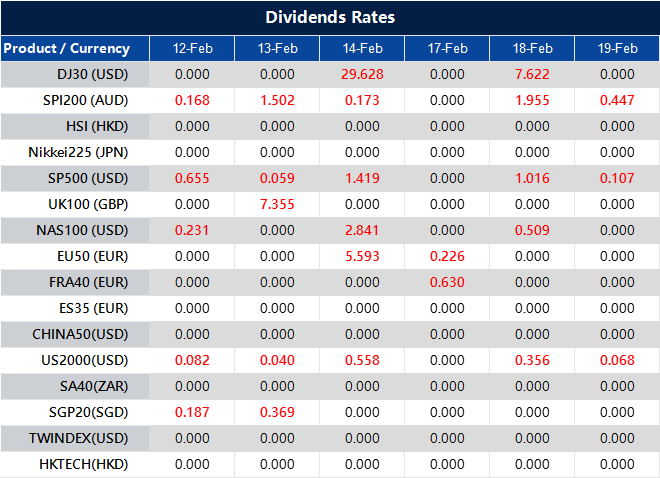
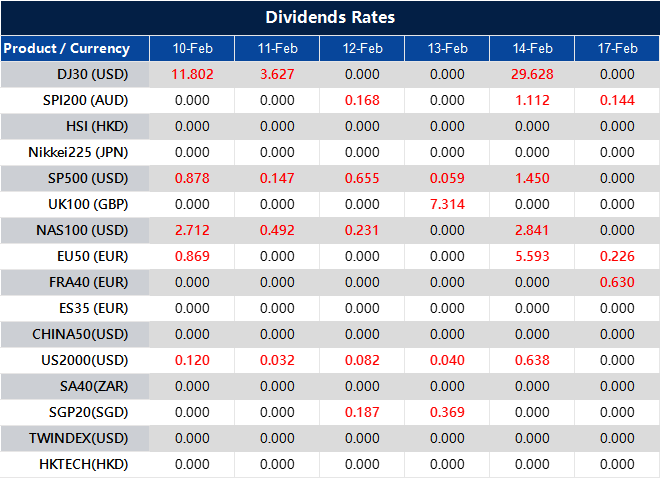
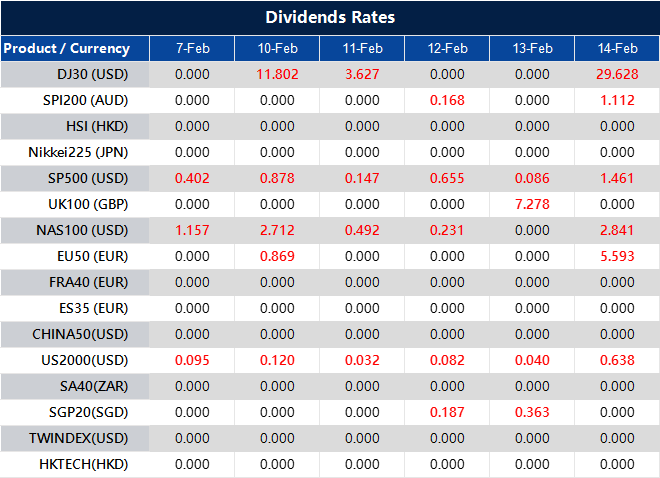
Please note that the dividends of the following products will be adjusted accordingly. Index dividends will be executed separately through a balance statement directly to your trading account, and the comment will be in the following format “Div & Product Name & Net Volume ”.
Please refer to the table below for more details:
The above data is for reference only, please refer to the MT4/MT5 software for specific data.
If you’d like more information, please don’t hesitate to contact [email protected].
Written on February 12, 2025 at 7:40 am, by anakin
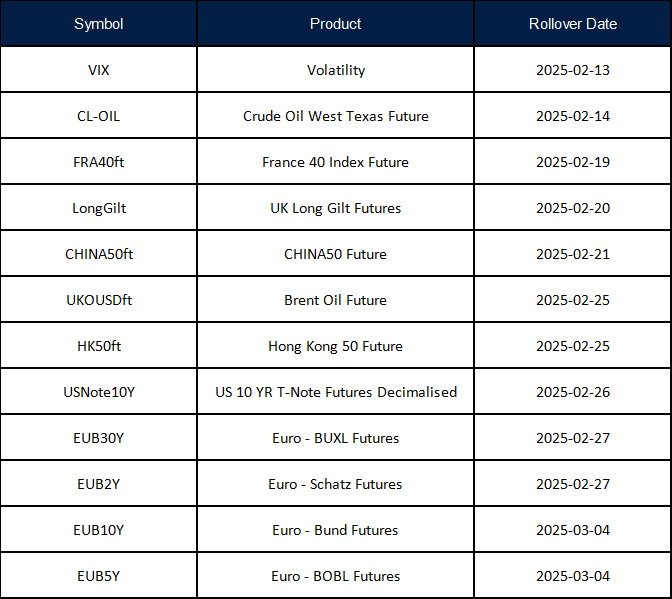
New contracts will automatically be rolled over as follows:
Please note:
• The rollover will be automatic, and any existing open positions will remain open.
• Positions that are open on the expiration date will be adjusted via a rollover charge or credit to reflect the price difference between the expiring and new contracts.
• To avoid CFD rollovers, clients can choose to close any open CFD positions prior to the expiration date.
• Please ensure that all take-profit and stop-loss settings are adjusted before the rollover occurs.
• All internal transfers for accounts under the same name will be prohibited during the first and last 30 minutes of the trading hours on the rollover dates.
If you’d like more information, please don’t hesitate to contact [email protected].
Written on February 11, 2025 at 8:05 am, by anakin
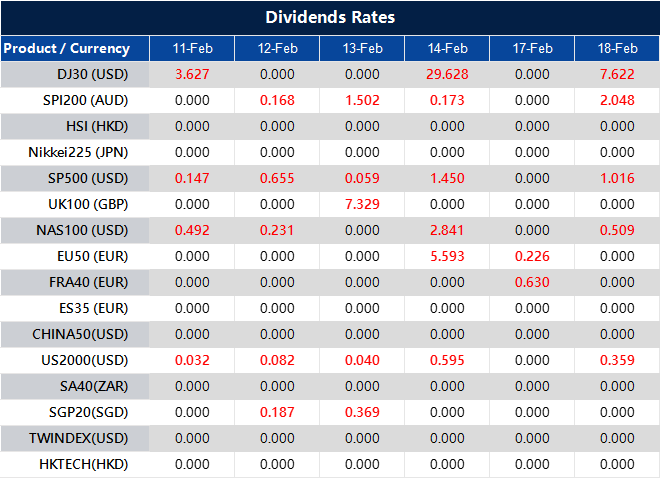
Please note that the dividends of the following products will be adjusted accordingly. Index dividends will be executed separately through a balance statement directly to your trading account, and the comment will be in the following format “Div & Product Name & Net Volume ”.
Please refer to the table below for more details:
The above data is for reference only, please refer to the MT4/MT5 software for specific data.
If you’d like more information, please don’t hesitate to contact [email protected].
Written on February 11, 2025 at 7:56 am, by anakin
Pedagang telah diuji bertalu-talu pada minggu lepas dengan pasaran bergelut untuk mencerna polisi perdagangan dan keputusan bank pusat. Langkah agresif Donald Trump untuk mengenakan tarif telah mengasak pasaran global, dengan duti baru ke atas China, Mexico, dan Kanada menghangatkan volatiliti merentasi ekuiti, mata wang, dan komoditi.
Donald Trump said he will introduce new 25% tariffs on all steel and aluminum imports into the US, on top of existing metals duties, in another major escalation of his trade policy overhaul https://t.co/pTwx469H2J
Penundaan kebanyakan tarif memberikan ruang bernafas buat sementara waktu, tetapi China masih terlibat dalam pertikaian perdagangan baru dengan US, dengan membalas duti 15% ke atas eksport tenaga dan 10% ke atas 72 produk kilang.
Memburukkan lagi keadaan, Trump telah menarik balik keputusannya untuk menghapuskan loophole de minimis, yang sebelum ini mengecualikan tarif untuk import bernilai kecil dari China.
Dengan tarif menyebulungi ekonomi global seperti ribut, bank pusat sedang melaraskan polisi monetari mereka bagi mengimbangi risiko inflasi dengan pertumbuhan yang perlahan.
Bank Pusat Umumkan Kadar
Federal Reserve dijangka memotong kadar sebanyak 50 mata asas, menurunkan kadar penanda aras kepada 4.00% menjelang akhir 2025. Langkah ini mencerminkan langkah berhati-hati berbanding pelonggaran agresif, memandangkan pasaran buruh yang kukuh dan kebimbangan inflasi berterusan menghalang Fed dari melakukan pemotongan lebih mendalam.
Di seberang Atlantik, European Central Bank (ECB) sedang bersedia untuk kitaran pelonggaran yang lebih agresif, dengan unjuran pemotongan kadar 100 mata asas untuk menurunkan kadar akhir kepada 2.15%. Inflasi di Eurozone telah menurun kepada 2.4%, memberikan ECB sedikit ruang untuk merangsang pertumbuhan. Walau bagaimanapun, jurang kadar yang melebar antara Fed dan ECB dijangka melemahkan euro, mendorong aliran keluar modal ke arah dolar.
Bank of England (BOE) juga telah menukar pendirian, dengan unjuran pemotongan kadar 75 mata asas dijangka menurunkan kadar akhir kepada 4.00% menjelang akhir tahun. Ekonomi UK semakin perlahan, dan pasaran buruh menunjukkan tanda-tanda tekanan. Pound British kekal di bawah tekanan, dengan kebimbangan gangguan perdagangan berkaitan Brexit dan kemungkinan tarif US ke atas barang UK menambah kerapuhannya.
Jepun kekal sebagai pengecualian dalam kalangan bank pusat utama. Bank of Japan (BOJ) dijangka menaikkan kadar sebanyak 75 mata asas, meningkatkan kadar dasar kepada 1.00% pada 2025. Ini menandakan perubahan besar daripada dasar kadar faedah negatif Jepun yang berpanjangan, didorong oleh pertumbuhan gaji dilaras inflasi dan prospek ekonomi yang lebih stabil. Walau bagaimanapun, jika sektor eksport Jepun terjejas oleh tarif baharu US, BOJ mungkin terpaksa mempertimbangkan semula kadar pengetatan.
Pasaran Minggu Ini
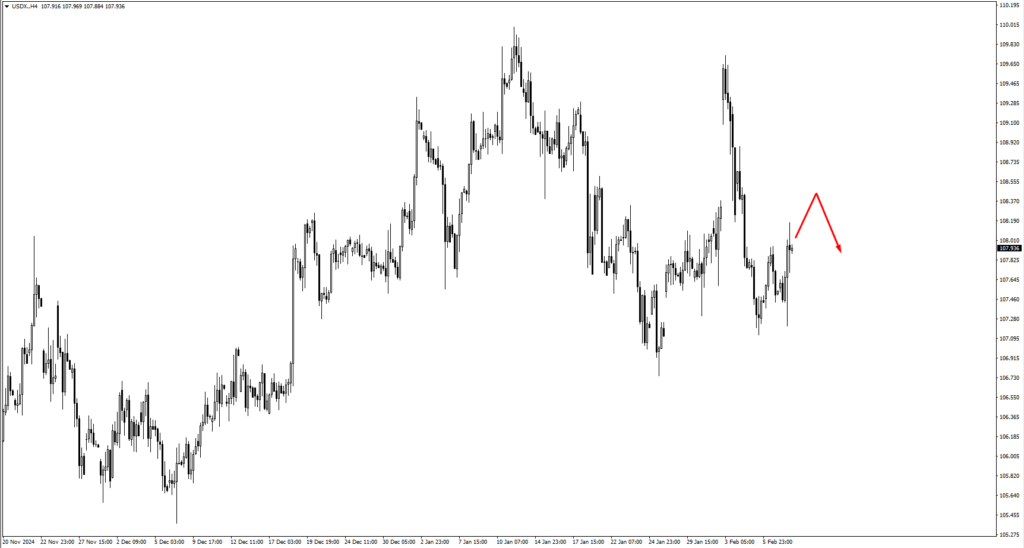
Dengan ketakpastian yang tinggi, kita beralih kepada carta untuk isyarat lebih lanjut mengenai hala tuju pasaran. Indeks dollar US (USDX) berdagang dalam julat yang berubah-ubah, mencecah 108.35 sebelum menarik balik. Jika pergerakan harga bergerak mendatar pada paras ini, pergerakan menurun ke 107.70 masih berkemungkinan, manakala sebarang pecahan di atas 108.65 boleh meningkatkan kekuatan dollar.
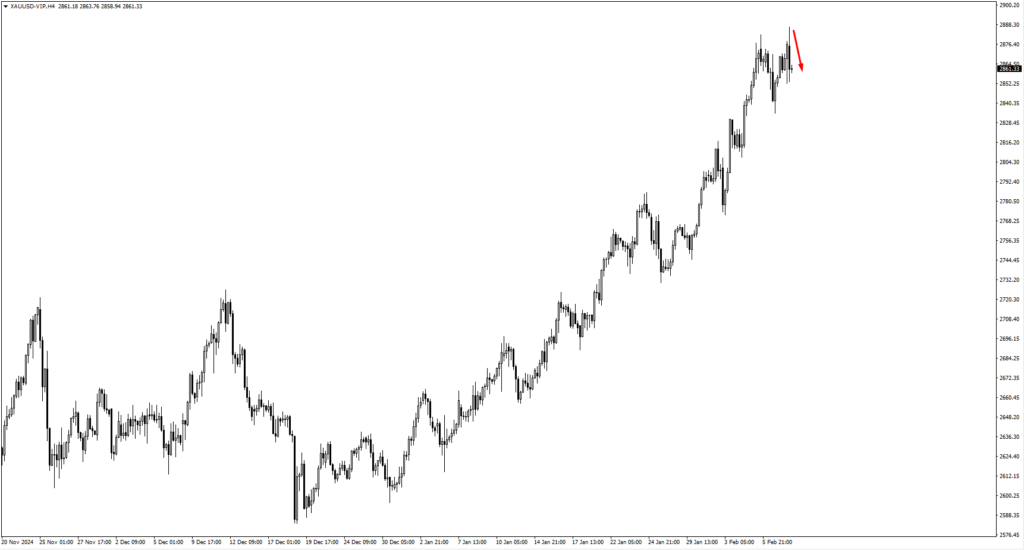
Emas terus mempamerkan ketakpastian, yang awalnya menolak rintangan pada $2,870 sebelum menunjukkan tanda−tanda kenaikan baru. Jika emas meneruskan kenaikan, pedagang akan memerhatikan pergerakan harga berhampiran $2,943 untuk pengesahan pecahan rintangan. Dengan kebimbangan inflasi dan risiko global masih berterusan, emas kekal sebagai pelindung nilai terhadap volatiliti.
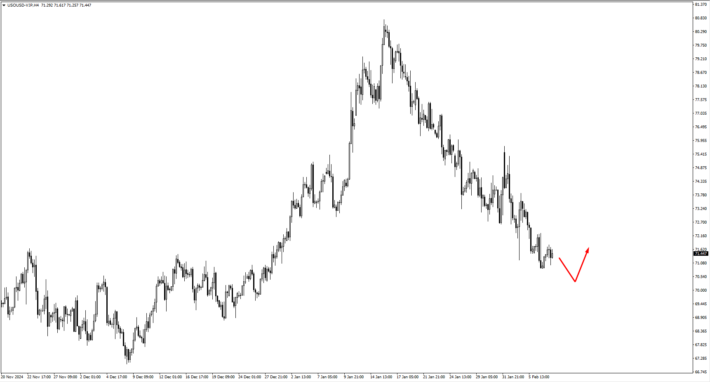
Harga minyak mencari arah, dengan minyak WTI menguji $71.00. Jika harga kekal pada paras ini, momentum menaik boleh mendorong ujian semula pada $76.50. Walau bagaimanapun, kebimbangan berterusan terhadap polisi perdagangan dan permintaan tenaga mungkin menyekat kenaikan, mengekalkan minyak dalam fasa konsolidasi.
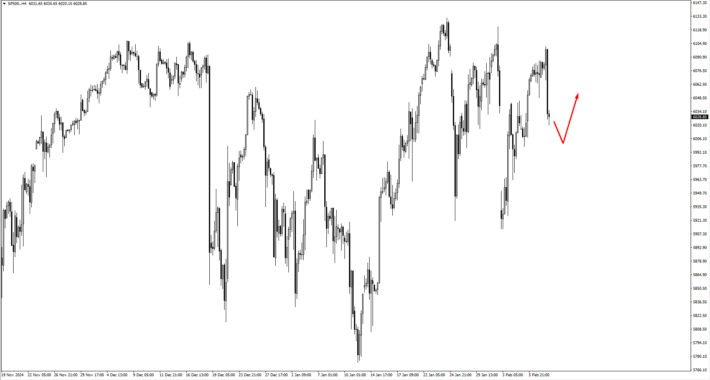
S&P 500 bergerak mendatar selepas rali baru-baru ini, dengan sokongan utama berhampiran 6,000. Jika pembeli mula aktif, pergerakan ke arah 6,190 dan 6,330 menjadi kemungkinan. Namun, dengan polisi monetari dan risiko perdagangan masih berlegar-legar, indeks mungkin sukar mengekalkan momentum bullish tanpa data ekonomi lebih kukuh.
Bitcoin berada dalam julat sempit, menguji paras tinggi kritikal pada 102,475. Jika pergerakan harga kekal tidak menentu, Bitcoin mungkin jatuh ke 94,770 sebelum cubaan pecahan tinggi yang baru. Jika 102,475 kekal sebagai rintangan, penurunan lanjut ke 91,227 atau 89,146 mungkin menjadi tumpuan sebelum sebarang momentum bullish muncul semula.
Peristiwa Minggu Ini
Pada hari Selasa, ucapan Gabenor BOE Bailey dijangka memberi potensi kenaikan awal kepada GBP/USD, walau kegagalan mengekalkan paras di atas 1.2300 boleh mencetuskan penurunan. Kemudian, testimoni Pengerusi Fed Powell dijangka mendorong USDX bergerak mendatar ke atas sebelum menurun, menjadikannya peristiwa utama untuk posisi dollar.
Hari Rabu memberikan data inflasi US, dengan Core CPI dijangka pada 2.9% (turun daripada 3.2%). CPI Keseluruhan diunjurkan kekal pada 2.9%. Walaupun tiada jangkaan kejutan besar, angka ini akan mempengaruhi jangkaan pasaran terhadap keputusan kadar Fed.
Pada hari Khamis, jangkaan inflasi New Zealand (sebelumnya 2.12%) dan data GDP UK, diunjurkan kekal pada pertumbuhan 0.10% bulanan, menjadi tumpuan. Sementara itu, CPI Switzerland dijangka kekal pada -0.10%, dan PPI US diunjurkan pada 0.20%, tanpa perubahan struktur besar. Walaupun angka ini mungkin tidak mengubah sentimen pasaran secara drastik, ia akan membantu membentuk prospek dasar monetari merentas ekonomi ini.
Please note that the dividends of the following products will be adjusted accordingly. Index dividends will be executed separately through a balance statement directly to your trading account, and the comment will be in the following format “Div & Product Name & Net Volume ”.
Please refer to the table below for more details:
The above data is for reference only, please refer to the MT4/MT5 software for specific data.
If you’d like more information, please don’t hesitate to contact [email protected].
Written on February 10, 2025 at 7:22 am, by anakin
You wake up, coffee in hand, screens glowing with opportunity. The markets are moving, and you’re ready to jump in. But somewhere between the first trade of the day and the fiftieth price refresh, the excitement starts to fade. Your heart races, your shoulders tense, and suddenly, every decision feels heavier than it should. Sound familiar?
Welcome to the reality of trading stress.
The markets are relentless—always open, always shifting, always demanding your attention. But trading success isn’t just about reading charts and executing trades—it’s about managing your mindset and energy levels too. If you’re running on fumes, your decision-making will suffer, your confidence will dip, and your once-strategic moves will become reckless guesses.
But it doesn’t have to be that way.
The Hidden Cost of Stress in Trading
Stress doesn’t just make you feel bad—it kills your edge in the market. That slight hesitation before executing a trade? The panic-driven impulse buy? The refusal to cut a losing position, hoping for a miracle reversal? That’s stress talking.
Burnout doesn’t hit all at once—it creeps up on you. One minute, you’re locked in, feeling on top of the world. The next, you’re fatigued, unfocused, and making trades just to feel like you’re doing something.
The early signs of burnout aresubtle. It starts with an extra hour at the screen, then two. A hesitation that wasn’t there before. A sudden wave of doubt before executing a trade. A tendency to overcorrect, to react impulsively instead of following a plan. What once felt like a thrilling game of strategy starts to feel like a war of attrition—one where you’re both the commander and the casualty.
The markets have a way of rewarding patience, of favouring those who know when to act and when to wait. The best traders aren’t necessarily the ones who know the most technical patterns or have the most aggressive strategies. They are the ones who know themselves. Who recognize the limits of their focus, their stamina, their emotional resilience.
Learning to Unwind
In an industry that thrives on the idea of ‘grind culture,’ the notion of stepping away feels counterintuitive.
But the traders who last aren’t the ones who trade the most—they’re the ones who trade the smartest. And smart trading is about more than just numbers and charts. It’s about energy management. It’s about knowing when to unplug, when to reset, when to take a step back so that you can return sharper, clearer, and in control.
The traders who thrive are the ones who have built rituals into their day—not just for trading, but for maintaining balance. They have their morning routines, their ways of grounding themselves before the first trade. They set limits, not just on their positions but on their time. They step away when they need to, knowing that clarity doesn’t come from staring at the screen longer, but from knowing when to pause and recalibrate.
And perhaps most importantly, they know that trading is not just about the wins. It’s about the long game. It’s about consistency over time, about learning from losses without letting them define you. It’s about knowing that success isn’t just measured in profits, but in longevity.
The market isn’t going anywhere. The question is, will you still be here, years from now, still sharp, still in love with the game, still making moves with confidence? Because the ones who last aren’t just traders. They are strategists, they are risk managers, they are masters of their own minds.
And that, in the end, is what separates those who burn out from those who build legacies.
Written on February 10, 2025 at 2:55 am, by anakin
Trading is exhilarating. The rush of placing a well-timed trade, the thrill of seeing your analysis play out—it’s a world of possibilities, a puzzle of price action and psychology.
But for every soaring high, there’s a crushing low.
Every trader, no matter how seasoned, remembers that moment—the one where they stared at their screen, watching a trade unravel, wondering where they went wrong.
It’s a lonely feeling, trying to navigate the markets without guidance. Some get lost in an endless cycle of YouTube tutorials and strategy PDFs. Others jump from one “guru” to the next, chasing promises of success that never materialize.
The truth?
Trading isn’t just about strategies and indicators—it’s about learning how to think, how to react, how to adapt. And that’s where the right education—whether through a structured course or the guidance of a mentor—makes all the difference.
The Power of Learning
Picture two traders starting out at the same time. One dives headfirst into the markets, learning by trial and error, taking hits along the way. The other takes a different route—studying under those who have already mastered the game, absorbing the nuances, refining their edge with knowledge rather than just experience.
A year later, one of them is still struggling, repeating the same mistakes. The other? They’ve learned to move with the market, not against it.
This isn’t a question of talent. It’s about how you learn, who you learn from, and how you apply that knowledge in real time.
A good trading course isn’t just a collection of lessons—it’s a blueprint. It structures your growth, teaches you how to spot opportunities, and—most importantly—helps you avoid the common pitfalls that wipe out new traders before they even get started.
The best courses go beyond just technical indicators. They teach how to manage risk, how to read market sentiment, and how to master the psychological side of trading. Without that foundation, even the best strategy will fail.
Why Guidance Matters
But even with the best education, something is always missing when you go it alone. The market throws curveballs. No course can prepare you for the emotional rollercoaster of watching a winning trade turn against you—or the hesitation that stops you from pulling the trigger on the right setup.
This is where mentorship changes everything.
A great mentor won’t give you shortcuts—they’ll give you perspective. They’ve been through the ups and downs. They know what it’s like to second-guess a decision or get caught in a losing streak. And because they’ve been there, they know how to guide you through it.
More than just strategy, a mentor helps you build the right mindset. They keep you accountable, push you to stick to your risk management, and help you refine your decision-making. In a world where self-doubt can be a trader’s worst enemy, having someone in your corner can mean the difference between giving up and pushing forward.
The Trap of Quick Fixes
Of course, there’s a dark side to trading education. The internet is flooded with flashy promises—”100% win rates,” “easy trading secrets,” “guaranteed profits.” It’s easy to be drawn in by the dream of making fast money. But the traders who actually succeed know better.
Real growth doesn’t come from a one-size-fits-all system. It comes from understanding how the market works, how to adapt, how to think critically in the face of uncertainty. If someone is selling you an easy road, it’s probably a dead end.
The best traders? They invest in their education the same way they invest in the market—with patience, strategy, and a long-term mindset.
Written on February 10, 2025 at 2:42 am, by anakin
Please note that the dividends of the following products will be adjusted accordingly. Index dividends will be executed separately through a balance statement directly to your trading account, and the comment will be in the following format “Div & Product Name & Net Volume ”.
Please refer to the table below for more details:
The above data is for reference only, please refer to the MT4/MT5 software for specific data.
If you’d like more information, please don’t hesitate to contact [email protected].
Like the unforgiving, post-apocalyptic sandy dunes of Mad Max, financial markets thrive on uncertainty–and nothing fuels volatility like breaking economic news.
From surprise interest rate hikes and global trade tensions to disappointing data and economic reports, major events can shape market sentiments and drive price swings. Traders quick on their feet often capitalise on these events.
This is known as news trading, but is it truly a high-reward opportunity or simply high-risk speculation? We’ll explore how traders can leverage basic analysis, market reactions and strategic executions to harness the power of news-driven volatility into potential gains.
Understanding How Economic Events Move the Market
News trading isn’t just about awareness—it’s about knowing how to react.
We’ll start with learning how to identify relevant news. Here are some key economic events that often move the markets:
Central bank decisions: Interest rate hikes or cuts can cause significant currency and market movements.
Employment reports: For example, the Non-Farm Payrolls–or NFP–release often triggers turbulence in forex and indices.
Trade and political tensions: Policies and tariffs can create uncomfortable tension that leads to uncertainty in equities, commodities, and forex pairs.
These events create liquidity and movement, but they also introduce risk–which can managed with the right strategies.
Navigating Highly Turbulent Waters
News-driven volatility offers high reward potential, but risk management is critical. Having a well-defined risk plan ensures traders can navigate news releases without unnecessary exposure.
Here’s how you can protect your capital:
Setting smart stop-losses: Avoid placing stops too tight, as price whipsaws are common.
Reducing leverage: High leverage amplifies both profits and losses—scaling down risk can prevent large drawdowns.
Monitoring spreads and liquidity: Some brokers widen spreads during news events, making execution more challenging.
Stay Ahead of the Curve with Strategy
There’s no one-size-fits-all approach to news trading. Every trader has different risk tolerance, personality, and trading style. Experiment and find what works best for you.
Here are some common news trading strategies:
Pre-News Positioning: Entering a trade based on expectations before a news release. This approach can be highly rewarding but carries risk if the outcome is different from forecasts.
Post-News Momentum Trading: Waiting for the market’s initial reaction and then trading in the dominant direction.
Straddle Strategy: Placing both buy and sell orders before major events to capture large price swings, no matter the outcome.
Fading the Initial Move: Taking advantage of overreactions by entering positions opposite to the first major spike.
Strategies mean nothing without discipline and an understanding of market psychology. Keeping a clear head is key to making rational decisions and avoiding emotional reactions to news.
Interpreting Market Reactions
Not all news are created equal. While some reports move markets in the blink of an eye, others may have delayed effects.
Market participants must remember to consider:
Market expectations vs actual results: If an event aligns with forecasts, the market may not react strongly.
Risk sentiment: Are traders in a ‘risk-on’ or ‘risk-off’ mood? A weak economic report may cause panic selling in some environments but be brushed off in others.
Technical levels and price action: Combining fundamental analysis with technical indicators can help confirm trade setups.
Final Verdict: Is News Trading for You?
The wilderness that is news trading isn’t for everyone–but for those who can read market reactions and control risk, a bountiful land of brimming with unique opportunities awaits.
Understanding economic events, executing strategies effectively, and managing exposure can turn high volatility into potential rewards.
VT Markets equips traders with real-time news feeds, an economic calendar, and tight spreads–helping you trade market-moving events with confidence.
As part of our commitment to provide the most reliable service to our clients, there will be Server, VT APP, Client portal maintenance this weekend.
Maintenance Hours:
08th of February 2025 (Saturday) 00:00 – 10:00 (GMT+2)
Please note that the following aspects might be affected during the maintenance:
1. During the maintenance hours, the Client Portal and VT Markets App will be unavailable, including managing trades, Deposit/Withdrawal, and all the other functions will be limited
2. During the maintenance period, the official website registration page will be unavailable. We recommend that you avoid applying for registration during this period.
3. During the maintenance hours, the price quote and trading management will be temporarily disabled during the maintenance. You will not be able to open new positions, close open positions, or make any adjustments to the trades.
4. There might be a gap between the original price and the price after maintenance. The gaps between Pending Orders, Stop Loss and Take Profit will be filled at the market price once the maintenance is completed. If you don’t want to hold any open positions during the maintenance, it is suggested to close the position in advance.
Please refer to MT4 / MT5 / VT APP for the latest update on the completion and market opening time.
If you’d like more information, please don’t hesitate to contact [email protected].