This data illustrates a shift in corporate investment behaviour, where firms are now taking a more measured approach after a sustained period of expansion.
Corporate Investment Trends
The drop in capital expenditure, though slight, contrasts with the growth seen in the third quarter, suggesting that businesses are reassessing their strategies amidst external pressures. While overall corporate sales rose at a steady pace, the notable increase in recurring profits shows that firms have managed to bolster their earnings despite adjusting their spending.
Monetary policy expectations and broader economic indicators should also be factored into assessments.
Market Outlook And Policy Impact
Should central banks signal shifts in policy that affect funding conditions, firms may adapt their spending accordingly. Recent earnings reports demonstrate that companies remain financially strong, but whether they continue to deploy capital at previous levels depends on how external pressures unfold. With government targets in place and firms navigating shifting conditions, the coming weeks warrant close monitoring.
Gold prices in the United Arab Emirates were relatively stable on Tuesday. The cost remained at 341.25 AED per gram, slightly down from 341.32 AED the previous day.
For a tola, the price was 3,980.23 AED, a minor decrease from 3,981.14 AED. Additional prices include 10 grams at 3,412.47 AED and a troy ounce at 10,614.00 AED.
Central Bank Gold Reserves
Central banks, particularly from emerging economies, have been increasing their gold reserves significantly. In 2022, they added 1,136 tonnes of gold valued at around $70 billion, the highest annual acquisition on record.
The price of gold is influenced by various factors, including geopolitical instability, interest rates, and the value of the US Dollar. It tends to increase in times of economic uncertainty and when interest rates are lower.
This steady movement in prices suggests a period of relative calm in the bullion market, but that does not mean traders should assume it will last. A small downward shift, such as the one observed, may not appear noteworthy at first glance. However, when viewed in conjunction with broader market conditions, it may indicate subtle shifts in sentiment that demand attention.
The continued accumulation of reserves by central banks, particularly those in developing economies, remains one of the strongest undercurrents in the market. With 1,136 tonnes being added in a single year, this reflects a determined long-term strategy rather than an opportunistic reaction. A purchase of this scale not only reinforces gold’s appeal as a store of value but also acts as a buffer against currency volatility.
The way gold reacts to economic and political circumstances is well established. When global tensions rise or currencies weaken, gold tends to be the asset investors seek as a safeguard. Right now, geopolitical instability remains present, even if the commodity is not displaying wild price swings. If uncertainty intensifies in the coming weeks, it would not be surprising to see stronger movements in response.
At the same time, interest rates are guiding investor behaviour. When borrowing costs are steep, holding gold becomes less attractive compared to interest-bearing assets. If central banks signal an intention to maintain or raise interest rates, gold prices could struggle to gain upward momentum. Conversely, any indication of a shift towards lower rates would likely give traders cause to reconsider their positions.
Impact Of The US Dollar
It is also necessary to monitor fluctuations in the US Dollar, as the relationship between the two has long been evident. A stronger dollar tends to push gold lower, whereas a weaker one can offer support. If the currency weakens, this could serve as a buying signal. On the other hand, a sustained rally in the dollar may add additional pressure on metals, requiring careful reassessment.
Given the complexity of these influences, traders in the derivatives market should not rely on one single factor when making decisions. Instead, they should continuously assess the direction of market sentiment, considering how central bank purchasing, global risks, interest rates, and currency fluctuations intertwine. The coming weeks may not bring dramatic swings, but there are still multiple forces at play that could alter the course of prices.
The People’s Bank of China (PBOC) manages the yuan’s daily midpoint against a basket of currencies, mainly the US dollar. This is part of a floating exchange rate system that allows fluctuations within a band of +/- 2%.
Each morning, the PBOC sets a midpoint based on market demand and supply, along with economic indicators and international currency trends. This midpoint acts as a reference for trading throughout the day.
Yuan Trading Band And Intervention
The yuan is allowed to move within the +/- 2% trading band from the midpoint. The PBOC can intervene in the foreign exchange market to manage excessive volatility or limit approaches to this band.
This mechanism effectively gives the central bank control over how much the yuan can move while still allowing market forces to play their part. By adjusting the daily midpoint, the People’s Bank of China can signal its position on the currency’s value relative to external factors. If the midpoint is set stronger than expected, it can indicate confidence in economic conditions or an intent to slow depreciation. Conversely, a weaker-than-expected fix may suggest concerns over exports, capital flows, or external pressures. Traders watch these adjustments closely as they provide insights into authorities’ expectations.
In recent months, adjustments to the daily midpoint have reflected a balancing act between supporting economic recovery and maintaining stability in financial markets. Policymakers have repeatedly guided the yuan’s value through stronger fixings to offset depreciation pressure from external forces, including interest rate differences and capital movements. The PBOC has also used state banks to smooth fluctuations, a tactic often observed when volatility threatens to spiral beyond preferred levels.
Beyond daily midpoint settings, broader macroeconomic conditions shape expectations. Inflation trends, credit expansions, and shifts in global interest rates all influence how authorities approach currency management. If inflation remains low and economic indicators show sluggish growth, policymakers may allow further currency weakness to support exports. However, if capital outflows accelerate or external debt concerns rise, stability becomes the priority.
Impact Of Global Monetary Policies
Given these conditions, traders should expect market reactions to be swift when daily fixings deviate from estimates. When the reference rate consistently surprises on the stronger side, it suggests tighter control and a preference for stability over depreciation. A weaker-than-expected fix, especially in succession, could indicate policymakers are tolerating a lower valuation, whether to aid exports or respond to external developments.
Another factor shaping expectations is how global monetary policies shift. The Federal Reserve’s stance on interest rates often affects capital flows into and out of China. A wider gap between US and Chinese rates can lead to more pressure on the yuan, requiring stronger fixings or increased intervention. If US monetary policy remains restrictive while local economic growth slows, authorities may find themselves balancing stability against capital flight risks.
The past several weeks have shown consistent efforts to steer sentiment. Measures such as liquidity injections and verbal guidance reinforce the view that maintaining confidence in the currency remains a priority. Recent patterns indicate authorities will continue adjusting the midpoint to manage swings, particularly when external pressures threaten orderly movements.
Market participants should pay close attention to signals within the fixings and accompanying policies. Abrupt deviations signal strategy shifts, while steady adjustments suggest a longer-term approach. Pricing in these changes with accuracy remains essential. Predictable patterns in official behaviour provide better clarity for positioning, while unexpected moves demand swift reassessments.
As authorities continue to use all available tools, managing risk appropriately in the coming sessions will depend on interpreting these developments without delay.
A spokesperson from China’s National People’s Congress addressed the additional 10% tariffs imposed by the United States on Chinese imports. Both countries have a mutual interest in enhancing the welfare of their populations and ensuring that trade adheres to World Trade Organization rules.
They expressed a desire for peaceful resolution of trade disputes and a collaborative approach to problem-solving. China’s commitment to safeguard its sovereignty and interests was reaffirmed, alongside a willingness to engage in dialogue with the US, although threats and oppression would not be accepted.
Importance Of Mutual Respect
The spokesperson acknowledged that differences are natural, but stressed the importance of mutual respect regarding each nation’s core interests.
This statement from China’s National People’s Congress makes it clear that while they want cooperation, they will not tolerate coercion. By referencing global trade regulations, they are signalling that they see themselves as playing by the rules, while implying that Washington may not be. The emphasis on peaceful resolution suggests they do not want outright confrontation, but the reaffirmation of sovereignty leaves no doubt that they will retaliate if pushed too far.
For traders in the derivatives market, this is not just political posturing—it affects pricing, volatility, and hedging strategies. If negotiations between Beijing and Washington show promise, asset prices tied to trade-dependent industries may see upward movement. However, should tensions escalate, we can expect increased hedging activity, particularly in commodities and currency derivatives exposed to Chinese and American markets.
Although this declaration strikes a diplomatic tone, it also sets a boundary. This means that any further tariff hikes or trade restrictions from the US could result in countermeasures from China, triggering reactions across futures and options markets. Accordingly, traders should prepare for increased volatility in sectors tied to raw materials, technology components, and shipping.
Impact On Market Volatility
Market participants need to watch for any indications of private negotiations behind the scenes. If diplomatic backchannels are actively smoothing out tensions, we may see reduced volatility. On the other hand, if rhetoric intensifies or new trade restrictions emerge, hedging strategies should be re-evaluated.
Keeping a pulse on news from both governments and monitoring options pricing in relevant sectors will be vital. A rise in implied volatility in certain contracts could signal that larger investors are bracing for disruptions. Those who trade based on macroeconomic factors should take notice of policy shifts that may affect supply chains reliant on cross-border trade between these two economies.
In the absence of a resolution, correlations between safe-haven assets and equities could strengthen. If negotiations deteriorate, gold and certain government bonds may see increased demand. Meanwhile, derivatives linked to export-heavy industries could mirror this turbulence.
Watching reactions from major multinational corporations with supply chains affected by these tariffs could also be telling. Statements from large manufacturers or technology firms might provide early signals on how businesses are preparing for future restrictions. If firms begin adjusting forward guidance or making pessimistic forecasts, it could confirm that traders should expect continued uncertainty.
Any trader engaged in markets sensitive to trade policy must stay alert. This diplomatic message gives reason for caution but does not remove the possibility of progress. Keeping an eye on policy statements from both sides in the coming weeks will be beneficial for those navigating derivative positions.
David Solomon, CEO of Goldman Sachs, stated that the likelihood of a recession in the United States by 2025 is low, yet still exists. He emphasised the role of fiscal spending in stimulating economic growth.
Solomon’s remarks suggest that while the risk of an economic downturn remains, government spending is helping to keep growth steady. This implies that markets may continue to find support in public expenditure, reducing the chances of a severe slowdown.
Impact Of Fiscal Policies
However, if fiscal policies were to shift or diminish, the outlook could change quickly. Traders calculating future trends must weigh the possibility of policy adjustments alongside broader market movements. While uncertainty exists, current conditions may still allow for stable market expansion.
Inflation remains another variable. Persistent price pressures could lead to tighter monetary policy, affecting borrowing costs and liquidity. If inflation stays elevated, interest rates may not decline as quickly as some expect. That would influence asset valuations and market sentiment.
Solomon’s outlook aligns with the broader view that while systemic risks exist, markets are not necessarily headed towards rapid contraction. Continued vigilance is necessary, as any policy missteps or unexpected economic developments could alter current conditions.
Role Of Government Measures
For now, government measures continue to play a role in sustaining demand. Monitoring changes in fiscal action and central bank policies will be essential in determining how markets adjust in the coming weeks.
With uncertainty reflecting in gold’s price movements, traders pushed the metal back towards the $2,900 level after it briefly dipped to $2,830. The 10-year Treasury note yield also dropped to 4.176%, marking its lowest point since the final month of 2024. A sustained close above $2,900 may allow an attempt at the year’s high of $2,954, making resistance levels essential to watch. If the rally falters, support levels around $2,877 and $2,864 from mid-February could come into focus. The broader upward trend appears intact unless a sharp move below $2,800 materialises.
Tariffs And Their Economic Impact
Tariffs remain a divisive tool in economic policy. While they aim to protect domestic industries by discouraging reliance on imports, they also carry the risk of inflating prices and provoking retaliatory measures. Unlike typical consumption taxes, which apply at the point of sale, tariffs must be settled upon entry of goods into a country. The economic debate surrounding these measures persists, with contrasting views on their effectiveness.
Japan’s finance minister, Kato, clarified that the country is not aiming to devalue the yen. He confirmed discussions with US Treasury Secretary Bessent regarding their approach to foreign exchange matters.
For the last ten years, Japanese authorities have upheld a very loose monetary policy to address deflation and low inflation levels. They consider the weak yen a by-product of these measures.
Monetary Policy And Inflation
This approach has resulted in inflation creeping back, though authorities insist their actions are not intended to weaken the currency. Rather, they maintain that monetary easing was necessary after years of stagnation. The yen’s current position is seen as a consequence rather than a target, which is why Kato has been clear in stating that engineered devaluation is not the goal.
Markets have been paying close attention to these remarks, particularly since Japan has a history of intervening when exchange rate shifts become disruptive. The conversation with Bessent suggests that Tokyo wants to prevent excessive speculation or volatility, but without appearing to manipulate the market deliberately. Given past instances of central bank involvement, traders should be mindful of any comments from officials that hint at further intervention.
The ultra-loose policy of recent years has played a key role in shaping Japan’s economic conditions. While inflation has picked up, wage growth has not kept pace, making it difficult for policymakers to tighten financial conditions too aggressively. This balance will be watched closely, especially as global markets assess whether Japan will move away from its long-standing approach.
Kato’s statements serve as a reminder that while policymakers acknowledge yen weakness, they are unlikely to take steps purely for currency management. Instead, their focus remains on broader economic goals, with exchange rates being managed only when absolutely necessary. Market participants will need to evaluate whether authorities believe conditions are getting out of hand.
Market Intervention And Volatility
It is worth remembering that previous interventions have typically been aimed at halting excessive movements rather than sustaining a particular level. The call with Bessent indicates that discussions with international counterparts are ongoing, reinforcing the possibility of coordinated action should volatility rise too much.
With this in mind, those watching these developments must remain alert for shifts in messaging from officials, particularly if the yen moves toward levels that previously triggered responses. Any signs that policymakers are growing uncomfortable with market behaviour could prompt action, especially if discussions with international counterparts signal broader approval of such steps.
South Korea’s service sector output declined from 1.7% to -0.8% in January. This marks a notable downturn in economic performance for the sector.
The Australian Dollar (AUD/USD) is currently near 0.6200 amid concerns over the US-China trade conflict, following dovish statements from the Reserve Bank of Australia. Concurrently, Gold prices remain under pressure below $2,900 as market sentiment turns risk-averse due to escalating tariffs.
In cryptocurrency, Ethereum saw a 16% drop, hitting $2,100 after earlier gains. Market anxiety increases as traders prepare for important economic data releases alongside ongoing tariff discussions.
South Korea Economic Concerns
This downturn in South Korea’s service sector output suggests a weakening in domestic demand. A fall from 1.7% to -0.8% is not just a fluctuation—it indicates contracting activity. If this continues, it could mean lower consumer spending and possible knock-on effects for other sectors. Those monitoring economic conditions should take note, as this could affect broader market sentiment, particularly within Asian equities and currency markets.
Meanwhile, the Australian dollar hovering near 0.6200 reflects market uncertainty. The dovish stance from policymakers in Australia suggests that interest rate cuts remain on the table. Combine that with trade tensions between the US and China, and it’s understandable why market participants remain cautious. Any further escalation in tariffs could hit Australia’s export-driven economy hard, exerting more pressure on its currency. Traders following this market should watch for upcoming economic data releases that could either support a recovery or drive further weakness.
Gold prices struggling below $2,900 show that traders are hesitant to take refuge in safe-haven assets despite rising trade risks. Normally, deteriorating risk sentiment would push prices higher, but the current market climate suggests a different dynamic at play. Factors like shifts in bond yields, central bank policies, and inflation expectations should be closely monitored to determine whether a rebound is likely.
Ethereum Market Volatility
Ethereum’s sharp decline of 16% to $2,100 follows a period of gains, highlighting the volatility in cryptocurrency markets. Sentiment remains fragile as investors remain wary ahead of upcoming data releases and discussions around tariffs. If risk aversion deepens, further downside pressure could emerge. Traders should remain alert for shifts in liquidity, as sudden volatility could create both risks and opportunities in the coming weeks.
Japan’s unemployment rate in January is reported at 2.5%, which exceeds the expected 2.4%, matching the previous rate of 2.4%.
The job-to-applicant ratio is recorded at 1.26, slightly above the anticipated 1.25, with the earlier figure also at 1.25.
Labour Market Trends
This labour market data emerges during discussions on potential challenges facing Japan’s economy, particularly in relation to political comments about currency values.
The latest labour figures suggest a workforce that remains tight but is not advancing beyond earlier levels. With unemployment rising above predictions and holding steady from the last report, there is no clear indication of escalating distress, yet no momentum in improvement either. Job availability shows a marginal increase, hinting at steady hiring demand, though not by a wide margin.
These numbers surface while key policymakers continue to make their stance on foreign exchange known. Recent statements from government officials have drawn particular attention from those tracking monetary policy and its potential influence on capital movements. Markets are watching closely how authorities may respond to shifts in the yen’s value.
Market Reactions And Outlook
While employment data alone does not dictate short-term price swings, it does factor into broader projections for central bank actions. When combined with policymakers’ rhetoric on currency levels, it becomes a variable that shapes expectations for potential intervention or rate adjustments.
As attention turns to upcoming economic reports, there will be a focus on whether wages reflect the same steadiness observed in hiring trends. If labour demand holds firm but household earnings do not rise at a comparable pace, it could reinforce certain views on consumer spending and inflationary pressures in the months ahead.
Bond and currency markets are absorbing this release alongside expectations for monetary adjustments elsewhere. With other major central banks weighing their own next steps, any divergence in interest rate outlooks becomes even more relevant. Traders will likely reassess risk exposure as further economic indicators emerge, particularly given the ongoing discussions around policy flexibility.
Pelan tarif terbaru Presiden Trump- 25% ke atas import Kanada dan Mexico, 10% ke atas barang China, dan cukai 10% yang lebih ketat ke atas minyak Kanada telah menggoncang pasaran. Ini bukan sekadar angka di atas kertas polisi, tetapi merupakan tekanan ke atas sistem yang sudah goyah. Tindakan ini mencetuskan reaksi merentas kelas aset utama, dan pasaran sedang mengalami konflik sementara pedagang menilai langkah seterusnya.
President Donald Trump’s tariff threats once again lifted the dollar last week, but a growing group of investors is betting against the greenback amid signs the economy is cooling and on concern a trade war will weaken it further https://t.co/wZbdRZ7259
US Dollar Index (USDX) meningkat 1.28% ke 109.75 dengan pembelian pedagang, tindakan refleks klasik dengan peningkatan ketakpastian, kali ini dipacu ketegangan tarif baru, perubahan jangkaan Fed, dan pasaran ekuiti yang berhati-hati di ambang rintangan.
Dolar yang kuat memiliki kebaikan dan keburukan. Di satu sisi, ia melambangkan keyakinan terhadap ekonomi AS. Di sisi lain, ia menjadikan eksport AS lebih mahal, mengikis daya saing perdagangan. Jika tarif kekal dan rakan perdagangan membalas, dolar mungkin terus kukuh, tetapi kekuatan ini ada harganya. Inflasi? Mungkin tidak, tetapi tekanan ke atas pendapatan korporat? Ini adalah senario yang mungkin berlaku.
S&P 500 (SP500) pula melalui ribut ini seperti kapal di lautan bergelora. Indeks luas ini mengemudi perdagangan tidak menentu, dengan anggaran Goldman Sachs bahawa setiap kenaikan 5% tarif mengurangkan 1-2% pendapatan sesaham korporat. Ini bukan jumlah kecil. Kesan 5% ke atas pendapatan boleh merebak merentas sektor, dan syarikat yang bergantung kepada rantaian bekalan global, seperti teknologi, automotif, dan industri akan merasainya dahulu. Pedagang belum menonjolkan perasaan panik, tetapi suasana berhati-hati jelas terasa. Jika mampatan pendapatan muncul dalam laporan akan datang, pasaran mungkin menilai semula risiko lebih pantas.
Sementara itu, emas (XAUUSD) bergerak sebagai lindung nilai utama terhadap ketakpastian. Logam kuning ini melonjak lebih 7% sejak 20 Januari, mencecah $2,942.70 per auns. Ini bukan sekadar pembelian perlindungan nilai, kerana ia juga merupakan lindung nilai terhadap turun naik mata wang dan tekanan inflasi yang mungkin timbul jika gangguan perdagangan berlanjutan. Jika S&P mula menurun dan kekuatan dolar goyah di bawah ketkpastian polisi, emas mungkin terus meningkat. Tetapi jika pedagang percaya tarif tidak akan meningkat, premium keselamatan ini mungkin berkurangan.
Prestasi Pasaran Minggu Ini
Minggu lepas, pasaran kewangan terperangkap dalam keseimbangan rapuh. Dengan bayangan polisi tarif Trump, pedagang menyemak semula strategi sambil memantau paras teknikal utama untuk isyarat pergerakan seterusnya.
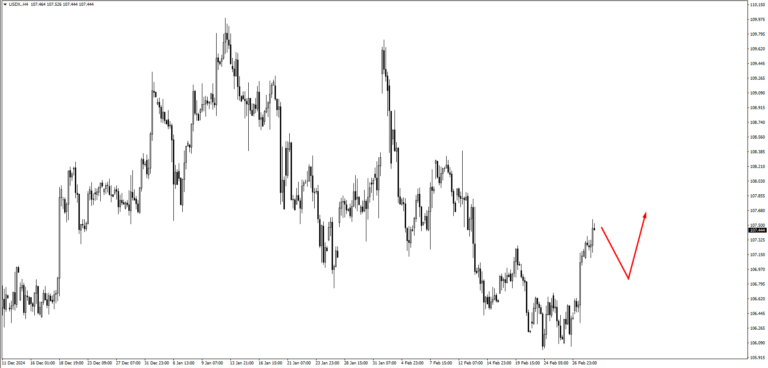
US Dollar Index (USDX) terus mendaki ke 107.60. Dengan sentimen pasaran memihak aset perlindungan nilai, dolar mungkin terus naik jika ia mengekalkan paras konsolidasi utama.
Pedagang akan memantau 107.25 dan 106.50; jika zon ini bertahan, kenaikan baru mungkin berlaku. Namun, sebarang pecahan di bawah paras ini mungkin menandakan kehilangan momentum, membuka ruang untuk pembetulan.
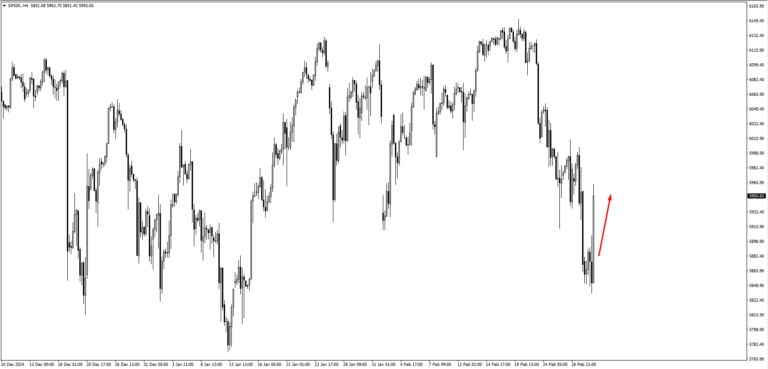
Dalam ekuiti, S&P 500 (SP500) bergerak sekitar paras 5,950—zon kritikal yang dipantau untuk peralihan momentum.
Walau bagaimanapun, kenaikan ke paras ini bersifat impulsif, mencetuskan sikah berhati-hati untuk posisi menjual. Jika indeks pecah lebih tinggi, 6,020 akan menjadi zon rintangan. Jika penjual masuk, pembetulan ke paras lebih rendah mungkin berlaku, menandakan tempoh penyejukan selepas minggu kenaikan.
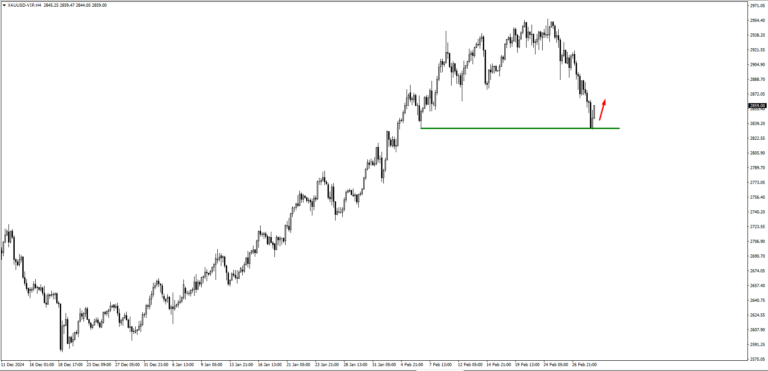
Emas (XAU/USD) kekal menjadi tumpuan selepas menguji paras rendah 2,834.20 sebelum melantun. Paras 2,875 kini menjadi rintangan utama penentu hala tuju seterusnya.
Jika pembeli mengekalkan kawalan, kenaikan mungkin berterusan, terutamanya dengan keresahan pasaran memihak aset selamat. Namun, penolakan di rintangan mungkin mencetuskan penurunan semula.
Dalam kripto, Bitcoin (BTC) bergerak aktif selepas melantun dari paras bawah julat 80,000. Pecahan di atas 90,000 dengan penggantungan kukuh boleh menarik pembeli baru. Namun, jika penjual kembali menguasai, sokongan seterusnya berada di sekitar 74,000, paras di mana bulls mungkin mempertahankan penurunan lanjut.
Untuk pedagang forex, EUR/USD menjatuhkan paras rendah 1.03726, mencadangkan momentum menaik. Namun, pedagang akan memantau pergerakan menurun di 1.0405 dan 1.0465. GBP/USD menghampiri 1.2660, di mana penjual mungkin masuk. USD/JPY mungkin menguji 151.70, dan jika ia bergerak mendatar, kenaikan mungkin berterusan sekitar 149.50.
Komoditi juga menunjukkan pergerakan kritikal. Minyak mentah (USOIL) menaik dengan 71.00 dan 72.45 sebagai rintangan utama. Gas asli mungkin melantun di 3.72 jika harga turun.
Peristiwa Minggu Ini
Selasa, 4 Mac, membawa ucapan penting daripada Gabenor Bank of Japan, Ueda. Dengan pasangan USD/JPY berada dalam fasa konsolidasi, pedagang akan memerhatikan sebarang petunjuk mengenai perubahan polisi. Jika Gabenor Ueda memberi isyarat sikap yang lebih tegas mengenai pengetatan monetari, yen boleh mendapat momentum, memberi tekanan menurun pada USD/JPY.
Rabu, 5 Mac, menampilkan tiga data penting yang menggerakkan pasaran. GDP Australia (q/q) dijangka berada pada 0.50%, naik daripada 0.30% sebelumnya. Jika ramalan ini betul, ia akan mengukuhkan optimisme terhadap ekonomi Australia, memberi AUD/USD potensi kenaikan jangka pendek sebelum menghadapi rintangan pada tahap yang lebih tinggi. CPI Swiss (m/m) juga diunjurkan pada 0.50%, meningkat daripada -0.10%. Angka inflasi yang lebih kuat daripada yang dijangka boleh menyokong CHF, yang boleh menyebabkan kelemahan dalam USD/CHF. Sementara itu, di AS, ISM Services PMI dijangka meningkat sedikit kepada 53.0 daripada 52.8. Bacaan yang lebih kuat kemungkinan akan menyokong dolar, terutamanya jika ia menunjukkan ketahanan dalam sektor perkhidmatan.
Pada Khamis, 6 Mac, Main Refinancing Rate European Central Bank dijangka menurun kepada 2.65% daripada 2.90%. Pemotongan kadar atau retorik dovish boleh memberi tekanan kepada EUR/USD, membuka peluang untuk pergerakan menurun selanjutnya. Pedagang akan menilai sama ada ECB memberi isyarat kitaran pelonggaran jangka panjang atau mengekalkan pandangan berhati-hati terhadap inflasi.
Jumaat, 7 Mac, menyampaikan acara berimpak tinggi: laporan Non-Farm Payroll AS. Pasaran menjangkakan 156K pekerjaan baharu, naik daripada 143K sebelumnya, manakala kadar pengangguran dijangka kekal pada 4.00%. Jika pasaran buruh menunjukkan peningkatan, jangkaan untuk Federal Reserve yang lebih hawkish boleh muncul semula, memperkuatkan dolar AS dan memberi tekanan kepada ekuiti. Walau bagaimanapun, laporan yang lebih lemah daripada yang dijangka boleh mencetuskan kebimbangan tentang kelembapan ekonomi, berpotensi menekan dolar dan mendorong kenaikan harga emas.
Dengan pasaran yang cemas dan perubahan polisi yang menulis semula strategi, pedagang perlu kekal berwaspada. Apabila ancaman tarif Presiden Trump terus berkembang dan ekonomi global beralih untuk menyesuaikan diri, skala kekal dalam keadaan berubah. Data pekerjaan AS minggu ini, keputusan kadar ECB, dan data inflasi baharu akan menguji ketahanan pasaran.