Trump has expressed a desire for the European Union to reduce tariffs, and there have been indications of improved relations. His comments suggest that the threats of tariffs may be part of a broader strategy for negotiations.
Additionally, Trump mentioned that Russia is keen to reach an agreement and urged cooperation between Putin and Zelensky. He is contemplating merging the US postal service with the Commerce Department and has indicated plans for reciprocal tariffs by the US. Furthermore, Trump stated that a minerals deal with Ukraine is nearing completion.
These remarks highlight a strategic approach rather than isolated policy decisions. By indicating that the European Union should reduce tariffs, Donald is not merely suggesting a preference but rather reinforcing a method he has applied in past negotiations. Threats of tariffs, in this context, seem to function as a bargaining chip, which means that actual policy adjustments may depend on how talks develop in the coming weeks. If discussions advance favourably, tension between both sides could ease.
On Russia, his statements imply that there is movement towards a potential agreement. The mention of Russian willingness signals that diplomatic efforts are underway, while the encouragement for cooperation between Vladimir and Volodymyr suggests active interest in resolving long-standing disputes. Whether this translates into immediate policy shifts remains to be seen, but it does indicate that discussions are not stagnant. Any developments in this area could affect views on stability in the region.
His consideration of merging the US postal service with the Commerce Department is a structural shift that could redefine how these institutions operate. Such a move would bring potential efficiency changes, but it also implies adjustments in regulatory oversight. The timing of this proposal raises questions about its broader implications, especially since it coincides with other economic discussions.
A plan for reciprocal tariffs also introduces another layer to upcoming trade policy. If this approach is implemented, it may lead to responses from other nations seeking to balance the effects. The extent to which these measures are enacted will depend on negotiations, but the direction is clearly being set.
His comment on a minerals deal with Ukraine nearing completion is particularly relevant. A completed deal would not only affect economic ties but could also shift geopolitical alignments. Resources remain a key factor in international agreements, so progress in this area may create reactions from those with vested interests.
Each of these elements presents a clear trajectory rather than isolated remarks. The manner in which they unfold will shape the decisions that follow. Remaining attentive to shifting tones in negotiations will be necessary, as these statements indicate that further developments are highly likely.
Written on February 22, 2025 at 7:29 am, by anakin
There’s a moment in every trader’s journey when they realize that trying to master everything is the fastest way to master nothing. The world of trading is vast—forex, stocks, indices, commodities, scalping, swing trading, trend-following, news-based strategies. It’s easy to get lost in the noise, jumping from one approach to the next, hoping to strike gold.
But the most successful traders know that the real secret isn’t doing more—it’s doing the right things better.
Instead of chasing every opportunity, they narrow their focus, refine their strengths, and build a trading approach that suits them—not the other way around. They find their niche, develop a tailored strategy, and turn consistency into profitability.
So, how do you find your trading edge? How do you stop spinning your wheels and start gaining momentum? Let’s break it down.
Why Specializing is the Key to Trading Success
Ask any seasoned trader, and they’ll tell you the same thing: jack-of-all-trades, master of none.
Spreading yourself too thin—jumping between different asset classes, trading styles, or strategies—leads to inconsistency. Instead of learning how a market moves, you’re constantly trying to keep up. Instead of refining a skill, you’re starting over every time.
But when you specialize? That’s where the magic happens.
✅ You refine your skills – Focused practice turns you into an expert. ✅ You gain deeper market insight – Tracking one area closely gives you an edge in spotting trends. ✅ You maximize your time and effort – No more chasing trades or feeling overwhelmed—just precision and confidence.
The best traders don’t just trade—they own their space.
Finding Your Trading Niche: Where Do You Thrive?
Not sure where to start? The key to finding your niche is aligning your trading with your strengths, interests, and lifestyle. Here’s how to zero in on what works best for you.
Explore Different Markets
Not all markets move the same way. Forex is volatile and fast-paced, while commodities like gold or oil follow broader economic trends. Index trading lets you track entire markets instead of individual stocks. Test different asset classes and see which one clicks with you.
Play to Your Strengths
Are you a big-picture thinker? You might thrive with fundamental analysis, looking at macroeconomic trends and market sentiment. Prefer fast, technical moves? Scalping or short-term price action trading might be your edge.
Match Your Trading to Your Schedule
Your time matters. ⏳ Short on time? Stick to day trading, scalping, or automated strategies. 🕰️ More flexibility? Swing trading or position trading could be your sweet spot.
Test, Tweak, and Track
You wouldn’t build a house without a blueprint—why build a trading strategy without one? Use a demo account to test different approaches and keep a trading journal to track what works (and what doesn’t).
Building a Strategy That’s Built for You
Once you’ve found your niche, it’s time to refine it into a repeatable system. A good trading strategy is more than just setups and indicators—it’s a framework that keeps you disciplined, consistent, and adaptable.
Set Clear Goals
Ask yourself: What’s your priority? 💰 Steady income – Look for high-probability setups with lower risk. 📈 Growth and high returns – Take on more calculated risks with trend-based strategies. 🛡 Capital preservation – Focus on strong risk management and defensive trades.
Use the Right Tools
A trader is only as good as their tools. Platforms like MT4, MT5, and TradingView give you access to real-time data, advanced charting, and automation features that turn strategy into execution.
Keep a Trading Journal
What gets measured gets improved. Log every trade, including your reasoning, results, and emotions at the time. Over time, you’ll start to see patterns in your strengths and mistakes—allowing you to fine-tune your approach.
Stay Adaptable
Even the best strategies need adjustments. The market evolves, and so should your plan. Regularly review your performance, tweak your approach, and refine your execution. The best traders aren’t just consistent—they’re consistently improving.
The Power of Focus
Success in trading isn’t about knowing everything—it’s about knowing your space better than anyone else.
Find what you love to trade. Master it. Build a strategy around it. And then refine it until it becomes second nature.
The markets reward those who play to their strengths.
So instead of asking, What should I trade? ask yourself: Where do I perform best?
That’s where your edge is. That’s where your success begins.
Written on February 21, 2025 at 8:17 am, by anakin
There’s a moment every trader knows well—that split second before clicking buy or sell, where instincts and strategy collide. The charts are telling one story, the headlines another, and deep down, there’s a gut feeling whispering a third. Do you trust the data? The market? Yourself?
Trading isn’t just about numbers. It’s about psychology, resilience, and staying sharp when everything else is in motion.
In a world that moves at lightning speed, traders aren’t just analysts; they’re decision-makers. They navigate shifting trends, manage risks, and anticipate the unexpected. But success isn’t about being right all the time—it’s about knowing how to adapt, how to stay focused, and how to play the long game without burning out.
The Market Never Sleeps—But You Should
It’s easy to fall into the trap of constant vigilance. Refreshing the charts one more time before bed. Checking price alerts over breakfast. Watching global markets unfold in real-time, always trying to stay one step ahead.
But here’s the truth: the best traders aren’t the ones who spend the most time staring at screens—they’re the ones who know when to step away.
Burnout is real, and in trading, it’s costly. A fatigued mind makes impulsive decisions, hesitates at the wrong moments, and struggles to see the bigger picture. The market rewards those who can analyze without emotion, act without desperation, and trust in a well-built strategy.
Setting boundaries isn’t a weakness—it’s a power move. The sharper your mind, the stronger your trades.
The Fine Line Between Confidence and Overconfidence
There’s a reason trading is often compared to poker. It’s not about winning every hand—it’s about knowing which hands to play. The best traders aren’t reckless, but they also don’t hesitate when they see an opportunity.
Confidence is built through experience and preparation. It’s not about taking wild risks but about trusting a system that’s been tested and refined. Overconfidence, on the other hand, is when past wins lead to shortcuts, when risk management slips, and when the belief in “being right” overshadows the reality of a changing market.
A great trader knows this: Every win is just as important as every loss. Both teach lessons. Both shape the next decision.
Adaptability is the Name of the Game
Markets evolve. What worked six months ago might not work today. The difference between an average trader and a great one is the ability to adapt without abandoning strategy.
Some traders lock themselves into rigid rules, refusing to shift when conditions change. Others chase every new strategy, never mastering one before moving on to the next. The balance? A solid foundation with the flexibility to pivot.
Great traders stay informed, but they don’t let the noise dictate their moves. They follow trends but don’t blindly chase them. They know their edge and refine it constantly.
Mastering the Mental Game
No amount of market knowledge can compensate for a weak mindset. Trading is a game of patience, discipline, and emotional control. Fear and greed are the two biggest enemies, and the ones who last in the industry are the ones who learn to keep both in check.
The reality? Losses happen. Even the best traders take them. The key is how you respond.
Do you revenge trade, trying to win back what was lost? Do you freeze, afraid to pull the trigger again? Or do you step back, reassess, and adjust?
The market doesn’t owe anyone a win. But it rewards those who stay level-headed, who manage risk like a pro, and who keep their focus on the bigger picture.
The Future Belongs to the Prepared
If there’s one thing successful traders understand, it’s this: consistency beats intensity. The ones who survive in this game aren’t the ones making the biggest bets, but the ones who show up, learn, refine, and execute with discipline.
It’s not about finding the perfect strategy. It’s about finding what works for you, testing it, improving it, and sticking with it.
The market will always move. There will always be another opportunity, another breakout, another shift. The question is: will you be ready for it?
Because in the end, trading isn’t about predicting the future—it’s about preparing for it.
Written on February 20, 2025 at 3:13 am, by anakin
If you’ve got a bit of a green thumb, you’ll likely recognise the importance of hedges in your garden. These natural barriers don’t just act as windbreaks for nearby crops—they also filter pollution and offer many other benefits.
The same could be said about the importance of hedges in the world of trading–referring to assets that preserve their value even during economic uncertainty.
Gold has been the undisputed king of safe havens for centuries, preserving its value—if not appreciating significantly—even today. Over the past decade, though, Bitcoin has emerged as an alternative, with some calling it “digital gold”.
As we enter the new year, traders find themselves asking the big question: Which asset is the better hedge—gold or Bitcoin?
We’ll break down each asset and what they bring to the table–their strengths, pitfalls and how they can help diversify your portfolio in today’s unpredictable markets.
The Timeless Yellow Metal
Empires rise and fall as the sands of time slowly chip away at their legacy. Gold, however, has been a store of value for thousands of years–outlasting great rulers of history, economic crashes, currency devaluations, and financial crises.
Gold remains a strong hedge because central banks continue to stockpile it, reinforcing its status as a safe-haven asset. Unlike paper money, which governments can print freely, gold’s scarcity helps preserve its value over time. Today, most paper currencies are fiat money—government-issued and not backed by physical commodities, making them susceptible to inflation and policy shifts.
GIF: Even Seinfeld knows what’s the good good with gold.
As a finite resource resistant to inflation, gold historically rises during times of uncertainty—whether due to stock market crashes or geopolitical tensions—strengthening its role as a crisis hedge.
That said, even the shiniest of gold can tarnish over time. Unlike stocks or bonds, gold doesn’t generate dividends or interest–depending solely on price appreciation for its valuation. Physical gold requires secure storage as well, which adds to cost and complexity. Finally, while gold price movements are generally stable, they don’t offer the explosive growth potential seen in other assets.
A New Digital Challenger Arrives
Bitcoin is often called “digital gold”, and for good reason. It shares many similarities with gold–scarcity, decentralisation, and a growing reputation as a hedge against traditional financial risks.
With a fixed supply of only 21 million Bitcoin to ever exist–it becomes immune to inflationary policies that devalue fiat currencies. Unlike physical gold, Bitcoin can also be transferred instantly across the globe at any time and day of the week.
This allows traders to act on global news quicklywithout being limited by the traditional market hours that gold follows. Finally, Bitcoin has outperformed nearly every traditional asset over the past decade, with massive price increases despite its volatility.
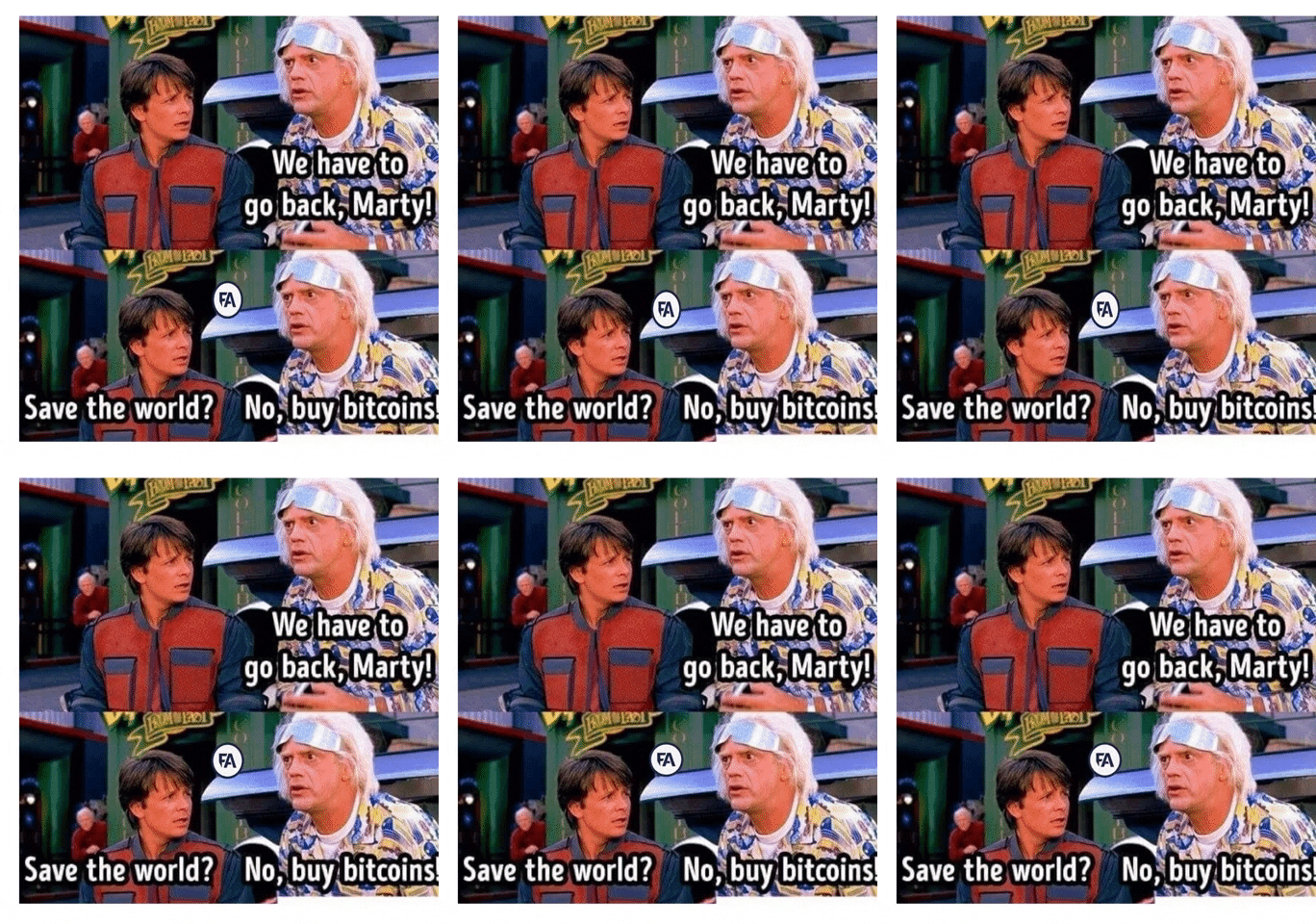
GIF: If only we knew how much Bitcoin’s price would skyrocket over the years, we wouldn’t wish to go Back to the Future.
However, Bitcoin’s inherent volatility can bring about dramatic price swings, making it a riskier short-term store of value compared to gold. The uncertainty around its regulation, future adoption, technological advancements, and speculative interest could also heavily impact its relevance–making it heavily driven by market sentiment.
Gold vs Bitcoin: A Head-to-Head Comparision
By now, it is apparent that both assets have their unique strengths and weaknesses–choosing between the two is a matter of individual risk tolerance and market outlook.
To make things easier for you, here’s a direct comparison of the two:
Feature
Gold
Bitcoin
Historical Reliability
Proven for centuries
Less than two decades of history
Inflation Hedge
Strong
Strong but untested in periods of prolonged inflation
Volatility
Low
High
Liquidity
High
24/7 global trading, highly liquid
Institutional Backing
Central banks hold reserves
Increasingly adopted but still debated
Growth Potential
Limited
High, albeit speculative
Regulatory Risks
None
Uncertain future policies
What’s Right for Me in 2025?
You’re a sparkling fit for gold if;
You prefer a stable, time-tested store of value.
You want an inflation hedge with low volatility.
You seek a tangible asset that holds global recognition.
Bitcoin’s your guy if;
You’re comfortable with volatility in exchange for high-growth potential.
You believe in Bitcoin’s long-term role as a digital store of value.
You want a decentralised, easily transferable hedge against economic uncertainty.
Or, why not both? Today, many traders are diversifying, holding gold and Bitcoin to balance security with potential upside. Gold provides the foundation of stability, while Bitcoin offers a speculative hedge with strong long-term possibilities.
Final Thoughts: Balancing the Old and the New
The debate between gold and Bitcoin isn’t about choosing one over the other—it’s about understanding what each asset offers in different economic scenarios.
GIF: If Homer Simpson can do it, so can you!
Gold remains the classic hedge, trusted for centuries, while Bitcoin is the modern alternative, offering digital advantages and potentially exponential returns.
At VT Markets, you don’t have to choose just one. With access to both gold and Bitcoin, you can trade with confidence and hedge against uncertainty in a way that suits your strategy. Which hedge fits your portfolio?
If you’ve got a bit of a green thumb, you’ll likely recognise the importance of hedges in your garden. These natural barriers don’t just act as windbreaks for nearby crops—they also filter pollution and offer many other benefits.
The same could be said about the importance of hedges in the world of trading–referring to assets that preserve their value even during economic uncertainty.
Gold has been the undisputed king of safe havens for centuries, preserving its value—if not appreciating significantly—even today. Over the past decade, though, Bitcoin has emerged as an alternative, with some calling it “digital gold”.
As we enter the new year, traders find themselves asking the big question: Which asset is the better hedge—gold or Bitcoin?
We’ll break down each asset and what they bring to the table–their strengths, pitfalls and how they can help diversify your portfolio in today’s unpredictable markets.
The Timeless Yellow Metal
Empires rise and fall as the sands of time slowly chip away at their legacy. Gold, however, has been a store of value for thousands of years–outlasting great rulers of history, economic crashes, currency devaluations, and financial crises.
Gold remains a strong hedge because central banks continue to stockpile it, reinforcing its status as a safe-haven asset. Unlike paper money, which governments can print freely, gold’s scarcity helps preserve its value over time. Today, most paper currencies are fiat money—government-issued and not backed by physical commodities, making them susceptible to inflation and policy shifts.
GIF: Even Seinfeld knows what’s the good good with gold.
As a finite resource resistant to inflation, gold historically rises during times of uncertainty—whether due to stock market crashes or geopolitical tensions—strengthening its role as a crisis hedge.
That said, even the shiniest of gold can tarnish over time. Unlike stocks or bonds, gold doesn’t generate dividends or interest–depending solely on price appreciation for its valuation. Physical gold requires secure storage as well, which adds to cost and complexity. Finally, while gold price movements are generally stable, they don’t offer the explosive growth potential seen in other assets.
A New Digital Challenger Arrives
Bitcoin is often called “digital gold”, and for good reason. It shares many similarities with gold–scarcity, decentralisation, and a growing reputation as a hedge against traditional financial risks.
With a fixed supply of only 21 million Bitcoin to ever exist–it becomes immune to inflationary policies that devalue fiat currencies. Unlike physical gold, Bitcoin can also be transferred instantly across the globe at any time and day of the week.
This allows traders to act on global news quicklywithout being limited by the traditional market hours that gold follows. Finally, Bitcoin has outperformed nearly every traditional asset over the past decade, with massive price increases despite its volatility.
GIF: If only we knew how much Bitcoin’s price would skyrocket over the years, we wouldn’t wish to go Back to the Future.
However, Bitcoin’s inherent volatility can bring about dramatic price swings, making it a riskier short-term store of value compared to gold. The uncertainty around its regulation, future adoption, technological advancements, and speculative interest could also heavily impact its relevance–making it heavily driven by market sentiment.
Gold vs Bitcoin: A Head-to-Head Comparision
By now, it is apparent that both assets have their unique strengths and weaknesses–choosing between the two is a matter of individual risk tolerance and market outlook.
To make things easier for you, here’s a direct comparison of the two:
Feature
Gold
Bitcoin
Historical Reliability
Proven for centuries
Less than two decades of history
Inflation Hedge
Strong
Strong but untested in periods of prolonged inflation
Volatility
Low
High
Liquidity
High
24/7 global trading, highly liquid
Institutional Backing
Central banks hold reserves
Increasingly adopted but still debated
Growth Potential
Limited
High, albeit speculative
Regulatory Risks
None
Uncertain future policies
What’s Right for Me in 2025?
You’re a sparkling fit for gold if;
You prefer a stable, time-tested store of value.
You want an inflation hedge with low volatility.
You seek a tangible asset that holds global recognition.
Bitcoin’s your guy if;
You’re comfortable with volatility in exchange for high-growth potential.
You believe in Bitcoin’s long-term role as a digital store of value.
You want a decentralised, easily transferable hedge against economic uncertainty.
Or, why not both? Today, many traders are diversifying, holding gold and Bitcoin to balance security with potential upside. Gold provides the foundation of stability, while Bitcoin offers a speculative hedge with strong long-term possibilities.
Final Thoughts: Balancing the Old and the New
The debate between gold and Bitcoin isn’t about choosing one over the other—it’s about understanding what each asset offers in different economic scenarios.
GIF: If Homer Simpson can do it, so can you!
Gold remains the classic hedge, trusted for centuries, while Bitcoin is the modern alternative, offering digital advantages and potentially exponential returns.
At VT Markets, you don’t have to choose just one. With access to both gold and Bitcoin, you can trade with confidence and hedge against uncertainty in a way that suits your strategy. Which hedge fits your portfolio?
Pasaran sekali lagi berada dalam keadaan berisiko tinggi apabila Fair and Reciprocal Tariffs Plan Presiden Trump menyuntik ketakpastian baru ke dalam perdagangan global. Pelan ini dijadualkan berkuat kuasa pada 1 April 2025, dan ia bukanlah satu gurauan walaupun ia jatuh pada tarikh tersebut.
The mood in the stock market is shifting as Donald Trump's tariff policies become increasingly muddled, with delays and exclusions mixing with bellicose rhetoric https://t.co/0RiffeONZJ
Polisi ini bertujuan untuk menyamakan tarif yang dikenakan ke atas barang US oleh negara lain, tetapi pakar pasaran menjangkakan kesan meluas merentasi forex, ekuiti, dan komoditi. Pedagang kini terpaksa mengimbangi volatiliti jangka pendek dengan perubahan struktur jangka panjang, terutamanya spekulasi tentang bagaimana tarif ini akan dilaksanakan dan sama ada ia akan mencetuskan tindakan balas dari rakan dagangan global.
Kekuatan Dolar Sekarang, Ketakpastian Kemudian
Impak segera sudah dirasai di pasaran mata wang. Dollar US mengukuh susulan permintaan tinggi terhadap aset perlindungan nilai. Mengikut sejarah, semasa perang perdagangan 2018, aliran keluar modal dari pasaran baru muncul dan ekonomi yang bergantung kepada perdagangan menyebabkan US Dollar Index (USDX) meningkat 6% dalam tempoh enam bulan, dan trend serupa sedang berlaku sekarang.
Walau bagaimanapun, hala tuju dollar tidak bebas risiko. Jika tarif meningkatkan kos import, inflasi boleh memecut, memaksa Federal Reserve melambatkan pemotongan kadar atau mempertimbangkan kenaikan kadar, seterusnya mengukuhkan dollar dalam jangka sederhana. Tetapi dalam jangka panjang, perubahan struktur perdagangan global boleh mengikis dominasi dolar.
Jika China, Rusia, dan negara BRICS meningkatkan usaha de-dolarisasi, risiko permintaan terhadap USD mungkin terhad akibat penyelesaian perdagangan alternatif dalam yuan, euro, atau mata wang bersandarkan emas.
Hala Tuju Berbeza Dalam Pasaran Berubah-Ubah
Kesannya akan berbeza bagi mata-mata wang utama lain. Euro berdepan tekanan menurun jika tarif memberi kesan tidak seimbang ke atas eksport Eropah, terutamanya automotif dan barangan pertanian. European Central Bank mungkin campur tangan untuk menstabilkan mata wang, tetapi jika EU membalas dengan tarif ke atas teknologi US, EUR/USD berkemungkinan susut, berpotensi membawa pasangan ini hampir ke pariti. Yuan China juga tertekan, dengan Beijing dijangka membenarkan penyusutan terkawal untuk mengimbangi kerugian perdagangan jika tarif US lebih kritikal. Sebaliknya, yen Jepun mungkin mengukuh pada mulanya apabila pedagang mencari keselamatan dalam aset JPY, tetapi ketidakpastian perdagangan berpanjangan boleh mendorong Bank of Japan untuk campur tangan, menyekat kenaikan yen.
Saham Dijangka Terjejas
Pasaran saham US sudah tertekan, dengan volatiliti mula memasuki indeks utama. Ketakpastian tentang sektor mana yang akan terjejas terlebih dahulu menyebabkan saham pertahanan menunjukkan prestasi lebih baik, manakala saham teknologi tertekan akibat kebimbangan tindakan balas China dan Eropah.
Sejarah menunjukkan bahawa gangguan berpunca tarif boleh menyebabkan pullback 5-10% dalam S&P 500, terutamanya dalam industri yang bergantung pada rantaian bekalan global seperti pengeluar automotif, firma semikonduktor, dan pengeksport pertanian.
Walau bagaimanapun, sektor berorientasi domestik seperti keluli, pembuatan, dan tenaga US mungkin akan menaik, kerana tarif mewujudkan kelebihan daya saing untuk firma yang beroperasi dalam sempadan US.
Pasaran Minggu Ini
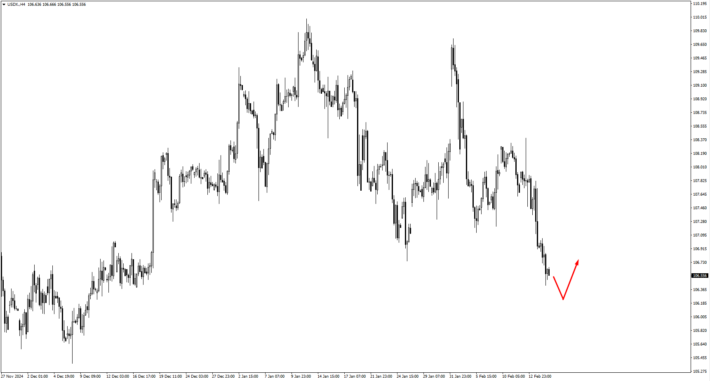
Dengan ketakpastian mencengkam pasaran global, tumpuan beralih kepada carta untuk isyarat lebih jelas. US Dollar Index (USDX) didagangkan lebih rendah, jatuh di bawah 106.90. Jika penurunan berterusan, pedagang akan memerhatikan pergerakan harga bullish di 106.05 atau 105.90.
Walau bagaimanapun, jika harga bergerak mendatar sebelum mencapai 106.05, rintangan mungkin muncul di 107.30, mewujudkan peluang bearish.
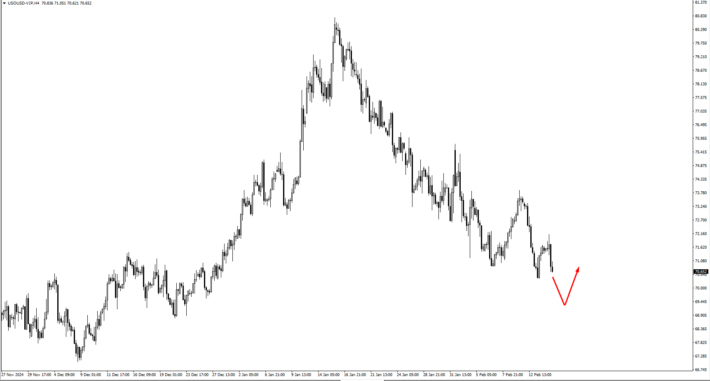
Minyak (USOIL) dikuasai penjual, mengakibatkan harga lebih rendah. Minyak mentah boleh menguji 70.00 atau 69.40, dengan pergerakan harga bullish dijangkakan pada $68.20 jika penurunan berterusan.
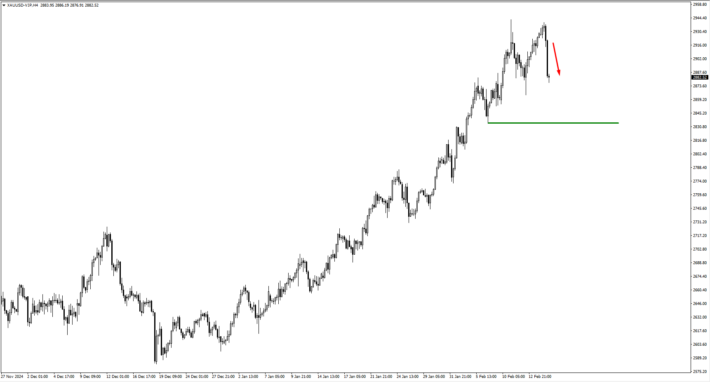
Emas (XAUUSD) menghadapi tekanan jualan ketara di 2943, dengan penjual kelihatan lebih tekad berbanding sesi sebelumnya. Paras rendah $2834.20 kekal sebagai paras ayunan kritikal, dan pecahan di bawah zon ini boleh mencetuskan momentum menurun lanjut.
Jika harga pecah di bawah 2834.20 dan bergerak mendatar, pedagang perlu mencari peluang menjual.
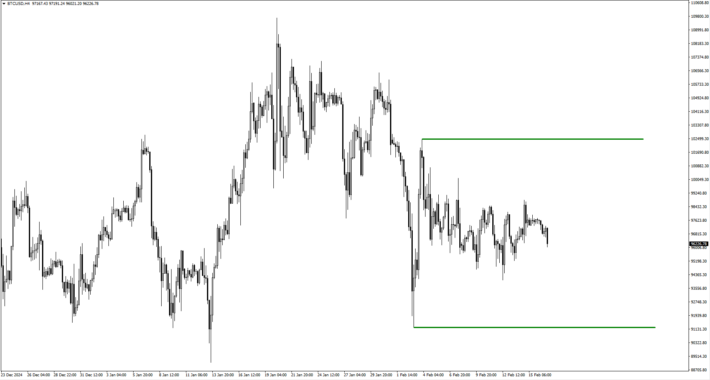
Bitcoin (BTCUSD) terus naik dari paras 94,770, tetapi pergerakan harga menunjukkan keraguan pembeli. BTC perlu pecah di atas 102,475 untuk kenaikan lanjut.
Jika rintangan kekal, Bitcoin mungkin menguji semula 91,227 atau 89,146 sebelum lonjakan bullish seterusnya. Paras $80,000 kekal sebagai zon sokongan kuat sekiranya berlaku pembetulan besar.
Peristiwa Minggu Ini
Selasa, 18 Februari, membawa pengumuman utama bermula dengan keputusan Cash Rate Australia. Pemotongan diunjurkan kepada 4.10% daripada 4.35% yang mungkin memberi tekanan ke atas dollar Australia. Kemudian, ucapan Gabenor BOE Bailey akan dipantau untuk sebarang petanda tentang keputusan kadar masa depan.
Pada hari Rabu, 19 Februari, CPI tahun-ke-tahun UK dijangka meningkat kepada 2.8% daripada 2.5%, menyokong aliran menaik GBP/USD jika inflasi kekal tinggi.
Pada hari Jumaat, 21 Februari, data PMI pembuatan dan perkhidmatan dari Eropah, UK, dan US menjadi tumpuan. Flash Manufacturing PMI Jerman dijangka pada 45.4, penurunan sedikit dari 45.5, manakala Flash Services PMI Jerman diunjurkan pada 52.4, di bawah 52.5.
Flash Manufacturing PMI UK dijangka naik ke 48.5 daripada 48.3, dan services PMI dijangka kekal pada 50.8, mencerminkan prospek ekonomi stabil.
Sementara itu, Flash Manufacturing PMI US diunjurkan kekal pada 51.2, dan services PMI dijangka naik sedikit ke 53.2 daripada 52.9.
Dengan keputusan kadar bank pusat, data inflasi, dan bacaan PMI, volaitiliti pasaran dijangka kekal tinggi sepanjang minggu.
Bubblegum, lollipops, sour belts…or perhaps some gobstoppers and jawbreakers?
Just like a kid armed with some spare change in a candy shop–financial markets offer many tantalising treats in the form of opportunities, but how do you know which one suits you best?
We know that picking the right one can sometimes feel like a challenge. Do you prefer the fast-paced, high-action life of forex, the steady growth of stocks, or the exciting, wild swings of crypto? Each market offers unique opportunities and risks.
If you are unsure where to start, join us as we break down what makes each of the three markets tick–and which would be a good match for your trading style.
Forex: The Chewy, Zesty Sour Belt for Fast-Moving Traders
Forex is fast, dynamic, and always moving—just like a sour belt candy that keeps stretching as you pull. It’s thin, flexible, and packed with flavour, much like how currency pairs react to economic events, interest rate decisions, and global news.
Video: Not as sour as the viral (and incredibly entertaining) TikTok–but trading Forex is equally as zesty.
One of the biggest appeals of forex trading is its accessibility. Unlike stocks, where you must pick individual companies, forex pairs revolve around macroeconomic trends. Traders analyse interest rates, inflation reports, and central bank policies to determine currency strength.
Just when you think you have figured out the taste, the tanginess kicks in, similar to how forex markets can suddenly reverse due to an unexpected policy shift or data release. It’s a favourite for traders who enjoy quick action, liquidity, and constant opportunities. But just like sour belts, forex trading isn’t for everyone—some may find the sharp price movements too much to handle.
Stocks: The Slow-Burn Jawbreaker for the Long-Term Planners
Stocks are the classic, time-tested favourite, much like a jawbreaker. At first, nothing much seems to happen, but with patience, layers start to dissolve, revealing new flavours. Some stocks offer steady, predictable returns, much like a slow-melting jawbreaker, while others, like high-growth stocks, have an unexpected burst of intensity when you least expect it.
One advantage of stocks is their relatively lower volatility compared to forex or crypto. Blue-chip stocks—shares of established companies—tend to offer stability, making them ideal for long-term traders who prefer steady growth over daily price swings.
GIF: Some advice is evergreen–thank you, Hannibal Lector.
Unlike forex, stock markets operate at fixed hours, requiring patience. It’s for those who don’t mind holding on, whether for long-term investments or carefully planned trades. While some jawbreakers have surprising flavour twists, most deliver a reliable, steady experience—just like blue-chip stocks that hold their value over time.
If you prefer a mix of fundamental research, lower leverage, and a structured market, stocks might be your best bet.
Crypto: The Mystery-Flavour Gobstopper for the Bold
Crypto is the ultimate wild card—an unpredictable, always-changing gobstopper with a mystery core. Every time you think you know what flavour is coming next, it changes. Bitcoin, Ethereum, and altcoins move based on sentiment, speculation, and sudden market events.
For traders who love risk and rapid price changes, crypto provides unmatched opportunities. The market is still young, meaning traders can take advantage of large price swings that are less common in traditional assets.
GIF: Some say crypto is the lawless, wild west of trading.
It’s exciting, chaotic, and offers the possibility of sweet rewards, but there’s always the risk that the next flavour won’t be what you expected. Just like crypto markets, it’s not for the faint of heart. Some traders thrive on the constant surprises, while others find it too unpredictable.
If you are comfortable with risk, volatility, and an always-on market, crypto could be your playground.
Conclusion: Finding Your Sweet Spot
Walking into a candy shop, every kid faces the same decision: Do they go for the intense and stretchy sour belt, the slow-revealing jawbreaker, or the ever-changing mystery gobstopper?
There’s no right or wrong choice—only the one that matches their taste. Markets work the same way! Forex suits those who love fast action and flexibility, stocks appeal to traders who prefer stability and patience, and crypto attracts thrill-seekers who embrace the unknown.
At the end of the day, the best choice depends on what excites you, what you can handle, and how you want to enjoy your trading journey.
At VT Markets, you don’t have to choose just one—we offer forex, stocks, and crypto trading so you can build your perfect mix. What’s your flavour?
Written on February 12, 2025 at 9:59 am, by anakin