USD/JPY rose for a third day, rebounding from about 158.25 and reaching the mid-159.00s in the Asian session. The move follows a bounce from the 200-period EMA on the 4-hour chart, near the lower edge of a short-term range.
The Japanese yen weakened amid concerns about the economic effects of the Middle East conflict and reduced expectations of a Bank of Japan rate rise in April. This supported US dollar demand and lifted the pair.
Dollar Support From Geopolitical Risk
Tensions around the Strait of Hormuz, linked to a US naval blockade of Iranian ports, helped the US dollar hold gains after touching its lowest level since late February. Hopes for diplomacy with Iran and softer expectations for US Federal Reserve policy were noted as limiting further USD strength.
Technical indicators point upwards, with the Relative Strength Index near 61 and the MACD rising in positive territory. Support is cited near 159.47, with further support at the 200-period EMA around 158.46.
We are seeing a familiar pattern in USD/JPY, reminiscent of the range-bound trading we observed around this time in 2025. The yen’s weakness is being driven by the Bank of Japan’s cautious stance, especially after the latest Tankan survey showed a decline in manufacturer sentiment, making further rate hikes seem unlikely. The pair is currently testing the 164.75 level, a multi-decade high that is making markets nervous.
Safe-haven flows are giving the US dollar a modest lift amid ongoing maritime tensions in the South China Sea. However, with the latest US CPI data showing inflation cooling to 2.8%, market pricing now suggests a 65% probability of a Fed rate cut before the fourth quarter, limiting the dollar’s potential. This policy divergence between a hesitant BoJ and a potentially easing Fed continues to be the central theme.
Options Strategies And Risk Management
For derivative traders, this suggests that buying call options on USD/JPY could be a viable strategy to capture potential upside toward the 165.00 psychological barrier. Given the capped upside from potential Fed easing, constructing a bull call spread might be more prudent than buying outright calls. This strategy allows us to profit from a moderate upward move while limiting our initial premium cost.
We must remain vigilant for intervention risk from Japanese authorities, as we saw with direct market action in late 2022 and with stern verbal warnings throughout 2024. As the pair pushes these highs, the probability of intervention increases significantly, which could cause a sudden and sharp drop of 300-500 pips. Therefore, traders holding long positions should consider buying out-of-the-money puts with a short-term expiry as a relatively cheap hedge against such an event.
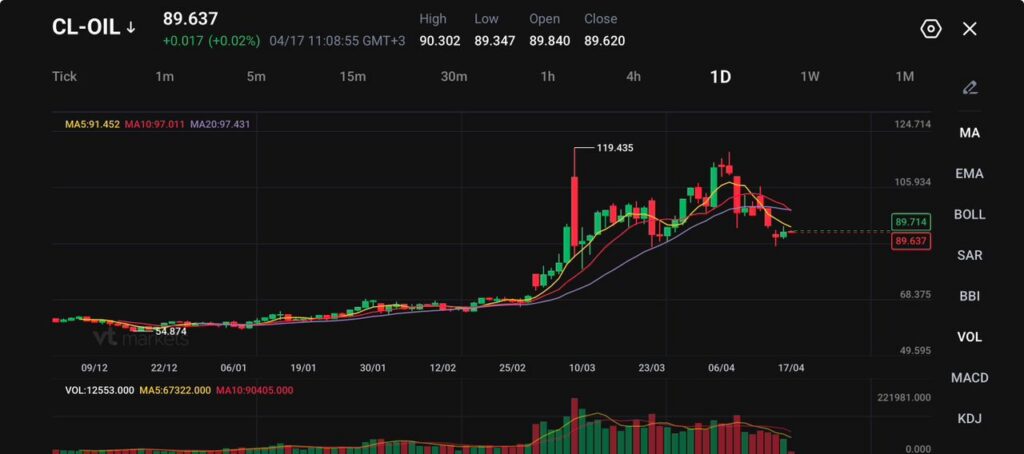
CL-OIL trades at 89.637, up 0.017 (+0.02%), after a high of 90.302 and a low of 89.347.
Brent fell 0.8% to $98.57 and WTI dropped 1.1% to $93.61 in early Europe as diplomacy improved sentiment.
The market still sees tight physical supply because the Strait of Hormuz has been disrupted for seven weeks, affecting about 20% of global oil supply.
Crude has moved lower because the market is stripping out part of the war premium that built through March. A 10-day ceasefire between Israel and Lebanon and fresh talk of possible US-Iran discussions have reduced the need for immediate panic buying. That shift has pushed Brent back below $100 and pulled WTI closer to the low $90s.
The decline still looks more like a repricing of fear than a return to normal conditions. Traders are no longer treating every headline as a straight line toward escalation, but they are also not pricing a clean recovery in Gulf energy flows. That keeps oil softer than the March highs without turning the market outright bearish.
A cautious near-term view still favours headline-driven volatility with prices supported above pre-war levels.
Hormuz Still Controls The Floor
The biggest reason the downside has stayed limited is that the physical bottleneck has not been solved. The Strait of Hormuz remains the central issue because it handles roughly one-fifthof global oil supply, and disruption there continues to distort flows, freight costs, and insurance pricing.
Trump’s plan to blockade the Strait of Hormuz would halt the nearly 2 million barrels a day of Iranian oil that’s been passing through the waterway, further squeezing global supply and cutting off a vital lifeline for the country. https://t.co/nSLfR1CYl4
ING estimated the interruption at roughly 13 million barrels per day of affected supply.
That means the market can fall on diplomacy without collapsing on it. Traders still need to see a more reliable reopening path before they price crude as though the supply shock is finished. Until then, every ceasefire headline removes some premium, but not all of it.
Market Focus on Trade Flow, Not Politics
The pricing now reflects a simple distinction. Political calm helps. Physical normalisation matters more. Even if negotiations continue, crude stays supported as long as shipping remains patchy and inventories outside the Gulf keep doing more of the balancing work.
A Pakistan-flagged tanker that entered the Persian Gulf over the weekend has become the first carrier to exit through the Strait of Hormuz with a crude cargo since a US blockade began on Monday https://t.co/AZkJV3XIt8
That is why the recent weakness in oil has been orderly rather than aggressive. Traders are more willing to sell the spike, but they are not yet willing to price a fully restored supply chain. The market still sees enough friction in the physical system to keep a floor under prices.
The Broader Macro Story Has Improved, But Only Partly
Lower oil has helped risk assets because it eases the inflation shock that had been tightening financial conditions. That support has shown up in equities and in a softer dollar tone.
At the same time, crude is still far above the levels that would signal a fully normal energy backdrop, and that leaves central banks with less room to relax.
That makes the current oil move important for two reasons. First, it reduces immediate stagflation fear. Second, it still leaves enough supply stress in place to stop markets from getting too comfortable. That balance is why oil has come off the highs while remaining fundamentally elevated.
CL-OIL Technical Outlook
CL-OIL is trading near 89.64, continuing to drift lower after pulling back sharply from the recent high around 119.43, with price now stabilising near the lower end of its recent range. The selloff has been steady, and recent price action suggests the market is attempting to find a base, though upside momentum remains weak for now.
From a technical standpoint, the structure has shifted into a short-term bearish correction within a broader uptrend. Price is trading below the 5-day (91.45) and 10-day (97.01) moving averages, both of which are sloping downward and acting as dynamic resistance.
The 20-day (97.43) sits just above, reinforcing a strong resistance cluster and signalling that bearish pressure is still in control in the near term.
Key levels to watch:
Support: 89.30 → 87.15 → 68.30
Resistance: 91.50 → 97.00 → 105.90
Oil is currently hovering just above the 89.30 support area. A break below this level could open the path toward 87.15, with further downside risk if selling pressure accelerates.
On the upside, 91.50 is acting as immediate resistance. A move back above this level could trigger a recovery toward 97.00, though stronger confirmation would be needed to suggest a broader trend reversal.
Overall, CL-OIL is in a corrective phase with bearish momentum still present, as the market digests the prior rally. The next move will likely depend on whether support at 89.30 holds or gives way to further downside.
What Traders Should Watch Next
The next move depends on whether diplomacy produces real improvement in Gulf flows or just a pause in escalation. Watch the pace of shipping through Hormuz, the tone of any weekend US-Iran discussions, and whether Brent can stay below $100 without triggering fresh concern over supply tightness. If flow confidence improves, crude can keep easing. If talks stall and transport remains constrained, the current dip may start to look too deep.
Learn more about trading Energies on VT Markets here.
Trader Questions
Why Did Oil Prices Fall After The Ceasefire News?
Crude eased because the market removed part of the war premium after a 10-day ceasefire between Israel and Lebanon and fresh discussion of possible US-Iran talks reduced immediate escalation risk. That pushed Brent to $98.57 and WTI to $93.61 in early European trade.
Why Haven’t Oil Prices Fallen More Sharply?
The market still sees tight physical supply. Shipping disruption through the Strait of Hormuz, higher insurance costs, and operational friction are still limiting how quickly flows can normalise.
Why Does The Strait Of Hormuz Still Matter So Much?
Because it handles about 20% of global oil supply. Even partial disruption can keep freight costs high and leave the physical crude market tighter than headline diplomacy alone would suggest.
Does A Ceasefire Mean The Oil Shock Is Over?
No. The ceasefire reduces immediate panic, but the supply story is still unresolved. The market still needs evidence that Gulf flows are moving more reliably before it prices a full return to normal conditions.
Why Is Oil Still Elevated Compared With Pre-War Levels?
Because supply risk remains embedded in the market. Traders have cut some of the premium, but not all of it, since disrupted Middle East production and transport bottlenecks are still feeding into physical pricing.
Start trading now – Click here to create your real VT Markets account
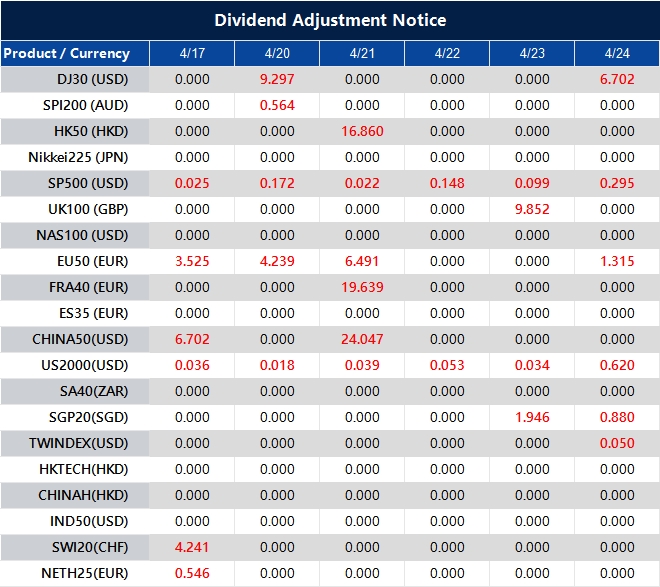
Please note that the dividends of the following products will be adjusted accordingly. Index dividends will be executed separately through a balance statement directly to your trading account, and the comment will be in the following format “Div & Product Name & Net Volume”.
Please refer to the table below for more details:
The above data is for reference only, please refer to the MT4/MT5 software for specific data.
If you’d like more information, please don’t hesitate to contact [email protected].
EUR/JPY rose after small losses the day before and traded at 187.83 during Asian hours on Friday. This was a new all-time high, with price moving higher inside an ascending channel.
The pair stayed above the nine-day and 50-day Exponential Moving Averages (EMAs). These levels were used as signals that the short-term trend remained upward.
Momentum Signals And Overbought Risk
The 14-day Relative Strength Index (RSI) was near 71, in overbought territory. This can point to strong momentum but also the risk of a pullback and consolidation.
Next resistance was noted at 188.00, then near 188.50 at the top of the ascending channel. Key support was placed at the nine-day EMA of 186.76.
If price moved below 186.76, focus could shift to the lower channel boundary around 185.80. Further down, the 50-day EMA support was listed at 184.46.
The report said the technical analysis was produced with help from an AI tool.
Strategy And Risk Management Considerations
We are seeing the EUR/JPY push into uncharted territory, which confirms the powerful uptrend we’ve been riding. This move is fundamentally supported by recent Eurozone inflation data for March 2026 coming in at 2.8%, keeping the ECB cautious, while the Bank of Japan continues to signal accommodative policy. The policy divergence between the two central banks remains the primary driver for this cross.
The Relative Strength Index hitting 71 is a clear signal to be cautious about entering new long positions at these record highs. We should anticipate a potential pullback, possibly toward the nine-day EMA at 186.76. This level presents an opportunity to buy call options or add to long futures positions, allowing us to re-enter the trend at a better price.
For those looking to trade the immediate momentum, the psychological level of 188.00 is the next clear target. A bull call spread could be an effective strategy to profit from a move toward the upper channel boundary around 188.50 while defining risk. This is a sensible approach given the overbought conditions.
On the downside, a break below 186.76 would be our first warning that the short-term momentum is fading. We would then look to the 185.80 level as the next major support. Traders holding long positions should consider buying protective put options if we see a decisive close below the nine-day EMA.
We remember that even the Bank of Japan’s historic policy shift away from negative interest rates back in 2024 did little to halt the Yen’s long-term weakness. Looking back at late 2025, we saw similar overbought RSI readings lead to brief consolidations before the uptrend resumed. This historical pattern suggests that viewing any potential dips as buying opportunities is the correct strategy for now.
Nvidia (NVDA) peaked at $212.19 on 29 October 2025, then fell to $164.27 to complete a correction that began from the April 2025 low. The price then turned higher with stronger momentum.
From the 30 March 2026 low, the move is described as a five-wave rise. Wave 1 ended at $177.37, followed by wave 2 down to $170.23 on the 30-minute chart.
Wave 3 is underway and is broken into smaller waves. From $170.23, wave ((i)) reached $190, wave ((ii)) pulled back to $185.14, and wave ((iii)) rose to $200.4.
Further upward legs are expected to complete the five-wave advance from 30 March 2026, then a corrective phase is anticipated. The upside view is tied to $170.23 holding, with pullbacks expected to form either a three-swing or seven-swing pattern.
Given the strong impulsive structure forming from the March 30, 2026 low, we believe derivative traders should position for a move toward, and likely beyond, the October 2025 record high of $212.19. The current setup, identified as a powerful wave 3, suggests that near-term weakness should be treated as a buying opportunity. This environment is favorable for strategies like buying call options or selling cash-secured puts to capitalize on the expected upward trend.
This technical strength is reinforced by fundamental tailwinds, as recent industry data from February 2026 showed a 24% year-over-year increase in data center chip sales. Furthermore, with the next earnings report anticipated in late May, implied volatility may begin to rise, which presents opportunities for traders positioning for a positive surprise. The continued rollout of enterprise AI applications is a significant catalyst that supports the technical outlook.
For the coming weeks, we see value in selling out-of-the-money put credit spreads with strikes below the key pivot of $170.23 for May or June 2026 expiration. This strategy collects premium while defining risk, aligning perfectly with the view that this critical support level will hold. As long as NVDA remains above that pivot, the bullish thesis remains firmly intact.
We are viewing this price action through the lens of past cycles, particularly the powerful recovery that began in early 2023. That period demonstrated how a confirmed market bottom, followed by an impulsive five-wave advance, could lead to a sustained rally. The current structure mirrors that earlier setup, giving us confidence that this is more than just a short-term bounce.
Written on April 17, 2026 at 8:52 am, by josephine
BRP sits in a unique position within the consumer discretionary sector. Its products are not essential, but they are aspirational, which makes the stock a useful signal of how confident consumers really are.
BRP is a premium discretionary brand, tied to leisure spending rather than necessity.
Higher interest rates are starting to pressure financing-driven demand.
The key question is whether higher-income consumers can sustain spending.
Consumer spending rarely weakens evenly. Instead, it fragments, with different income groups and categories adjusting at different speeds. This makes premium discretionary stocks particularly useful as indicators of underlying economic conditions.
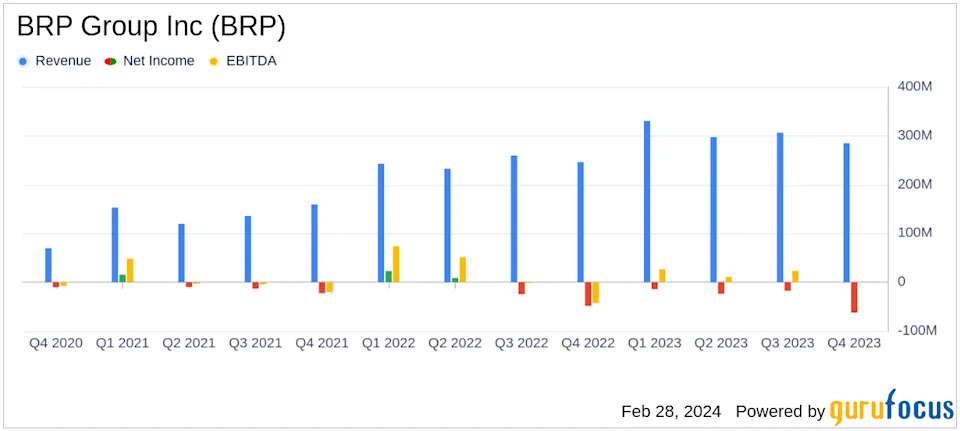
Companies like BRP Inc. offer one view into this dynamic. Their products, including recreational vehicles and leisure equipment, are high-ticket purchases tied to lifestyle and confidence rather than necessity. Recent results, including quarterly revenue of C$2.46 billion, up 16% year on year, suggest that demand remains present, but the composition of that demand is shifting.
Source: Yahoo Finance
Rather than focusing on a single company, the more important question is broader. Can premium consumer spending as a whole remain resilient as financial conditions tighten?
Premium Spending is Not Uniform
The resilience of premium spending is often misunderstood. It does not mean that demand remains strong across all segments. It means that it behaves differently.
Higher-income consumers tend to be less sensitive to short-term economic pressure. Their spending is influenced more by long-term wealth and asset values than by immediate income constraints. This allows premium brands to hold up longer during slowdowns.
However, recent trends suggest that even this segment is beginning to show signs of adjustment. Companies like Diageo, a leader in premium spirits, have faced pressure as consumers become more selective, particularly in markets where discretionary budgets are tightening.
This creates a layered demand environment. Spending does not collapse, but it becomes more uneven, with some categories holding up better than others and growth becoming harder to sustain.
Interest Rates are Reshaping Discretionary Demand
Interest rates are one of the most important drivers of this shift. Higher borrowing costs reduce flexibility across the consumer base, particularly for high-ticket purchases that rely on financing.
In sectors such as recreational vehicles, the impact is direct. Higher monthly payments reduce affordability, lengthen purchase cycles, and lead to more cautious decision-making. In other areas, such as premium goods and lifestyle spending, the effect is more indirect but still meaningful.
Consumers respond by becoming more selective. Purchases are delayed, spending is prioritised, and discretionary budgets are reassessed. This does not eliminate demand, but it changes its timing and intensity.
For traders, this is where the signal becomes valuable. Rate-sensitive consumer stocks often move ahead of broader economic data, reflecting real-time shifts in behaviour.
As interest rate expectations evolve, traders often track these effects across a range of global equities. CFD Shares on the VT Markets platform provide access to companies exposed to these same macro forces.
From Pandemic Boom to Demand Normalisation
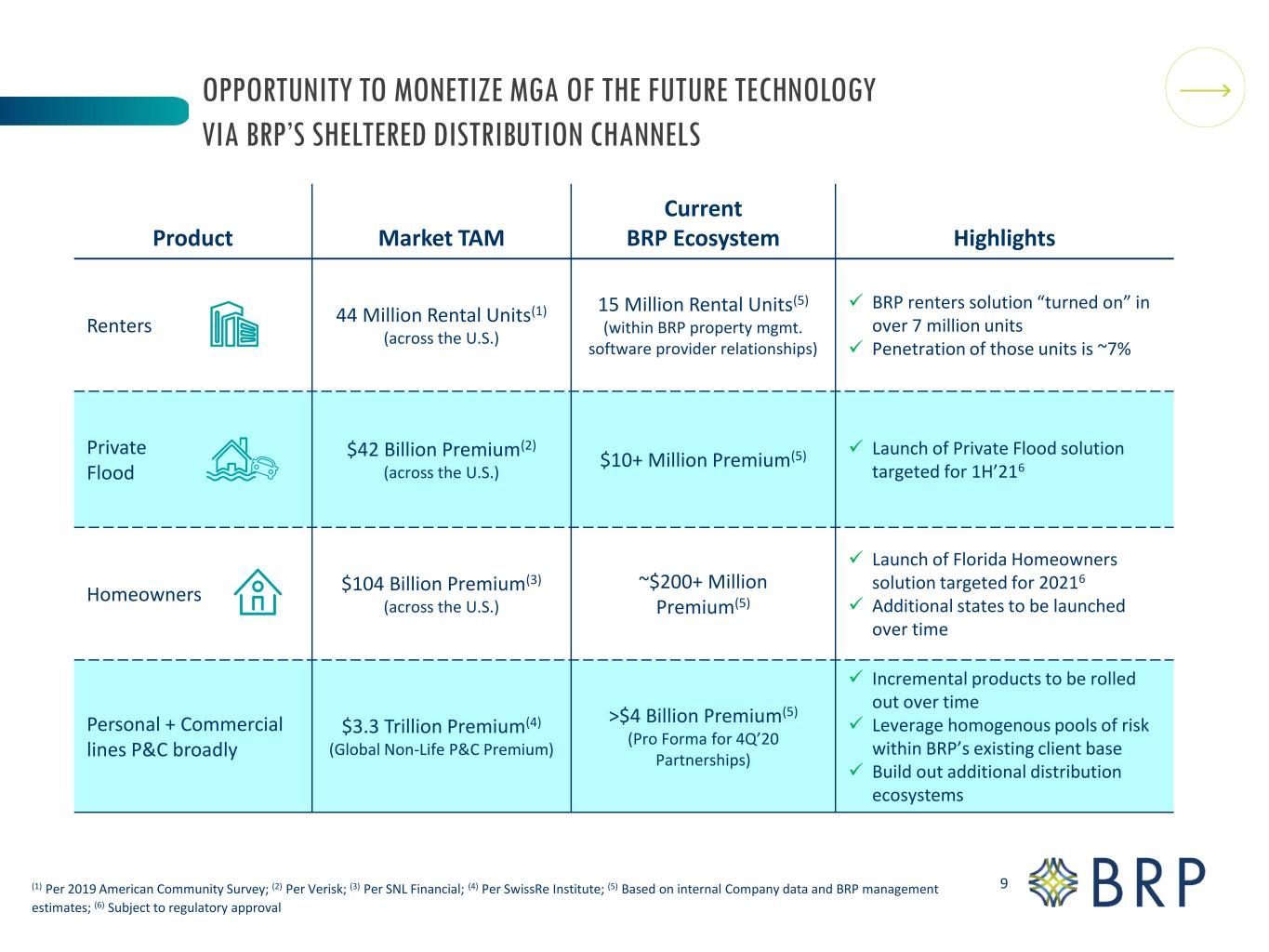
The current environment cannot be understood without considering the demand surge during the pandemic period. Between 2020 and 2022, consumers redirected spending toward goods, particularly those linked to outdoor and lifestyle activities.
Source: BRP
This created a powerful growth cycle across premium discretionary sectors. Companies benefited from elevated demand, strong pricing power, and accelerated customer acquisition.
That surge also pulled forward future demand. Many purchases that would have occurred later were brought forward, leaving a gap in subsequent periods.
“I think the higher-end consumer, the premium consumer, is candidly immune, becoming more immune to the headlines and not delaying their investment in the experience economy,” Delta Air Lines CEO Ed Bastian says on the company’s Q1 earnings call. pic.twitter.com/w5nDTBWuIE
Now, the market is adjusting. Growth is moderating, replacement cycles are extending, and new demand is entering at a slower pace. This is not necessarily a sign of weakness, but a transition toward more sustainable levels.
Similar patterns can be observed across sectors. From recreational products to premium consumer goods and even technology, many industries are now moving through a phase of recalibration following unusually strong growth, . Ttake Allbirds’ complete overhaul into AI this week.
Inventory, Pricing, and Margin Discipline
As demand normalises, the focus shifts to how companies manage the transition.
Inventory becomes a key indicator. When products take longer to sell, stock begins to build, creating pressure across the supply chain. This can eventually lead to discounting and margin compression if not managed carefully.
The same principle applies across premium lifestyle sectors. Strong brands are better positioned to preserve margins, but they are not immune to pressure. The ability to manage inventory without aggressive discounting is often a key differentiator during this phase of the cycle.
Interest Rates Are a Key Pressure Point
Interest rates remain one of the most direct drivers of BRP’s performance. Because many purchases are financed, affordability is highly sensitive to changes in borrowing costs. Even modest increases in rates can significantly affect monthly payments, altering the total cost of ownership.
This creates a clear transmission mechanism into demand. As rates rise, financing becomes more expensive, approvals may tighten, and consumers become more cautious about committing to large purchases. These effects do not always appear immediately in revenue, but they can be observed in the operating environment.
Sales cycles tend to lengthen, dealer turnover slows, and inventory begins to build. Companies may respond with increased promotional activity or incentives to stimulate demand. In this way, BRP acts as a direct reflection of how monetary policy filters into real-world consumer decisions.
This is why rate-sensitive stocks like BRP are often watched alongside broader macro assets. Traders looking to position around interest rate shifts can also explore opportunities across global shares and indices through CFDs on the VT Markets app.
Wealth Effects and Diverging Consumers
One of the defining features of the current environment is divergence between consumer groups.
Higher-income consumers, who drive much of the demand for premium products, tend to remain more resilient. Their spending is influenced by asset values and long-term financial outlook rather than immediate income pressure.
At the same time, middle-income consumers face tighter conditions. Higher borrowing costs, reduced savings buffers, and rising living expenses all contribute to more cautious spending behaviour.
Health-care costs are one part of a broader affordability crisis squeezing the middle class nationwide. That financial burden feels particularly heavy in Florida. https://t.co/libkhDEpSd
This creates a split dynamic within premium discretionary sectors. Demand may hold at the top end while weakening elsewhere, leading to changes in product mix and overall growth patterns.
For traders, this divergence helps explain why some premium stocks remain stable while others come under pressure. The underlying driver is not just income, but the distribution of financial resilience across the consumer base.
What Traders Should Watch
For traders, the key is to monitor how these figures evolve in relation to broader economic conditions. Unit sales trends provide a direct read on demand, while inventory levels offer early signals of slowing turnover. Pricing behaviour and promotional activity can indicate whether margins are under pressure, and interest rate trends remain central to understanding affordability. Consumer sentiment data adds an additional layer, helping to contextualise discretionary spending behaviour.
BRP often moves alongside consumer discretionary trends, and traders may track it in conjunction with broader retail and lifestyle sectors to gain a more complete picture of demand.
BRP often moves alongside consumer discretionary trends. Traders can explore opportunities across retail, lifestyle, and global consumer stocks through CFD Shares on VT Markets.
How Premium Lifestyle Stocks Fit Into a Broader Strategy
Premium discretionary stocks offer a targeted way to express views on consumer behaviour. They sit at the intersection of confidence, income, and financial conditions, making them particularly sensitive to changes in the economic environment.
This makes them useful in several ways. They can act as indicators of discretionary confidence, reflect the impact of interest rates on spending, and provide insight into how different consumer segments are adjusting to changing conditions.
They also offer a point of comparison with other sectors. While premium consumer stocks reflect spending behaviour, areas such as technology and AI often respond differently to the same macro drivers. Comparing these signals can help traders build a more complete view of the market.
Bottom Line
Premium lifestyle stocks are not immune to economic pressure, but they tend to adjust differently. Demand becomes more selective rather than disappearing, and resilience depends on both brand strength and the financial position of the consumer.
The current environment reflects a transition from exceptional demand to a more balanced phase. For traders, the key is understanding how this shift plays out across different sectors and consumer groups.
Create a live VT Markets account today to access our platform features, including market insights and educational content.
Trader Questions
What are premium lifestyle stocks?
Premium lifestyle stocks refer to companies that sell high-end discretionary products such as luxury goods, premium alcohol, and recreational equipment. Their performance is closely tied to consumer confidence and spending behaviour.
Why are premium brands affected by interest rates?
Higher interest rates increase borrowing costs and reduce disposable income, which can lead consumers to delay or reduce spending on non-essential purchases.
Do premium brands perform better in slow economies?
Premium brands often show more resilience because their customers tend to have higher incomes, but demand can still soften as economic pressure builds.
What stocks reflect discretionary spending trends?
Stocks in sectors such as luxury goods, premium alcohol, and lifestyle products, including companies like Diageo, often reflect broader consumer behaviour.
How can traders approach premium consumer stocks?
Traders often track a group of discretionary stocks rather than focusing on one company, using them to gauge broader trends in spending and economic conditions.
Start trading now – Click here to create your real VT Markets account
USD/IDR rose strongly in Friday’s Asian session and reached a record area of 17,185-17,190. The pair is set for strong weekly gains and remains biased higher.
The Indonesian rupiah weakened due to economic risks linked to the Middle East conflict. Indonesia is a net oil importer, so higher energy prices have raised import costs and subsidy bills.
Geopolitical Risks And Rupiah Pressure
Geopolitical tension also triggered capital outflows from Indonesia’s bond and equity markets into safe-haven assets, including the US dollar. This has supported the rise in USD/IDR over the past month.
The US Dollar Index (DXY) tried to extend its rebound from its lowest level since late February, amid uncertainty around the Strait of Hormuz. Separately, a 10-day truce between Israel and Lebanon lifted expectations of a potential US-Iran peace deal.
That backdrop supported risk appetite and, with lower expectations for a Federal Reserve rate rise, limited further US dollar strength. This may also cap USD/IDR upside in the near term.
We are seeing the USD/IDR exchange rate break through 17,180, a new all-time high that signals intense pressure on the Rupiah. For traders, this strong upward momentum suggests that buying USD/IDR call options could be a prudent move to capitalize on further expected weakness in the Rupiah. This situation feels very similar to the sharp depreciation we experienced in 2025 when the pair first crossed the 16,800 threshold.
Strategy Risks And Central Bank Watch
The primary driver is the high price of oil, which is a significant economic strain because Indonesia is a net importer. Data from last year showed our national oil and gas trade deficit exceeded $18 billion, making the Rupiah highly sensitive to sustained energy price shocks from geopolitical events. This fundamental weakness is a core reason to believe the current trend has room to run.
We are also witnessing significant capital flight from our domestic markets as global investors seek the safety of the US Dollar. The yield on Indonesia’s 10-year government bond has climbed above 7.8% this month, reflecting foreign investors selling off their holdings and converting the proceeds out of Rupiah. This outflow provides a steady stream of demand for US Dollars, pushing the exchange rate higher.
However, we must consider the factors that could limit this rally, including hopes for a de-escalation in the Middle East and the reduced likelihood of further US Federal Reserve rate hikes. This suggests that while going long on USD/IDR is the main strategy, traders might consider using bull call spreads. This would allow for profiting from a continued rise while capping potential losses if the rally suddenly stalls.
Finally, we have to anticipate potential intervention from Bank Indonesia (BI), which has historically stepped in to stabilize the currency. BI’s foreign exchange reserves have already declined by over $5 billion since the start of the year, a clear sign they are actively selling dollars to support the Rupiah. Any aggressive moves by the central bank could cause a sharp, albeit likely temporary, reversal in the USD/IDR pair.
EUR/USD traded near 1.1777 in Asian trading on Friday and moved sideways after a two-week rise to about 1.1825. Markets were watching for news on a further round of US-Iran talks.
S&P 500 futures were flat in Asia after gaining 0.26% to 7,041 on Thursday. The US Dollar Index was slightly higher near 98.25, though it was on track for a second weekly fall.
Us Iran Talks In Focus
No timetable was given for the next talks, but President Donald Trump said Iran was ready to hand over its uranium enrichment. He also said the US was “very close to a deal” and warned military action could resume if there is no deal.
In Europe, ECB policymaker François Villeroy de Galhau said talk of an April rate rise was premature. The ECB policy meeting is due on April 30.
Technically, the pair stayed above the 20-day EMA at 1.1673 after rebounding from the mid-1.15s. The 14-day RSI was near 62.
Support sits at 1.1673, with further support in the mid-1.15 area if it breaks. Resistance is at 1.1825, then 1.1929.
One Year Market Shift
We see that this time last year, the focus was on a potential bullish breakout for EUR/USD above 1.1825. At that point in April 2025, the pair was consolidating near 1.1777 after a strong rally. Today, the landscape has completely shifted, with the pair trading much lower at 1.1150, a drop of over 5% in the last twelve months.
The dovish ECB stance mentioned by Villeroy in 2025, where he pushed back on rate hike expectations, has fully materialized and intensified. We have since seen the ECB cut its deposit facility rate, most recently in February 2026 to 3.50%, as inflation remains stubbornly below target at 1.8%. This policy divergence with the US Federal Reserve continues to weigh heavily on the euro.
Geopolitical factors have also reversed, as the optimistic US-Iran talks from last year under the previous administration failed to produce a lasting deal. The focus has since shifted, and renewed tensions have contributed to a risk-off sentiment that benefits the US dollar. Consequently, the Dollar Index (DXY) has climbed from 98.25 last April to around 104.50 today, buoyed by persistent US inflation figures hovering at 3.2%.
Given the current environment, holding long positions seems risky, and the pair’s failure to rebound suggests selling into any strength. For options traders, this muted volatility and downward drift could make strategies like selling out-of-the-money call spreads attractive, capitalizing on the pair’s inability to break key resistance levels. This approach allows for premium collection while defining risk, a prudent strategy in this market.
USD/CAD stayed muted for a fifth day and traded near 1.3700 in Asian hours on Friday. The pair edged lower as the Canadian Dollar firmed with a small rise in oil prices, as Canada is the largest crude exporter to the US.
WTI crude held near $90.00 per barrel at the time of writing. Prices were supported by supply concerns linked to market caution around US-Iran ceasefire talks.
Ceasefire Developments In The Middle East
CNN reported on Friday that the Lebanese army recorded multiple ceasefire violations by Israel after a truce began. Lebanon said intermittent shelling hit villages in southern Lebanon, and the army told citizens to delay returning to southern towns and villages.
US President Donald Trump said on Thursday he spoke with Lebanese President Joseph Aoun and Israeli Prime Minister Benjamin Netanyahu. He said Israel and Lebanon agreed to a 10-day ceasefire that began at 5 PM ET.
Falls in USD/CAD were limited as the US Dollar Index (DXY) found support from higher safe-haven demand. Markets were cautious ahead of a US-Iran meeting due this weekend.
Washington and Tehran are expected to resume talks over the weekend. Trump said he was optimistic a permanent ceasefire could be reached before it expires next week.
Trading Implications For Usdcad
With USD/CAD currently trading around 1.3650, the market feels familiar. The Canadian dollar is finding support from West Texas Intermediate crude oil prices, which have remained firm above $85 per barrel throughout April 2026. This strength in oil, driven by tight OPEC+ supply discipline and persistent global demand, is putting a cap on how high the currency pair can go.
This situation reminds us of the dynamic we saw back in 2025, when geopolitical tensions surrounding US-Iran talks and an Israel-Lebanon ceasefire pushed oil toward $90. Back then, the commodity’s strength was countered by a rush into the US Dollar as a safe haven. The lesson was that geopolitical risk in the Middle East creates a two-way pull on this pair, often leading to volatility rather than a clear trend.
For traders, this suggests that outright directional bets are risky in the coming weeks. Instead, options strategies that benefit from price swings, such as buying straddles or strangles, could be more effective. Implied volatility on USD/CAD options has already ticked up by 5% this month, indicating the market is pricing in the potential for a larger-than-usual move.
We must also factor in the persistent interest rate differential between the US Federal Reserve and the Bank of Canada. The Fed’s commitment to holding its policy rate has kept a roughly 50-basis-point premium over Canadian rates, which continues to attract capital to the US Dollar. This fundamental support is preventing any significant breakdown in the USD/CAD pair, despite strong oil prices.
Therefore, traders should be prepared for the pair to remain in its current range but with sharp, headline-driven spikes. Using options to hedge existing positions seems prudent, such as buying puts to protect long Canadian dollar exposure from a sudden flare-up in risk aversion. This allows participation in CAD strength from oil while defining the downside risk from a stronger US Dollar.
The People’s Bank of China (PBoC) set the USD/CNY central rate on Friday at 6.8622. This compared with the previous day’s fix of 6.8616 and a Reuters estimate of 6.8206.
The PBoC’s main aims are to keep prices stable, including exchange rate stability, and support economic growth. It also works on financial reforms, such as opening and developing the financial market.
Pboc Governance And Leadership
The PBoC is owned by the state of the People’s Republic of China, so it is not an autonomous body. The Chinese Communist Party Committee Secretary, nominated by the Chairman of the State Council, has strong influence over management, and Pan Gongsheng holds both roles.
The PBoC uses tools such as the seven-day reverse repo rate, the Medium-term Lending Facility, foreign exchange actions, and the reserve requirement ratio. The Loan Prime Rate is China’s benchmark rate and affects loan, mortgage, and savings rates, as well as the Renminbi exchange rate.
China has 19 private banks, a small share of the system. The largest are WeBank and MYbank, and private-funded domestic lenders have been allowed since 2014.
Today’s fixing of the yuan at 6.8622, notably weaker than the market’s 6.8206 estimate, is a clear signal from the People’s Bank of China. This action shows an official preference for a managed, weaker currency to support the economy. We should interpret this as a green light for further gradual depreciation in the coming weeks.
Market Implications And Strategy
This official guidance is consistent with recent economic data, as we saw first-quarter 2026 GDP growth come in at 4.8%, just below the government’s 5% target. Furthermore, March export figures showed a surprising 1.5% year-over-year decline, reinforcing the view that authorities will use the exchange rate as a tool to boost competitiveness. Therefore, a weaker yuan is not just a market trend but an active policy choice.
Looking back to early 2025, we recall a similar pattern where the PBOC consistently set weaker fixes whenever the yuan strengthened toward the 6.80 level. That historical resistance established a policy floor, which eventually paved the way for the currency’s slow grind toward the 7.30 range we are trading in today. This precedent confirms the central bank’s priority is economic stability over currency strength.
Given the PBOC’s control, we anticipate continued low volatility even as the yuan weakens. Implied volatility for USD/CNH options has already compressed to a six-month low of 4.2%, making outright long positions on the dollar expensive to hold. For the next few weeks, the more prudent strategy would be to sell out-of-the-money yuan call options, capitalizing on the gradual and controlled pace of depreciation managed by the state.