US stocks fell as investors awaited next week’s inflation report

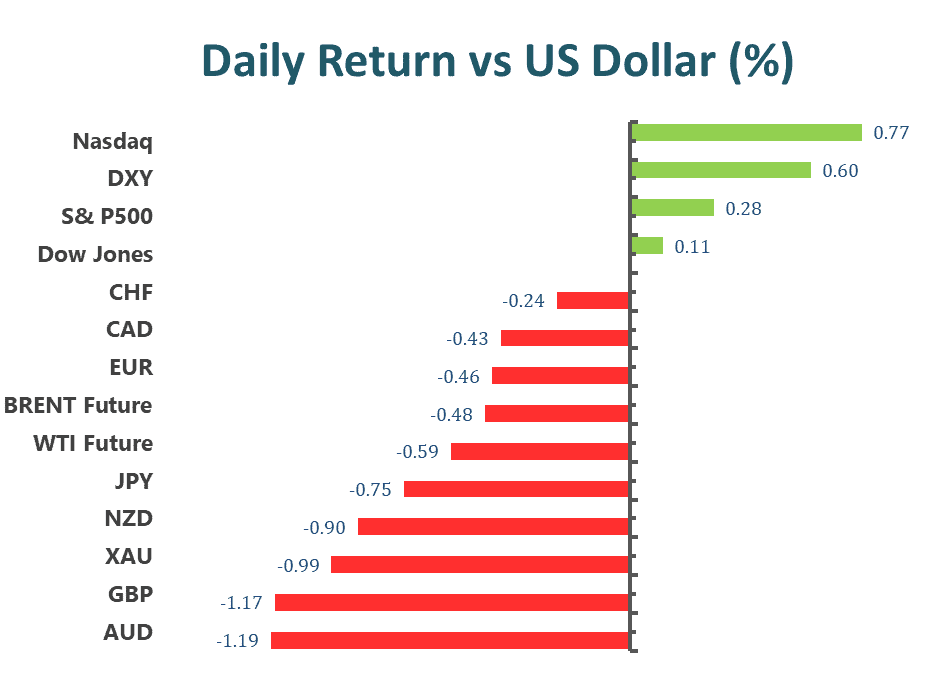
US stocks declined lower on Thursday, failing to find many reasons to climb higher and extending its previous slide amid higher bond yields, hawkish Fedspeak, and a surge in equity bullishness. The fresh fears surrounding the economic slowdown ahead of the key US data lend support to the greenback’s gauge versus the six major currencies and weighed on the equity markets.

However, the downbeat comments from the Federal Reserve (Fed) officials and softer US data, as well as China-inspired market optimism in the Asia-Pacific zone, might help the stock market to find recovery strength. On top of that, Japan’s Prime Minister Kishida is expected to name BOJ Governor Kuroda’s successor next week. Speculation revolves around whether Kishida will choose a more aggressive leader for the central bank that will end the ultra-loose monetary policy. On the Eurozone front, the odds of a continuation of bumper interest rate hikes by the ECB are still solid despite a decline in German inflation.

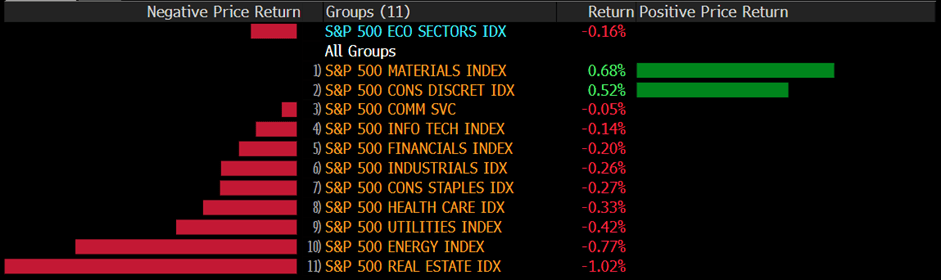
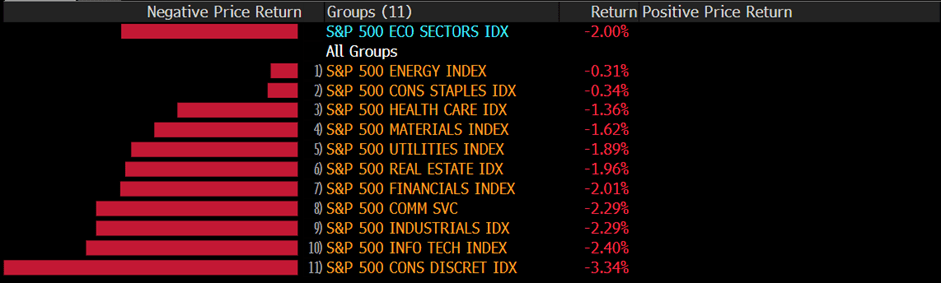
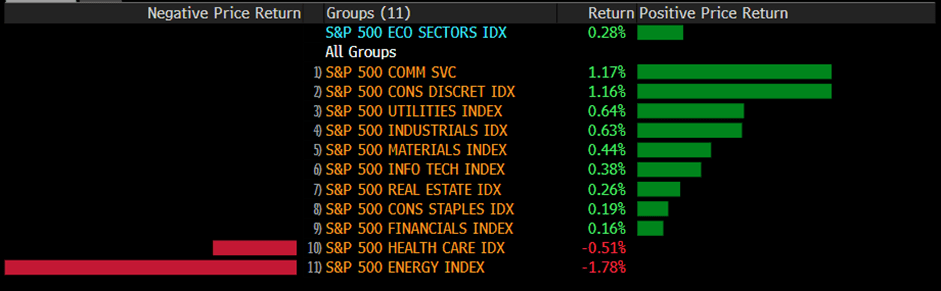
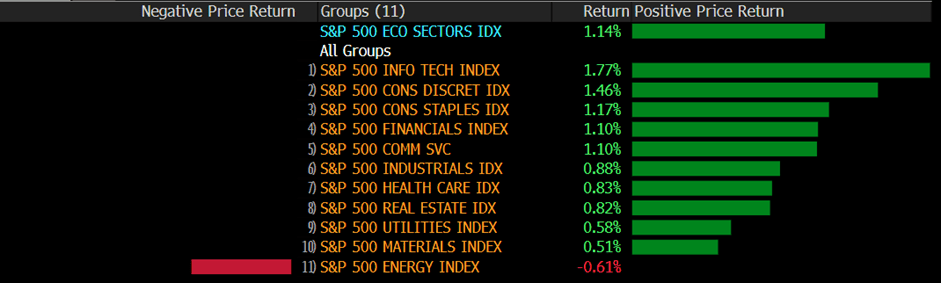
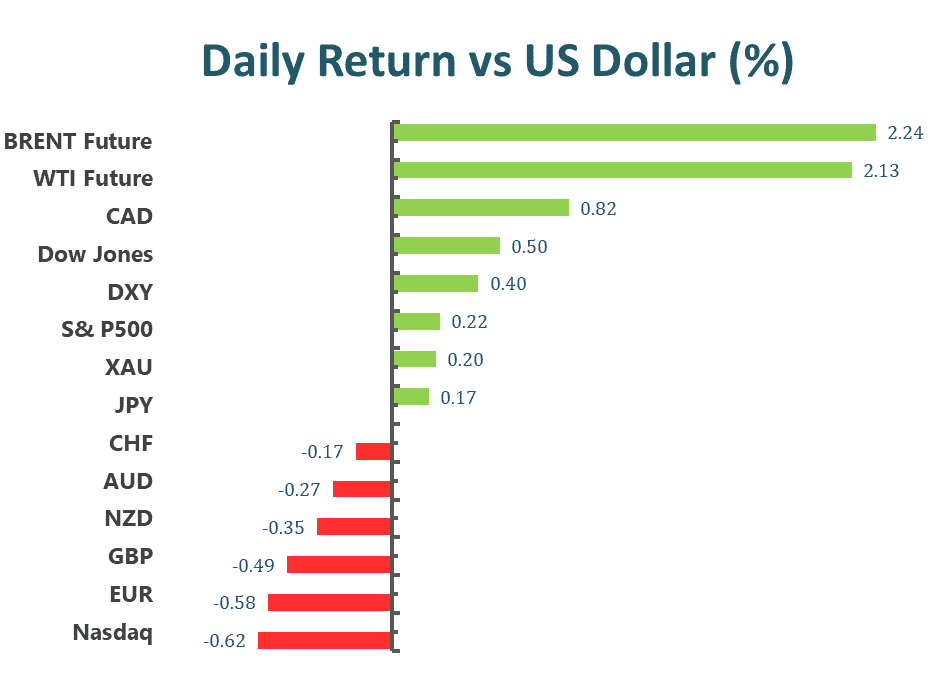
The benchmarks, S&P 500 and Dow Jones Industrial Average both declined lower on Thursday as the S&P 500 wiped out a rally of almost 1% amid renewed recession fears and the cautious mood. The S&P 500 was down 0.9% daily and the Dow Jones Industrial Average also dropped slightly with a 0.7% loss for the day. All eleven sectors in S&P 500 stayed in negative territory as the Communication Services sector and the utility sector are the worst performing among all groups, losing 2.80% and 1.41%, respectively. The Nasdaq 100 meanwhile retreated the most with a 0.9% loss on Thursday and the MSCI World index was down 0.4% for the day.

Main Pairs Movement

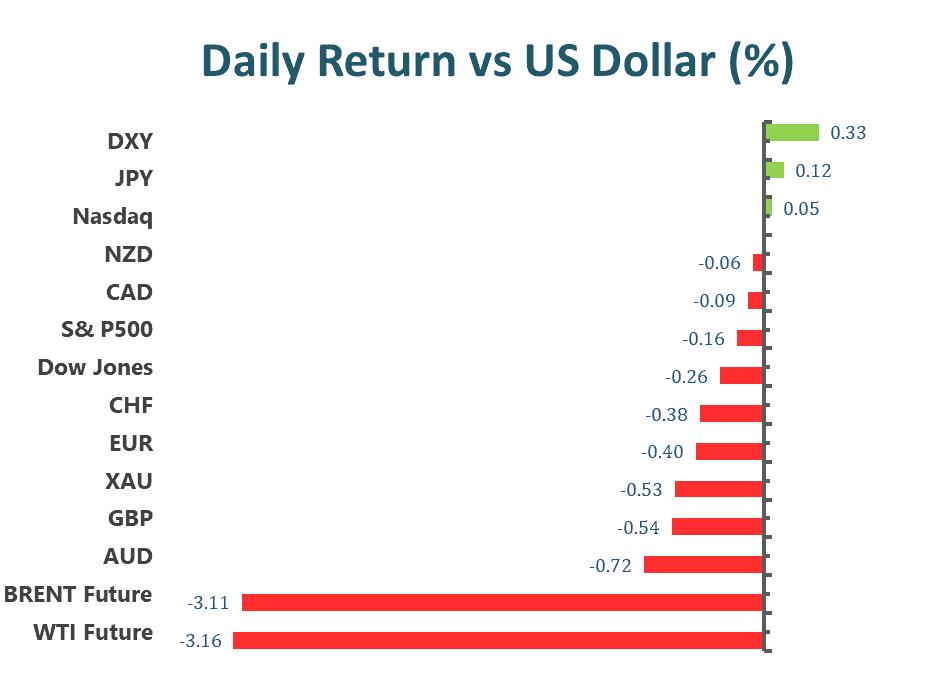
The US dollar retreated lower on Thursday, dropping to a daily low below 102.70 level but then rebounded back amid the fresh fears surrounding the economic slowdown ahead of the key US data. The higher government bond yields and comments from Richmond Fed President Thomas Barkin help the greenback to find demand, as he said that the effects of the Fed’s policy tightening have been substantial while adding that macroeconomic data put back the risk of a recession.

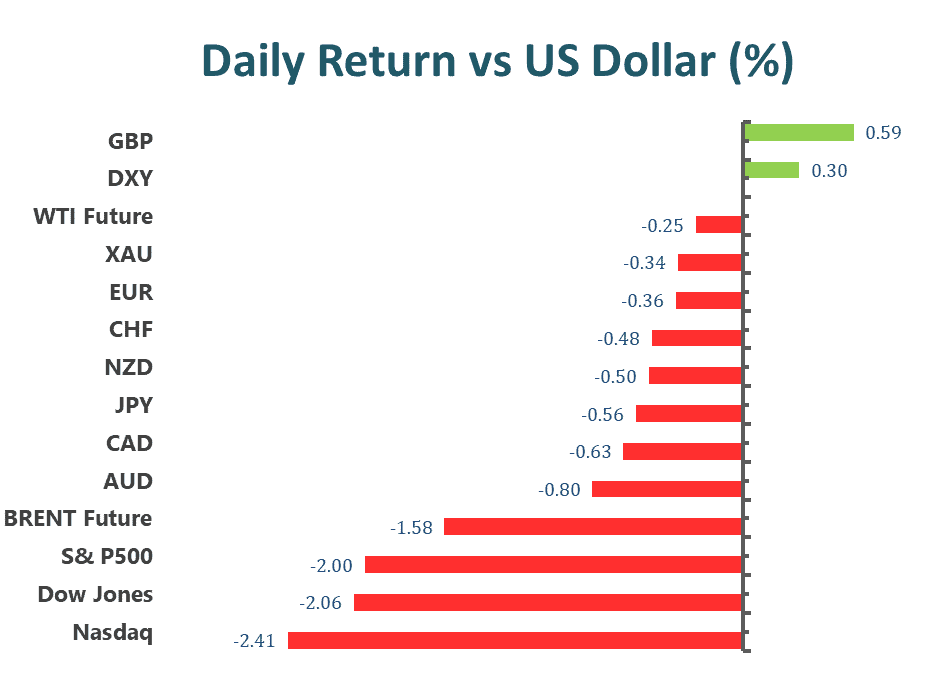
GBP/USD advanced higher on Thursday with a 0.41% gain after the cable preserved its upside traction and touched a daily high above the 1.2180 mark ahead of UK GDP data. On the UK front, the UK GDP is expected to release on Friday and upbeat data could avoid recession fears and support the Pound Sterling. Meanwhile, EUR/USD also witnessed buying interest and climbed to a daily high of around 1.0790 area. The pair was up almost 0.26% for the day.

Gold declined sharply with a 0.73% loss for the day after retreating from a daily top and extended its slide towards the $1860 area during the US trading session, as the higher US Treasury bond yields renewed recession fears and exerted bearish pressures on the yellow metal. Meanwhile, WTI Oil dropped lower with a 0.52% loss for the day. Oil prices dropped as Asia’s earthquake worries faded.

Technical Analysis

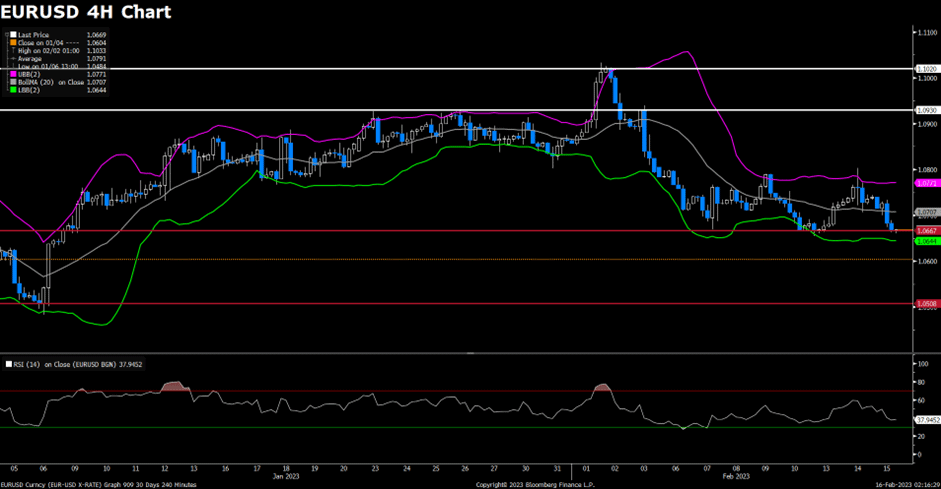
EURUSD (4-Hour Chart)

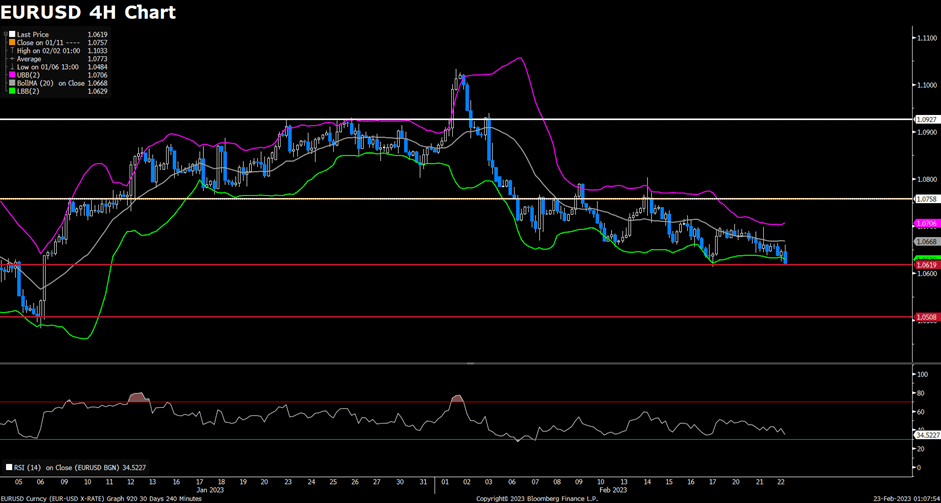
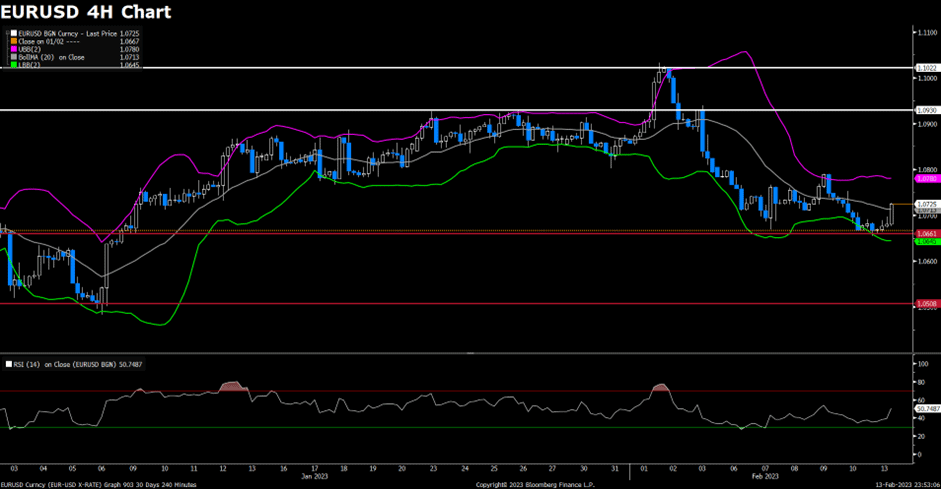
The EURUSD lost its upside traction after reaching the 1.0800 area at the beginning of the US trading session and struggled to hold above the 1.0750 level as of writing. The US Dollar regains strength and limits the pair’s upside room with Wall Street’s main indexes retreating from opening highs. On Thursday, a better market mood alongside sliding US Treasury yields undermined US dollar demand. Softer-than-expected German inflation figures triggered a short-lived reaction as the Harmonized Index of Consumer Prices (HICP) unexpectedly rose by 9.2% YoY in January, below the 10% expected and easing from the previous 9.6%, which means the ECB can decelerate the pace of tightening. Apart from this, the ECB member and Bank of France head, Francois Villeroy de Galhau, hit the wires and said that he thinks he can exclude a recession in the French as of today. His words provided an extra boost for the Euro currency.

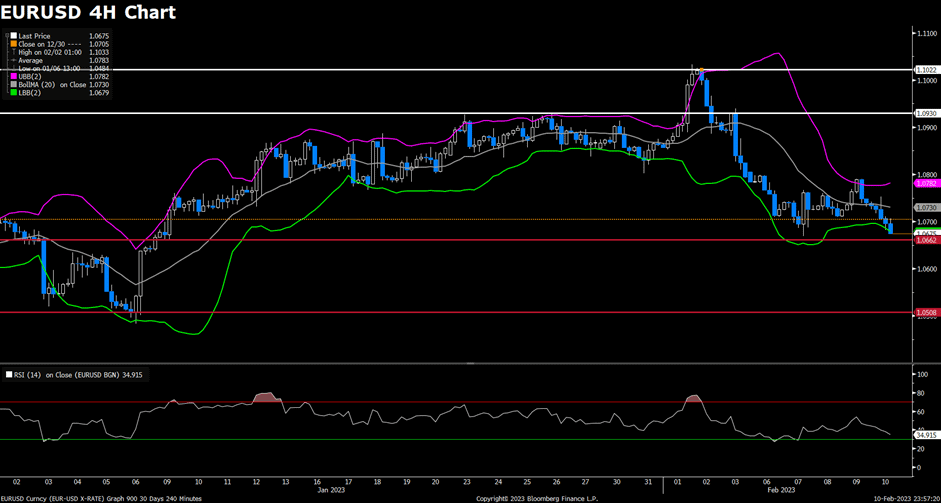
From a technical perspective, the four-hour scale RSI indicator slid to 48 as of writing, suggesting that the pair’s momentum turned neutral and any event may be a decisive move. As for the Bollinger Bands, the EURUSD is trading in the upper area and supported by a 20-period moving average, showing the pair is on the defensive in the near term.

Resistance: 1.0930, 1.1024

Support: 1.0661, 1.0508

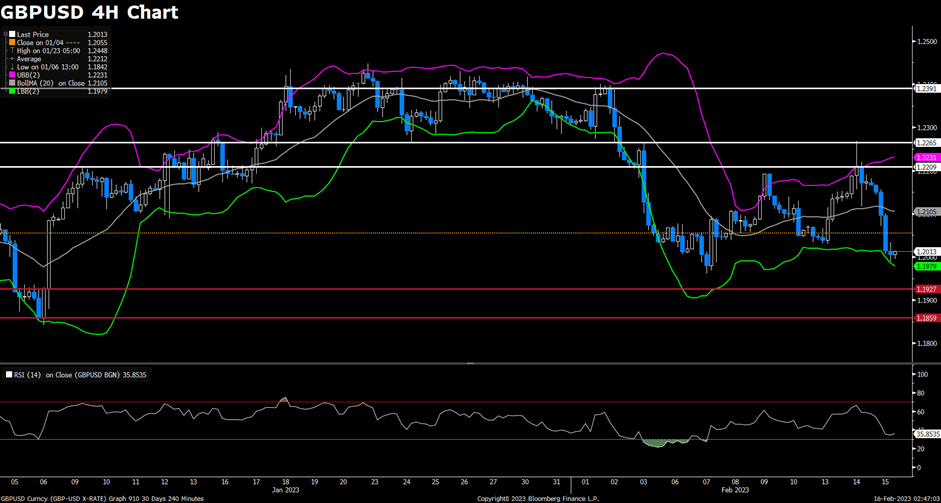
GBPUSD (4-Hour Chart)

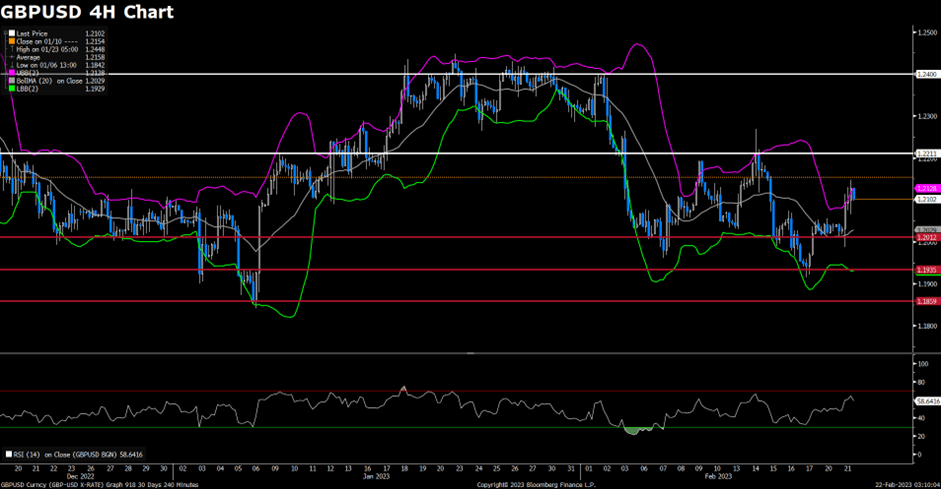
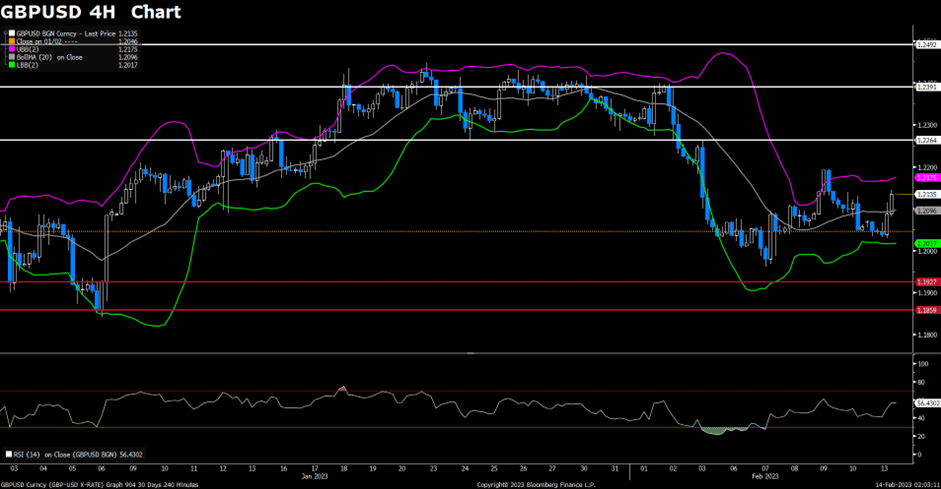
The GBPUSD has managed to build on earlier gains and touched its highest level in nearly a week above 1.2170 on Thursday before retreating modestly. BOE policymakers’ cautious comments on the inflation outlook and the US Dollar’s uninspiring performance fueled the pair’s rally. Traders might refrain from placing aggressive bullish bets around the British Pound amid a dovish assessment of the Bank of England’s policy decision last week. The UK central bank removed the phrase that they would “respond forcefully, as necessary”. Furthermore, BoE Governor Andrew Bailey said that inflation will fall more rapidly during the second half of 2023. This suggested that the BoE was becoming increasingly unsure as to whether further policy tightening is warranted and that the current rate-hiking cycle might be nearing the end. Hence, investors will look to the BoE’s monetary policy report hearing for clues about future rate hikes, which might influence the Sterling.

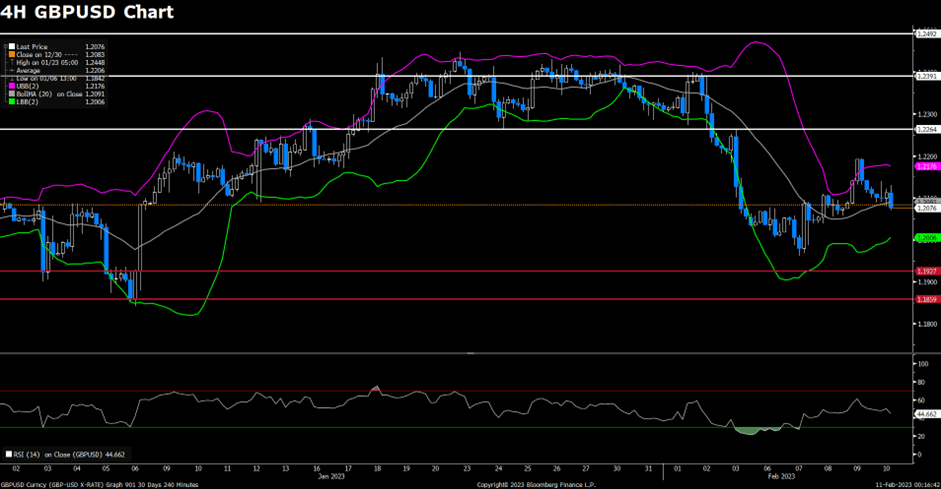
From the technical perspective, the four-hour scale RSI indicator slightly slid to 52 at the moment of writing, showing that the pair have no critical traction to dominate the moving direction. As for the Bollinger Bands, the pair has just fallen below the upper band and the gap size had little changed, which is a sign that the bullish momentum tends to slow down.

Resistance: 1.2265, 1.2393, 1.2493

Support: 1.1927, 1.1858

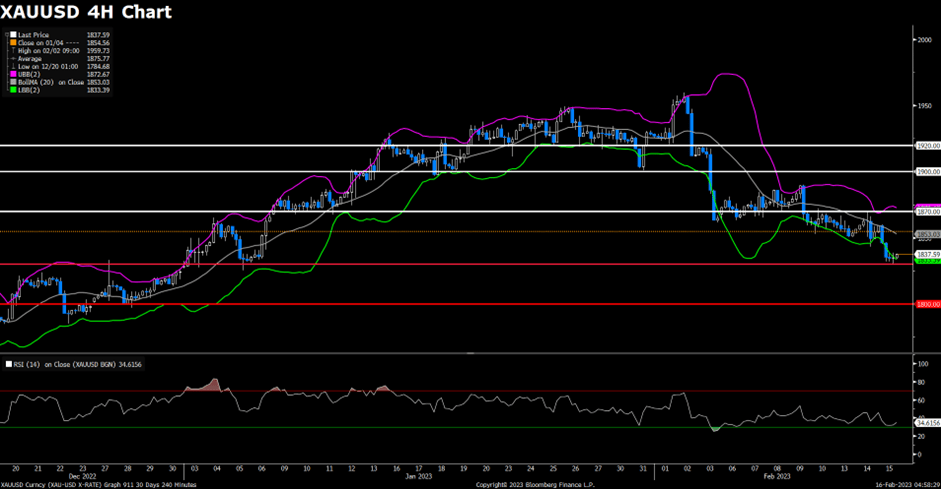
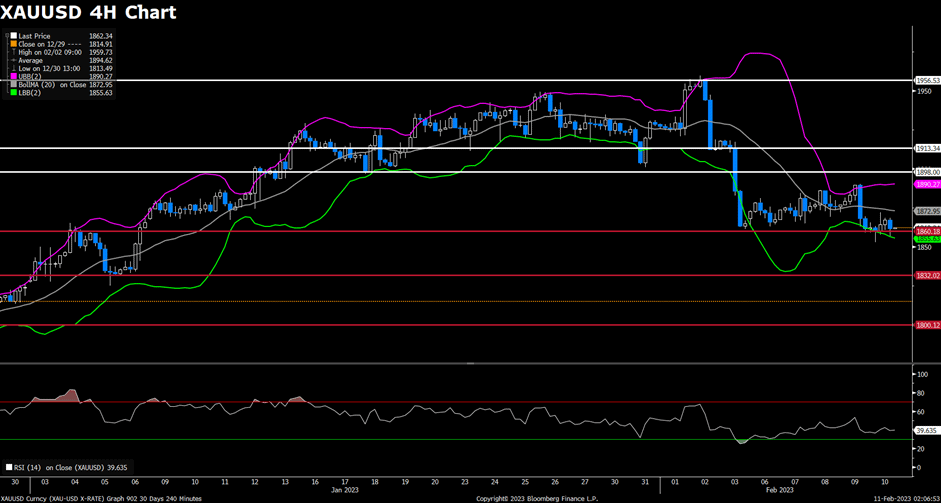
XAUUSD (4-Hour Chart)

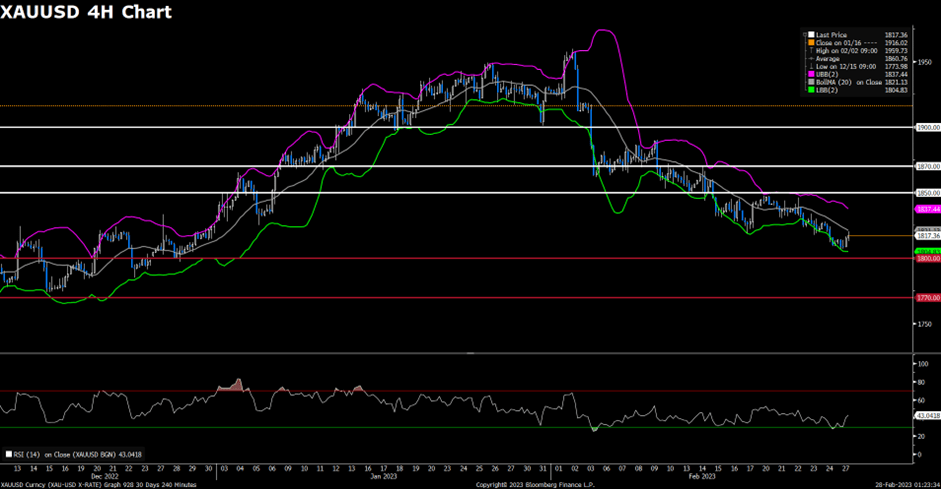
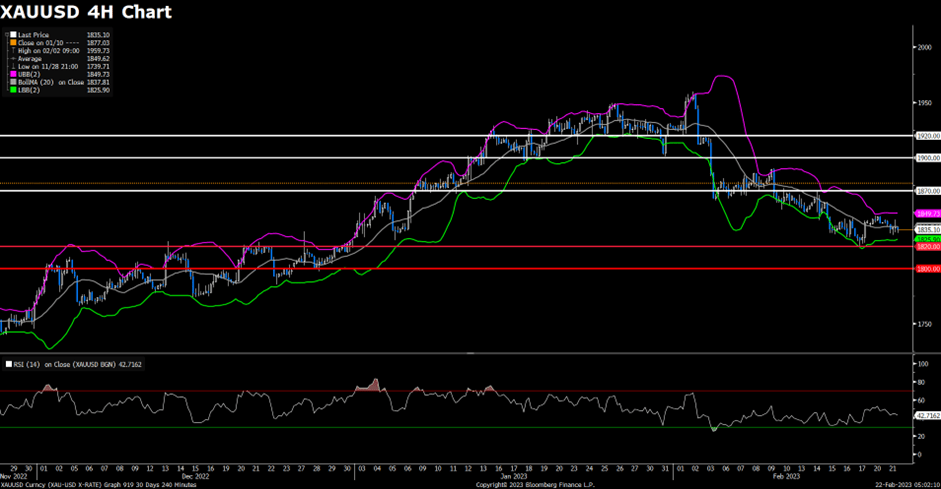
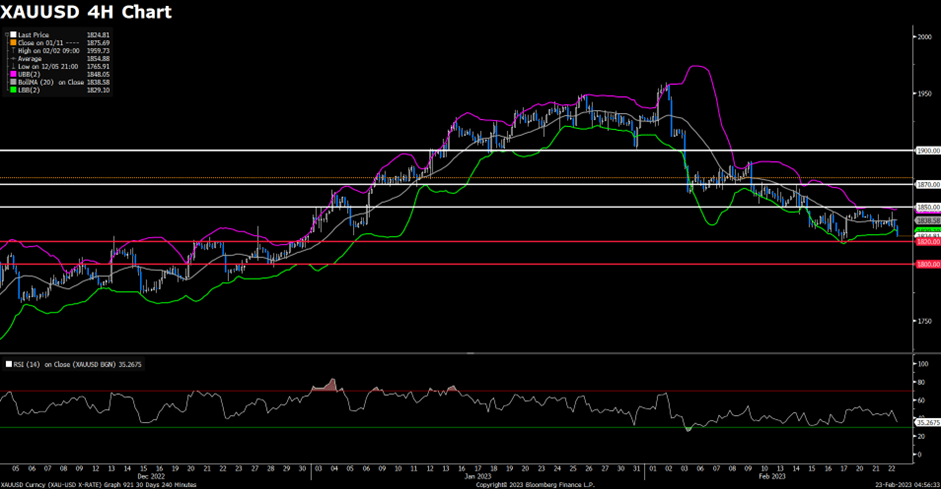
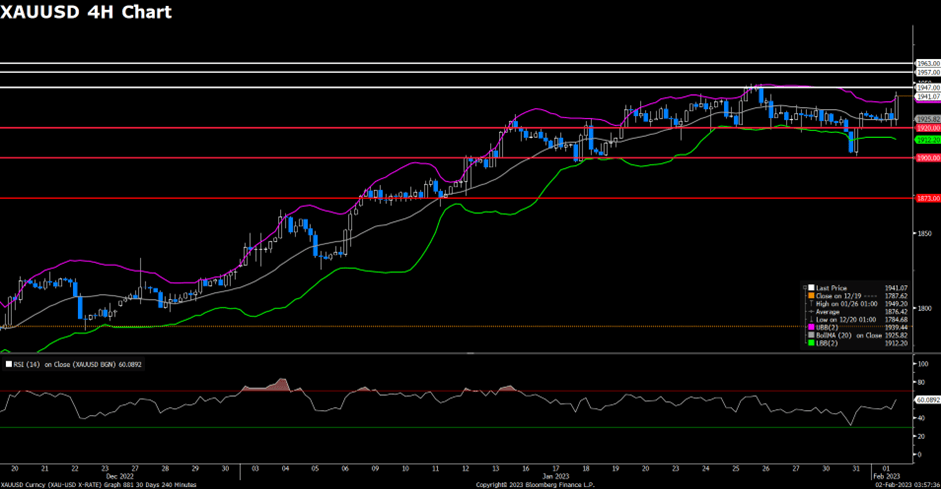
Gold prices were volatile in the course of trading on Thursday. Earlier, the price surged to $1,889.73 in the EU trading session. Later in the US trading session, it started to reverse from its daily high, falling towards $1,860. At the time of writing, the Gold price is trading at $1,865.59, posting a 0.56% loss daily. The US dollar index declined 0.23% to 103.229, while the benchmark US 10 Year Treasury Yield rose 1.97% to 3.684, which seems to cap on Gold price. The following trend for Gold prices still depends on the rate hiking path from the Fed. For more price action, eye on the comments from Federal Reserve officials and the US economic reports.

For the technical aspect, RSI indicator 39 figures as of writing, sliding from mid-line as the price staged a downside correction. As for the Bollinger Bands, the price is moving up and down around the moving average. The main traction seems unclear for now. In conclusion, the price is capped in a narrow range so far this week, and it needs a decisive breakthrough to confirm the path in the near term. That said, we think the bearish is more favored as the rally today was rejected. A downtrend should persist. For the downtrend scenario, the price is currently holding above support at  $1,860. If the price drops below the current support, it may trigger some technical selling and drag the price deeper.

Resistance: 1900, 1920, 1957

Support: 1860, 1830, 1800

Economic Data

CurrencyDataTime (GMT + 8)Forecast
GBPGDP (QoQ) (Q4)15:000.0%
GBPGDP (MoM) (Dec)15:00-0.3%
GBPGDP (YoY) (Q4)15:000.4%
GBPManufacturing Production (MoM) (Dec)15:00-0.2%
GBPMonthly GDP 3M/3M Change (Dec)15:00 
EUREU Leaders Summit18:00 
RUBInterest Rate Decision (Feb)18:307.50%
CADEmployment Change (Jan)21:3015.0K

Fed: Interest rates need to keep higher

US stocks declined sharply on Wednesday, suffering heavy daily losses, and were dragged lower by a selloff in tech stocks as Federal Reserve speakers reinforced the idea that interest rates will need to keep climbing to quash inflation.

Fed Governor Christopher Waller teased a long fight with a 2.0% inflation target by citing expectations of tighter monetary policy for longer than expected. Meanwhile, Governor Lisa Cook also said that the central bank remains focused on restoring price stability, as inflation is still running too high. Therefore, hawkish comments from the US policymakers provided support to the US Dollar and exerted bearish pressure on the equity markets.

On top of that, the mixed concerns surrounding the latest geopolitical tension between the US also acted as a tailwind for the greenback. On the Eurozone front, European Central Bank policymaker Klaas Knot said that headline inflation appears to have peaked but added that keeping the current pace of hikes into May could well be needed if underlying inflation does not materially abate.

The benchmarks, S&P 500 and Dow Jones Industrial Average both declined lower on Wednesday as the S&P 500 almost wiped out its previous session’s rally amid hawkish comments from the US policymakers. The S&P 500 was down 1.1% daily and the Dow Jones Industrial Average also dropped slightly with a 0.6% loss for the day.

All eleven sectors in S&P 500 stayed in negative territory as the Communication Services sector and the utility sector are the worst performing among all groups, losing 4.13% and 1.71%, respectively. The Nasdaq 100 meanwhile retreated the most with a 1.8% loss on Monday and the MSCI World index was down 0.5% for the day.

Main Pairs Movement

The US dollar advanced higher on Wednesday, rebounding from a daily low, and held onto its recovery moves towards the 103.50 level amid hawkish Federal Reserve comments. The Fed officials including Chairman Jerome Powell renewed inflation fears and allowed the US Dollar Index (DXY) to regain upside momentum. However, receding woes of the US-China ties and a light calendar might limit the upside for the US Dollar.

GBP/USD advanced higher on Wednesday with a 0.20% gain after the cable struggled to maintain its feet and gradually dropped to the 1.2060 area amid the souring market mood. On the UK front, the UK GDP is expected to display a flat performance every quarter on Friday. Meanwhile, EUR/USD also remained under pressure around the 1.0710 area amid a modest US Dollar comeback. The pair was down almost 0.13% for the day.

Gold advanced slightly with a 0.13% gain for the day after touching a daily high at $1886 during the European trading session, as the statements highlighting inflation fears from the US diplomats weighed on the yellow metal. Meanwhile, WTI Oil rebounded higher with a 1.74% gain for the day. The solid China recovery is expected to keep the oil price in bullish territory.

Technical Analysis

EURUSD (4-Hour Chart)

The EURUSD erased daily gains and was trading below 1.0730 as of writing. The EUR/USD pair hover around 1.0740 on Wednesday, consolidating after Tuesday’s Federal Reserve (Fed) chief Jerome Powell turmoil in markets. The head of the American central bank participated in a moderated discussion at the Economic Club of Washington, DC, providing some interesting headlines. The macroeconomic calendar has no relevant data scheduled for today. A couple of Federal Reserve officials are scheduled to speak during the American afternoon.

From the technical perspective, the four-hour scale RSI indicator climbed to 42 as of writing, suggesting that the pair’s negative traction has weakened. As for the Bollinger Bands, the pair continued to wander below the 20-period moving average, showing that the EURUSD remained defensive at the moment of writing.

Resistance: 1.0930, 1.1025

Support: 1.0664, 1.0508

GBPUSD (4-Hour Chart)

The GBPUSD has failed to stabilize above 1.2100 and erased a portion of its daily gains. The US Dollar preserves its strength amid the souring market sentiment and makes it difficult for the pair to gather recovery momentum. Late Tuesday, FOMC Chairman Jerome Powell also acknowledged the strong labor market data and reiterated that they will probably need to do further rate hikes. In an optimistic tone, Powell said that he was expecting 2023 to be “a year of the significant decline in inflation.” This comment made it difficult for the US Dollar Index to preserve its bullish momentum and helped GBP/USD erase some of this week’s losses. Currently, the CME Group FedWatch Tool shows that markets are pricing in a 68% probability of the Fed opting for two more 25 basis points rate increases in March and May. The market positioning is unlikely to change significantly ahead of next week’s inflation report.

From the technical perspective, the four-hour scale RSI indicator recovered to 46 at the moment of writing, suggesting that the pair now have no decisive direction. As for the Bollinger Bands, the pair was breaking through the 20-period moving average to the upper area and the size between the upper and lower bands got smaller, signaling that the pair was within the consolidation phase.

Resistance: 1.2264, 1.2391, 1.2492

Support: 1.1924, 1.1859

XAUUSD (4-Hour Chart)

Gold price stays around $1,870, unable to gain traction on Wednesday amid the absence of a fresh catalyst. Market participants lack of consensus so far from US Federal Reserve (Fed) Chair Jerome Powell’s speech on Tuesday. Powell repeated that they were determined to control inflation and would continue tightening the monetary policy by hiking rates. On the other hand, he also stated that the disinflationary process has begun. At the time of writing, the Gold price is trading at $1,877.26, posting a 0.3% gain daily. The US dollar index rose 0.03% to 103.370 and the benchmark US 10 Year Treasury Yield declined 0.65% to 3.653, having no clear traction on Gold price.

For the technical aspect, RSI indicator 43 figures as of writing, signaling no clear traction as the RSI indicator has no significant movement in the near term. As for the Bollinger Bands, the price is holding around the downward moving average. The bearish trend could persist. In conclusion, we think the market is in modest bearish mode though both indicators show no strong bearish potential. The downtrend from last week should persist until further breakthrough. For the downtrend scenario, the price is currently holding above support at  $1,860. If the price drops below the current support, it may trigger some technical selling and drag the price deeper. For the uptrend scenario, the price must hold above $1,860 and break through the resistance at the round-figure mark of $1,900 to confirm the uptrend.

Resistance: 1900, 1920, 1957

Support: 1860, 1830, 1800

Economic Data

CurrencyDataTime (GMT + 8)Forecast
EUR                German CPI (YoY) (Jan)15:008.9%
GBP                BoE MPC Treasury Committee Hearings17:45 
EUR                EU Leaders Summit 18:00 
USD                Initial Jobless Claims21:30190K

二月期货合约展期通知 – 2023年02月08日

尊敬的用户:

VT Markets 平台的期货产品:VIX (恐慌指数) 、CL-OIL (西德州原油期货)、FLG(英国长期债券)、TY(十年美国中期债券)、CHINA50ft (新华富时A50期货) 、HK50ft (港指期货) 、UKOUSDft (布兰特原油期货) 、即将于以下时间展开新合约,如持仓过夜将会收取展期费用。

由于并非市场因素所造成的价格波动,若投资者的仓位于合约切换期间包含期货原油的未平仓头寸,将依据展期方向产生相应的费用扣补,以此反映新旧合约之间的价差。

请留意:

• 展期时,合约将自动切换,所有持仓中的订单将可继续持有。

• 展期日未平仓的订单将通过展期费进行调整,以反映到期合约和新合约之间的价格差异。

• 为避免差价合约展期,客户可以选择在展期日之前关闭任何未平仓的订单。

• 投资者应在展期前妥善控制仓位或调整相应的止盈止损设置。

• 同时,由于展期需做调整,在展期当天开盘前后半小时,我们会禁止所有同名账户内部转账。

如您有任何疑问,我们的团队将十分乐意为您解答。
请留言或发邮件至 [email protected] 或联系在线客服。

Powell: Inflation is in the very early stages of easing

Federal Reserve Chairman Bill Powell said Tuesday that inflation is in the very early stages of easing, which may be a long process, the process may be bumpy, and must keep interest rates at restrictive levels for some time. In the job market, Bauer said that if the strong employment data continues, further interest rate increases will be needed to cool inflation, and borrowing costs may have to reach a peak higher than previously estimated by the Fed.

The Fed’s inflation target is 2%, but several indicators show that the inflation rate is much higher than this target. The U.S. non-farm payrolls report for January released last week showed that 517,000 people were added to the workforce, far exceeding the market’s expectations of 185,000, and the unemployment rate also set a new 53-year low of 3.4%.

Dow ends higher as Powell offers limited new clues on policy. The Dow Jones Industrial Average gained 0.78% or 265 points, the S&P 500 rose 1.3%, and the Nasdaq jumped 1.9%.

On the other hand, the U.S. 10-year bond yield surged to 3.66% and the U.S. Dollar Index rose to 103.53. The U.S. Dollar Index was nearing 104 before Bauer’s remarks, setting a new high for the second day in a row since Jan. 6 and rising more than 0.3% during the day.

Main Pairs Movement

The US dollar retreated lower on Tuesday, extending its February rally throughout the first half of the day but failed to preserve upside traction amid mixed comments from the Federal Reserve (Fed) officials. Fed Chairman Jerome Powell said that he expects 2023 to be a year of significant declines in inflation and added that the central bank would certainly raise rates more if data were to continue to come in stronger than expected. Therefore, the US Dollar fell as Wall Street soared as an immediate reaction.

GBP/USD advanced higher on Tuesday with a 0.24% gain after the cable regained upside strength and rebounded towards the 1.2080 mark amid the fresh optimism surrounding the UK Prime Minister Rishi Sunak’s Cabinet reshuffle. On the UK front, Sunak broke the British Cabinet into two departments to justify his pledge to bolster the economy. Meanwhile, EUR/USD was nothing changed and stabilized above 1.0720 despite hawkish Fed commentary.

Gold advanced slightly with a 0.30% gain for the day after climbing to a daily high above $1880 during the US trading session, as market sentiment stays sluggish amid mixed signals from the Federal Reserve and the geopolitical front. Meanwhile, WTI Oil advanced sharply with a 4.09% gain for the day as the US Dollar weakens on soft US Fed Powell remarks.

Technical Analysis

EURUSD (4-Hour Chart)

The EURUSD has lost its traction and dropped to its lowest level in nearly a month below 1.0700 following a quiet European morning. Ahead of FOMC Chairman Jerome Powell’s speech, the US Dollar preserves its strength on hawkish Fedspeak and weighs on the pair. The EURUSD pair extended its slide to a fresh three-week low at 1.0969, as demand for the US Dollar prevails ahead of the United State Federal Reserve (Fed) President Jerome Powell’s speech. Market participants are still pricing in the latest central bank decisions and the solid employment report published last Friday, both suggesting the Federal Reserve would maintain the tightening course. Chair Powell is due to participate in a moderated discussion at the Economic Club of Washington DC after Wall Street’s opening and may provide a clue about monetary policy.

From a technical perspective, the four-hour scale RSI indicator remained around the 30 levels, suggesting that the pair were surrounded by heavy bearish pressure and investors should be aware of any sign of a dramatic rebound. As for the Bollinger Bands, the pair kept pricing at the lower area, but the size between the upper and lower bands got lower, which indicates that the pair’s downside momentum has been slowdown. We think the pair is more favored for the downside path in the short term, but a critical rebound is not far away.

Resistance: 1.0747, 1.0930, 1.1022

Support: 1.0661, 1.0508

GBPUSD (4-Hour Chart)

The GBPUSD managed to rebound above the 1.2000 level at the moment of writing, erasing its most daily losses. As investors await FOMC Chairman Jerome Powell’s speech, the US Dollar was moving in a volatile path and struggling to preserve its strength as of writing. However, it is too early to say whether Pound Sterling is out of the woods as investors are unlikely to bet on an extended recovery ahead of FOMC Chairman Jerome Powell’s highly-anticipated speech. In the Eurozone, news of EU and UK negotiators have made a breakthrough in the Nothern Ireland Protocol helped Pound Sterling stay resilient against its rivals. Additionally, Bank of England (BoE) Chief Economist Huw Pill noted that they were ready to do more to get inflation back to target, providing a boost for the GBPUSD pair.

From a technical perspective, the four-hour scale RSI indicator rebounded to 33 as of writing, suggesting that the pair was amid strong recovery strength. As for the Bollinger Bands, the pair was pricing below the 20-period moving average and the gap size became smaller, which is a sign that the pair’s negative traction has been softer. The pair now is waiting for a critical move to decide the near-future direction.

Resistance: 1.2265, 1.2397, 1.2492

Support: 1.1927, 1.1854

XAUUSD (4-Hour Chart)

Gold prices were volatile on US Federal Reserve (Fed) Chairman Jerome Powell’s speech. Earlier, the Gold price surged to its highest $1,884.37, and pullback from then as the US dollar regather strength. Federal Reserve Chair Jerome Powell on Tuesday reiterated that continued interest-rate increases will be appropriate and that the “disinflationary process” has begun. The gold prices rose following Powell’s comments that inflation was on the decline. Aftermarket participants reassess the comments and the US dollar regathers strength and Gold price pullback. At the time of writing, the Gold price is trading at $1,872.82, posting a 0.25% gain daily.

For the technical aspect, RSI indicator 39 figures as of writing, slightly holding above the 30 lines as the price established itself above $1,860  from the sharp decline last week. As for the Bollinger Bands, the price is moving between the downward moving average and the lower band. The bearish trend could persist. In conclusion, we think the market is in bearish mode as both indicators show bearish potential. For the downtrend scenario, the price is currently holding above support at  $1,860, which seems unstable for now. If the price drops below the current support, it may trigger some technical selling and drag the price deeper. For the uptrend scenario, the price must hold above $1,860 and break through the resistance at the round-figure mark of $1,900 to confirm the uptrend.

Resistance: 1900, 1920, 1957

Support: 1860, 1830, 1800

Economic Data

CurrencyDataTime (GMT + 8)Forecast
USDCrude Oil Inventories23:302.457M

Strong US jobs data boosts economic transition optimism

US stocks declined lower on Monday, extending their previous slide, and continued to give back some of this year’s gains amid a dismal market mood. Hawkish Fed bets underpin the US Treasury bond yields and US Dollar, which exerted bearish pressure on equity markets. Meanwhile, traders are waiting to see if Jerome Powell will dampen the bullish reaction to his recent remarks as the Federal Reserve keeps its firm grip on policy. Policymakers from the US appear optimistic about the economic transition after witnessing strong United States employment and activity data on Friday.

On top of that, the political tensions between US and China weighed on the market mood, further fueling demand for the safe-haven US Dollar. On the Eurozone front, European Central Bank (ECB) ’s Robert Holtzmann said that monetary policy must continue to show its teeth until we see a credible convergence to our inflation target.

The benchmarks, S&P 500 and Dow Jones Industrial Average both declined lower on Monday as the S&P 500 remained under pressure as China-linked fears join fresh hawkish concerns over Fed. The S&P 500 was down 0.6% daily and the Dow Jones Industrial Average also dropped slightly with a 0.1% loss for the day.

Nine out of eleven sectors in the S&P 500 stayed in negative territory as the Communication Services sector and the Information Technology sector are the worst performing among all groups, losing 1.31% and 1.22%, respectively. The Nasdaq 100 meanwhile retreated the most with a 0.9% loss on Monday and the MSCI World index was down 1.1% for the day.

Main Pairs Movement

The US dollar advanced higher on Monday, extending its last Friday rally, and climbed to fresh February highs against most major rivals near the 103.70 level amid a risk-averse environment. The upbeat economic report from the US fueled speculation that the US Federal Reserve (Fed) will keep tightening its monetary policy while chances of a rate cut by year-end decreased sharply. Further fueling the dismal mood were mounting tensions between the United States and China.

GBP/USD declined lower on Monday with a 0.31% loss after the cable preserved downside traction and refreshed its daily low below the 1.2020 mark amid a dismal market mood. On the UK front, the Bank of England Chief Economist Huw Pill said that UK policymakers are prepared to do more to get inflation back to target. Meanwhile, EUR/USD also stumbled to multi-week lows at around the 1.0720 area amid US Dollar strength. The pair was down almost 0.65% for the day.

Gold advanced slightly with a 0.13% gain for the day after rebounding from a one-month low at $1864 during the US trading session, but the recent hawkish bias over the Fed’s next move should keep the Gold sellers hopeful. Meanwhile, WTI Oil rebounded higher with a 1.42% gain for the day. WTI posted a modest intraday advance and settled at $74.30.

Technical Analysis

EURUSD (4-Hour Chart)

The EURUSD came under renewed bearish pressure and declined to its lowest level in nearly a month below 1.0737 as of writing. The risk-averse market environment, as reflected by the sharp decline seen in Wall Street’s main indexes, provides a boost to the US Dollar and weighs on the pair. Risk aversion dominates financial markets at the beginning of the new week, pushing the US Dollar further up across the FX board. The upbeat January Nonfarm Payrolls report showed that the US added 517K new job positions in the month, more than doubling expectations, while the Unemployment Rate contracted to 3.4%, despite an increase in the Labor Force Participation Rate to 62.4%. The mounting speculation that the US Federal Reserve will continue to hike rates in the upcoming months not only diminished the chances of a rate cut by year-end, but pressured the EURUSD pair.

From the technical perspective, the four-hour scale RSI indicator figured 28 as of writing, suggesting that the pair was under heavy selling pressure. As for the Bollinger Bands, the pair is pricing below the 20-period moving average and the gap between upper and lower bands became larger, indicating that the pair would move in a volatile path.

Resistance: 1.0930, 1.1022

Support: 1.0714, 1.0662, 1.0508

GBPUSD (4-Hour Chart)

GBPUSD lost upside traction and turned south on the day and was pricing around 1.2009 as of writing. With major indexes opening deep in the red on Monday, the US Dollar continues to gather strength against its rivals and forces the pair to stay on the back foot. Last Friday, the US Nonfarm Payrolls rose by 517K in January, compared to the market expectation of 185K, and the Unemployment Rate declined to 3.4% from 3.5% in December. The impressive job report forced investors to reassess the probability of one more 25 basis points Federal Reserve rate hike in May and helped the US Dollar outperform its rivals. At the same time, the benchmark 10-year US Treasury bond yield climbed toward 3.6, further boosting the greenback.

From the technical perspective, the four-hour scale indicator RSI indicator figured 25 at the time of writing, suggesting that investors should be aware of a corrective rebound while the market was amid a strong oversold mood.  As for the Bollinger Bands, the pair was pricing along with the lower band and the gap size got wider, indicating that the strong selling pressure would persist for a while.

Resistance: 1.2265, 1.2401, 1.2493

Support: 1.1924, 1.1859

XAUUSD (4-Hour Chart)

Gold price remains under selling pressure on Monday. Earlier in the European trading session, the Gold price peaked at $1,881.30, and the price resumed to decline amid the broad US Dollar demand from then. The US dollar extends its post-NFP advance on the speculation that the Fed will keep hiking rates for some time, while the chances for a year-end rate cut are reduced. The US dollar index is currently placed at 103.68,  while the benchmark 10-year US Treasury bond yield rose 3.06% to 3.634%, weighing on Gold price. At the time of writing, the pair is trading at $1,867.43, posting a 0.09% gain daily.

For the technical aspect, the RSI indicator is 32 figures as of writing, hovering around 30 as the price remains under selling pressure in the near term. As for the Bollinger Bands, the price is moving between the downward moving average and the lower band. The bearish trend could persist. On the other hand, the wide-separated bandwidth shows the huge volatility of Gold price may be. Traders should be aware of the upside correction risk. In conclusion, we think the market is in bearish mode as both indicators show bearish potential. A failure to defend the critical support at $1,900 suggests that the bulls have surrendered. The price is currently holding above support at  $1,860, which seems unstable for now. If the price drops below the current support, it may trigger some technical selling and drag the price deeper.

Resistance: 1900, 1920, 1957

Support: 1860, 1830, 1800

Economic Data

CurrencyDataTime (GMT + 8)Forecast
AUDRBA Interest Rate Decision (Feb)11:303.35%
AUDRBA Rate Statement11:30 

Week ahead: Will the Reserve Bank of Australia increase its rates this month?

The upcoming week will bring much anticipation for the financial community as the Reserve Bank of Australia (RBA) is set to announce its latest monetary policy decision. The central bank has been on a streak of consecutive rate hikes, but speculation has been brewing about whether or not it will continue this trend. 

With the economy showing signs of growth and inflation pressures on the rise, many are asking: will the RBA raise rates this month?

Here are the key market events for the week ahead:

RBA Rate Statement (7 February)

The RBA raised the cash rate by 25bps to 3.1% in its last meeting of 2022, its eighth consecutive hike. 

Analysts anticipate RBA to increase rates by 20bps to 3.3% this month.

UK Monthly Gross Domestic Product (GDP) (10 February)

The British economy saw a growth of 0.1% in November, a decrease from October’s 0.5%. 

Analysts predict a 0.1% decrease in the UK (GDP) for December 2022. 

Canada Employment Change (10 February)

The Canadian economy saw the creation of 104,000 jobs in December 2022, with an unemployment rate of 5%, the lowest since hitting a record-low of 4.9% in June and July. The unemployment rate dropped from 5.1% in November. 

Analysts forecast a smaller increase of 15,000 jobs in January and a slightly higher unemployment rate of 5.2%.

US Prelim University of Michigan Consumer Sentiment (10 February)

The University of Michigan consumer sentiment for the US was revised upward to 64.9 in January 2023, the highest it has been since April 2022, from a preliminary reading of 64.6. 

Analysts anticipate the data to be around 65 for this month.

NFP surprised markets rose by 517K

US stocks declined lower last Friday, posting weekly gains but ended its three-day advance after a volatile Friday session as investors contended with data pointing to a robust labor market.

On Friday, the US Bureau of Labor Statistics (BLS) surprised markets by revealing that the Nonfarm Payrolls (NFP) rose by 517K in January, which came much higher than the markets’ expectation of 185K. Moreover, the Unemployment Rate also dropped to 3.4% from 3.5% prior.

The figure strong US economic figure renewed inflation fears and favored the odds of further rate increases from the Fed. Meanwhile, yields on Treasuries also spiked higher after a surprisingly strong jobs report that should give the Fed room to remain aggressive if inflation stays elevated, sending the US Dollar to rose the most on Friday since late September.

On the Eurozone front, European Central Bank (ECB) President Christine Lagarde signaled that the risks to inflation and growth are more balanced after the bank announced a 0.50% interest rate hike last week by matching the market expectations.

The benchmarks, S&P 500 and Dow Jones Industrial Average both declined lower last Friday but the S&P 500 still notched a weekly gain that took the index to its highest level since August as equities swerve between modest gains and losses. The S&P 500 was down 1.0% daily and the Dow Jones Industrial Average also dropped slightly with a 0.4% loss for the day. All eleven sectors in S&P 500 stayed in negative territory as the Consumer Discretionary sector and the Communication Services sector are the worst performing among all groups, losing 3.11% and 2.22%, respectively. The Nasdaq 100 meanwhile retreated the most with a 1.8% loss last Friday and the MSCI World index was up 1.2% for the day.

Main Pairs Movement

The US dollar advanced sharply last Friday, gathering upside strength during the US trading session, and rose to a new three-week high around the 103.00 mark after a surprisingly strong jobs report from the United States. Investors’ sentiment turned sour as January’s Nonfarm Payrolls report increased speculations that the Fed could raise rates back above Wednesday’s 25 basis points mark.

GBP/USD plunged lower last Friday with a 1.42% loss after the cable witnessed heavy selling and dropped sharply towards the 1.2100 mark after robust US economic data. On the UK front, the Bank of England (BoE) announced a 0.50% interest rate hike by matching the market expectations. Meanwhile, EUR/USD also suffered from heavy losses and collapsed to new 2-week lows near the 1.0800 level amid downbeat market sentiment. The pair was down almost 1.07% for the day.

Gold tumbled sharply with a 2.45% loss for the day after dropping from daily highs at $1918 and collapsing toward the $1870 area during the US trading session, as the US Nonfarm Payrolls report showed that more jobs were added to the economy than expected. Meanwhile, WTI Oil dropped sharply with a 3.53% loss for the day. The US crude oil failed to preserve its upside strength that due to a surprising report from the US Department of Labor.

Technical Analysis

EURUSD (4-Hour Chart)

The EUR/USD pair declined lower on Friday, reversing its initial gains, and retreated sharply towards the 1.0850 level after the release of a solid January US job report. The pair is now trading at 1.0859, posting a 0.46% loss daily. EUR/USD stays in the negative territory amid renewed US Dollar strength, as the greenback was lifted by a surprisingly upbeat US Nonfarm Payrolls report and reached a new two-week high at 102.63 level. The report showed that US Nonfarm Payrolls rise by 517,000 in January, which came in much higher than the market expectation of 185,000. The US labor market shows no signs of weakness so far, therefore further Fed action is expected. In the Eurozone, ECB President Christine Lagarde refrained from committing to any move about the possibility of additional rate actions after March, which is acting as a headwind for the shared currency.

For the technical aspect, RSI indicator 41 figures as of writing, suggesting that the risk skews to the upside as the RSI is recovering towards the mid-line. As for the Bollinger Bands, the price failed to preserve its downside momentum and rebounded slightly higher, therefore some upside movements can be expected. In conclusion, we think the market will be bullish as long as the 1.0830 support line holds. On the downside, a break below that support could bring in additional sellers and open the door for an extended slide toward 1.0780.

Resistance:  1.0930, 1.1020

Support: 1.0830, 1.0780, 1.0722

GBPUSD (4-Hour Chart)

GBP/USD dropped sharply to the 1.2100 area after US Nonfarm Payrolls and January Unemployment Rate was released on Friday. The US Bureau of Labor Statistics revealed that Nonfarm Payrolls rose by 517K in January, much higher than the 185K expected. The unemployment rate dropped to 3.4% with the expectation of 3.6%. The US Dollar rose sharply across the board after the report, currently at 102.90,  while the benchmark 10-year US Treasury bond yield rose 3.65% to 3.519, exerting heavy pressure on GBP/USD. At the time of writing, the pair is trading at 1.2061, posting a 1.33% loss daily.

For the technical aspect, RSI indicator 23  figures as of writing, placed in the oversold zone as the price is staging strong downward movement in the near term. Though the indicator shows strong bearish momentum, traders should be aware of upside correction risk as the RSI indicator is placed in an oversold zone. As for the Bollinger Bands, the expansion of the bandwidth implies enormous volatility in prices, which also suggests correction risk. In conclusion, we think the market is in bearish mode as both indicators show bearish potential. The recent below 1.2200 area constitutes the formation of a bearish top pattern on the daily chart, which favors a bearish trend. That said, there is a correction risk as GBP/USD dropped sharply in the short term. For the downtrend scenario, if the price drop below 1.2000, it may trigger some follow-through selling and drag the pair further toward the next support at 1.1860.

Resistance: 1.2270, 1.2426, 1.2493

Support: 1.2000, 1.186

XAUUSD (4-Hour Chart)

Gold price extended its slide from the previous day and touched its lowest level since January 10 below $1,870 on Friday as US Nonfarm Payrolls and January Unemployment Rate surpass the expectation. The US Bureau of Labor Statistics revealed that Nonfarm Payrolls rose by 517K in January, much higher than the 185K expected. The unemployment rate dropped to 3.4% with the expectation of 3.6%.  The US labor market shows no signs of weakness, therefore further action from Fed is expected. The US Dollar rose sharply across the board after the report, currently at 102.94,  while the benchmark 10-year US Treasury bond yield rose 4.04% to 3.532, exerting heavy pressure on Gold prices. At the time of writing, the pair is trading at $1,865, posting a 2.47% loss daily.

For the technical aspect, RSI indicator 26 figures as of writing, placed in the oversold zone as the price is staging strong downward movement in the near term. Though the indicator shows strong bearish momentum, traders should be aware of upside correction risk as the RSI indicator is placed in an oversold zone. As for the Bollinger Bands, the expansion of the bandwidth implies enormous volatility in prices. An upside correction could occur as the indicator shows high volatility and the price drop sharply. In conclusion, we think the market is in bearish mode as both hands show bearish potential. A failure to defend the critical support at $1,900 suggests that the bulls have surrendered. The selling pressure that comes from buyers could drag Gold’s price further.

Resistance: 1900, 1920, 1957

Support: 1830, 1800

Economic Data

CurrencyDataTime (GMT + 8)Forecast
GBPConstruction PMI (Jan)17:3049.6
CADIvey PMI (Jan)23:00 

Powell’s dovish message boosted stocks

The Nasdaq and S&P 500 indexes closed higher and hit roughly five-month highs on Thursday (Feb. 2), as a more dovish-than-expected message from Fed Chairman Jerome Powell boosted stocks and Meta Platforms shares surged on tight cost controls.

The S&P 500 rose 1.47% to 4,179.76, its highest level since August. Meanwhile, the technology-focused Nasdaq Composite Index rose 3.25% to 12,200.82, its highest level since September. The Dow Jones Industrial Average underperformed, falling 39.02 points, or 0.11%, to 34,053.94.

On Wednesday, investors are still digesting the Fed’s policy decision and comments from Powell, who acknowledged progress in fighting inflation and seemed reluctant to stop the rally in stocks and bonds.

Data showed that initial jobless claims fell to a nine-month low last week, underscoring the resilience of the labor market, with monthly employment data due out Friday.

The 50-day moving average of the S&P 500 broke above its 200-day moving average, a pattern known as a “golden cross” that many see as a bullish technical signal for near-term momentum. The energy sector was one of the top performers last year, down 2.5%, while the healthcare sector was down 0.7%.

Main Pairs Movement

The greenback, in terms of the USD Index, adds to the weekly leg lower and breaks below the 101.00 support to print new 10-month lows on Thursday. However, the price started to return to the north during the Asia trading session. At the time of writing, trading at 101.73.

EUR/USD pair is displaying a back-and-forth action around 1.0900 after a pullback move from 1.0885 in the early Asian session. The major currency pair has turned sideways ahead of the United States Nonfarm Payrolls data, which will release on Friday. At the time of writing, trading at 1.8993.

GBP/USD sees a further downside near 1.2200 as anxiety soars ahead of US NFP. At the time of writing, trading at 1.22160.

Gold price nosedived to near 1,912.00 after a blockbuster recovery move from the DXY on Thursday. The precious metal is staring at the round-level resistance of 1,900.00 as further downside looks possible ahead of the NFP data. At the time of writing, trading at 1916.40

Technical Analysis

EURUSD (4-Hour Chart)

The EUR/USD pair declined lower on Thursday, coming under renewed bearish pressure, and declined below the 1.0900 mark after the European Central Bank’s interest rate decision. The pair is now trading at 1.0914, posting a 0.67% loss daily. EUR/USD stays in the negative territory amid recovering the US Dollar across the board, as the greenback was bolstered by the market’s reaction to the BoE’s and ECB’s decisions and trimming some of its losses towards the 101.8 area. The US Federal Reserve lifted rates yesterday but sounded dovish, as Fed chair Powell said the disinflation process has started. In the Eurozone, the European Central Bank has decided to raise interest rates by 50 basis points as broadly expected. Still, ECB President Christine Lagarde refrained from committing to additional rate hikes after March, which caused the Euro to lose strength. The decision on future rate raises will remain data-dependent and in a meeting-by-meeting approach.

For the technical aspect, RSI indicator 51 figures as of writing, suggesting that the risk skews to the downside as the RSI is falling sharply towards 50. As for the Bollinger Bands, the price witness heavy selling and retreated from the upper band, therefore a downside trend continuation can be expected. In conclusion, we think the market will be bearish as the pair is now testing the 1.0918 support level. Technical indicators also retreated from overbought conditions and headed to negative territory, which reflects bear signals.

Resistance:  1.1020, 1.1092, 1.1131

Support: 1.0918, 1.0830, 1.0780

GBPUSD (4-Hour Chart)

GBP/USD tumbled to multi-week lows near 1.2250 on Thursday. GBP/USD failed to benefit from the Bank of England’s decision to raise the Bank Rate by 50 bps to the 4% threshold. The pair dropped after the Bank of England lifted rates and gave no signals for further increases. Governor Bailey’s optimistic comments on the inflation outlook seem to be weighing on the pair. At the time of writing, GBP/USD is trading at 1.2244, posting a 1.04% loss daily, while the US dollar index recover part of its loss from yesterday, posting a 0.46% daily gain.

For the technical aspect, RSI indicator 34  figures as of writing, sharply falling through mid-line and currently placed in the bearish region. A downtrend movement could persist. As for the Bollinger Bands, the price dropped through the downward moving average and holds around the lower band now, signaling the downtrend and strong bearish momentum in the near term. In conclusion, we think the market is in bearish mode as both indicators show bearish potential—the price dropped below the previous support at 1.2292. A break out of the previous consolidation range suggests that the bulls have surrendered and the pair could see fresh follow-through selling, dragging GBP/USD down further. For the downtrend scenario, if the price drop below 1.2188, it may head to test the next support at the round-figure mark at 1.2000.

Resistance: 1.2426, 1.2493, 1.2593

Support: 1.2188, 1.2000, 1.186

XAUUSD (4-Hour Chart)

The gold price hit $1,959, the highest level since mid-April, on Thursday and then dropped sharply in the second half of the day, losing all post-FOMC gains. The dollar index recovers part of its loss after having suffered heavy losses late Wednesday, weighting on Gold price. At the time of writing, Gold price is trading at $1,913.33, posting a 1.89% loss daily, while the US dollar index rises to 101.71, posting a 0.53% daily gain. For more price action, keep an eye on the Nonfarm Payrolls report and the ISM Non-Manufacturing PMI report on Friday, which will update the status of the US economy.

For the technical aspect, RSI indicator 40 figures as of writing, slightly below from mid-line. The big move up and down across the mid-line shows high volatility of the price but no clear direction in the near term. As for the Bollinger Bands, the price is moving up and down across the horizontal moving average, showing high volatility as well. In conclusion, we think the market is in consolidation mode. The sharp decline in the Gold price of more than $30 looks like a reversal but is still too soon to tell. For the uptrend scenario, the current resistance is $1,947. A firm break above the level could trigger some follow-through buying and push gold higher toward the next resistance at $1,957. For the downtrend scenario, as long as the Gold price remains under the $1,920 area, a slide toward critical support at $1,900 is possible. On the other hand, a drop below $1,900 could trigger a deeper correction.

Resistance: 1947, 1957, 1963

Support: 1900, 1873, 1830

Economic Data

CurrencyDataTime (GMT + 8)Forecast
GBPComposite PMI (Jan)17:3047.8
GBPServices PMI (Jan)17:3048
USDNonfarm Payrolls (Jan)21:30223K
USDUnemployment Rate (Jan)21:303.50%
USDISM Non-Manufacturing PMI (Jan)23:0049.2

Fed raise the interest rate by 25bps as expected

The Dow closed flat Wednesday, as investors weighed up the Federal Reverse’s widely expected quarter-point rate hike and Fed Chairman Jerome Powell’s lack of pushback on the recent rally in stocks and easing financial conditions. 

The Dow Jones Industrial Average was up 0.02%, or 6 points, the S&P 500 rose 1.1%, and the Nasdaq Composite rose 2%.

On the economic front, data continued to show the labor market running hot. Weekly job openings and the December private jobs report came in better than expected, threatening to boost wage pressures and inflation.

Monetary policy decisions from other major central banks and US Nonfarm Payrolls will be crucial for clear directions.

The energy was the only sector in the red, falling more than 2% as oil prices fell after U.S. weekly crude stockpiles increased more than expected and OPEC and its allies stuck with their output policy unchanged. Final return rate at -1.89%.

Main Pairs Movement

DXY holds lower grounds near 100.90 as traders lick their wounds near the lowest levels since April 2022 during Thursday’s Asian session. At the time of writing, the DXY price at 102.205, dropped around 0.9% on the daily chart.

EUR/USD bulls cheer the Federal Reserve’s acceptance of easing price pressure, as well as Chairman Jerome Powell’s readiness for rate cuts if needed, by rising the most since November 2022 to poke the highest levels in 10 months, making rounds to 1.1000.

GBP/USD rallied overnight on US Dollar weakness following the Federal Reserve event. The pair burst through 1.2350 resistance. GBP/USD now depends on the Bank of England and US jobs data on Friday. At the time of writing, the price at 1.23822.

Gold price makes rounds to the highest levels since late April 2022, close to $1,955 during the mid-Asian session on Thursday. At the time of writing, the price trades at 1955.06.

Technical Analysis

EURUSD (4-Hour Chart)

The EUR/USD pair advanced higher on Wednesday, preserving upside momentum, and hit fresh highs above the 1.0910 mark after the release of US economic data. The pair is now trading at 1.0919, posting a 0.54% gain on a daily basis. EUR/USD stays in the positive territory amid a weaker US Dollar across the board, as the greenback lost its strength and stayed on the back foot following the disappointing Manufacturing PMI data. Meanwhile, the ADP employment report showed US private sector added 106K jobs in January, which is below the market expectation for an increase of 178K and also the lowest reading since January 2021. Investors are now waiting for the US Federal Reserve to announce its policy decisions following the first meeting of the year, as the central bank is expected to slow the pace of tightening further and deliver a 25 bps rate hike. In the Eurozone, the European Central Bank is also expected to raise interest rates by 50 basis points on Thursday as policymakers recently commented that more significant rate hikes are on the table.

For the technical aspect, RSI indicator 64 figures as of writing, suggesting that the risk skews to the upside as the RSI is rising sharply towards 70. As for the Bollinger Bands, the price moves out of the upper band, therefore a strong upside trend continuation can be expected. In conclusion, we think the market will be bullish as the pair is now testing the 1.0918 resistance level. Technical indicators also crossed their midlines into positive territory, which reflects bull signals.

Resistance:  1.0918, 1.0943, 1.1003

Support: 1.0830, 1.0780, 1.0722

GBPUSD (4-Hour Chart)

GBP/USD maintains nonvolatile ahead of the FOMC decision. The pair trimmed early gains and holds above 1.2300 on cautious market sentiment. The Fed is widely expected to raise interest rates by 25 bps amid signs of easing inflationary pressures. The bets were cemented by the US wage growth data released on Tuesday, which showed that labor costs increased less than expected in the fourth quarter. On the other hand, traders also focus on BoE Interest Rate Decision on Thursday. The BoE is estimated to raise rates by 50bps, leaving the Bank Rate at 4%. This and Fed Interest Rate Decision will provide some meaningful impetus to GBP/USD.

For the technical aspect, RSI indicator 36  figures as of writing, falling below mid-line on a continued downside correction. As for the Bollinger Bands, they are edging lower between the downward moving average and lower band, signaling that the bearish trend is more favored. A downtrend could persist. In conclusion, we think the market is in modest bearish mode as both indicators show some bearish potential. The pair is currently trading in a narrow range. A firm break out of the range is needed to confirm the follow-through trend. For the uptrend scenario, the price needs a firm break above resistance at 1.2426 to show bullish impetus. For the downtrend scenario, if the price drop below the support at 1.2292, it may trigger some technical selling and drag the GBP/USD pair further toward the next support at 1.2188.

Resistance: 1.2426, 1.2493, 1.2593

Support: 1.2292, 1.2188, 1.2000

XAUUSD (4-Hour Chart)

Gold rises to $1,940 area after Fed Interest Rate Decision. Following the Fed’s decision to raise interest rates by 25 bps, the benchmark 10-year US Treasury bond yield drops 3.25% to below 3.4%, helping the Gold price push higher. Meanwhile, the US dollar index declines 0.85% to 101.221, which also favors the dollar-denominated gold. At the time of writing, the Gold price is trading at $1,940.07, posting a 0.65% gain on a daily basis.

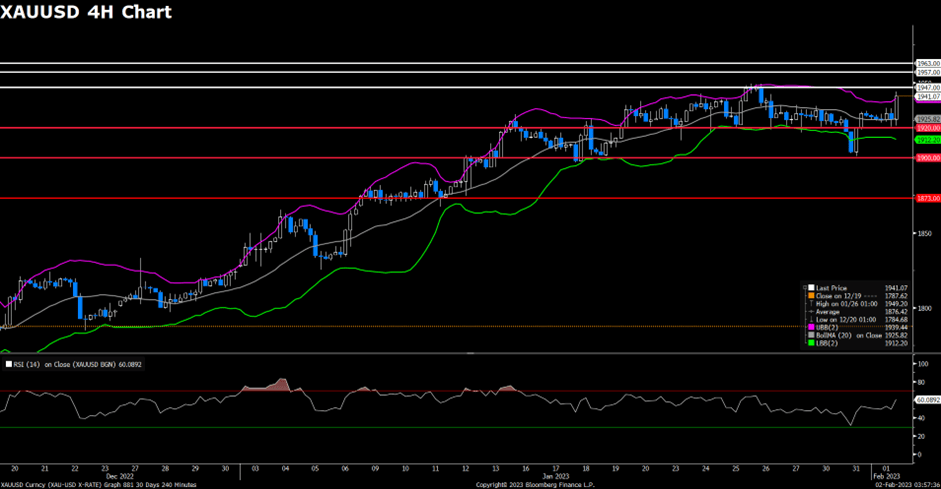
For the technical aspect, the RSI indicator is 60 figures as of writing, advancing to a bullish region from mid-line on bullish price action. As for the Bollinger Bands, the price surged to the upper band from the moving average, showing strong bullish momentum. In conclusion, we think the market is in bullish mode. A continued rise could be expected. For the uptrend scenario, the pair is testing resistance at $1,947. A firm break above the level could trigger some follow-through buying and push gold higher toward the next resistance at $1,957. For the downtrend scenario, the current support is at $1,920. If the Gold price closes below $1,920 on the 4H chart. It may trigger some technical selling and drag the pair toward critical support at $1,900.

Resistance: 1947, 1957, 1963

Support: 1920, 1900, 1873

Economic Data

CurrencyDataTime (GMT + 8)Forecast
GBPBoE Interest Rate Decision (Jan)20:004.00%
GBPBoE MPC Meeting Minutes20:00 
EURDeposit Facility Rate (Feb)21:152.50%
EURECB Marginal Lending Facility21:15 
EURECB Monetary Policy Statement21:15 
EURECB Interest Rate Decision (Feb)21:153.00%
USDInitial Jobless Claims21:30200K
EURECB Press Conference21:45 
GBPBoE Gov Bailey Speaks22:15 
EURECB President Lagarde Speaks23:15 

US Stocks rise as market focus on Fed decision

The Dow climbed Tuesday, to end the month in the green as investors digested a slew of mostly better-than-expected results just as focus shifts to the Federal Reserve decision due Wednesday.

The Dow Jones Industrial Average gained 1.1%, or 368 points, ending the month with a gain of about 2%. The Nasdaq Composite closed 1.7% higher. The S&P 500 rose 1.4% notching its best January since 2019.

US Treasury bond yields are downtrend slightly by 0.013% to  3.516%.

The Employment Cost Index (ECI) report released on Tuesday had an unusual impact across financial markets, with the US Dollar weakening after the numbers. Analysts at Well Fargo point out that the figures are one more in the list of inflation readings over which the Federal Reserve is breathing a little easier. They point out that while the report further supports inflation moving back toward the 2% target, labor cost growth remains too strong to be consistent with it staying there for the long haul.

Main Pairs Movement

DXY gauges the greenback vs. a bundle of its main rivals comes all over the way down to the 102.30 region after climbing to as high as the 102.60 area earlier on Tuesday. At the time of writing, the DXY exchanges hand at 102.089, dropping around 0.15% on the daily chart.

The EUR/USD pair is showing signs of a loss in the upside momentum after reaching near the immediate resistance of 1.0870 in the early Tokyo session. The shared currency pair has already displayed a responsive buying action after dropping to near the round-level support at 1.0800.

GBP/USD fails to cheer the US Dollar weakness much as Cable’s recovery from the weekly low fades around 1.2320 during early Wednesday. In doing so, the quote seems to justify the downbeat catalysts at home, mainly relating to inflation and housing markets.

XAUUSD stopped consecutive three days down trend, rebound around 0.26%, and closed at 1928 marks.

The yellow metal managed to cheer the broad US Dollar weakness, backed by the United States data and firmer equities.

Technical Analysis

EURUSD (4-Hour Chart)

The EUR/USD pair edged lower on Tuesday, coming under pressure but then rebounded slightly towards the 1.0850 area amid recovering market sentiment. The pair is now trading at 1.0854, posting a 0.06% gain on a daily basis. EUR/USD stays in the positive territory amid renewed US Dollar weakness, as the greenback lost its strength following the release of US labor costs data for the fourth quarter and allowed the EUR/USD pair to pull away from session lows. The US Employment Cost Index rises by 1% in Q4, which came in below the market expectation of 1% and points to more evidence of a slowdown in inflation. Therefore, the greenback tumbled after the report and lend support to the EUR/USD pair. In the Eurozone, the better-than-anticipated Euro-Zone Gross Domestic Product (GDP) failed to push the Euro higher as German Retail Sales plunged by 5.3% MoM in December, which is much worse than expected.

For the technical aspect, RSI indicator 49 figures as of writing, suggesting that the risk skews to the upside as the RSI is rising sharply towards the mid-line. As for the Bollinger Bands, the price regained upside momentum and rebounded toward the moving average, therefore a continuation of the upside trend can be expected. In conclusion, we think the market will be bullish as the pair is heading to test the 1.0868 resistance level. Bulls could take control of the pair if it breaks above the aforementioned resistance.

Resistance:  1.0868, 1.0918, 1.0942

Support: 1.0830, 1.0780, 1.0722

GBPUSD (4-Hour Chart)

GBP/USD continued to trade lower towards 1.2300 early Tuesday as the US dollar index maintained its strength amid risk-off sentiment. The pair is now trading at 1.2328, posting a 0.19% loss on a daily basis. GBP/USD could suffer additional losses in the near term if buyers fail to hold 1.2300. On Wednesday, the Fed would be the first to release the interest rate, expected to increase by 25bps, while the BoE is estimated to raise rates by 50bps, leaving the Bank Rate at 4%. Most analysts expect this would be the last increase by the BoE, which could exert some pressure on GBP/USD as rates in the US are expected to peak at 5%.

For the technical aspect, RSI indicator 41  figures as of writing, falling below mid-line as GBP/USD witnessed some short selling. As for the Bollinger Bands, the moving average started to move down, signaling that the current trend started to change modestly. A downtrend could persist. In conclusion, we think the market is in modest bearish mode as both indicators show some bearish potential. For the uptrend scenario, the price needs a firm break above resistance at 1.2426 to show bullish impetus. For the downtrend scenario, if the price drop below the support at 1.2292, it may trigger some technical selling and drag the GBP/USD pair further toward the next support at 1.2188.

Resistance: 1.2426, 1.2493, 1.2593

Support: 1.2292, 1.2188, 1.2000

XAUUSD (4-Hour Chart)

The gold price was volatile on Tuesday. Earlier, the Gold price tumbled to $1,900.94, slightly above the round-figure mark of $1,900, as the US dollar index strengthened. However, traders turned their back on the US dollar later in the US trading session, and the Gold price managed to recover its lost territory back to the $1930 level. At the time of writing, the Gold price is trading at $1,929.94, posting a 0.36% gain on a daily basis. On the other hand, The Fed will announce its policy decision at the end of a two-day meeting on Wednesday and is expected to raise interest rates by 25 bps. Apart from this, traders will focus on the Bank of England (BoE) meeting and the European Central Bank (ECB) decision, both scheduled on Thursday. Any hawkish signals from major central banks will more likely be negative for Gold prices.

For the technical aspect, RSI indicator 53 figures as of writing, surging from oversell region as prices recover strongly from $1900. As for the Bollinger Bands, the price surged from the lower band and currently holds around the moving average. In conclusion, we think the market is in a modest bearish mode. Though both indicators show no strong bearish signal, the price has made a lower low on correction and the fundamental outlook seems weighing on the gold price as well. For the downtrend scenario, the current support is at the $1900 round-figure mark. If the price closes below critical support at $1900, bulls may surrender and trigger some follow-through selling.  For the uptrend scenario, the pair should establish itself above the current support at $1900. To regather bullish strength, it should also recover the lost territory from the multi-month high around the $1,949 zone, which has become a strong barrier in the near term for bulls.

Resistance: 1947, 1957, 1963

Support: 1900, 1873

Economic Data

CurrencyDataTime (GMT + 8)Forecast
CNYCaixin Manufacturing PMI (Jan)09:4549.5
EURGerman Manufacturing PMI (Jan)16:5547
GBPManufacturing PMI (Jan)17:3046.7
EURCPI (YoY) (Jan)18:009.00%
USDADP Nonfarm Employment Change (Jan)21:15178K
USDISM Manufacturing PMI (Jan)23:0048
USDJOLTs Job Openings (Dec)23:0010.250M
USDCrude Oil Inventories23:300.376M
Back To Top
server

您好 👋

我能帮您什么吗?

立即与我们的团队聊天

在线客服

通过以下方式开始对话...

  • Telegram
    hold 维护中
  • 即将推出...

您好 👋

我能帮您什么吗?

telegram

用手机扫描二维码即可开始与我们聊天,或 点击这里.

没有安装 Telegram 应用或桌面版?请使用 Web Telegram .

QR code