Intermediate 3: Understanding the moving average break pattern

A moving average is one of the simplest ways to analyse the market and predict future price movements. They’re easy to use, which makes them a great first step for new investors. But even if you’re an experienced trader, moving averages can still be valuable tools for your arsenal—especially when combined with other forms of technical analysis

In this article, we’ll walk you through what a moving average is, how it works, and how it can help you make better investment decisions.

What is a Moving Average?

A moving average is used as a technical analysis tool that helps provide an updated average price, so it’s easier to look into data and determine trends that could dictate the market’s movement and thus influence your trading decisions. It is a simple calculation that involves taking the sum of all the past closing prices or other data points and dividing it by the number of data points used in the calculation. 
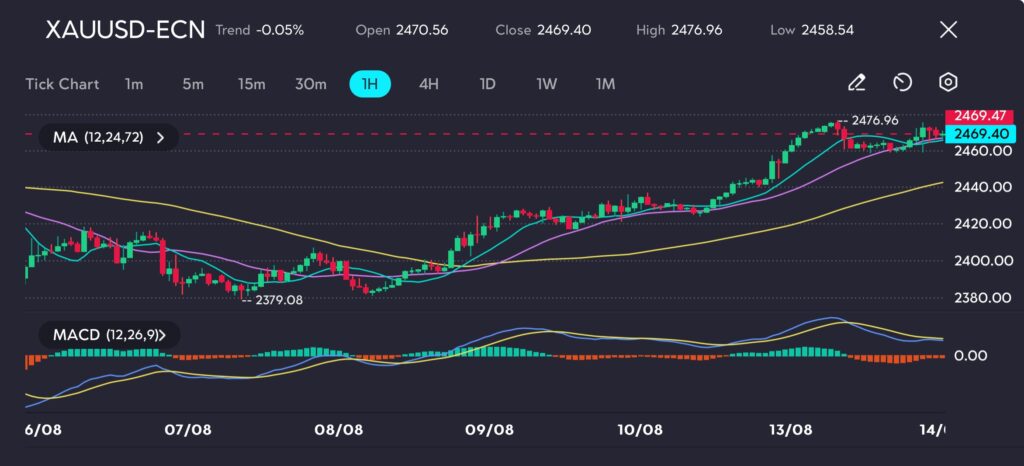
Source: VT Markets MT4

For example, if you have ten days of closing prices and use an average of 200 days for your moving average, then there are 200 data points being used to calculate an average for each day. This means that every day, you will have ten new closing prices added to your calculation and 190 from previous days.

The most important thing you need to know about moving averages is that they are lagging indicators: they only predict future trends after forming a pattern or trend over several periods (usually around 20). This makes them useful when looking at longer-term trends but less helpful when determining short-term movements in price.

Types of Moving Averages

There are three common types of moving averages:

Simple Moving Average (SMA) 

A simple moving average is the sum of closing prices over specific periods. For example, a 20-day SMA would be made up of 20 days’ worth of closing prices and plotted on a chart as an average line.

Exponential Moving Average (EMA)

An exponential moving average is calculated by adding a percentage of each period’s closing price to the previous period’s moving average. The most common EMA type is a 5-period EMA, which adds 20% of today’s closing price to 80% of yesterday’s closing price. This means that recent prices are given more weight than older prices (like with a simple moving average).

Weighted Moving Average (WMA)

A weighted moving average gives more importance to recent data points than old ones. With a weighted moving average, the most recent data point will have the most weight in calculating the average. The weights are calculated by multiplying each data point by a number between 0 and 1, with 0 being given to older prices and 1 being given to more recent prices.

How do you read a Moving Average Break Pattern?

Traders use a moving average (MA) to help identify if a trend is up or down. As its name suggests, a moving average takes the average price of an asset over a specific period. The most common type of MA is the simple moving average (SMA), which takes all closing prices for an asset during its given period, adds them together, and then divides that sum by the number of days in that timeframe.

Source: Investopedia

Here’s an example:

Suppose you have three days’ worth of closing prices from Apple stock from Jan 1st through Jan 3rd, each day being US$100 per share.

To calculate your SMA for this period, it would look something like this:

US$100 + US$100 + US$100 = US$300 / 3  = US$100 per share

This would be your SMA line on your chart because every new price point would be plotted against this line until another new value comes in, which takes over as part of your new SMA calculation until another change occurs again, and so on.

What are the benefits of using a Moving Average Break Pattern?

There are many benefits to using the Moving Average Break pattern.

  • The moving average break is a technical analysis tool that can help you identify trends, overbought or oversold conditions, and support and resistance levels. It can also be used to confirm turning points in a specific market.
  • A moving average break occurs when the price moves through an established trend line on a chart, such as the 50-day Simple Moving Average. This pattern is one of several price patterns you can use to determine if it’s time to buy or sell stocks, futures contracts, or other financial assets.
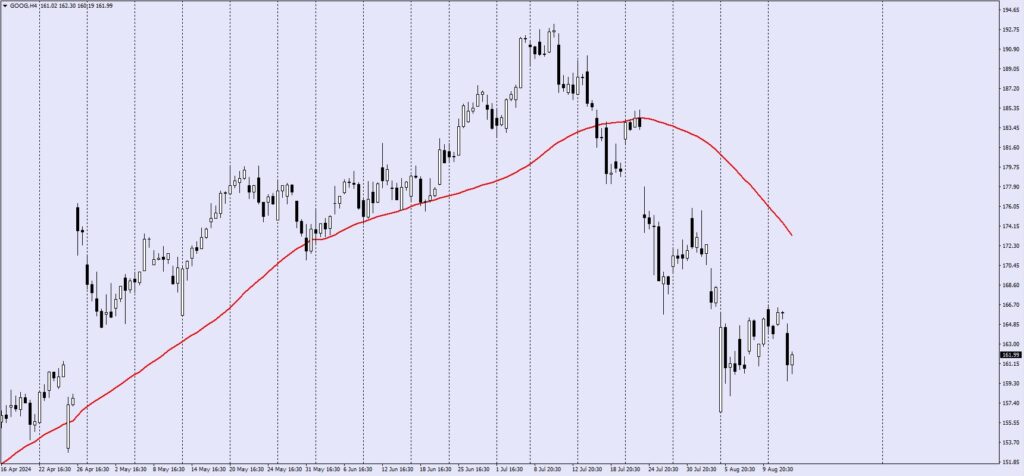
Source: VT Markets MT4

When trading with multiple assets at once, you need to keep an eye on what’s happening with your trades. Get an idea about whether some changes are significant enough to affect your overall portfolio performance, which means keeping tabs on key indicators like moving averages. By comparing slices of data against each other daily, you will know when to expect major highs/lows during any given period.

In conclusion, moving averages are useful tools for investors, along with many others. They allow you to take a big-picture view of the market and make informed decisions about your investment strategy. Moving averages can be used in any timeframe, so whether you are looking at daily, weekly, or monthly charts, there will always be a moving average that works best in the current market environment. 

Fed will Continue to Tighten with a Slowing Economy

US stocks declined on Tuesday, as the markets are bracing for hawkish talk at the Jackson Hole event after recent comments from officials convinced many investors the Fed will continue to tighten even with a slowing economy. Apart from that, data Tuesday showed sales of new US homes fell for the sixth time this year to the slowest pace since early 2016, while business activity contracted for a second straight month.  Moreover, quantitative tightening by the US central bank is set to kick into gear next month, presenting another potential headwind for equities.

The benchmarks, both S&P500 and Dow Jones Industrial Average fell and saw their third straight drop after swinging between gains and losses throughout the session on Tuesday. Seven out of eleven sectors stayed in negative territory, as Real Estate and Health Care performed the worst among all groups, plunging with 1.45% and 1.39% losses on daily basis respectively, while Energy outperformed all the other groups, surged with a 3.62% on daily basis. The Dow Jones Industrial Average fell 0.5%, the Nasdaq 100 was little changed, and the MSCI world index decreased 0.3% for the day.

Main Pairs Movement

US dollar declined on Tuesday and failed to extend its four straight rises after data showed U.S. private sector activity was weaker than expected in August, prompting bets the Federal Reserve may be less aggressive in its rate hiking cycle. The DXY index witnessed heavy selling transactions and fell to a daily low level below 108.1 in the early US trading session, then rebounded to oscillate in a range from 108.4 to 108.7 level.

The GBP/USD surged by 0.59% daily for the day, as US economic data reignited recession fears. The cables observed fresh upbeat traction during the early US trading session following a drop in greenback caused by dismal US data. The pair touched a daily high level above 1.187, then lost bullish momentum and volatile between 1.185 and 1.181. Meantime, EUR/USD surged and touched a daily high level above 1.001. The pair advanced by 0.27% daily.

Gold surged and ended the six consecutive day drop on Tuesday, as the US dollar plunged across the board. XAU/USD gained bearish momentum and touched a daily high of $1,754 marks after an announcement of US dismal data, which may slow the pace of rate hiking.

Technical Analysis  

EUR/USD (4-Hour Chart)

The EUR/USD pair rebounded on Tuesday, recovering sharply from 20-year lows that touched earlier in the European session and climbed to a daily top above the 1.000 mark after the release of dismal US PMI data. The pair is now trading at 0.9971, posting a 0.29% gain daily. EUR/USD stays in the positive territory amid renewed US dollar weakness, as the release of weaker-than-expected flash US PMI prints for August exerted bearish pressure on the greenback and helped the EUR/USD pair to find demand. The US Manufacturing PMI declined to 51.3 and the Services PMI plunged to 44.1 in August, falling short of market expectations and showing that the business activity in the US private sector contracted at a stronger pace. For the Euro, the mixed Eurozone and German PMI data provide some support to the shared currency, as well as the better-than-expected Eurozone Consumer confidence that was released in the US session.

For the technical aspect, the RSI indicator is 34 as of writing, suggesting that the downside is still more favoured as the RSI stays below the mid-line. As for the Bollinger Bands, the price witnessed fresh buying and rose toward the moving average, therefore some upside traction can be expected. In conclusion, we think the market will be slightly bullish as long as the 0.9924 support line holds. The rising RSI also reflects bull signals.

Resistance:  0.9991, 1.0038, 1.0082

Support: 0.9924

GBP/USD (4-Hour Chart)

The GBP/USD pair advanced on Tuesday, observing strong daily gains and touched a daily high above 1.1860 level during the US trading session amid the weak US economic data. At the time of writing, the cable stays in positive territory with a 0.65% gain for the day. The US Dollar Index (DXY) retreats from the monthly high and dropped to a daily low near 108.1, as the report showed that business activity in the US contracted for the second consecutive month. But the fears of recession and increasing hawkish Fed bets should limit the losses for the safe-haven greenback, meanwhile, investors expect a more hawkish message from Fed Chair Jerome Powell at the Jackson Hole symposium on Friday. For the British pound, the UK Manufacturing PMI in August also fell to 46.0, which is mainly due to supply chain disruptions and high energy prices across Europe.

For the technical aspect, the RSI indicator is 44 as of writing, suggesting that the pair has regained bullish momentum as the RSI rose sharply toward the mid-line. As for the Bollinger Bands, the price staged a rebound and crossed above the moving average, therefore a continuation of the upside trend can be expected. In conclusion, we think the market will be bullish as the pair is testing the 1.1830 resistance. A sustained strength above that level could confirm the bullish shift in the near-term outlook.

Resistance: 1.1830, 1.1922, 1.2050

Support: 1.1780, 1.1763

XAU/USD (4-Hour Chart)

Gold catches some upside traction on Tuesday and recovers from a multi-week low.

The price reverses an intraday dip to the $1,730 level and surges to a daily high in the US session. It seems to have snapped a six-day losing streak to a nearly four-week low and is currently placed around the $1,745 level.

Gold prices rebounded as the US dollar retreated modestly on the back of dismal August PMI figures. That said, expectations for a more hawkish message from Fed Chair Jerome Powell at the Jackson Hole symposium on Friday still support a stronger US dollar. This, along with elevated U.S. bond yields, should limit further gains on the gold price.

For the technical aspect, the RSI indicator is 47 as of writing, close to the midline, suggesting that the pair has staged a strong upside correction. As for the Bollinger Bands, the price surged and crossed above the moving average, now testing the pressure region at the $1,757 level. Besides, the moving average is still downward. In conclusion, we think the price is now right between pressure and support regions. The price might test both sides here. Investors should wait for the breakout to determine a clear direction. To the upside, the price should advance above the $1,757 level first. On the downside, if the price closes below the $1,730 level, it might head to test the next pivotal support at the $1,714 level.

Resistance: $1,757, $1,783, $1,803

Support: $1,730, $1,714, $1,685

Economic Data  

CurrencyDataTime (GMT + 8)Forecast
USDCore Durable Goods Orders (MoM) (Jul)20:300.2%
USDPending Home Sales (MoM) (Jul)22:00-4.0%
USDCrude Oil Inventories22:30-0.933M

The Fight Against Inflation is Far from Over, Fed Officials say

US stocks plunged on Monday, as the earnings season wrapped up and the threat of an economic recession still looming large amid warnings from Fed officials that the fight against inflation is far from over. That stance will likely be reinforced by Jerome Powell Friday at the prestigious event in Wyoming’s Grand Teton mountains, which has been used by Fed chairs as a venue for making key policy announcements. According to the latest MLIV Pulse Survey, stocks and bonds are set to tumble once more even though inflation has likely peaked, as rate hikes reawaken the great 2022 selloff. Many investors see the most destabilizing era f price pressures in decades eroding corporate margins and sending equities lower.

The benchmarks, both S&P500 and Dow Jones Industrial Average dropped on Monday, as equities saw their worst rout in two months after a surge drove S&P500 to its best start to a third-quarter since 1932. All sectors stayed in negative territory, as Consumer Discretion, Information Technology, and Communication service performed the worst among all groups, falling with 2.84%, 2.78%, and 2.67% on daily basis respectively for the day. The Nasdaq dropped 2.7% as big tech underperformed, Dow Jones Industrial Average fell 1.9%, and the MSCI world index plunged 1.8% on Monday.

Main Pairs Movement

The US dollar surged on Monday, as investors shied away from riskier assets amid growing fears that interest-rate hikes in the United States and Europe, aimed at curbing inflation, would weaken the global economy. The DXY index extended bullish momentum and edged higher, witnessing fresh transactions and surging to a level above 109.0 in the early US trading session.

The GBP/USD plunged and printed a fresh two-year low of 1.1742 on Monday, as strong greenback across the board and the vulnerable employment data have trimmed the confidence of the Bank of England in hiking interest rates. The cables have extended the selling pressure caused by the US dollar since last week and edged lower to a level below 1.177 by the end of the day. Meantime, EUR/USD fell to a level below 0.995, the lowest level since December 2002, as fears of the Eurozone recession escalated day by day. The pair dropped 0.94% on daily basis for the day.

Gold dropped and remained weighted at a one-month low, down for the seventh consecutive day, with the risk-aversion market mood supporting the US dollar ahead of the Jackson Hole meeting on Friday. Moreover, market fear of Russia’s Nord Stream 1 pipeline’s maintenance also supports the XAU/USD bears. The gold extended the bearish momentum and kept moving down to a level below $1,730 marks ahead of the US trading session, then rebounded to oscillate in a range from $1,735 to $1,740.

Technical Analysis  

EUR/USD (4-Hour Chart)

The EUR/USD pair tumbled on Monday, coming under heavy bearish pressure and extended its slide toward the multi-year low below the 0.996 mark amid a risk-off market environment. The pair is now trading at 0.9958, posting a 0.80% loss daily. EUR/USD stays in the negative territory amid renewed US dollar strength, as the flight to safety in the American session provides a boost to the greenback and lifted it to new highs further north of the 108.00 mark at the beginning of the week. The growing worries over a global economic downturn and the COVID lockdowns in China have both undermined the market sentiment and exerted bearish pressure on the EUR/USD pair. For the Euro, the Bundesbank monthly report, which weighed on the shared currency, showed that a recession in Germany is increasingly likely and inflation will continue to accelerate.

For the technical aspect, the RSI indicator is 17 as of writing, suggesting that the pair might witness some upside correction as the RSI stays in the oversold zone. As for the Bollinger Bands, the price preserved its bearish traction and moved out of the lower bands, therefore a strong downtrend continuation can be expected. In conclusion, we think the market will be bearish as the pair is testing the 0.9991 support. But the pair could see some short-term correction before edging lower amid the oversold RSI.

Resistance:  1.0082, 1.0111, 1.0188

Support: 0.9991, 0.9950, 0.9910

GBP/USD (4-Hour Chart)

The GBP/USD pair suffered heavy losses on Monday, continuing to turn lower for the fourth straight day and dropped to the lowest level since March 2020 below 1.1750 level amid renewed US dollar buying. At the time of writing, the cable stays in negative territory with a 0.64% loss for the day. The expectations that the Fed would continue to tighten its monetary policy to tame surging inflation continued to underpin the US dollar and dragged the GBP/USD pair lower. The speech from Fed Chair Jerome Powell at the Jackson Hole Symposium on Friday might also provide clues about the possibility of a 75 bps rate hike move at the September meeting. For the British pound, the Bank of England’s gloomy economic outlook and growing recession fears kept acting as a headwind for the currency.

For the technical aspect, the RSI indicator is 21 as of writing, suggesting that the pair could stage a correction before extending its slide as the RSI has dropped below 30. As for the Bollinger Bands, the price remained under pressure and dropped toward the lower band, therefore a continuation of bearish traction can be expected. In conclusion, we think the market will be bearish as the pair is testing the 1.178 support. A four-hour close below that level could open the door for additional losses.

Resistance: 1.1830, 1.1922, 1.2050

Support: 1.1780

XAU/USD (4-Hour Chart)

Gold price slumped to below $1,730 level in the European session and tried to erase losses in the early American session but failed on Monday. Price continues losing ground for the sixth straight day and drops to a nearly four-week low, suggesting that gold is still hard to gather bullish momentum with US Treasury bond yields continuing to push higher.

From the technical aspect, gold price witnessed heavy sell on Monday from the $1,750 level to the lowest $1,728. The RSI indicator is 28 as of writing, slightly below 30, which suggests that there could be a correction due to overselling. On the other hand, any advance upward now might be taken as a good chance for investors to sell while the trend is still downward. As for the Bollinger Bands, the price kept declining along with the lower band, a continuation of bearish traction can be expected. In conclusion, we think the market will maintain its downside traction but need to be aware of upside correction.

Market participants now eye on Fed Chair Jerome Powell’s speech at the Jackson Hole Symposium on Friday for clues about the possibility of a 75-bps rate hike move at the September meeting. This and the important US economic releases this week will play a key role in influencing the USD price and help determine the next direction for gold.

Resistance: $1,757, $1,783, $1,803

Support: $1,714, $1,685

Economic Data

CurrencyDataTime (GMT + 8)Forecast
EURGerman Manufacturing PMI (Aug)15:3048.2
GBPComposite PMI16:3051.3
GBPManufacturing PMI16:3051.0
GBPServices PMI16:3052.0
USDNew Home Sales (Jul)22:00575k

US Fed’s Jackson Hole Symposium, US Data in Focus This Week

The US Federal Reserve’s 2022 Jackson Hole Symposium will be held in Cheyenne, Wyoming, from 25-27 August. Central bankers and economists from across the globe will attend the event. 

The meeting is one of the most anticipated events for economists and investors alike as it offers an opportunity for Fed officials to discuss their outlook for monetary policy. In addition to this highly anticipated event, we have a host of economic data that could impact markets over the next few days. 

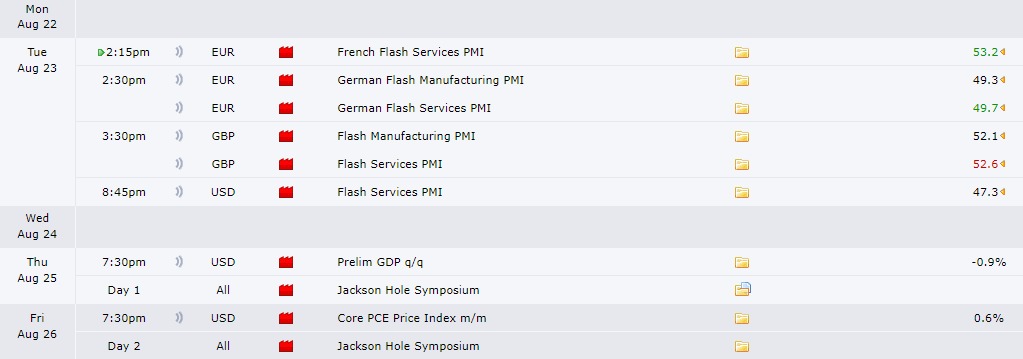
Several prominent economic indicators like US Flash Services PMI and Prelim GDP, as well as Core PCE Price Index for July, will be published this week. France, Germany, and the United Kingdom will also release their Flash Services PMI figures on Tuesday, 23 August. Meanwhile, Germany and the United Kingdom will release their Manufacturing PMIs on the same day.

Image source: forexfactory.com  

French Flash Services PMI | 23 August 2022

July saw the French Flash Services Purchasing Managers Index fall to 53.2, from 53.9 in June, the third successive decline in the growth rate and the weakest since January this year, amid weaker demand for services. Despite rising inflation, businesses were slightly more optimistic in July.

Germany’s Flash Manufacturing PMI | 23 August 2022

Germany’s Flash Manufacturing PMI declined from 52 to 49.3 in July 2022, showing that manufacturing slowed down. The most significant drop was in input demand, which fell because of a slowdown in the supply chain. Employment levels rose at a slower pace, while business expectations remained low.

United Kingdom’s Manufacturing PMI | 23 August 2022

In July of 2022, the Purchasing Managers’ Index for UK manufacturing fell to 52.1, down from 52.8 in June, with the decline attributed to decreases in consumer and intermediate goods sub-industries.

United Kingdom’s Flash Services PMI | 23 August 2022

The Flash Services PMI dropped to 52.6 in July of 2022 from 54.3 in June, indicating a slowdown in the expansion of services activity. Inflationary pressures and the cost-of-living squeeze led to more significant economic uncertainty, and businesses expected conditions would remain the same for at least another few months.

US Flash Services PMI | 23 August 2022

The US Flash Services PMI took a hit in July, falling to 47.3 in July 2022, from 52.7 in June. Although new orders returned to growth, the expansion rate was historically subdued and much slower than those seen earlier in the year. Inflationary pressures remained traditionally high in July but eased further. Businesses are expected to improve in the next few months.

Jackson Hole Economic Symposium | 25 – 27 August 2022

The Jackson Hole Economic Symposium takes place annually on the last Friday in August. This year’s topic will be “Reassessing Constraints on the Economy and Policy,” with speeches from federal reserve board members and other economists about current economic conditions and policies. The Economic Symposium is organised by the Federal Reserve Bank of Kansas City in conjunction with a group of academic economists and financial industry representatives. It attracts thousands of attendees annually from around the world.

US Prelim GDP | 25 August 2022 

US GDP shrank 0.9% in the second quarter of 2022, after shrinking 1.6% in the first quarter and crossing into recession. US Federal Reserve Chair Jerome Powell recently stated that he did not believe the US was in a recession, causing the markets to expect an increase of 0.5%.

US Core PCE Price Index | 26 August 2022 

In June of 2022, the Core PCE Price Index in the US increased 1% month-on-month—the highest monthly growth since September 2005. Core PCE Price Index data is forecast at 1% for July. Inflation will likely increase further in the coming months, driven by higher energy prices. The US economy is forecast to grow steadily in 2019-2022, putting upward pressure on wages and consumer price inflation.

Markets Cautious with more Fed officials supporting rate hikes ahead of Jackson Hole Symposium

US stocks declined on Friday and snapped the longest weekly rally since November. Investors turned cautious and short-sellers resurfaced after Federal Reserve officials beat the drum on hiking rates. The pullback in equities this week follows a rally that has propelled the S&P500 from its mid-June nadir amid speculation that the Fed may scale back its aggressive path of rate hikes. However, more Fed officials joined the chorus of a hawkish stance in the runup to the annual symposium at Jackson Hole Aug. 25-27. Which makes a force that contributed to the rally now showing signs of fatigue, with hedge funds dialing down purchases of shares.

The benchmarks, S&P 500 and Dow Jones Industrial Average both dropped on Friday, as S&P500 notched its biggest daily decline since June, its first weekly loss in five weeks. Nine out of eleven sectors stayed in negative territory, and six of them fell more than 1% on daily basis. It’s worth noting that, the Consumers Discretion and Financials sectors performed the worst among all groups, sliding with 2.10% and 2.02% loss for the day. The Dow Jones Industrial Average fell 0.9%, the Nasdaq 100 dropped 1.9%, and the MSCI world index decreased 1.3% on Friday.

Main Pairs Movement

The US dollar surged on Friday, which posts the biggest weekly advance since April 2020.  The minutes of the July meeting suggested that the Fed will continue to raise interest rates at the next few meetings, but the pace of the rate hikes will be data-dependent, which supports the greenback. The DXY index witnessed fresh transactions since the UK trading session and edged higher to a level above 108.1.

The GBP/USD dropped with a 0.85% loss on daily basis for the day, as sentiment shifted sour after Fed’s hawkish commentary. The cables were weighted to a daily low level below 1.180 during the middle of the US trading session as the strong US dollar across the board, then oscillate in a range from 1.181 to 1.184. Meantime, EUR/USD slid to a level below 1.004. The pair decreased by 0.50% on Friday.

Gold plunged 0.66% daily for the day, with a fifth-consecutive day as market mood amid a backdrop of fear and volatility.  Although under selling pressure, XAU/USD observed fresh transactions before the US trading session and touched a daily high of $1,758 marks. However, gold then witnessed downside traction and fell to the daily low below $1,746 marks at the beginning of the US trading session.

Technical Analysis

EUR/USD (4-Hour Chart)

The EUR/USD pair declined on Friday, extending its previous slide and held lower ground near the monthly low below the 1.005 mark amid fears of German recession and geopolitical concerns. The pair is now trading at 1.0048, posting a 0.36% loss daily. EUR/USD stays in the negative territory amid a stronger US dollar across the board, as the DXY just prints new multi-week tops above the 108.00 hurdle on Friday and exerted bearish pressure on the EUR/USD pair. The hawkish comments from the Fed policymakers in recent days continued to drive flows toward safety assets like the greenback, as markets seem convinced that the Fed will stick to its policy tightening cycle amid the incoming positive US macro data. For the Euro, Germany’s Producer Price Index (PPI) for July came at 5.3% MoM, which is higher than markets’ expectations.

For the technical aspect, RSI indicator is 24 as of writing, suggesting that the pair might witness some upside correction as the RSI stays in the oversold zone. As for the Bollinger Bands, the price continued to move alongside the lower band, therefore the downside traction should persist. In conclusion, we think the market will be bearish as long as the 1.0082 resistance line holds. But the pair could see some short-term correction before edging lower amid the oversold RSI.

Resistance:  1.0082, 1.0111, 1.0188

Support: 1.0111, 0.9991

GBP/USD (4-Hour Chart)

The GBP/USD pair tumbled on Friday, coming under heavy selling pressure and dropped to a monthly low below 1.1840 level in the US trading session amid renewed US dollar strength. At the time of writing, the cable stays in negative territory with a 0.88% loss for the day. The prospects for further rate increases by the Fed and the prevalent risk-off mood both acted as a headwind for the GBP/USD pair, as the US central bank is expected to stick to its policy tightening path due to recent comments by several Fed officials. For the British pound, the better-than-expected UK Retail Sales rose 0.3% in July but failed to provide bullish strength to the cable, which is being weighed by the Bank of England’s gloomy economic outlook and a possible recession that would start in the fourth quarter.

For the technical aspect, the RSI indicator is 30 as of writing, suggesting that the pair could stage a correction before extending its slide as the RSI dropped below 30. As for the Bollinger Bands, the price preserved its downside traction and move alongside the lower band, therefore a continuation of the downtrend can be expected. In conclusion, we think the market will be bearish as the pair is testing the 1.183 support. A break below that level could drag the pair toward the next support at 1.1780.

Resistance: 1.1922, 1.2050, 1.2119

Support: 1.1830, 1.1780

XAU/USD (4-Hour Chart)

Gold price declined to $1,750 during the European trading hours on Friday. Price continually slumped to below $1,750 in the US session after managing to erase its losses in the late EU session. With the 10-year US Treasury bond yield rising on the trade of the day and a stronger US dollar, the gold price seems hard to gather bullish momentum. Any further advance is taken as a selling opportunity by investors now.

From a technical aspect, the gold price drops below the $1,757 support level, and it turns out to be the pressure level to the upside. RSI indicator is 32 as of writing, suggesting downside momentum.  As for the Bollinger Bands, the price tumbled along with the lower bound, staying right above it rather than dropping into the oversold zone, which means a decline before is acceptable and further decline to the downside could be expected. In conclusion, the gold price has dropped below the previous support zone at $1,757 and failed to regain the losses. The price could head to the next pivotal support zone for gold at the $1,714 level, which is the most possible path for gold price from technical analysis.

Looking ahead, in absence of any top-tier US economic events, the repricing of Fed expectations will play a key role in the gold price action. For more price action, all eyes now turn towards the Fed’s Jackson Hole Symposium this week.

Resistance: $1,757, $1,783, $1,803

Support: $1,714, $1,685

Economic Data

CurrencyDataTime (GMT + 8)Forecast
CNYPBoC Loan Prime Rate21:152.75%

VT Markets TSLA股票分割调整通知

尊敬的用户:

您好!

特斯拉公司即将在 2022 年 08 月 25 日 进行股票分割。
届时,特斯拉公司的股票(TSLA)将会以分割后的合约提供投资者交易。

股票分割的客户须知 :

1. 每个客户的TSLA持仓量将变为 3 倍。

2. 所有TSLA仓位的「开仓价格」与「止盈 / 止损设置价格」将会在股票分割后,变为原始价格的 3 分之 1。

3. 分割 / 拆分后的TSLA报价将大约落在 08 月 24 日收盘价格的 3 分之 1。

4. 股票分割时,所有的TSLA挂单设置将会被取消。

5. 「模拟账户」内所有的TSLA仓位将会因股票分割而关闭。

注意:以上数据仅供参考,实际执行数据有可能会有变动,具体请依据 MT4/MT5 软件为准。

您可能想知道更多有关股票分割的详情?

更多详情有关股票分割,请浏览以下文章:
https://helpcentre.vtmarkets.com/hc/zh-cn/articles/8597160316697

如您有任何疑问,我们的团队将十分乐意为您解答。
请留言或发邮件至 [email protected] 或联系在线客服。

VT Markets 服务器升级维护通知

尊敬的用户:

您好!

VT Markets 致力于为客户提供更快速且稳定的交易环境,我们将于周末进行服务器(MT4/MT5) 升级维护。

维护时段: 2022 年 08 月 20 日 (星期六) 18:00 至 23:00

上述时段采用 GMT+8 时区

请您务必留意下列事项:

本周末维护期间,客户仍可照常参与交易

产品报价的稳定及市场流动性将可能受影响而降低,我们建议客户谨慎操作。

望您谅解因此次升级维护为您所带来的不便,我们将继续为您提供更优质的服务。

如您有任何疑问,我们的团队将十分乐意为您解答。
请留言或发邮件至 [email protected] 或联系在线客服。

Weekly Jobless Claims Fell, Strength Demand in Labour?

US stocks edged higher on Thursday, as mixed economic and earnings reports failed to spark a broad conviction trade.  The weekly jobless claims data fell for the first time in three weeks, a sign of strength in demand for labour, while a gauge of manufacturing activity in the Philadelphia area unexpectedly expanded in August. Meantime, following the equity rally from June lows, sentiment turned fragile Wednesday after the Fed minutes signalled inflation-busting rate hikes will continue despite a weakening economy. Further clues for policy makers’ views may come at the Fed’s annual symposium in Jackson Hole, Wyoming next week.

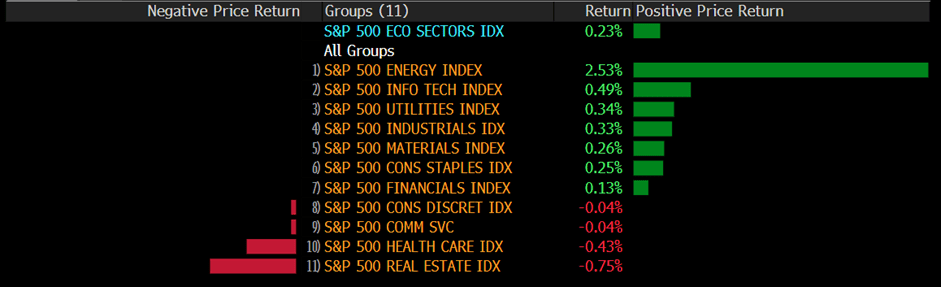
The benchmarks, both S& P500 and Nasdaq 100 advanced after swinging between modest gains and losses on Thursday. Seven out of eleven sectors of S& P500 stayed in the positive territory, as Energy got the best performance among all groups, which rose 2.53% on daily basis, while Real Estate underperformed and slid 0.75% for the day as existing-home sales fell for six straight months, indicating housing market’s rapid decline. The Dow Jones Industrial Average was little changed, the Nasdaq 100 rose 0.3%, and the MSCI World index was little changed on Thursday.

Main Pairs Movement

US dollar surged on Thursday, as Federal Reserve officials spoke of the need for further rate hikes, and investors need to reevaluate minutes from the US central bank’s July meeting on Wednesday as being more hawkish. The DXY index gained bullish momentum during the US trading session and broke through to a month-high level above 107.5 amid a cautious market mood.

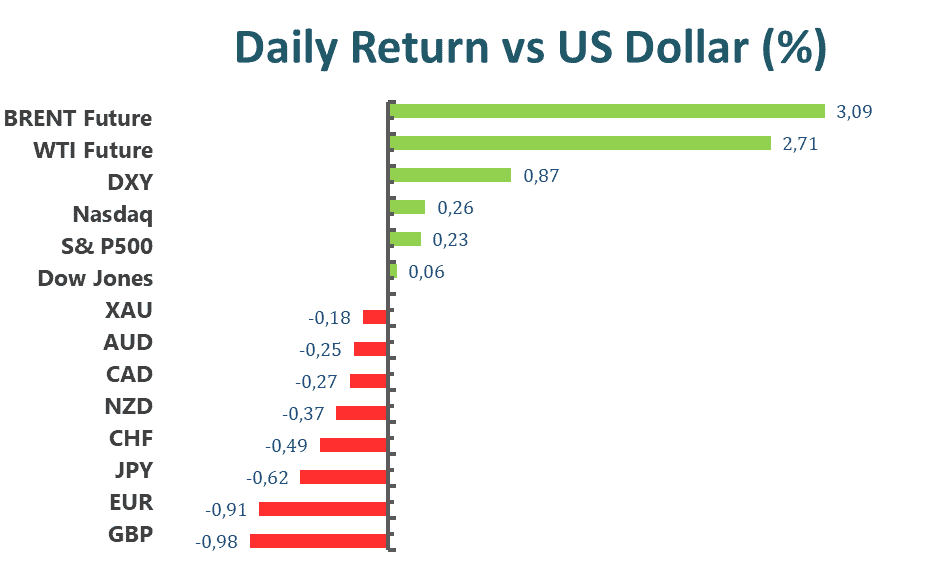
The GBP/USD dropped 0.98% on Thursday, as the strong US dollar across the board was caused by the hawkish speech from Fed officials. The safe-haven greenback has witnessed strong transactions weighting the cables since the US trading session, and the pair touched nearly a month-low level below 1.193. Meanwhile, EUR/USD holds lower ground after refreshing its monthly bottom the previous day and fell to a level below 1.008 at the end of the day. The pair dropped 0.91% daily on Thursday.

Gold slid with a 0.18% loss for the day, as a four consecutive days decline. With hawkish Fed speech and fears surrounding China’s recession exert downside pressure. XAU/USD observed fresh tractions during the UK session and touched a daily-high level above $1,772 marks, but then lost upward momentum and dropped to a level below $1,760 marks during the US trading session. WTI and Brent oil surged on Thursday, rising 2.71% and 3.09% respectively.

Technical Analysis

EURUSD (4-Hour Chart)

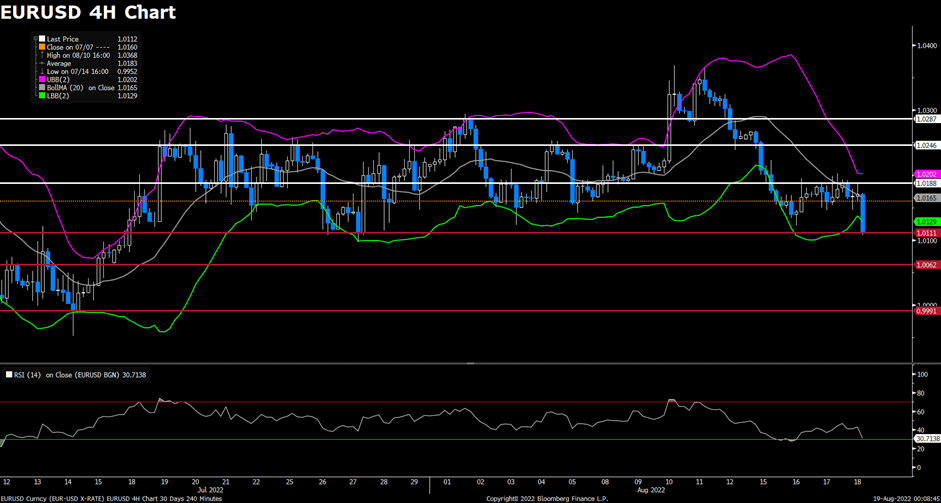
The EUR/USD pair declined on Thursday, being surrounded by bearish pressure and dropped to a daily low below 1.012 level at the start of the US session amid the risk aversion market environment. The pair is now trading at 1.0134, posting a 0.42% loss daily. EUR/USD stays in the negative territory amid renewed US dollar strength, as the better-than-expected US macro data provide some support to the safe-haven greenback and dragged the EUR/USD lower. The US Weekly Initial Jobless Claims declined to 250K and came in lower than the market expectation of 265K, which underpinned the expectations that the Fed would continue to tighten its monetary policy. For the Euro, the Eurozone inflation arrives at 8.9% YoY in July, meeting the market’s estimates. But the energy supply-related concerns keep being a key factor acting as a headwind for the shared currency.

For the technical aspect, the RSI indicator is 31 as of writing, suggesting that the pair is facing heavy selling pressure as the RSI is approaching the oversold zone. As for the Bollinger Bands, the price has moved out of the lower band so a strong downside trend continuation can be expected. In conclusion, we think the market will be bearish as the pair is testing the 1.0111 support. A break below that level could confirm the bearish bias in the near term and drag the pair lower toward 1.0062.

Resistance:  1.0188, 1.0246, 1.0287

Support: 1.0111, 1.0062, 0.9991

GBPUSD (4-Hour Chart)

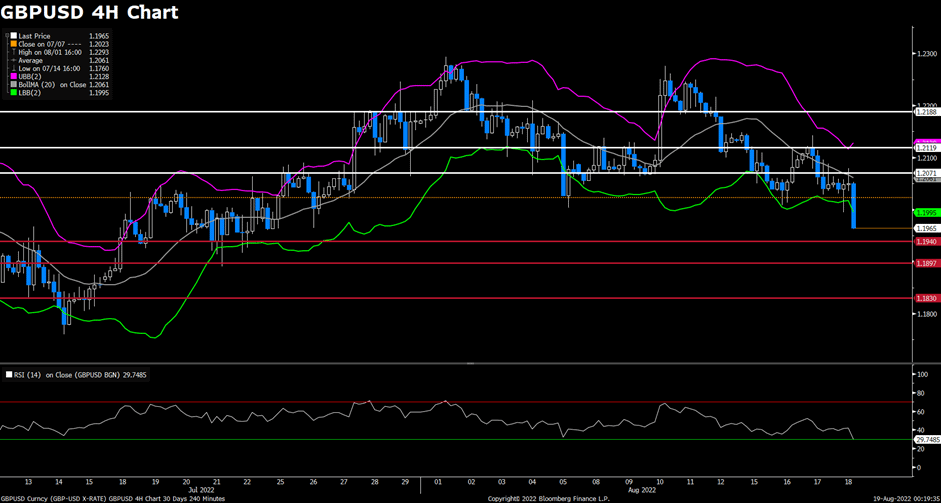
The GBP/USD pair tumbled on Thursday, extending its previous slide and refreshing its daily low below the 1.200 mark heading into the US trading session amid a souring market mood. At the time of writing, the cable stays in negative territory with a 0.49% loss for the day. The hawkish commentary from Fed’s official helped the safe-haven Dollar to find demand, as San Francisco Fed President Mary Daly reiterated that it was way too early to declare victory on inflation in an interview with CNN on Thursday. She also said that either 50 bps or a 75 bps hike would be appropriate. For the British pound, the currency remained under pressure despite the hotter-than-expected UK CPI data, as investors now speculate that an economic downturn might force the BoE to adopt a gradual approach to raising interest rates.

For the technical aspect, the RSI indicator is 30 as of writing, suggesting the pair’s bearish outlook in the near term as the RSI is reaching the oversold zone. As for the Bollinger Bands, the price witnessed heavy selling pressure and dropped below the lower band, therefore the downside traction should persist. In conclusion, we think the market will be bearish as the pair is heading to test the 1.1940 support. Additional losses toward 1.1897 could be witnessed if the pair break below the aforementioned support.

Resistance: 1.2071, 1.2119, 1.2188

Support: 1.1940, 1.1897, 1.1830

XAUUSD (4-Hour Chart)

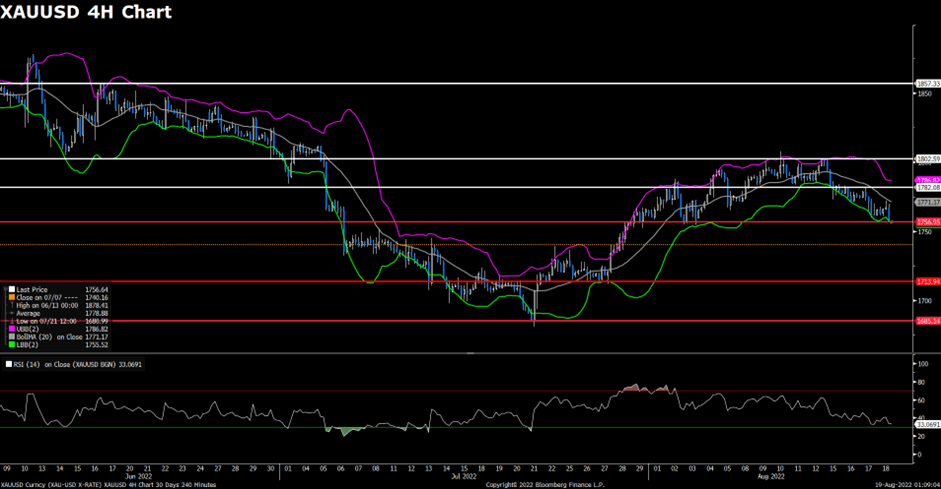
Gold gains some positive traction on Thursday, but immediately declined back to the $1,760 level. A stronger US dollar is still weighing on Gold prices.

The dollar surged to a fresh monthly high on firm expectations that the Federal Reserve will continue to tighten monetary policy. Although the FOMC minutes released on Wednesday did not hint at a specific pace of future rate hikes, still show that policy makers remained committed to raising rates to tame inflation, which still supported bullish sentiment around the US dollar.

For the technical aspect, the RSI is 33 as of writing, are still in bearish mode but not reaching the oversold zone. As for the Bollinger Bands, the gold price keeps moving between the moving average and lower bound, forming a clear downward tunnel. The price seems to test support above the $1,757 level. If the price closes with negative price action below the $1,757 level on the 4H chart, it might head to test the next support level at the $1,714 level.

In conclusion, the fundamental background suggests that the most likely path for gold is to the downside. Even from a technical perspective, the recent positive moves are still seen as selling opportunities by investors, gold price, therefore, declined downward on the 4H Chart and hardly gained positive traction. We think the market is still bearish as fundamental background and technical analysis both support downward traction. Now, investors are looking forward to the US economic data, seeking broader risk sentiment which could provide clear direction and fresh momentum for gold prices.

Resistance: $1,783, $1,803, $1,857

Support: $1,757, $1,714, $1,685

Economic Data

CurrencyDataTime (GMT + 8)Forecast
GBPRetail Sales (MoM) (Jul)14:00-0.2%
CADCore Retail Sales (MoM) (Jun)20:300.9%

The Fed’s Rate hikes to Control Inflation Weighed on the Market Sentiment

US stocks declined for the first time in four days as investors assessed the outlook for the path of interest-rate hikes after a minute of Federal Reserve’s last meeting noted officials saw risks from tightening more than necessary. Moreover, the stock market rallied on signs of peaking inflation and an earnings reporting season that saw four out of five companies meeting or beating estimates. However, prospects of the Fed continuing to raise rates to cool inflation and tip the economy into recession have weighed on market sentiments.

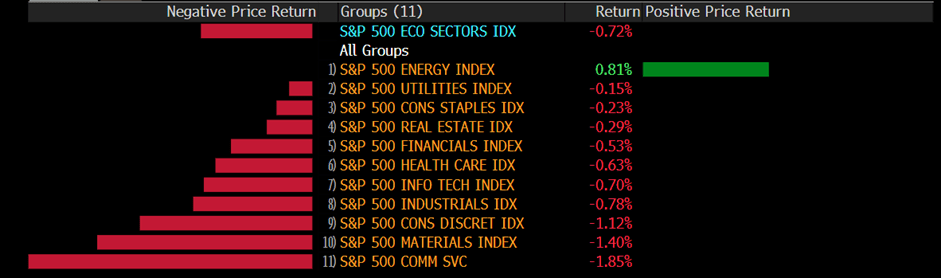
The benchmarks, both S&P 500 and Dow Jones Industrial Average slid on Wednesday, as Fed minutes note it may be appropriate to slow increases. Ten out of eleven sectors of S&P 500 stayed in the negative territory, as Communication Service and Material sectors performed worst among all groups, falling 1.40% and 1.85% on daily basis respectively. Energy is the only section in positive territory, rose with a 0.81% gain for the day. The Dow Jones Industrial Average decreased 0.5%, the Nasdaq 100 dropped 1.2%, and the MSCI World index fell 0.6% on Wednesday.

Main Pairs Movement

The US dollar little advanced on Wednesday, as the minutes from Federal Reserve’s July meeting, showed that Fed officials are concerned the US central bank could raise interest rates too far as part of its commitment to get inflation under control. The DXY index witnessed fresh transactions during the UK trading session and touched a daily high level of nearly 106.9 level, however, paring most gains and reached a daily low level below 106.4 after the FOMC minute.

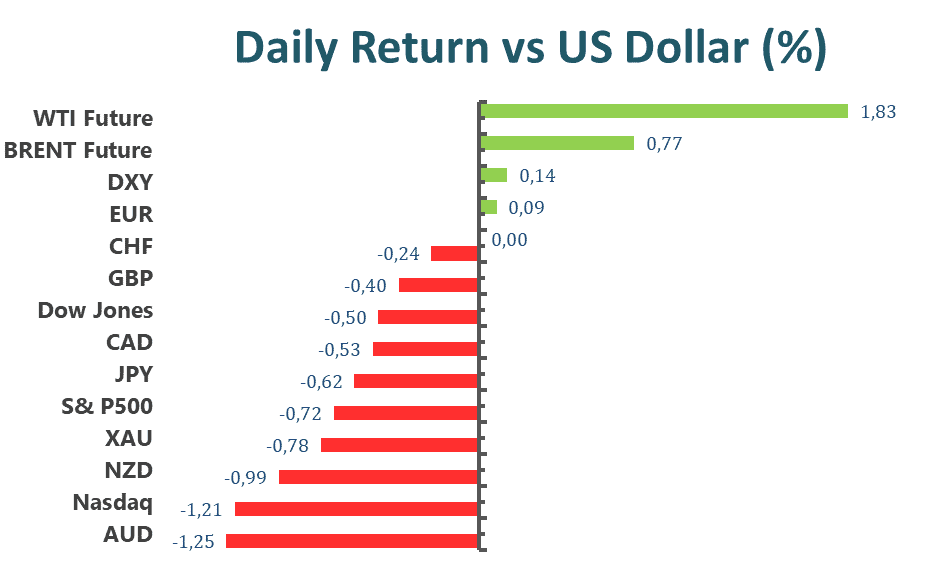
The GBP/USD dropped with a 0.40% loss on daily basis after a volatile day, as UK’s 40-year high inflation propelled recession woes and the minute of the Federal Reserve. The cables were under heavy selling pressure during the UK trading session amid a pessimistic market mood towards economic growth. However, GBP/USD rebounded after the Fed minute and oscillate around the 1.2045 level. Meanwhile, EUR/USD touched a daily-high level above 1.020 after the minute by Fed. The pair rose 0.09% for the day.

Gold dropped on Wednesday, and remains under pressure around a two-week low, down for the fourth consecutive day. XAU/USD edged lower since the UK trading session as a strong greenback across the board and touched a daily low below $1,760 in the middle of the US trading session.
WTI and Brent oil advanced for the day, rising 1.83% and 0.77% respectively.

Technical Analysis

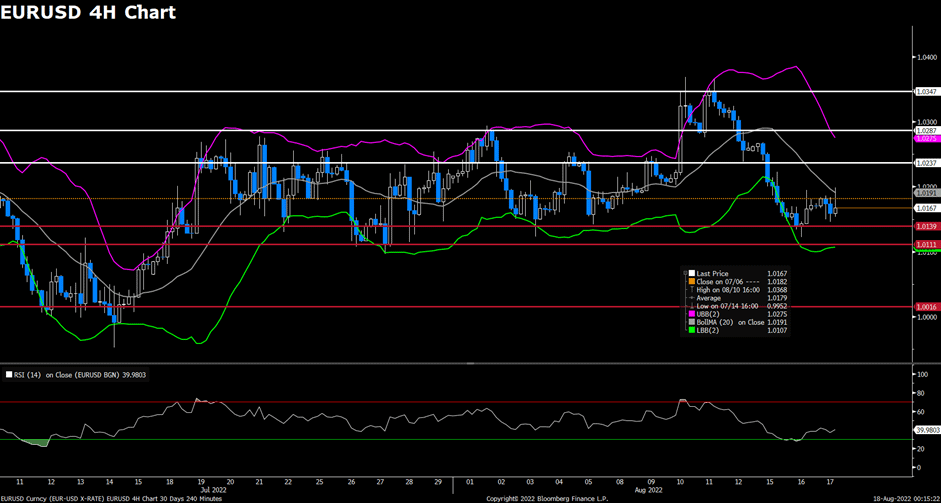
EURUSD (4-Hour Chart)

The EUR/USD pair edged lower on Wednesday, remaining under pressure and surrendered most of its daily gains after touching a daily high above the 1.019 mark amid a soured market mood. The pair is now trading at 1.0164, posting a 0.08% loss daily. EUR/USD stays in the negative territory amid renewed US dollar strength, as global stocks turned sharply lower ahead of the release of the latest FOMC Meeting Minutes and lend support to the safe-haven greenback. The US Retail Sales stay unchanged in July and came in slightly weaker than the market expectation of +0.1%, which failed to provide impetus to the markets as the focus now shifts to FOMC minutes. For the Euro, the Eurozone GDP expanded by 0.6% QoQ in the second quarter of this year, but the markets react little to the economic data.

For the technical aspect, the RSI indicator is 39 as of writing, suggesting that the downside is more favoured as the RSI stays below the mid-line. As for the Bollinger Bands, the price retreated and failed to cross above the moving average, therefore some downside traction can be expected. In conclusion, we think the market will be bearish as the pair might head to test the 1.0139 support. The risk is also skewed to the downside as the pair is developing below all of its moving averages.

Resistance: 1.0237, 1.0287, 1.0347

Support: 1.0139, 1.0111, 1.0016

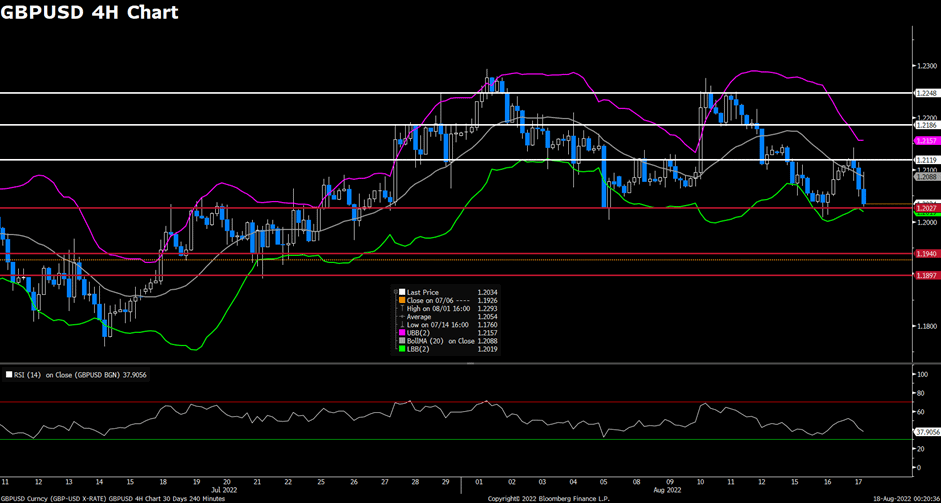
GBPUSD (4-Hour Chart)

The GBP/USD pair declined on Wednesday, failing to preserve its upside traction that was witnessed earlier in the Asia session and refreshed its daily low below 1.205 level ahead of FOMC meeting minutes. At the time of writing, the cable stays in negative territory with a 0.53% loss for the day. The speculations that the Fed would stick to its policy tightening path have been fueled by the recent hawkish remarks by several Fed officials. On top of that, the rising US Treasury bond yields also helped the US dollar to find demand and undermined the GBP/USD pair. For the British pound, the UK Consumer Prices Index (CPI) rose to 10.1% YoY in July, which came in hotter-than-expected but failed to provide strong support to the cable as the US economic data have lifted bets for a larger Fed rate hike move at the September meeting.

For the technical aspect, the RSI indicator is 37 as of writing, suggesting the pair’s bearish outlook in the near term as the RSI keeps heading south. As for the Bollinger Bands, the price witnessed fresh selling and dropped toward the lower band, therefore a continuation of the downside trend can be expected. In conclusion, we think the market will be bearish as the pair is testing the 1.2027 support. A break below that level could open the door for additional losses and the falling RSI also reflects bear signals.

Resistance: 1.2119, 1.2186, 1.2248

Support: 1.2027, 1.1940, 1.1897

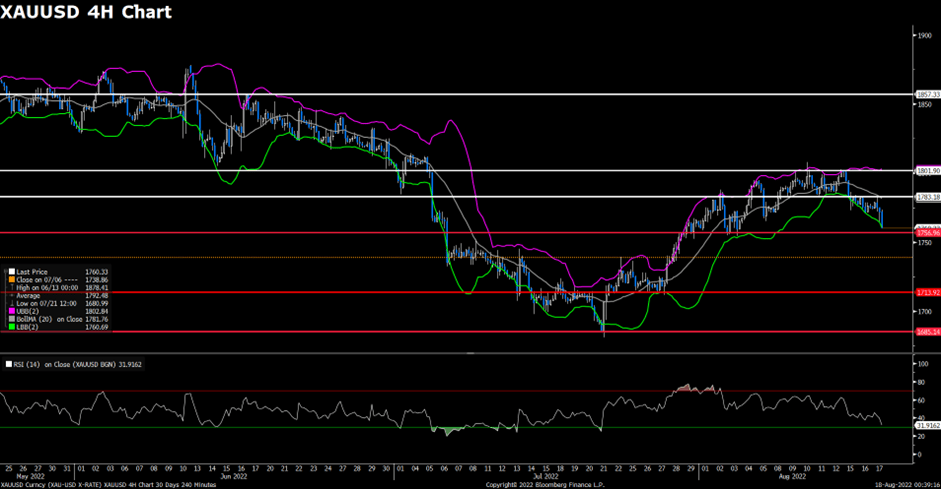
XAUUSD (4-Hour Chart)

Gold slumps below $1,770 on Wednesday, dropping to its two weeks low. Rising yields and a stronger US dollar are weighing on the gold price. The benchmark 10-year US Treasury bond yield is up nearly 3% on the trade of the day, forcing XAU/USD to come under more bearish pressure.

For the technical aspect, XAU/USD drifts in negative for the third successive day forming a clear downward trend and slumps below the $1,770 level in the European session. The price continued to drop in the early US session. At the time of writing, the price is $1,760 level testing the support level at $1,757. The RSI indicator is 33 as of writing, suggesting that the price is still under downside pressure. For the Bollinger Bands, the price tumbled but still maintained slightly above the lower bound, indicating that the price is not yet dropped below oversell zone. In conclusion, we think the market is still in bearish mode as the RSI indicator keeps in a downtrend and the price keeps edging low.

Markets are now pricing in at least a 50 bps rate hike at the September FOMC meeting. As such, clues about the possibility of a larger 75 bps move will play a key role in influencing the recent USD price and determining the next move for gold. For more price action, eye on the tier 1 US economic data.

Resistance: 1783, 1803, 1857

Support: 1757, 1714, 1685

Economic Data

CurrencyDataTime (GMT + 8)Forecast
AUDEmployment Change (Jul)09:3025.0k
EURCPI (YoY) (Jul)17:008.9%
USDInitial Jobless Claims20:30265k
USDPhiladelphia Fed Manufacturing Index (Aug)20:30-5.0
USDExisting Home Sales (Jul)22:004.89M

VT Markets 新产品上线通知

尊敬的用户:

您好!

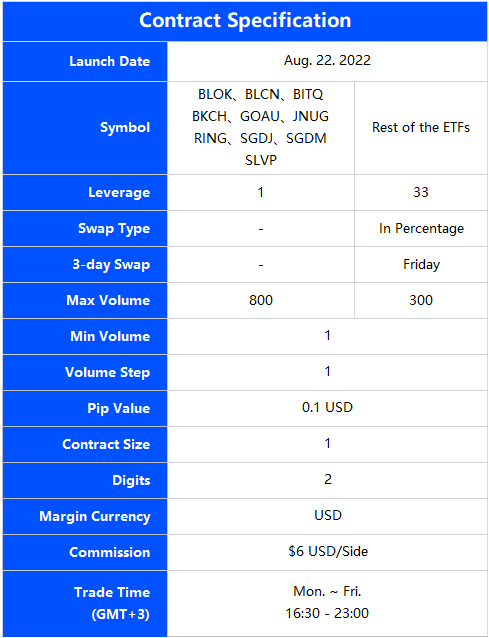
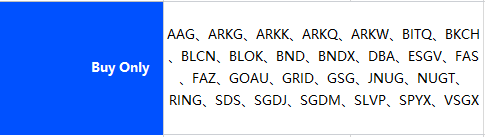
VT Markets 为进一步丰富广大客户的投资选择,我们预计将于 2022 年 08 月 22 日 (周一) ,MT5 服务器上新增51只ETF产品。

新产品交易细则如下:

注意:以上数据仅供参考,实际执行数据有可能会有变动,具体请依据MT4/MT5软件为准。

温馨提醒:
1. 此次上新产品仅限于 MT5 上可交易。
2. 其他交易细则请至 MT5 软件查看各产品规格。
3. 因市场风险因素,部份产品只开放交易多单。

此次上线的新产品,将更好地满足广大客户对产品多元化的需求。
未来,VT Markets 将会持续更新产品列表,致力于产品优化、技术革新、服务创新等全方位提供客户崭新良好的投资体验。

如您有任何疑问,我们的团队将十分乐意为您解答。
请留言或发邮件至 [email protected] 或联系在线客服。

Back To Top
server

您好 👋

我能帮您什么吗?

立即与我们的团队聊天

在线客服

通过以下方式开始对话...

  • Telegram
    hold 维护中
  • 即将推出...

您好 👋

我能帮您什么吗?

telegram

用手机扫描二维码即可开始与我们聊天,或 点击这里.

没有安装 Telegram 应用或桌面版?请使用 Web Telegram .

QR code