


尊敬的用户:
您好!
由于美国地区即将由夏令时切换至冬令时,部份产品的交易时间将于 2024年11月03日有所调整,详情如下:
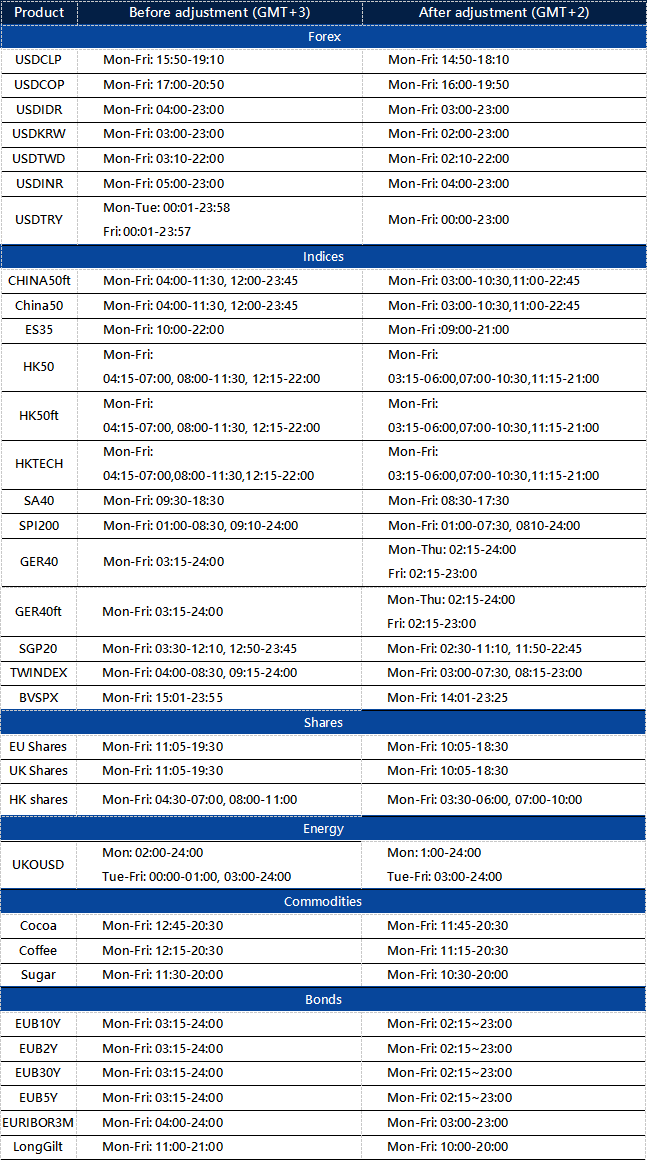
注意:以上数据仅供参考,实际执行数据有可能会有变动,具体请依据 MT4 / MT5 软件为准。
如您有任何疑问,我们的团队将十分乐意为您解答。
请留言或发邮件至 [email protected] 或联系在线客服。



 CN
CN


尊敬的用户:
您好!
由于美国地区即将由夏令时切换至冬令时,部份产品的交易时间将于 2024年11月03日有所调整,详情如下:
注意:以上数据仅供参考,实际执行数据有可能会有变动,具体请依据 MT4 / MT5 软件为准。
如您有任何疑问,我们的团队将十分乐意为您解答。
请留言或发邮件至 [email protected] 或联系在线客服。
Pilihan raya US berlangsung minggu ini. Walaupun pasaran telah mengalami volatiliti dalam beberapa minggu menjelang keputusan pilihan raya, data pekerjaan yang terbaru tidak memberikan hala tuju yang konkrit untuk peserta pasaran.
Pada bulan Oktober, hanya 12,000 pekerjaan ditambah, sekaligus mencatat rekod sebagai penambahan pekerjaan bulanan yang paling kecil dalam empat tahun. Jumlah ini terlalu berbeza dengan penambahan pekerjaan sebanyak 254,000 pada bulan sebelum ini dan menimbulkan persoalan mengenai perubahan yang dramatik ini.
Walaupun kadar pengangguran kekal stabil pada tahap terendah 4.1%, terdapat tanda-tanda pasaran pekerjaan sedang menyejuk.
Beberapa faktor telah menyumbang kepada penurunan ini, termasuk impak taufan baru-baru ini dan mogok di Boeing, yang telah mengganggu pengambilan pekerja dalam pelbagai sektor.
Pertumbuhan pekerjaan kini tertumpu dalam penjagaan kesihatan dan perkhidmatan kerajaan, manakala industri seperti pengilangan, riadah, hospitaliti, runcit, dan pengangkutan sedang bergelut untuk menambah pekerja.
Situasi ini menekankan realiti yang kelesuan ekonomi tidak memberi impak yang sama rata kepada semua sektor. Sebaliknya, beberapa sektor mampu menangani cabaran ekonomi dengan lebih baik.
Menambah kepada ketakpastian, semakan kepada jumlah penciptaan pekerjaan yang lepas telah mengeruhkan keadaan. Bureau of Labor Statistics telah menyemak angka Ogos dan September sebanyak 112,000 pekerjaan.
Perubahan ini mencadangkan pasaran buruh tidaklah kukuh seperti yang diharapkan, mendorong pedagang untuk menilai semula jangkaan mereka. Sementara itu, data dari Job Openings and Labor Turnover Survey (JOLTS) menunjukkan pendekatan yang berhati-hati di kalangan majikan, dengan peningkatan dalam pembuangan kerja mencadangkan tidak ramai yang bersedia meninggalkan pekerjaan mereka untuk mencari peluang yang lebih baik.
Kita sedang menyaksikan peralihan kepada “pasaran majikan”, di mana keselamatan pekerjaan lebih sukar untuk dicapai, dan peluang pekerjaan semakin berkurang. Dengan peserta pasaran memproses maklumat ini, semua mata tertumpu kepada langkah Fed yang seterusnya.
Sebelum laporan pekerjaan, terdapat kemungkinan 98.4% untuk potongan kadar sebanyak 25 mata asas dalam mesyuarat 7 November. Kini, kebarangkalian ini telah meningkat sedikit kepada 98.9%. Dengan melihat lebih jauh ke hadapan, kemungkinan untuk satu lagi potongan pada bulan Disember telah meningkat dari 74.6% kepada 82.7%, menandakan jangkaan yang semakin kuat untuk sokongan berterusan kepada pasaran buruh.
Walaupun data pekerjaan yang mengecewakan, pasaran saham bertindak balas dengan positif dan membuka lebih tinggi.
Walaupun situasi ini bertentangan dengan logik, tetapi jangkaan adalah Fed akan bertindak balas kepada laporan pekerjaan yang lemah dengan kadar faedah yang lebih rendah. Kadar yang lebih rendah biasanya menjadikan pinjaman lebih murah, yang boleh mendorong pelaburan dan perbelanjaan pengguna, dan akhirnya mendorong harga saham naik.
Indeks Dollar US (USDX) telah meningkat dari kawasan 103.40 serta-merta selepas laporan pekerjaan dikeluarkan.
Cari tindakan harga bearish pada tahap 104.80 dan 105.30.
Sementara itu, pasangan EURUSD telah jatuh tetapi belum mencapai zon jual yang dijangkakan pada 1.0940. Pedagang kini memberi tumpuan kepada tahap 1.0800 untuk tindakan.
GBPUSD telah menyaksikan kenaikan dari kawasan 1.2840, walaupun momentum belum menarik minat membeli yang kuat. Jika ia berdagang lebih rendah, awasi tindakan bullish sekitar 1.2790.
USDJPY berdagang ke atas, selepas terlepas menguji kawasan 151.00, tetapi sekiranya ia terbalik, pergerakan bullish dijangkakan pada tahap itu.
USOil telah jatuh dari kawasan 71.70, dengan potensi untuk merudum lebih rendah ke arah 66.938 dan mungkin 65.508.
Emas, selepas meningkat dari 2730 pada awalnya, mengalami konsolidasi sebelum pembalikan. Awasi 2690 untuk sokongan.
Jika emas boleh mengekalkan momentum bullishnya, ia mungkin menguji tahap tertinggi sekali lagi.
Harga Bitcoin mengalami volatiliti yang tinggi, meningkat dari 68,850 ke sekitar 67,850. Jika ia tidak menunjukkan penolakan kuat pada tahap ini, ia mungkin menurun ke 65,244 sebelum percubaan meningkat semula.
Dengan pilihan raya presiden US yang semakin hampir, pedagang mungkin kekal waspada dengan perkembangan politik dan bagaimana ia boleh mempengaruhi keputusan perdagangan.
Mesyuarat Fed yang akan datang akan memberikan lebih banyak petunjuk, tetapi untuk sekarang, tumpuan kekal kepada memahami dan bertindak balas kepada gambaran ekonomi yang berubah-ubah.
Selasa membawa perhatian kita ke Down Under; kadar tunai Australia dijangka kekal pada 4.35%, tidak berubah dari tahap sebelumnya. Dinamik perdagangan awal minggu mungkin melihat peningkatan pergerakan harga, yang berpotensi memberi kesan kepada USD di sebalik pilihan raya presiden.
Pada hari Rabu, kadar pengangguran New Zealand dijangka naik kepada 5.0%, berbanding 4.6%. Data ini akan menjadi sangat relevan dalam konteks pilihan raya baru-baru ini dan mungkin memberi kesan kepada sentimen NZD.
Kadar Rasmi Bank UK dijangka mengumumkan penurunan dari 5.00% kepada 4.75% pada hari Khamis. Reaksi pasaran akan bergantung kepada bagaimana penyesuaian ini selaras dengan jangkaan pedagang semasa pengumuman.
Mengakhiri minggu pada hari Jumaat, Federal Fund Rate di US dijangka jatuh kepada 4.75% dari 5.00%. Jika USD telah mencapai tahap tinggi baru-baru ini, pedagang mungkin melihat pembetulan harga disebabkan pengambilan keuntungan.
Kadar pengangguran US dijangka meningkat sedikit kepada 6.60%, berbanding 6.50% sebelumnya. Bagaimana nombor ini selaras dengan jangkaan akan membentuk pergerakan pasaran sepanjang hari.
Buka akaun live VT Markets anda dan mula berdagang sekarang.
Betting markets have shown rising odds for a Trump victory in the upcoming US election. Traders are considering the potential inflationary effects of policies like tariffs under a possible second term.
Market participants are closely assessing what his potential win could mean for the upcoming U.S. presidential election. At the heart of this analysis is the so-called “Trump Trade.”
The “Trump Trade” describes how markets and investors react to the economic policies and political moves tied to a Donald Trump presidency. This concept became prominent after his 2016 election, as markets responded to his agenda of deregulation, tax cuts, and expanded infrastructure spending. It mainly captures the expectation of a pro-business environment and economic stimulus that could bolster U.S. growth.
To understand what the markets expect, it’s helpful to look back at market reactions during Trump’s previous term.
With expectations of stronger economic growth, the Federal Reserve adjusted its policies:
Regardless of who wins the upcoming election, two billionaire investing legends remain focused on the US bond market due to the unsustainable trajectory of large US deficits.
“I have moved in that direction for sure,” Jones told CNBC when asked if he was adjusting his strategy for a possible Trump win over Vice President Kamala Harris.
“It just means more in inflation trades,” Jones added, joining other top investors in voicing concerns about the U.S. government’s fiscal outlook, regardless of the election outcome, given both candidates’ commitments to tax cuts and spending.
On the alarming US deficit and debt path: Jones didn’t hold back here—it’s worth watching as he breaks down the US debt problem in simple terms. He compares it to someone earning $100,000 a year but borrowing $700,000 and planning to add $40,000 more in debt annually. So, why would anyone still lend to the US government?
U.S. debt situation has spiraled out of control. Just 25 years ago, the national debt was a little under 60% of GDP. Today, that rate has doubled to 120%.
Source: OMB; St. Louis Fed; US Global Investors
Paul Tudor Jones warns the U.S. faces a fast-approaching debt crisis unless it tackles government spending. He notes that political promises of increased spending or tax cuts only deepen the issue, saying the U.S. will be “broke really quick” without serious fiscal action.
Stanley Druckenmiller, billionaire investor and former chairman of Duquesne Capital and former chief portfolio manager for George Soros’ Quantum fund, shared his views on the Fed, criticising its overly easy policies during the pandemic, when he believed rate hikes should have started sooner.
He also expressed concern that the Fed may be making a new mistake by cutting rates too aggressively, which could trigger another inflation spike if the economy stays strong and potentially compromise the Fed’s independence.
In case you missed, read our article on the 2024 September Fed cut here.
It’s worth noting that Druckenmiller is less interested in discussing the equity markets and is more focused on the risks to the bond market, which could impact stocks negatively. He specifically indicates that he is taking a strong position against US long-term treasury bonds, hoping to profit from a sharp further rise in US yields.
With Jones taking a similar stance, he said, “I’m long gold, I’m long bitcoin…Commodities are ridiculously underowned.”
Important: The interaction between bond yields and stock markets is crucial for understanding currency movements. If bond yields rise, it may lead to a stronger U.S. dollar (creating challenges for equities) as investors seek higher returns, thereby increasing demand for dollars to purchase U.S. bond.
The “Trump Trade” meant reevaluating and adjusting their portfolios to adapt to the changing economic environment:
Investors needed to be careful with long-term bonds because rising yields could decrease their value. Instead, they shifted their focus to shorter-duration bonds, which are less affected by interest rate changes. This approach helps reduce the risk of losing money if interest rates rise further.
For portfolios that include foreign investments, implementing hedging strategies has become increasingly important. This is to protect against potential losses due to a strong U.S. dollar, which can make foreign assets less valuable when converted back to dollars.
It became wise to diversify investments into assets that are not heavily influenced by U.S. political events. Including safe-haven assets, such as gold or Swiss Franc, provides a buffer against market volatility caused by political uncertainty. These assets tend to hold their value better in turbulent times.
You might be interested: How to Manage Market Volatility in the US Elections
When considering wise words of these investing legends, one key observation is that they are extremely quick to change their mind if something dramatically new happens.
In fast-moving markets where prices can shift direction rapidly, you can trade CFDs across a wide range of assets, from forex to precious metals, capitalising on breaking news and political changes.
It takes less than 5 minutes to open your CFD trading account here.
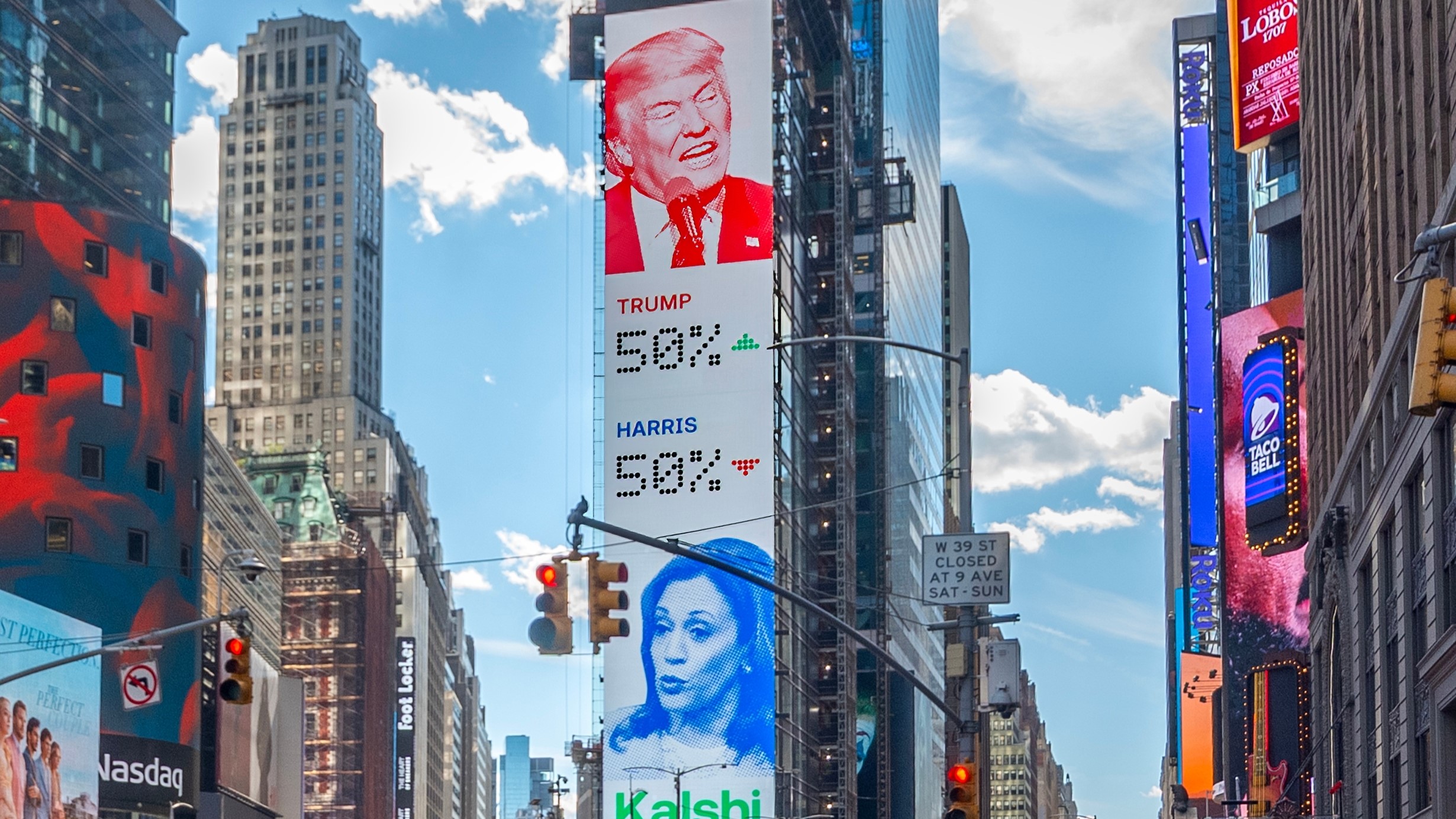

The Trump-Harris showdown begins: Voters in the US will go to the polls on 5 November to elect their next president. Will America get its first ever woman president or a second Donald Trump term? The election volatility brings a wave of both opportunities and challenges. Market participants are closely monitoring how it might impact both short-term and long-term trends.
The 2024 US election is a tightly contested one, with two candidates, Kamala Harris and Donald Trump, each having unique approaches to economic policy.

Source: NY Times (As of 3 November 2024)
The result of this election will undoubtedly have implications for traders. Here, we explore how both the short-term volatility and the longer-term policies may affect market dynamics.
Leading up to the election, market volatility is likely to spike due to the uncertainty surrounding the outcome. A tightly contested election can cause hesitation in the markets, particularly if the results are delayed or there are recounts in swing states. This uncertainty tends to lead to heightened short-term volatility, which is both an opportunity and a risk for different types of traders.
For day traders, this environment of short-term swings could be beneficial for seizing quick opportunities. On the other hand, longer-term traders may find themselves in a riskier position, with markets reacting suddenly to polling news or to disputes over election outcomes. The extended uncertainty could weigh on financial sentiment until January 2025, when the new president officially assumes office.
If Kamala Harris were to win the election, market participants may anticipate a sense of stability as her administration would be viewed as a continuation of the Biden presidency. Historically, incumbent administrations have provided a more predictable environment, leading to smoother market transitions. Traders might expect less turmoil in reaction to the election results due to the familiarity with ongoing policies and existing economic plans.
On the contrary, a return of Donald Trump to the presidency could foster an environment of uncertainty. A new administration typically takes time to get up to speed, and traders may need to wait for new policies to be communicated and implemented before gauging their full impact. This scenario is more likely to trigger short-term volatility as the markets react to unknowns.
Looking beyond immediate market reactions, the long-term effects of the US election are tied closely to each candidate’s economic policies.
Kamala Harris: Harris’s potential continuation of Biden’s administration is likely to bring regulatory policies that affect financial markets. Her focus on social spending may increase national debt, putting downward pressure on the dollar, while potentially triggering inflation. Rising inflation could prompt the Federal Reserve to raise interest rates, which could then strengthen the dollar in the medium term.
Donald Trump: The 2016 Trump administration had a strong pro-business stance, focusing on deregulation and tax cuts, which initially strengthened the dollar. However, his position on fiscal stimulus could increase national debt, thereby weighing on the currency. Additionally, Trump’s unpredictable approach to foreign policy could lead to geopolitical instability, with potential consequences for the US dollar.
Source: Reuters
Both candidates have policies that could have a contrasting effect on the dollar. Fiscal stimulus and regulatory measures could simultaneously impact the value of the dollar, pushing it either higher or lower depending on how effectively policies are implemented and received by the market.
Given the current environment, traders need to stay adaptable. Monitoring polling data, understanding the incoming administration’s economic plans, and watching the market’s response to breaking news are essential strategies. The Federal Reserve’s response to inflation—influenced by policies on spending, regulation, and commodity prices like oil—will be an important focus for traders, especially those with positions in US dollar pairs.
Short-term opportunities might emerge as market volatility spikes in response to evolving headlines, but understanding the long-term direction will require a careful assessment of policy impacts, especially around fiscal discipline and regulatory actions. We recommend paying attention to any shifts in the dollar’s trajectory due to changes in fiscal and monetary policy, as these will be key indicators in the months following the election.
For more insights, read this article on how you can manage market volatility in the US elections.

We get it. The presidential elections are always the talk of the town when they roll in. The stakes are always high, and markets are already toeing the line with stirring volatility.
But what is it about a presidential election that gets the world in a tizzy? The United States has had a long history of influence on the global economy, from policies passed to shifting sectors.
It’s all old hat to the wolves of Wall Street by now, but it’s always good practice to look back at the past to make better decisions for the future.
The months leading up to U.S. elections have been prime time for market swings.
The influence of the presidential election is very clearly seen on the VIX (Chicago Board Options Exchange Volatility Index). Colloquially known as the “fear gauge”, the VIX often displays a spike before election season, signalling a surge in hedging and the anticipation of rapid market moves.
For now, the VIX remains fairly stable ahead of the presidential race, but a contested election or results uncertainties could turn it on its head in a blink.
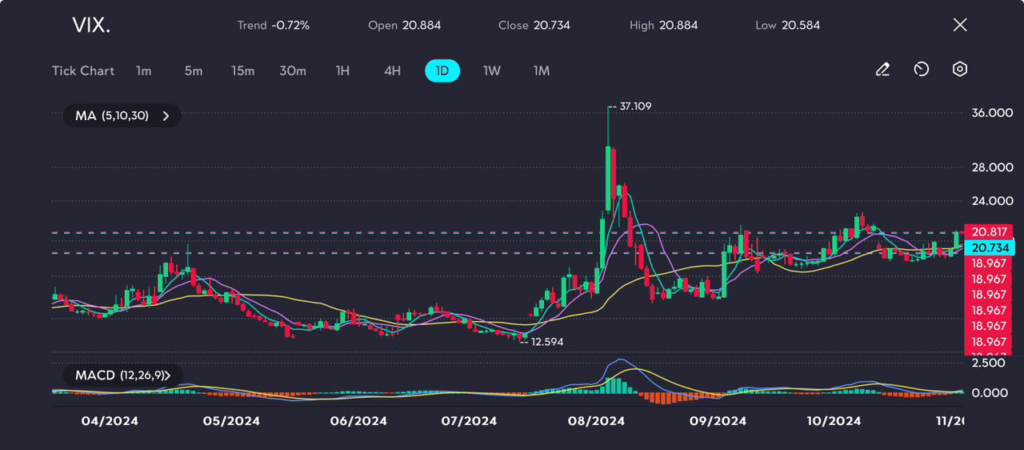
Picture: The daily VIX chart, as seen on the VT Markets app
Let’s take a look at some major volatility highlights from past elections:
The 2000 election between George W. Bush and Al Gore was like a political roller coaster that Americans couldn’t get off of—especially once the results in Florida started swinging back and forth.
While Gore won the popular vote by a hair’s breadth, the fate of the election came down to Florida’s 25 electoral votes. “Hanging chads” and “butterfly ballots” became household terms as everyone struggled to understand what had gone wrong with the vote-counting process.
As tensions rose, the S&P 500 slid nearly 5%, and the VIX jumped over 40%.
After a dramatic 5-4 decision by the Supreme Court in Bush v. Gore, the recount was stopped, essentially handing the presidency to Bush.
When the financial crisis hit in 2008, it was like watching dominoes fall, each one representing jobs, homes, and financial security for millions of Americans. The economy felt like it was teetering on the edge, and people were desperate for a leader who could step up with a vision of stability.
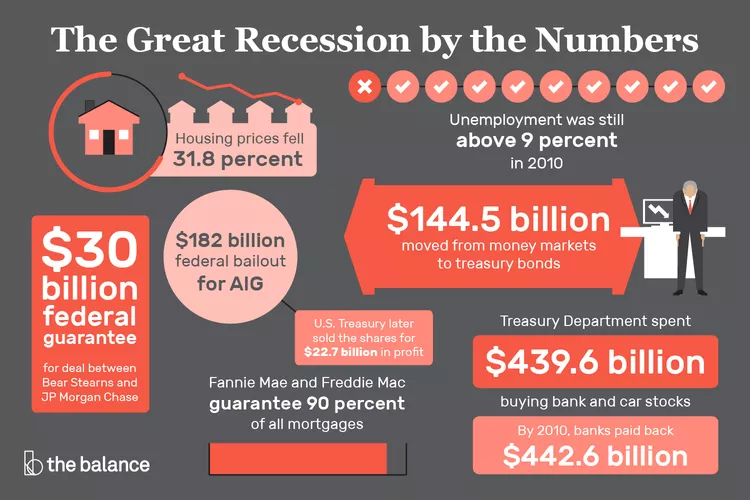
Image source: The Balance
The VIX hit 89.53—an all-time high—as markets were gripped by uncertainty over which candidate’s policies would steer the recovery.
The 2016 election brought America into a whole new kind of campaign, one that was messy, loud, and deeply divided.
Clinton won the popular vote by nearly 3 million, but Trump clinched the Electoral College in key states like Pennsylvania and Michigan, which were seen as Democrats’ strongholds.
Trump’s win came out of left field for many, including the markets.
Dow futures dropping more than 800 points overnight. However, the whiplash rebound saw the S&P 500 ending the year up 9.5%.
The 2020 election was like no other in recent memory, taking place against the backdrop of a global pandemic, economic uncertainty, and heightened racial tensions. Joe Biden, with his “Build Back Better” message, positioned himself as a calm, empathetic counter to President Trump, who was criticised for his handling of COVID-19 and his combative approach to social issues.
Biden ultimately won both the popular vote by over 7 million and the Electoral College, but the transition was anything but smooth. The VIX surged to 40 as concerns over potential delays or contested results kept traders on edge.
Picture: The CBOE VIX movement in 2020 as seen on the VT Markets app.
Like the rest of the world, markets do not like uncertainty. The U.S. Elections deliver it in spades, especially in such closely fought elections as we are seeing at the moment, where the winning candidate is still very much in balance. Predicting which candidate’s policies will come into play, and what they’ll mean for trade, taxes, and industry regulation, makes markets skittish.
Add in media speculation and poll shifts, and it’s no wonder we see such volatility.
Policies of each candidate can shake specific sectors differently, like green energy or healthcare, leading traders to hedge their bets or rotate sectors to manage the risk.
With elections ramping up volatility, traders employ various strategies to protect their portfolios or benefit from market moves:
Options
Options are a great tool to let traders hedge against downside risks, with many buying put options on indices like the S&P 500. They can also provide
The VIX
The VIX itself is a popular hedge, as it rises during periods of uncertainty.
Currency Hedges
U.S. Elections can send shockwaves through global currencies, affecting pairs like USD/JPY or EUR/USD. Traders might shift into other currencies if the dollar weakens, capitalising on global market reactions.
Sector Rotations
During election cycles, traders rotate between sectors that may fare better under each candidate. For example, green energy stocks surged in 2020, while healthcare stocks saw volatility due to opposing reform views.
Safe-Haven Assets
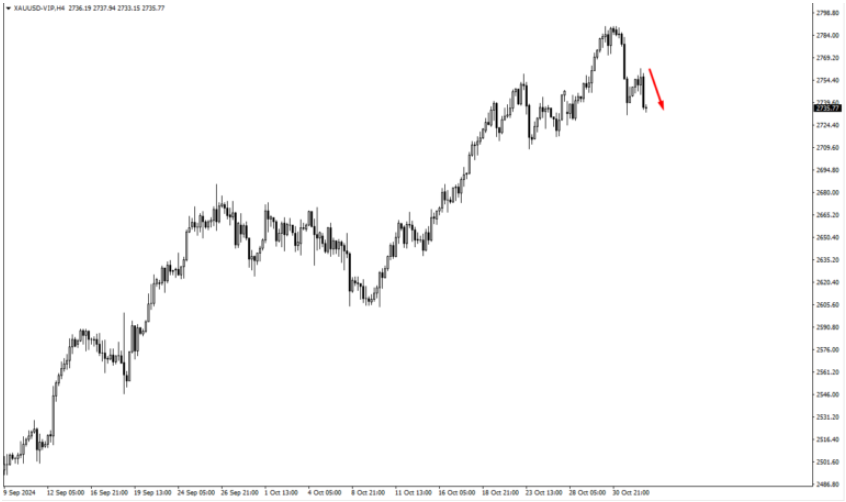
Gold, U.S. Treasuries, and the Swiss franc (USD/CHF) are classic go-tos when things get rocky, offering a sense of security when markets turn turbulent. This can be seen particularly with the surge in the price of Gold in recent months due to an increase in geopolitical tension and the uncertainty of the US Presidential elections
Picture: Daily gold chart, as seen on the VT Markets app.
While some traders play defence, others see volatility as an opportunity for profit. Election-driven price swings can be ideal, especially for short-term trading.
Swing Trading
Elections offer ripe conditions for swing traders, who can capitalise on short-term moves driven by breaking news, polls, and debates.
Key technical indicators such support and resistance levels help traders navigate volatility. Following such technical cues allows traders to adapt to sudden price swings as the market reacts and digests news driven events
Futures contracts, especially on indices, commodities, and currencies, are heavily traded during elections. Contracts on crude oil, gold, and the S&P 500 see considerable action as traders leverage rapid market shifts.
Post-Election Adjustments
After the election, markets may reassess the implications of the results, leading to further price swings, creating additional opportunities.
We know that the markets will tend to perform better in years where the incumbent president is re-elected, as it provides more consistency.
Likewise, a change in the administration can lead to short term turbulence as the new policies take their time to be adopted and the impacts assessed.
With each U.S. election comes a wave of volatility, but traders can navigate it with smart hedging or by riding the price swings.
Options, safe-haven assets, and sector shifts can provide protection for portfolios, while swing and futures trading can turn uncertainty into opportunity.
Election-driven volatility brings risk, but for the prepared trader, it also brings potential rewards.
尊敬的用户:
您好!
VT Markets 致力于为客户提供更快速且稳定的交易环境,我们将于周末进行 MT4 & MT5 服务器升级维护。
MT4 & MT5维护时段:
2024 年 11 月 03 日 (星期日) 12:00 至 19:00
上述时段采用 GMT+8
请您务必留意下列事项:
1. 维护期间,服务器报价将会暂停,您将无法建立新仓位、关闭或调整既有持仓。
2. 维护期间前后的市场价格可能发生跳空,在跳空范围内的挂单或止损/止盈设置将在维护结束后的市场价格成交,建议您留意仓位控管。
3. 因应冬令时调整,本次维护后,服务器时间将从 GMT+3 调整为 GMT+2。
具体维护完毕与开盘时间请依据 MT4 & MT5 软件为准。
望您谅解因此次升级维护为您所带来的不便,我们将继续为您提供更优质的服务。
如您有任何疑问,我们的团队将十分乐意为您解答。
请留言或发邮件至[email protected] 或联系在线客服。
尊敬的用户:
您好!
随着2024年11月5日美国总统大选临近,市场预期波动性将进一步加剧。VT Markets始终致力于为您提供优质的交易环境,并将全力确保在此期间的客户体验。请您特别留意以下相关市场风险:
点差:
选举期间,市场点差可能出现比平时更显著的波动。请谨慎交易并合理管理仓位和资金。
流动性:
受市场情绪及不确定性因素影响,部分流动性供应商和银行可能减少或撤出资金支持,这可能导致订单执行价格与预设价格之间出现较大差异,增加滑点风险。
波动性:
新闻事件和市场动态的频繁更新可能引发市场剧烈波动,导致极端行情变化。
作为您的信赖经纪商,VT Markets将实施多项风险管理措施,以有效应对市场波动并保障交易安全。具体调整可能包括杠杆比例的下调以及将持仓预付款要求提升至原有水平的两倍。请留意,杠杆调整将可能直接影响预付款要求提高或降低,建议您提前增加账户资金,以确保充足的资金比例。
如您有任何疑问,我们的团队将十分乐意为您解答。
请留言或发邮件至 [email protected]或联系在线客服。
尊敬的用户:
您好!
受到国际节假日影响,VT Markets 部份产品交易时间将有所调整。
节假日受影响产品,请见以下链接:
注:“-” 符号表示正常交易時間。
温馨提醒:
以上时间为 MT4/5 冬令服务器时间(GMT+2),在极少数情况下,以上信息可能会因流通性供应商的调整而变化,具体请以MT4/5实际交易时间为准。
如您有任何疑问,我们的团队将十分乐意为您解答。
请发邮件至 [email protected] 或联系在线客服。
尊敬的用户:
您好!
VT Markets 为进一步丰富广大客户的投资选择,我们已于 2024 年 10 月 28 日 (周一) 在 MT5 上新增 16 只美国存托凭证产品
您可以在 Meta Trader 5 上交易以下新产品,交易细则如下:
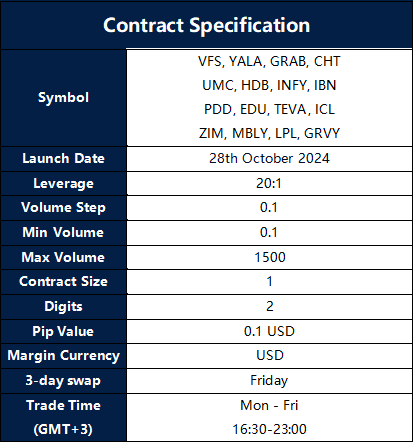
注意:以上数据仅供参考,具体请依据 MT5 软件为准。
温馨提醒:
1. 隔夜库存费费率请依据 MT5 软件为准。
如您有任何疑问,我们的团队将十分乐意为您解答。
请留言或发邮件至 [email protected] 或联系在线客服。
Pilihan raya presiden US 2024 semakin sengit di antara Kamala Harris dan Donald Trump. Seperti biasa, bukan hanya pengundi yang merasai ketegangan dari persaingan ini, kerana pasaran juga sedang memerhatikan perjalanan pilihan raya ini dan keputusannya kelak.
Kami telah mengenal pasti nombor, sentimen pasaran, dan trend semasa untuk memahami apa yang boleh terjadi dari pilihan raya ini.
Percayai atau tidak, S&P 500 mempunyai rekod yang menarik dalam meramalkan pemenang pilihan raya.
Data dari LPL Financial Holdings menunjukkan apabila S&P meningkat dalam tiga bulan sebelum hari pilihan raya, parti penjawat semasa memenangi pilihanraya sebanyak 83%.
Buat masa ini, indeks tersebut telah meningkat 11.8% sejak Ogos, membayangkan kemungkinan kelebihan bagi Harris.
Tetapi 2020 merupakan satu anomali: Biden menang walaupun S&P menunjukkan prestasi yang kuat, dan mungkin disebabkan oleh ketaktentuan pandemik.
Apakah pandangan Wall Street kali ini?
Sedikit berbelah-bagi, dengan kecondongan ke arah Trump.
Peserta pasaran sedang bersedia untuk inflasi dan tarif yang mungkin lebih tinggi dengan kemenangan Trump, dan kami melihat sentimen ini dalam pasaran bon, di mana harga jatuh, hasil meningkat, dan kebimbangan mengenai potensi dasar Trump yang semakin meningkat.
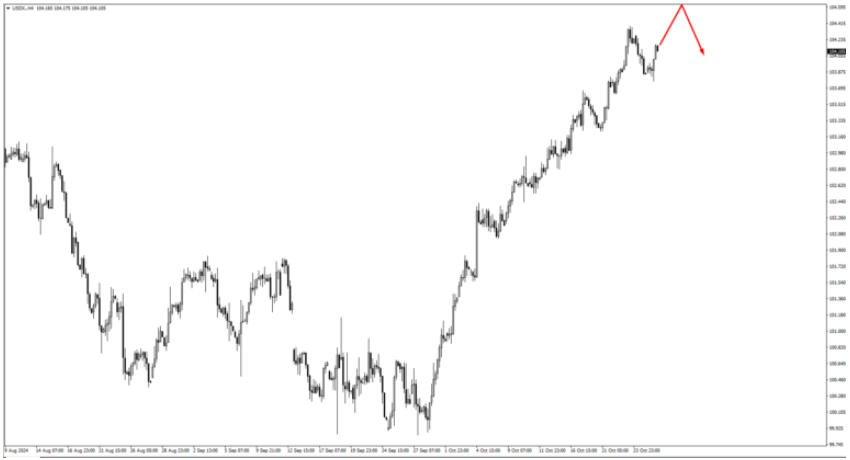
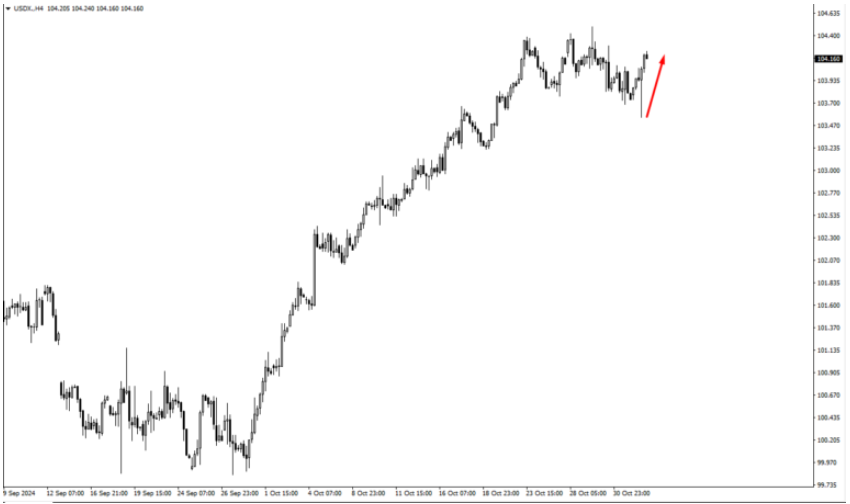
USDX (US Dollar Index) membuat percubaan menurun baru-baru ini tetapi ia tidak mencapai tahap sokongan 103.40, melantun semula selepas menguji 103.775. Pemulihan ini membayangkan minat membeli yang diperbaharui, yang boleh mendorong indeks ke arah 104.535.
Jika USDX memecahkan 104.535, pembeli mungkin menyasarkan 104.65. Walau bagaimanapun, tahap ini boleh bertindak sebagai tahap penentangan di mana tindakan bearish mungkin boleh berlaku. Pedagang perlu mengawasi tanda-tanda pembalikan harga sekitar 104.65, kerana ia boleh isyaratkan peluang pullback jangka pendek.
Dalam pasaran pertaruhan politik pula, Trump telah mendapat momentum yang didorong oleh tumpuannya terhadap pengilangan dan kawalan inflasi – dua isu besar bagi kebanyakan pengundi.
Dari segi tinjauan, Harris mempunyai kelebihan kecil 48.1% berbanding 46.4% untuk Trump, menurut 538 ABC News. Tetapi dengan 62% rakyat US merasai tekanan ekonomi, kelebihan Harris adalah rapuh.
Dengan Biden menarik diri dari pertandingan, Harris mempunyai peluang untuk mengalihkan fokusnya daripada cabaran ekonomi semasa.
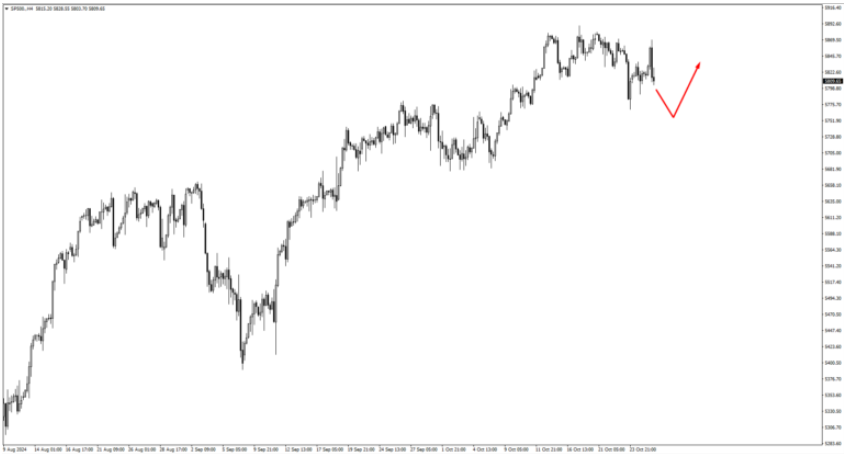
SP500 mungkin meneruskan konsolidasinya sebelum bergerak ke atas. Pedagang mungkin menjumpai isyarat bullish sekitar 5750 atau 5710 jika indeks jatuh. Jika ia naik, 6050 adalah rintangan yang perlu diperhatikan.
Pasaran Eropah tidak optimistik dengan kemungkinan kemenangan Trump. Pendirian perdagangan Trump boleh mengganggu hubungan perdagangan EU-US, dan kemungkinan ini membuatkan pasaran Eropah tidak senang duduk.
Jika Trump menang, kita mungkin melihat perubahan perdagangan global merebak merentasi sektor, terutamanya bagi Eropah.
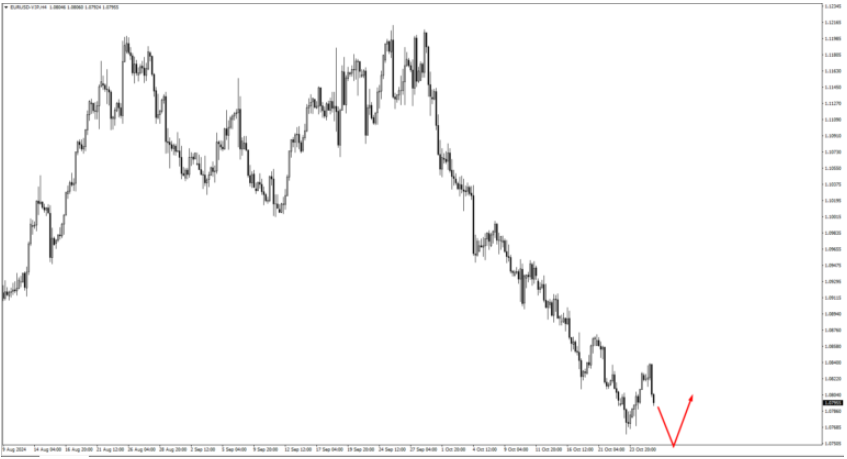
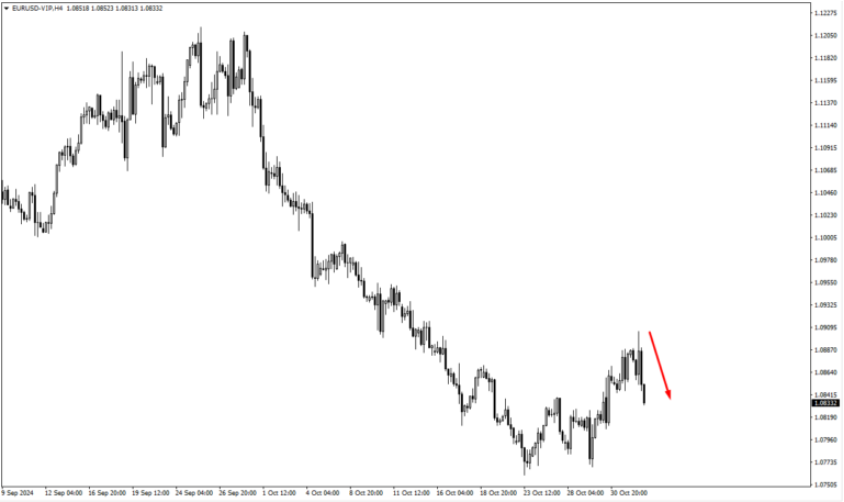
Pasangan EURUSD baru-baru ini membuat pergerakan ke atas dari 1.0760 sebelum berhenti di 1.0850. Penghentian ini membayangkan pembeli belum bersedia untuk menjadi lebih agresif, dan secara langsung menyediakan peluang untuk kemungkinan pullback.
Oleh itu, EURUSD mungkin akan menurun ke sekitar 1.0720, yang mungkin bertindak sebagai tahap sokongan utama.
Bagi mereka yang ingin membuka posisi membeli, 1.0720 boleh menjadi titik yang baik untuk mengawasi sebarang isyarat bullish – lantunan di sini mungkin menjadi tiket untuk pergerakan pemulihan.
Buka akaun live VT Markets anda sekarang dan mula berdagang.








