US Treasury yields remain in a downtrend, weakening the dollar.
US 2-year yields are nearing a two-month low.
The dollar index trades below key levels: 200-day SMA, 38.2% Fibonacci retracement, and recent trend support.
Friday’s US Jobs Report may temporarily boost the greenback, but medium-term, the index might fall to 103.44 (50% Fib retracement) before testing 102.34.
Gold Recovery:
Gold continues to recoup recent losses.
Currently re-testing the $2,360/oz. level; a break above could signal further gains.
The recent range of $2,280/oz. – $2,450/oz. is expected to hold in the short- to medium-term.
STOCK MARKET
May Jobs Report:
Nonfarm payrolls expected to rise by 185,000 in May, compared to 175,000 in April.
Unemployment rate projected to remain flat at 3.9%.
Average hourly earnings (month-over-month) anticipated to increase by 0.3%, up from 0.2%.
Average hourly earnings (year-over-year) expected to stay at 3.9%.
Average weekly hours worked likely to remain at 34.3.
Market Reaction:
Stock market has hit record highs amid softer-than-expected economic data.
Increased investor confidence that the Federal Reserve might cut interest rates in September.
Markets pricing in a 67% chance of a rate cut in September, up from 50% a week ago (CME FedWatch Tool).
Labor Market Trends:
Economists see the report indicating a healthy, balanced labor market rather than a broader economic slowdown.
Bank of America economist Michael Gapen suggests the “catch-up” effect in hiring is fading, supporting potential for Fed policy easing based on inflation confidence.
Additional Data:
The latest JOLTS report showed job openings fell to their lowest level since February 2021.
Ratio of job openings to unemployed people returned to 1.2, aligning with pre-pandemic levels.
Wage Growth:
April’s year-over-year wage growth fell below 4% for the first time in nearly three years.
Economists expect May’s wage growth to rise slightly on a monthly basis to 0.3%.
Year-over-year wage growth expected to remain at 3.9%.
Key Considerations:
Friday’s report will be scrutinized for signs of either a labor market normalization or an early economic slowdown.
Consistently high wage growth could contribute to persistent inflation.
Oxford Economics chief US economist Ryan Sweet notes the Fed aims for a gradual slowing in job and wage growth trends.
Tips and tricks on how to increase your trading win rate
Every trader enters the financial market with dreams of massive gains, inspired by stories of professional traders making fortunes like a degen.
But here’s a question: do these traders win all the time? The simple answer is no.
Even the best in the business have win rates of only about 50% to 55%.
Embracing losses
In trading, just like in sports, it’s not about winning every single time.
It’s important to realise that losses are part of the game, even for the pros. So, successful trading isn’t about never losing—it’s about making sure your wins outpace your losses.
But how exactly can a trading strategy give you an edge, and what win rate do profitable traders actually achieve?
Balancing your win rate with a good reward-to-risk ratio
Risk-Reward Ratio = Potential Profit / Potential Loss
Believe it or not, professional traders don’t win every trade. Yet, they still manage to rake in significant returns. If you know how to manage your risk, you can achieve consistent profits with a win rate as low as 30% to 50%.
Understanding win rates
So, what’s a win rate? It’s simply the number of successful trades divided by the total number of trades, expressed as a percentage.
For example, a 50% win rate means you win half of your trades.
Many traders get fixated on their win rate because, naturally, everyone wants to be right all the time. But even top athletes like Lionel Messi in football or Maximilian Günther in Formula E racing don’t win every point.
Pay close attention to your reward-to-risk ratio, aiming for scenarios where the potential reward significantly outweighs the risk.
Imagine this: if you win 5 out of 10 trades, your win rate is 50%.
If those 5 wins earn you $1,000 and your 5 losses cost you $500, you still come out ahead with a net profit of $500.
This shows how even a 50% win rate can be quite profitable.
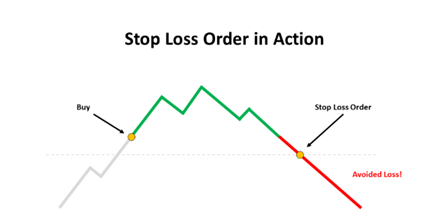
For a deeper understanding on reward and win rates, see this: Forex risk: reward and win rates Risk management plays a huge role here. Professional traders are masters at managing their risk. They use strategies like setting stop-loss orders to limit potential losses and take-profit orders to lock in gains.
“It’s not whether you’re right or wrong, but how much money you make when you’re right and how much you lose when you’re wrong.”
In a nutshell…what does all this mean for you?
It means that being right half the time can lead to substantial profits if you manage your risk and develop a solid strategy with a favourable reward-to-risk ratio.
Not every trade will be a winner, but with smart risk management, your profitable trades can cover your losses and still leave you with an overall gain.
So, remember, it’s not about winning every trade—it’s about making your wins count more than your losses.This will pay off in the long run. With this mindset, you’re on your way to a successful trading journey.
Also, practice makes perfect. Need to backtest your trading strategy?
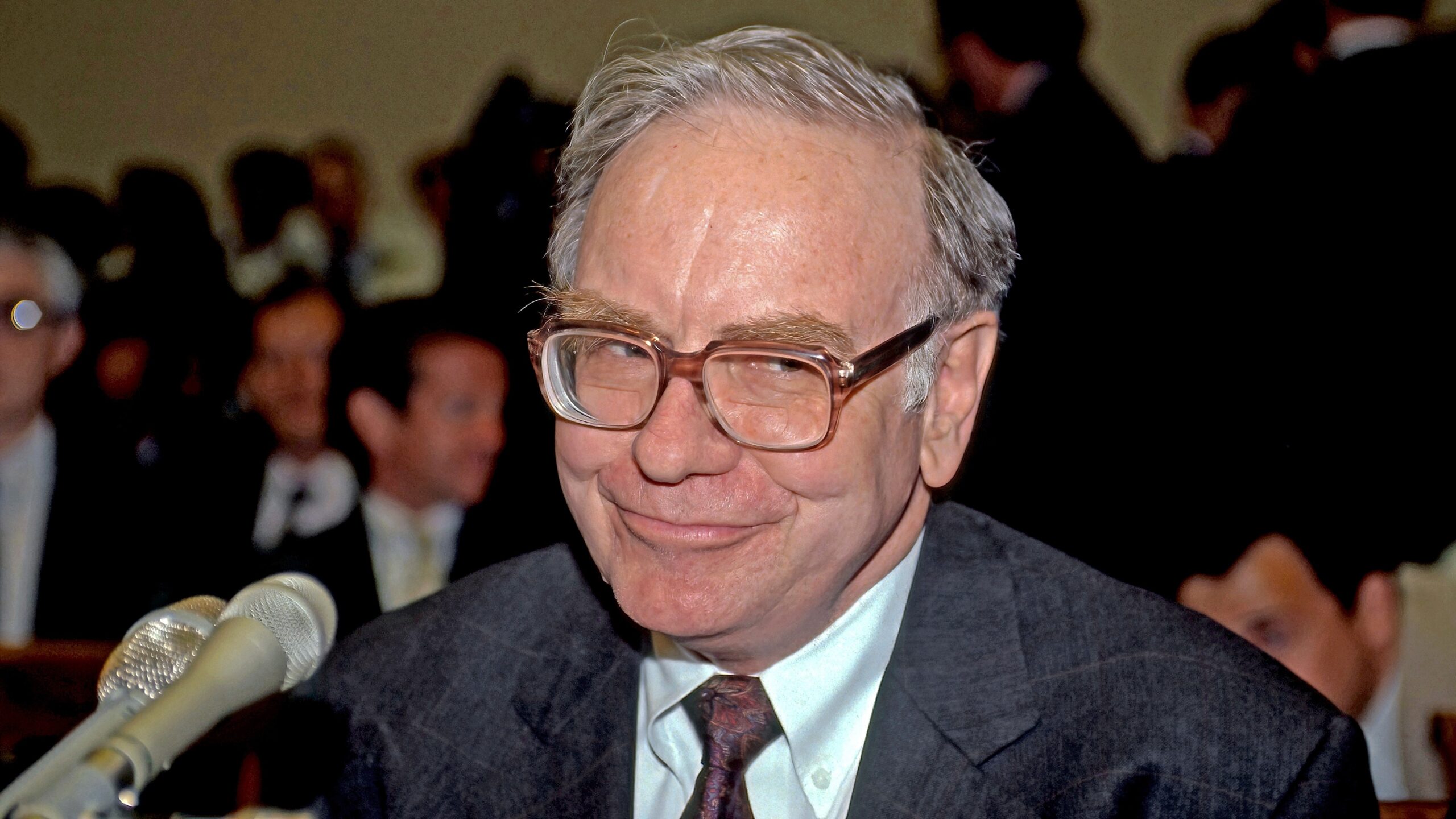
Famous for his principles in value investing, mainstream media regard Warren Buffett as one of the most successful investors of all time. Buffett runs Berkshire Hathaway (Symbol: BRKB), one of the favourite stocks for many investors in the world.
But there is an alternative school of thought challenging that Warren Buffett’s principles are “old school, obsolete, unrealistic and unsexy”.
Buffett’s principles and his lifestyle
Keywords of value investing principles are “long-term”, “patience” and “value”. Very much slow and steady. And people tend to forget that Buffett started investing when he was 10 years old, and he has since then been consistent until today. With an average ROI of 22% per year and compounding power, it is easy to see why Buffett ends up being one of the wealthiest people on the planet.
Realistically though, how many people start investing at the age of 10? Probably no one else apart from Buffett himself.
Modern day lifestyle, inflation and debt
Consider an alternative scenario where Buffett only starts investing when he was 30, whereby he would have been drowned with student debts from pursuing a master’s degree or PhD. With a regular job, he is only left with some USD500 a month after deducting the necessities. At the same ROI of 22% per year, he would end up with 99.9% less even after a period of 30 years.
There is just no way Buffett would be labelled as “the most successful investor”, even if he had been disciplined in his investment journey based on this alternative scenario.
The truth is that most people belong to this alternative scenario rather than being born as an investment prodigy who would start at the age of 10.
Add inflation into the picture and the ROI would be eroded to somewhere between 15-18% per year. Growing your wealth with a small capital and at such a speed is just not enough to keep up and live a decently happy life, much less to achieve financial freedom or becoming rich.
Value investing with little money down does not make any sense
Once again, consider yourself as an individual in the alternative scenario mentioned earlier. With just USD 500 spare cash a month and a long-only strategy, it is not easy to salvage a bad entry point, especially if you entered at the highest point of the market. It is also mentally painful if you decide to practice dollar cost averaging (DCA) when the market is crashing, as the more cash you invest, the more your portfolio will be bleeding. Sometimes it takes half a decade for the investment to break even. And the investor would already lose out to inflation too. For nothing.
What a pain.
An average joe with just USD 500 spare cash a month also must diversify. Playing the all-in strategy means you go big or go home. Buffett can do concentrated positions because he has the holding power, but truth is most people do not have such holding power. Choices are needed in certain occasions, and if one asset class is down, people do need another asset class to cover back the losses. And that is just how reality works.
A lot of flexibility is what helps the average individuals
This is where CFD trading becomes very appealing to many. Flexible, small and quick – just like a ninja.
Make money no matter the market is bullish or bearish
In CFDs, you can choose to bet if the market is going upwards or downwards. If the market is crashing, you can simply choose to follow the trend and short the market, making money when everyone else is bleeding.
Fast in fast out equals healthy cashflow
Most CFD traders practice intraday trading, and positions would be closed quickly to avoid overnight risks. Such practice also allows for healthy cashflow for a regular person. There would be no necessity to have your USD 500 cash stuck for extended periods of time.
Lower barrier to entry with leverage
With leverage of up to 500:1, CFDs also offer a lower barrier to entry – you only need to put up a small sum to gain full market exposure.
With a starting amount of USD 500 and leverage of 500:1, you can open positions of up to USD250,000, which can potentially amplify your profits. With Warren Buffett’s methods, you will have to earn the spare cash of USD250,000 first, which is not really viable to many.
Diversification of markets you can expose yourself to
You can gain exposure to forex, commodities, bonds, shares, indices and ETFs via CFD trading. It is easy to hedge or diversify with CFDs.
So, is Warren Buffett lying?
Perhaps from his own perspective, Buffett is not lying per se. But his methods are unrealistic and cumbersome for anyone without USD 1,000,000 in cash lying around waiting to be invested.
Once a while, everyone would want a cup of latte or boba tea, travel to another country, celebrate little moments in life, and just live simple happiness. Life could feel meaningless if every single penny saved must be invested and had to be locked for at least half a decade.
Start CFD trading with VT Markets
With 1000+ assets being offered in the form of CFD trading, there is nothing to stop you from living the lifestyle you desire. Start your financial trading journey today!