Interest rates, interest rates. This seems to be everything everyone with any skin in today’s financial market ever cares about. With the whole world shifting uncomfortably in their seat whenever a rate hike review is due from the Federal Reserve, this almost obsessive focus on this seemingly arbitrary number feels a little crazy for the uninitiated.
After all, what can one little percentage point really do?
The concept of interest rates dates back to ancient Mesopotamia around 3,000 BC, where loans were made and interest was charged in the form of a commodity, like grain or silver. However, it was the ancient Greek philosopher Aristotle who first noted the idea of interest, albeit with skepticism, considering it unnatural.
Fast forward to the Renaissance, when financial minds like the Italian mathematician Leonardo Fibonacci began to formalise the mathematics behind interest rates, setting the stage for modern economic theories. We still use the Fibonacci retracement as a technical analysis tool today.
In the modern economy, interest rates are treated as the “cost” of borrowing money. They influence consumer spending, business investments, and overall economic growth. The power of interest rates lies in their ability to steer the economy. Whether it’s cooling down an overheating market or stimulating a sluggish one, this little number wields immense influence.
So how profound is the influence of interest rates on the value of any currency? We can observe how interest rates fluctuate, almost in tandem to market movement. Why then, one might wonder, is it necessary for central banks review interest rates periodically?
And why should you as a forex trader care?
The role of central banks in managing the economy
Central banks change interest rates primarily to manage economic stability. Changes in interest rates can determine if the economy growth of a country is sustainable, as this in turns control inflation and achieves a stable financial environment.
In the context of monetary policy, central banks can have varying attitudes in approaching inflation and economic growth. When describing the tone and content of speeches by central bank, two terms are commonly used:
Being hawkish cools down the economy
Hawkish policymakers prioritise keeping inflation low, often advocating for higher interest rates and tighter monetary policy.
Their main concern is that high inflation could destabilise the economy, so they tend to act quickly and decisively to raise rates or otherwise restrict the supply of money.
Being dovish heats up the economy
Dovish policymakers are more concerned with unemployment and supporting economic growth. It is common to see lower interest rates and a looser monetary policy to stimulate borrowing and spending.
Dovish policymakers are more willing to accept higher inflation if it means encouraging job creation and economic growth.
When hawkish and when dovish?
To put it simply, a sensible central bank may start taking a hawkish stance when it perceives that the economy is overheating. Common signs that an economy is overheating would include rising inflation and asset price bubbles. As raising interest rates can make borrowing more expensive, a hawkish stance can potentially cool off speculative investments and reducing the risk of a market bubble.
On the other hand, central banks tend to adopt a dovish stance when it felt the need to stimulate the economy. Recession periods, high unemployment rates and financial crises are the usual triggers. For instance, during the COVID-19 pandemic in 2020, central banks like the US Federal Reserve and the European Central Bank (ECB) slashed interest rates to near-zero levels and implementing quantitative easing to support their economies.
The Federal Reserve kept its key interest rate near zero, where it's been since March 2020, but policymakers indicated the era of record-low interest rates will soon come to an end https://t.co/C1LJbWNveOpic.twitter.com/iFKJIrZv6i
Whichever stance taken by a central bank, change is the only constant in any economy. This is the reason why central banks cannot go with a one-way street approach as it pleases, but rather review its approach periodically to tighten and loosen the monetary policy like a game of tug-of-war depending on the economy status at the given material time.
🗣️ Powell trying to balance hawkish and dovish narratives by declining on rate hikes but doubling down on higher for longer:
• "I wouldn't call the PPI reading hot, but sort of mixed." • "Restrictive policy may take longer than expected to do its work, & bring inflation down."…
It depends. While interest rates are key drivers in forex markets, the impact isn’t always straightforward. Delays in economic response, high existing debt and global economic conditions can lessen the effectiveness of rate changes.
Also, when rates are near zero, traditional rate cuts become less effective. Interest rates are also closely tied to other economic indicators like employment rates, inflation and GDP growth.
As such, understanding how interest rates relate to these factors can provide deeper insights into potential currency movements. For forex traders, understanding and anticipating interest rate changes is essential for those who would like to trade on news, which can be very swift and lucrative.
Trading opportunities arising from changing interest rates
Interest rates are closely tied to other economic indicators like employment rates, inflation and GDP growth. Understanding how interest rates relate to these factors can provide deeper insights into potential currency movements.
Further, announcements regarding interest rate changes are typically times of high volatility in forex markets, quite like the nature of news trading. Traders can capitalise on this volatility if they can predict the direction of the market movement following an interest rate change.
What if the central bank makes a poor decision?
In short, it can turn into a situation of adding oil to fire. Not only there would be long-term economic challenges for the country, but everything from the stability of the currency to general living standards would be impacted.
One of the classic examples would be Turkey and one of the biggest losers in the currency market, the Turkish Lira (TRY).
Under the administration of President Recep Tayyip Erdoğan’s, the Central Bank of the Republic of Turkey (CBRT) has lowered interest rates despite soaring inflation. President Erdoğan has publicly advocated for lower interest rates, arguing that it helps to foster economic growth.
The Turkish lira (TRY) has seen a sharp fall since 2018, depreciating between 80% to 90% against major currencies such as the US Dollar (USD), the Euros (EUR), Pound Sterling (GBP) and Japanese Yen (JPY). Foreign investors are spooked, and the purchasing power of Turkish people practically just evaporated into thin air.
Opportunities for forex traders
With an obvious trend from the CRBT, USDTRY and EURTRY are the most traded exotic currency pairs as traders can simply choose to short TRY.
Combined with the right trading strategy, technical analysis and risk management, both pairs can present a good trade setup for traders to seize some profits.
Nvidia’s stock surged by 7% overnight, boosting its market cap to over $2.8 trillion, making it the third-largest company globally.
The rally places Nvidia close to Apple ($2.9 trillion) and Microsoft ($3.2 trillion).
Nvidia’s AI chips are crucial for advanced AI applications, driving high demand and significant stock price increases.
Since surpassing the $500 mark at the start of 2024, Nvidia has seen rapid gains, recovering quickly from a late-March/early-April dip.
Nvidia holds a 7.2% weighting in the Nasdaq 100, and its recent rally pushed the tech index to a new high.
US Dollar and Inflation:
The US dollar is stable as traders await Friday’s Core PCE inflation data.
US inflation remains high, impacting rate cut expectations for 2024, now with only one 25 basis point cut anticipated.
Minneapolis Fed Reserve President Neel Kashkari stated that the central bank should wait for several months of positive inflation data before considering rate cuts, emphasizing the Fed’s focus on reducing inflation.
US Dollar Index:
The US Dollar Index shows a slight downside bias.
Initial support levels are 104.44 (200-dsma) and 104.37 (38.2% Fibonacci Retracement).
STOCK MARKET
Key Highlights:
The stock market’s most critical driver, earnings outlook, continues to improve.
S&P 500 earnings grew 6% in Q1 2024 compared to the previous year, with a 10% growth excluding Bristol Myers-Squibb’s poor performance.
Future earnings estimates are rising: 2024 earnings growth forecast increased to 11.4% from 10.9% (as of April 5), and 2025 estimates up to 14.2% from 11.6%.
Strategist Insights:
Jonathan Golub, UBS Investment Bank: Raised year-end S&P 500 target to 5,600 from 5,400 due to stronger earnings.
Second-quarter earnings estimates are robust, supporting further market upside.
Earnings Growth:
S&P 500 earnings show resilience and growth across various sectors.
“Mega-Cap Growth and Tech” stocks grew about 39% year-over-year, maintaining strong performance.
Earnings for Cyclicals and Defensives grew 7.5% in Q1 2024, indicating healthy growth.
Sector Performance:
Nvidia contributed 37% to the S&P 500’s earnings growth over the past year, expected to drop to 9% over the next 12 months.
Broader market participation expected with contributions from power, commodities, and utilities.
Market Dynamics:
Cost-cutting has driven recent earnings growth; however, increased demand and revenue growth are anticipated to take over.
Industrial sector companies signal a recovery in demand for the second half of the year, expected to improve operating leverage and margins.
Investor Trends:
Charles Schwab’s Kevin Gordon emphasizes that revenue beats outperformed earnings beats in Q1 2024, indicating market preference for genuine demand-driven growth over cost-cutting.
Flip, eat, sleep, repeat – such is the degen lifestyle of a forex trader. While majority of people are still debating about on-site jobs, hybrid work or full remote opportunities, degens traders are thriving on market volatility in attempt to tenfold or even hundredfold their small capital, living the dream lifestyle of many.
Or at least that is how social media portray them to be living.
Half the time, these market enthusiasts are glued to their computer screens and following the latest market movements for the next big opportunity.
Opportunity and risks
Even the S&P500 companies would be out of manpower if and only if everyone could easily be a successful forex trader. No one would be interested in a “job” if it is straightforward to achieve such a degen lifestyle.
While social media seems to display that life is great as a trader, the truth is that such lifestyle that demands one to possess dedication in learning and a high-risk tolerance to market fluctuation.
Without any consistent or stable income stream at the onstart, a degen forex trader typically has a super small capital and often has the wildest dream of flipping $100 to his first million. While this is not impossible given that there are endless opportunities in the financial market, traders are often subject to certain challenges that would make or break them.
If a market always stays quiet and flat, there would be no opportunities to for profits to be made. On another end, extreme volatility or swings would either result in a huge fat profit or wipe a trader’s account out.
News and information overload: To follow or not to follow?
Staying up to date in the financial markets is a constant battle. On top of economy calendars, fundamental data, technical analysis and news articles, degen forex traders also tend to receive tips from social media channels such as Twitter.
Not only it is easy to drown in a sea of information, but traders may also struggle to filter or verify the validity of the same. It is no surprise to see some traders would rather just purely rely on technical analysis as their trading strategy instead of trading on news.
Failure of risk management is the highway to hell
Many degen traders are prone to take on excessive risk as they all hope to make money quickly. As such, they often trade in a speculative manner, and further amplify the risk using high leverage.
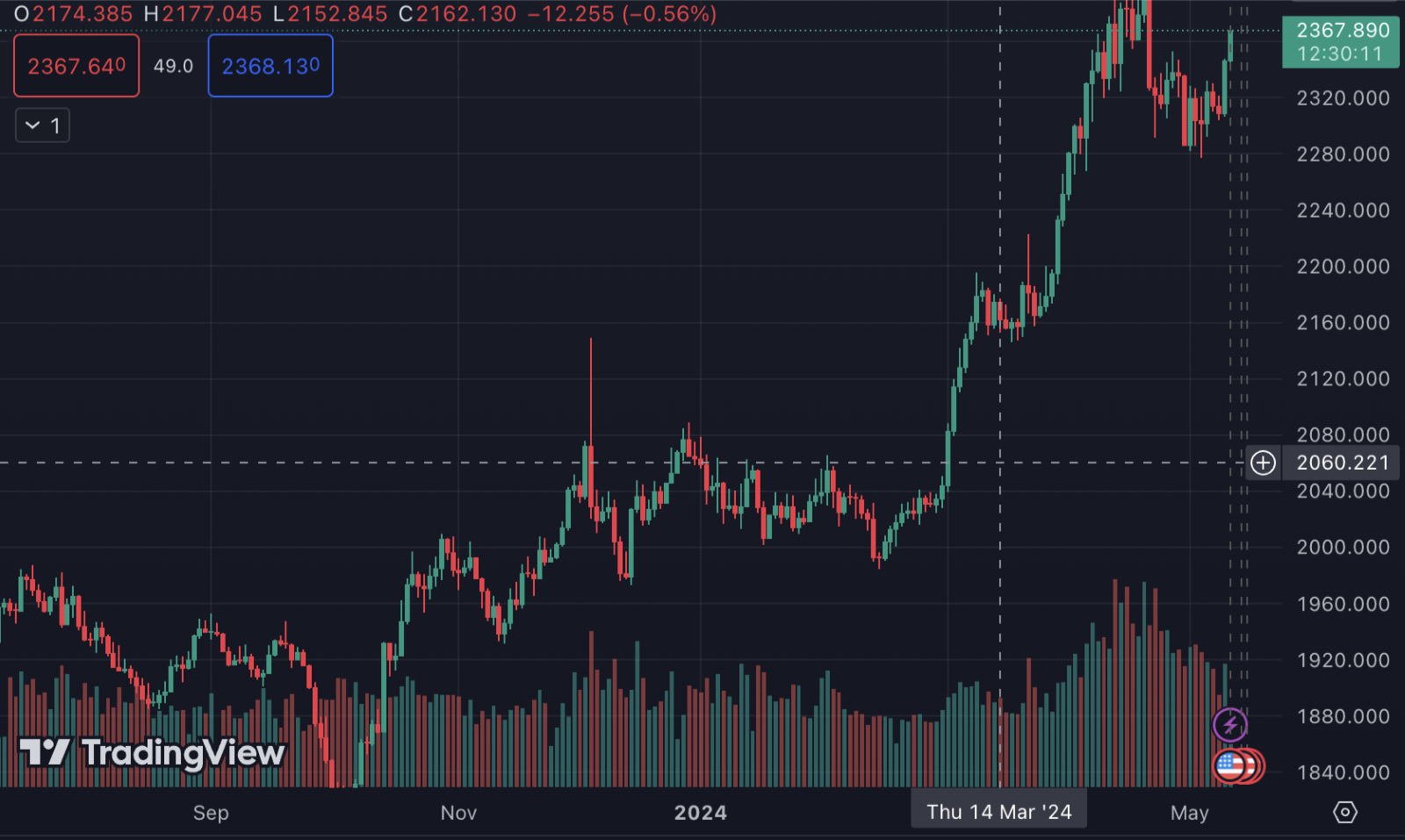
Let’s use a trade in gold (XAUUSD) as example.
If a trader with a balance of $4,120 decided to short one (1) standard lot of XAUUSD at $2,060 with target price of $2,000, he is using a leverage of 1:50. If things moved according to his plan, he would make a profit of $6,000 on this trade alone. That is a whooping 145.63% on his capital of $4,120 – which is impressive!
However, XAUUSD eventually rallied in the opposite direction, past the $2,100 price level. If the same trader set a stop-loss at $2,080, his position would have been closed with a loss of $2,000, which is quite a painful loss of 48.54%.
Now imagine how can he recover such a sum back? Only if he doubles the trades that he subsequently makes with his new balance of $2,080. Ouch.
Pictured: Financial hell
Worse, if no stop-loss was set at all, his entire account would have been wiped out once XAUUSD moves past $2,101.20. This is exactly how over-leveraging kills a forex trading account.
By setting a stop-loss too far away, not adhering to a stop-loss or not using a stop-loss at all, a forex trader is throwing risk management out of the window. However, managing risk is crucial for survival as a degen trader, as one will need to survive through series of trades before striking a big successful transaction.
In the meantime, one single mismanaged trade can wipe out an entire portfolio, sending all previously made profits back into the market. This is why it is essential to strike a balance between risk and rewards.
Is this degen lifestyle as a forex trader really sustainable?
No doubt the market is a place full of high risks and speculation. Although a retail forex trader cannot control the market, what he can control is his own risk management and mental state in avoiding impulsive or reckless decisions.
With strong commitment in learning the markets and good discipline in managing risks, a forex trader will be able to achieve consistency in his trades. From there, the profits piled over time will generate a significant sum, leading to financial freedom envisioned by most.
Trade 1,000+ assets with VT Markets
Embark on your journey as a forex trader with VT Markets now. With 1000+ assets being offered, ECN and STP accounts, forex economy calendar, academy and analysis being made avail to you, there is nothing to stop you from living the lifestyle you desire. As a new client of VT Market, you can also claim welcome bonus on your deposits. So, hesitate no more, start today!
Overview: EUR/USD fails to sustain bullish momentum, GBP/USD pauses after breakout.
Introduction to Contrarian Trading:
Herd mentality can dominate trading, but experienced traders often explore contrarian strategies.
Contrarian trading involves recognizing when the majority sentiment may be incorrect and capitalizing on those opportunities.
Tools like IG client sentiment can identify extreme optimism or pessimism, signaling potential market reversals.
Contrarian signals are most effective when integrated with technical and fundamental analysis.
Gold Market Sentiment:
54.01% of IG clients are net-long on gold, with a buyer-to-seller ratio of 1.17 to 1.
Increase in net-long traders: +8.22% since yesterday, +1.60% from last week.
Decrease in bearish bets: -3.65% since yesterday, +2.22% from last week.
Prevailing bullishness suggests a potential pullback, but mixed positioning trends create uncertainty.
Key Takeaway: Combine contrarian signals with technical and fundamental analysis for comprehensive trading decisions.
Dow Jones 30 Market Sentiment:
75.94% of IG clients are betting on a decline in the Dow Jones 30, with a short-to-long ratio of 3.16 to 1.
Increase in sellers: +9.59% since yesterday, +8.17% from last week.
Decrease in bullish exposure: -6.93% since yesterday, -10.37% from last week.
Overwhelming pessimism may indicate a near-term upside surprise.
Key Takeaway: Use contrarian signals along with other analysis methods to make well-informed trading decisions regarding the Dow Jones.
USD/JPY Market Sentiment:
IG data shows a heavy bearish sentiment on USD/JPY, with a short-to-long ratio of 2.37 to 1.
Decrease in sellers: -0.85% since yesterday, -8.77% from last week.
Increase in bullish positions: +9.28% since yesterday, -4.13% from last week.
High bearish bets suggest potential upside, but recent easing of selling pressure introduces uncertainty.
Key Takeaway: Mixed signals emphasize the need for a comprehensive trading strategy, incorporating sentiment data with price action and fundamental analysis.
STOCK MARKET
Overview:
President Biden retains Trump’s China tariffs and introduces new levies.
New tariffs aim to protect domestic industries, especially semiconductors and green energy.
Biden vs. Trump on Trade:
Both leaders support protectionism but have different approaches and rationales.
Biden focuses on tariffs for Chinese electric vehicles (EVs) and specific industries.
Tariff on Chinese EVs raised to 100%, significantly increasing their cost in the US.
Impact on Chinese Imports:
Tariffs apply only to products shipped directly from China.
Loopholes exist, allowing Chinese companies to bypass tariffs by producing in other countries (e.g., Mexico, Canada).
Industry Concerns:
US auto industry worried about Chinese automakers setting up in Mexico or Canada.
Free trade agreements with these countries complicate direct tariff application.
Political and Legal Challenges:
Biden and Trump have no clear solutions for the loophole issue.
Trump’s proposed tariffs on Chinese cars made in Mexico might face legal hurdles.
Executive action could be challenged in court, with potential long-term litigation.
Legislative Action:
New laws might be needed to address loopholes, but Congress is not ready.
Potential hearings and draft bills expected, but real legislative action likely post-election.
China’s Strategy:
China subsidizes critical industries like EVs and green energy to compete globally.
Chinese companies could leverage government support to offset tariff impacts.
Election Implications:
Trade policy on China is a key issue in swing states with manufacturing bases.
Both Biden and Trump aim to appear tougher on China to win voter support.
Key Takeaways:
Expect ongoing protectionism regardless of election outcome.
Addressing trade policy loopholes will be a significant challenge for either administration.
Political and economic strategies will continue to evolve in response to global trade dynamics.
Tesla tends to dominate the headlines in the EV market, but Chinese EV brands could potentially seize the crown.
After Tesla’s bumpy Q3 2023 earnings report, traders and investors are starting to scout around for alternatives in the EV market to park their money. Tesla expanded their revenue by a mere 9% YoY, while earnings per share finished at an underwhelming $0.66 (-37%).
Meanwhile, China players like BYD, NIO and XPeng have all been racking up significant delivery growth during Q3.
With these big boys in the rearview mirror, Tesla will soon lose grip on the Chinese EV market if it continues to fall asleep behind the wheel, pun intended.
Picture: Graph shows some of Tesla’s key rivals in China’s EV market
It’s been quite a showdown in the electric vehicle world lately. When Tesla dramatically slashed prices to attract more customers, other EV automakers quickly followed suit, plunging into a full-fledged price war.
Just a while back, the cheapest version of Tesla’s Model Y SUV was sitting at nearly $20,000 above the average price of a new car in the US. But fast forward to April…that price gap vanished into thin air.
What does the EV price war mean for the world today?
The dawn of EVs, traditional automakers exposed
Cheaper EVs mean more options—maybe even more people making the switch from fossil fuels to electric. Legacy automakers like Ford and Volkswagen are now struggling to keep up with Tesla’s price cuts so they don’t get left behind. They’re seen ramping up their EV production in the catchup phase.
A battery price war kicks off, lowering manufacturing costs
The main cost of an EV is its battery. The steep price of energy-dense batteries has kept EVs pricier than their fossil fuel counterparts.
But here’s the kicker: China’s leading the pack when it comes to lithium iron phosphate (LFP) batteries. These batteries are cheaper, as they have no cobalt. With the growing demand for lithium, CATL has spent $1.4 billion to build lithium extraction plants in Bolivia, adding to a global rush to secure supplies of the battery material.
And that’s got consumers excited…it could mean more budget-friendly EVs are hitting the streets.
Mixed views on EV transition in the US Presidency
The effort to accelerate the US transition from gas powered automobile to EVs would largely depend on who’s the victor of the US election 2024.
Team Biden: Biden’s strategy includes the boost of EVs with subsidies, new emission standards, infrastructure investments, and tax credits, calling it his big industrial and climate plan. He’s been touring assembly lines and battery plants, exploring the possibilities about creation of new jobs.
Team Trump: Trump and his administration are painting a grim picture, especially in auto-centric Michigan, warning of job losses and touting EVs as too pricey, with infrastructure woes, and are not quite up to the same capabilities compared to their gas-powered peers. Also: Are you obsessed with politics? Election years could be profitable for traders like you.
Why traders think Li Auto overtakes Tesla in the share market
Looking for an alternative to Tesla? Here’s one many are eyeing: Li Auto.
Despite some challenges when its Mega model tanked, Li Auto showcased impressive results when it released its August 2023 delivery update. The cumulative deliveries of vehicles in 2023 reached 208,165 as of the end of August, an increase of 663.8% Y/Y and 2.3% Q/Q, with monthly deliveries for each of the three Li L series models exceeding 10,000 vehicles.
And Li Auto was just warming up… the EV automaker exceeded expectations when it released its unaudited Q3 2023 financial results in November, surpassing forecasts with over 105,000 EV sales and a 271% increase in revenue. These financial highlights and growth plans bolstered investor confidence in Li’s market positioning.
The consistent robust performance makes Li Auto an appealing alternative to Tesla for anyone looking to put their money in this exciting industry. For those confident in Li Auto’s trajectory and seeking to capitalise on its growth, CFD trading with leverage can be a powerful tool to enhance investment returns.
That’s why VT Markets’ share trading offers competitive spreads and provides leverage of up to 20:1, allowing traders to amplify their market exposure.
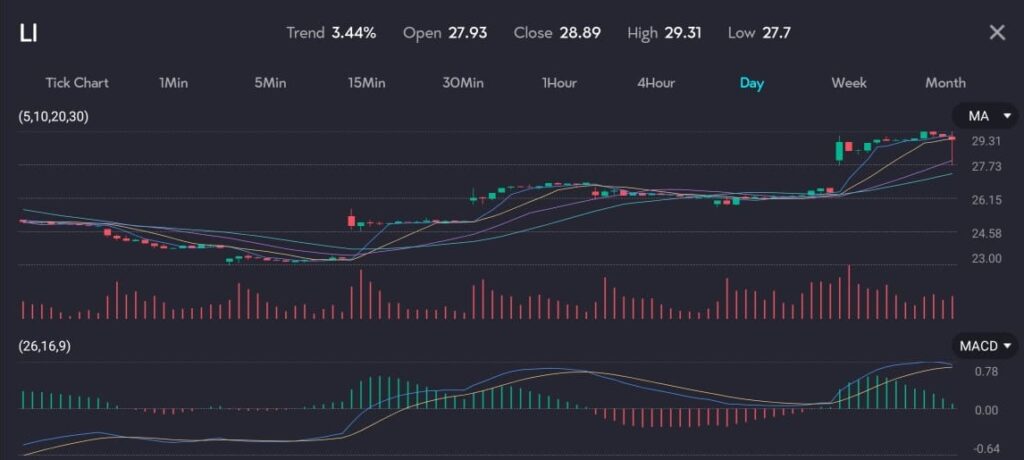
Picture: Li Auto share prices on the rise as seen on VT Markets app.