The Dow Jones Industrial Average saw a modest increase on Thursday, propelled by a surge in Disney’s stock following their post-earnings announcement of a price hike for ad-free Disney+ subscriptions. The market was also buoyed by a key inflation report that revealed slightly lower year-over-year inflation growth than economists had predicted. The blue-chip index gained 52.79 points, or 0.15%, closing at 35,176.15. While all three major indexes had initially climbed more than 1% earlier in the day, the Nasdaq Composite and S&P 500 are projected to conclude the week with slight declines of 1.2% and 0.2%, respectively, while the Dow is set for a 0.3% advance.
The inflation report for July showed an annual consumer price increase of 3.2%, slightly under the 3.3% consensus projected by economists polled by Dow Jones. Despite this moderate figure, the core July CPI reading, which excludes food and energy, marked a substantial increase of 4.7% on an annual basis, well above the Federal Reserve’s targeted 2% inflation rate. Additionally, Disney’s positive earnings announcement drove a 4.9% surge in their stock, making them the top performer in the Dow. Other positive contributors included Wynn Resorts, which advanced 2.6% due to better-than-expected earnings. As earnings season continued, more than 90% of S&P 500 companies had reported their quarterly earnings, with around 80% surpassing Wall Street expectations, according to FactSet data.
On Thursday, the overall market saw a slight uptick of 0.03%. Among the sectors, Communication Services led the gains with a notable increase of 0.43%, followed by Consumer Discretionary at 0.28%, and Materials at 0.09%. Energy, Financials, and Information Technology all saw minor gains of 0.08% and 0.01%, respectively.
However, Health Care experienced a slight decline of -0.04%, while Consumer Staples, Industrials, Real Estate, and Utilities encountered more notable drops, with decreases of -0.20%, -0.28%, -0.31%, and -0.32% respectively.
Major Pair Movement
During the NorAm session, the dollar index initially weakened due to a near-forecast U.S. CPI reading causing a brief drop in Treasury yields, almost touching last Friday’s lows. However, the dollar swiftly rebounded, erasing its losses along with rising Treasury yields. The expected and confirmed 0.2% monthly rise in both all-items and core CPI led to an initial decline in Treasury yields and a temporary weakening of the dollar against the euro and other currencies supported by risk-on sentiment. But the dollar regained strength, propelled by hawkish comments from San Francisco Federal Reserve Bank President Mary Daly and driven by a de-risking event after Treasury yields surged post a lackluster 30-year Treasury auction. This shift favored the dollar, causing EUR/USD to lose its earlier gains, while USD/JPY bounced back from intraday lows toward 2023’s highs.
Meanwhile, sterling’s early gains turned into a 0.3% loss as risk sentiment waned, compounded by concerns about the BoE’s potential economic slowdown following its final rate hikes. EUR/JPY approached a 15-year high due to the BoJ’s unchanged policy rate and steady cap on 10-year JGB yields, which was unaffected by a post-BoJ meeting peak. Amid ongoing worries about China’s hesitant economic recovery and trade conflicts, the Australian dollar shed its earlier gains, and the Chinese yuan (CNH) fell 0.2%.
Picks of the Day Analysis
EUR/USD (4 Hours)
EUR/USD Reverses Gains Amidst US Inflation Data and Stronger Dollar
The EUR/USD initially surged above 1.1050 following US inflation data, but later retreated, erasing its daily gains as the US Dollar gained strength. The pair remained confined within a well-known range, influenced by key moving averages, while the robust US Dollar continued to limit its movement. The US inflation report for July indicated an annual Consumer Price Index (CPI) rate of 3.2%, slightly below the market consensus of 3.3%, with a monthly increase of 0.2%. Despite the rise, the report resembled pre-pandemic levels and did not signal the end of deflationary pressures. The US Dollar strengthened during the American session due to worsening market sentiment and higher US Treasury yields, with the US 10-year yield reaching 4.10%, its highest in three days. The US Dollar Index was on track for its strongest daily close in a month, surpassing 102.50. The report also highlighted an increase in Initial Jobless Claims to 248,000, above the expected 230,000. The upcoming US Producer Price Index data and Europe’s July inflation readings are expected to impact further developments. The EUR/USD’s price action hinges on USD dynamics, with potential weakening tied to improved risk sentiment and ongoing deflation in the US. However, current momentum still indicates Dollar strength.
Based on technical analysis, the EUR/USD created a higher spike as the US CPI data was released lower than expected and reached the upper band of the Bollinger Bands. However, it then moved lower to reach the middle band and is currently experiencing a slight upward movement above the middle band of the Bollinger Bands. The Relative Strength Index (RSI) is currently at 51, indicating that the EUR/USD is in a consolidation phase.
Resistance: 1.1038, 1.1121
Support: 1.0915, 1.0839
XAU/USD (4 Hours)
XAU/USD Prices React to US CPI Release and Dollar Fluctuations
Gold prices experienced selling pressure, hovering around $1,920 after reaching a peak of $1,930.09 post the United States Consumer Price Index (CPI) release. The XAU/USD pair initially rose as China’s eased travel restrictions lifted sentiment and speculative interest shifted away from the US Dollar ahead of the inflation update. The CPI data, in line with expectations, showed a 0.2% monthly increase in July and a 3.2% yearly rise, slightly below the anticipated 3.3%. The core annual reading, at 4.7%, was a slight decline from June’s 4.8%. These figures supported the idea of a prolonged pause in Federal Reserve monetary tightening, leading to a decline in the US Dollar against major counterparts. However, Dollar strength returned later, erasing rivals’ gains influenced by the CPI data. Optimism waned after comments by Federal Reserve Bank of San Francisco President Mary Daly, emphasizing data-dependent rate decisions and noting that the CPI data, though as expected, doesn’t signal victory on inflation.
Based on technical analysis, the XAU/USD witnessed a slight decrease on Thursday following a previous upward movement triggered by the release of the US CPI data. The price managed to reach the middle band of the Bollinger Bands during this movement. At present, the price is retracing lower and is marginally positioned above the lower band of the Bollinger Bands. The Relative Strength Index (RSI) is currently at 37, indicating that the XAU/USD pair is exhibiting a somewhat bearish sentiment.
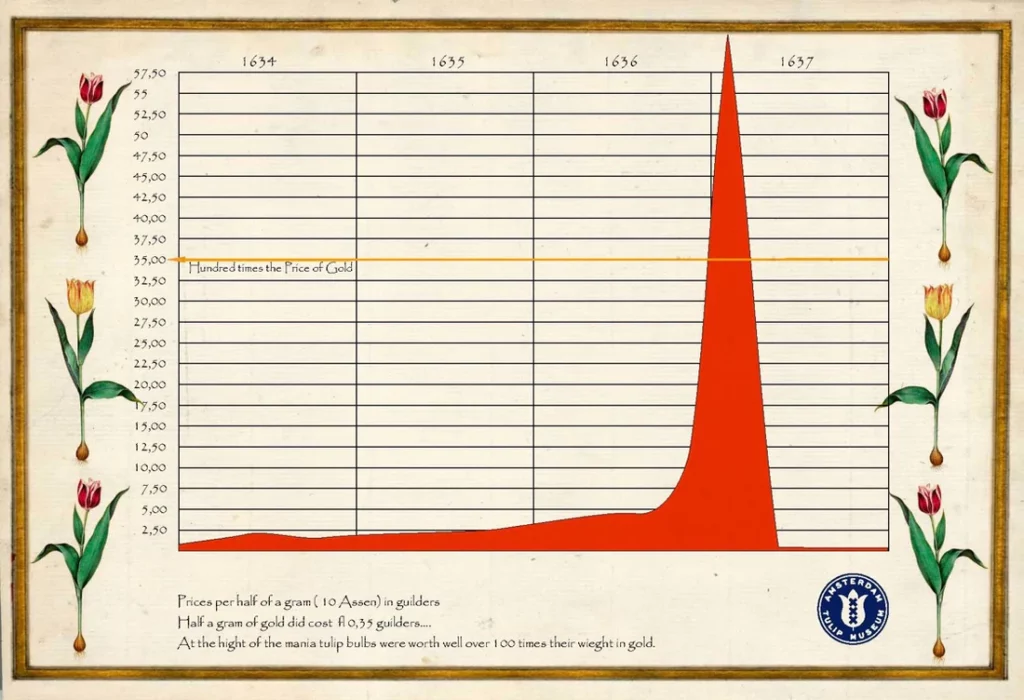
In the 17th-century Dutch Golden Age, a mesmerising phenomenon called “Tulip Mania” took centre stage, forever changing economic history.
Tulips, normally beloved for their beauty, became the focus of an astonishing speculative bubble. Prices soared to unimaginable heights, with a single rare bulb fetching the value of a grand house in Amsterdam.
source: Amsterdam Tulip Museum
Enthusiastic investors rushed into the tulip trade, lured by the promise of untold riches. However, reality intervened, and the bubble burst, leaving many penniless as prices plummeted.
Tulip Mania remains a powerful lesson in speculative trading and the impact of soft commodities on markets and human behaviour. Soft commodities, the backbone of the global economy and vital for human sustenance throughout history, have a longstanding history of trade spanning centuries.
Today, the soft commodities market has evolved into a highly sophisticated arena, surpassing the archaic bartering systems of the past. Its allure lies in the remarkable liquidity and critical significance of these commodities, presenting traders with abundant opportunities to capitalise on profitable ventures in the global markets.
This article aims to provide a comprehensive understanding of soft commodities, elucidating their definition and elucidating the avenues for trading them directly or through financial derivative instruments. Moreover, we will explore the various factors that wield influence over soft commodity prices and delve into effective strategies for managing a diversified portfolio that includes these valuable assets.
Understanding Soft Commodities
Soft commodities refer to natural resources that are cultivated and harnessed for various purposes, including food production, construction, manufacturing consumable goods, and facilitating other human activities.
These products are derived from the earth’s resources but necessitate human effort to be transformed into marketable goods that can be traded. They are commonly referred to as ‘softs’ within the trading industry.
Examples of Soft Commodities
Soft commodities encompass a diverse range of products, originating from various geographical regions worldwide, where optimal conditions favour their production. Despite their distinct origins, these commodities are categorised together due to their indispensable role in human sustenance and their natural composition, which allows for further refining or processing to yield other goods.
Here are some noteworthy examples of soft commodities: Coffee beans, Wheat, Cocoa, Sugar, Rough rice, Palm and kernel oil, Cotton, Hogs, Soybeans, Live cattle, Oats, Corn, Lumber.
Given the global nature of their sourcing, soft commodities are subject to price fluctuations influenced by factors such as weather conditions, disruptions in supply chains, and economic uncertainties. These fluctuations create ample opportunities for traders to speculate on the short and long-term movements of their prices.
What Are Hard Commodities?
To grasp the concept of commodities comprehensively, it is essential to distinguish between hard and soft commodities.
Unlike soft commodities that require cultivation and human intervention, hard commodities are directly extracted or mined from the earth and used in their raw, unprocessed state.
These commodities consist of finite natural resources, including crude oil, natural gas, as well as renewable energies such as solar, hydro, wind, and geothermal power.
Factors Influencing Soft Commodities Prices
The price of soft commodities is subject to the influence of various natural and human-related elements. Some key factors include:
Weather Conditions: Weather plays a crucial role in determining soft commodity prices. Favourable weather is essential for achieving expected harvests and yields to meet supply demands. Conversely, excessively favourable conditions can lead to an oversupply, causing a significant drop in prices.
Consumer Demand: Changes in consumer preferences can impact the popularity of specific soft commodities, affecting their prices. For instance, a rise in foodie culture and increased awareness of different cocoa bean types and flavour profiles can influence cocoa prices.
Political Instability: Political unrest and the threat of conflicts can disrupt soft commodity production and trading, leading to fluctuations in prices. For example, the recent war in Ukraine impacted wheat prices.
source: Financial Times
Supply Chain Disruptions: Issues such as increased transport costs, instability in developing nations, and other supply chain challenges can cause scarcity of soft commodities in the market, driving prices up.
Climate Change: Soft commodities cultivated on land are susceptible to climate change-related problems, such as poor soil quality, natural disasters, changing climate zones, floods, or droughts, impacting prices.
Labor Issues: Labor-related problems in supply countries can significantly influence soft commodity prices. Changes in wages due to new legislation can have a direct effect on the cost of raw materials.
Government Regulations: National governments may impose quotas on commodity production for specific markets. Such regulations or sanctions can disrupt supply and affect prices in other regions.
Seasonality: Soft commodities are influenced by seasonal cycles in their harvesting regions, causing prices to fluctuate accordingly.
Global Development: Rapidly developing regions experiencing population growth create new markets with increasing demands for soft commodities, leading to long-term shifts in supply and demand dynamics.
Exploring the Advantages of Soft Commodity Trading
The soft commodity market presents compelling opportunities for traders worldwide due to the indispensable nature of these commodities in meeting human needs. The market’s inherent unpredictability and vulnerability to various forces offer both heightened risks and substantial rewards.
While not every trader seeks to embrace such risks, those who thrive on navigating volatile markets can capitalise on lucrative prospects through soft commodity trading.
In today’s sophisticated trading landscape, much of the soft commodities trade occurs through futures markets rather than immediate spot transactions. Futures entail binding contracts that establish fixed prices for soft commodities to be executed on a future date, mutually agreed upon by the buyer and seller.
Initially devised to aid farmers and the agricultural industry in securing favourable prices during off-peak periods, futures have evolved into an integral part of a complex trading ecosystem.
Although futures contracts involve eventual asset delivery, many traders opt to offset futures before the delivery date, leveraging the instrument to speculate on anticipated price movements rather than the intrinsic value of the underlying asset itself. This strategic approach enables traders to engage in dynamic and forward-looking soft commodity trading practices.
Navigating Soft Commodity Trading: Strategies and Risk Management
Soft commodity trading via futures involves significant risk and requires careful consideration of leverage. Futures contracts enable traders to invest only a percentage of the asset’s full value, yet profits and losses are calculated based on the total price.
Successful predictions can yield magnified profits when offsetting soft commodity futures. However, sudden unpredictable factors may cause price fluctuations, potentially leading to losses surpassing the initial investment.
To mitigate risk, implementing robust risk management strategies is paramount before commencing soft commodity trading. Utilising tools like stop-loss orders can automatically close positions once they reach an unaffordable level, safeguarding against excessive losses.
Additionally, deciding whether to go long or short while trading soft commodities is crucial in formulating an effective strategy.
To gain practical experience, traders can begin with a demo account before transitioning to real trading with a live trading account. VT Markets simplifies this process by providing access to over a thousand financial instruments within an institutional-grade environment.
It’s important to recognise that each soft commodity possesses unique characteristics, including production methods, supply sources, vulnerabilities, and consumer behaviour. For those interested in specific commodities like coffee, comprehensive guides focusing on these particular markets are available to enhance understanding and proficiency.
In conclusion, soft commodity trading offers a rich history and exciting opportunities. From the historic “Tulip Mania” to today’s sophisticated futures markets, these commodities have a significant impact on global economies.
Traders must navigate risks and employ strategies for successful trading. With diverse soft commodities and their unique market influences, there are abundant chances to capitalise on global dynamics. Embrace the allure of soft commodities, learn from history, and explore the complexities of modern trading. Join this exciting journey and seize remarkable opportunities.
Summary:
Soft commodities have a rich history, including the famous “Tulip Mania” in the 17th-century Dutch Golden Age.
The modern soft commodities market offers diverse opportunities for traders to capitalise on price fluctuations.
Soft commodities are natural resources cultivated and utilised for various human needs, such as food production and manufacturing, requiring human effort to become marketable goods.
Soft commodities encompass a diverse range of products originating from various geographical regions worldwide, such as coffee beans, wheat, cocoa, sugar, palm oil, cotton, soybeans, and more.
Understanding factors influencing soft commodity prices is crucial, including weather, consumer demand, political instability, and more.
On Wednesday, the stock market witnessed a downward shift as investors braced themselves for upcoming inflation data and evaluated a series of diverse earnings reports. The Dow Jones Industrial Average concluded the trading session with a loss of 0.54%, shedding 191.13 points to reach a closing figure of 35,123.36. Similarly, the S&P 500 registered a decline of 0.7%, settling at 4,467.71, while the Nasdaq Composite faced a 1.17% dip, concluding at 13,722.02.
As the market eagerly awaits the imminent release of the U.S. inflation report, all eyes are on the consumer price index data for July, scheduled for unveiling on Thursday. This data holds a critical role as it provides vital insights into potential adjustments in the Federal Reserve’s interest rate strategy. Economists, surveyed by Dow Jones, have projected a 3.3% increase in the inflation gauge for July, prompting market participants to meticulously assess its implications. Meanwhile, in parallel, the corporate landscape is being shaped by a wave of earnings reports, with Disney and Wynn Resorts poised to disclose their quarterly results. Against this backdrop, a sense of cautious prudence pervades the investor sentiment, as they navigate the intricate interplay between economic indicators and the outcomes of corporate performances.
On Wednesday, across all sectors, the market experienced a decrease of 0.70%. However, there were some sectors that saw gains: Energy increased by 1.22%, Real Estate by 0.20%, Utilities by 0.17%, and Consumer Staples by 0.13%. On the other hand, several sectors faced declines: Health Care decreased by 0.05%, Industrials by 0.09%, Materials by 0.47%, Financials by 0.78%, Consumer Discretionary by 1.20%, Communication Services by 1.24%, and Information Technology by 1.51%.
Major Pair Movement
The dollar index remained below Tuesday’s risk-off highs as U.S. bank stocks continued to decline following Moody’s downgrade, while Italian bank stocks rebounded due to a capped windfall tax. While European markets regained some ground, U.S. stocks, led by banks, experienced a decline, and yield spreads between bunds and Treasuries increased. The rebound in the yuan from recent lows was attributed to the prospect of China’s first deflation reading in 2 years prompting stronger government stimulus, though the extent of this remains uncertain.
Market focus now turns to the upcoming U.S. Consumer Price Index (CPI) report on Thursday, which will either confirm or challenge prevailing expectations of the Federal Reserve’s future rate actions. The dollar has nearly recouped its losses triggered by weaker June data, and July’s CPI is expected to provide clearer insights into inflation trends and the Fed’s stance. In currency movements, EUR/USD rose, and USD/CNH fell, while sterling declined, USD/JPY rose, and AUD/USD fell due to global derisking. Key points of interest include the status of EUR/USD above its support level, the surge in Dutch gas prices potentially boosting the dollar, sterling breaching its 55-day moving average amid concerns about UK inflation, and USD/JPY’s attempt to surpass previous peaks, with CPI data potentially playing a role. Additionally, the near real-time indicator of labor demand provided by initial jobless claims will be observed on Thursday.
Picks of the Day Analysis
EUR/USD (4 Hours)
EUR/USD Gains Momentum Ahead of Key US Inflation Data
The EUR/USD rose as the Euro demonstrated strength and market focus turned to impending US inflation data. While the currency pair currently lacks a distinct trend, the upcoming US figures could spark notable movement.
Boosted by Italy’s decision to partially reverse a banking sector windfall tax, the Euro outperformed other G10 currencies on Wednesday. Market attention now shifts to the European Central Bank’s economic bulletin and Italy’s final July inflation reading. Anticipation surrounds the release of the US July Consumer Price Index, projected at 3.3%, and the weekly Jobless Claims report. These releases could significantly impact the EUR/USD pair’s trajectory, taking into account both the data itself and its context within recent consolidation.
Based on technical analysis, the EUR/USD remained steady on Wednesday as the market awaited upcoming US inflation data for the week, specifically CPI and PPI, while also attempting to move toward the middle band of the Bollinger Bands. Right now, the price is slightly below the middle band, creating a small gap between the upper and lower bands of the Bollinger Bands. The Relative Strength Index (RSI) is currently at 47, showing that the EUR/USD is in a phase of consolidation.
Resistance: 1.1038, 1.1121
Support: 1.0915, 1.0839
XAU/USD (4 Hours)
XAU/USD Prices Drop as US Dollar Gains Amid Economic Uncertainty
Gold prices fell to a one-month low of around $1,917 per troy ounce during the American session. The US Dollar initially weakened but later stabilized, particularly against safe-haven currencies. Market uncertainty prevails due to economic concerns and central bank policies, with expectations for potential rate hikes lingering despite recent pauses. The US focus remains on a tightening labor market and the upcoming release of the July Consumer Price Index, which could impact the Federal Reserve’s future rate decisions.
Based to technical analysis, the XAU/USD experienced a minor decrease on Wednesday, managing to touch the lower band of the Bollinger Bands. Currently, the price is slightly above the lower band of the Bollinger Bands. The Relative Strength Index (RSI) stands at 33, suggesting that the XAU/USD pair is somewhat in a bearish mode.
Stocks experienced a renewed downward trend on Tuesday, triggered by a credit rating downgrade of the banking sector from Moody’s in the midst of an August selloff. The Dow Jones Industrial Average closed with a loss of 158.64 points, or 0.45%, settling at 35,314.49, while the S&P 500 ended down 0.42% at 4,499.38, reflecting a month-to-date decline of nearly 2%. The Nasdaq Composite also retreated by 0.79% to 13,884.32, deepening its August loss to 3.2%. This marked the fifth negative day in six sessions for both the S&P 500 and the Nasdaq, with neither index breaking into positive territory despite recovering from session lows.
Moody’s credit rating downgrade had a pronounced impact on the banking sector, causing a broad decline. Regional banks like M&T Bank and Pinnacle Financial faced credit rating reductions due to concerns about deposit risk, potential recession, and challenges in commercial real estate portfolios. Bank of N.Y. Mellon and State Street were placed under review for potential downgrades as well. Consequently, banking giants Goldman Sachs and JPMorgan Chase saw declines of around 2.1% and 0.6%, respectively, while the SPDR S&P Bank ETF (KBE) dropped by 1.3%. The SPDR S&P Regional Banking ETF (KRE) also lost 1.3%, with a notable history of decline due to previous events such as the failure of Silicon Valley Bank. The downgrade emphasized the crucial importance of strong credit ratings for regional banks, as any loss of faith in the sector negatively impacts market sentiment. Amid these developments, UPS reported weaker-than-expected revenue for Q2, leading to a 0.9% drop in its shares. Despite the generally positive corporate earnings season, where a majority of S&P 500 companies exceeded expectations, the market appeared to have already priced in these results, contributing to the ongoing pullback.
On Tuesday, most sectors experienced a decline, with the overall market decreasing by 0.42%. Health Care and Utilities, however, showed gains, rising by 0.78% and 0.49% respectively. Energy also saw a similar increase of 0.49%. Communication Services and Real Estate sectors faced slight decreases of 0.23% and 0.45% respectively. Industrials, Consumer Staples, Information Technology, and Consumer Discretionary sectors all declined, ranging from -0.46% to -0.87%. Financials and Materials were the hardest hit, both decreasing by 0.87% and 1.05% respectively.
Major Pair Movement
The dollar index exhibited a 0.54% increase on Tuesday, primarily driven by safe-haven demand, which overshadowed even larger gains against currencies sensitive to risk due to recent events. The euro faced additional downward pressure due to its significant reliance on Chinese demand, worsened by recent data. The European Central Bank’s (ECB) struggle to fully address inflation, with both overall and core euro zone inflation remaining above 5%, has led to market uncertainty regarding another ECB interest rate hike to reach 4%. Meanwhile, the U.S. Federal Reserve’s (Fed) July rate hike to 5.5% is perceived as its final move before future rate cuts.
In the U.S., both overall and core Consumer Price Index (CPI) stood at 3% and 4.8% in June, with forecasts projecting an increase to 3.3% and 4.8% for July. Despite the upcoming shift in the base effect, which will transition from depressing year-over-year comparisons to elevating them, the monthly increase for July is expected to remain steady at a modest 0.2%. In comparison, the Fed appears to be more advanced in its efforts to combat inflation, while the U.S. economy is displaying greater resilience compared to the euro zone. While the possibility of a soft landing for the U.S. economy is still uncertain, the likelihood of a harder landing for the euro zone seems more plausible.
The EUR/USD currency pair experienced a 0.43% decline, yet found support at 1.0930 lows, coinciding with the 55-day moving average and mirroring last week’s lows. Despite an approximately 8 basis points decline in the two-year bund-Treasury yield spreads, they did not reach their previous lows from August. The adjustment in Treasury yields, in part driven by preparation for a three-day Treasury refunding and influenced by recent auction outcomes, was followed by a subsequent decrease in yields after a strong 3-year auction. The USD/JPY pair saw a 0.57% increase, as the demand for the higher-yielding dollar overpowered the safe-haven appeal of the yen, particularly following certain developments. Furthermore, both the Australian dollar (AUD) and the Chinese yuan (CNH) experienced declines of 0.59% and 0.45% respectively, with USD/CNH surpassing a crucial downtrend line, while concerns about China and global economic growth led to significant losses in industrial metals. The focus is now shifting towards upcoming U.S. Consumer Price Index (CPI) and Producer Price Index (PPI) reports scheduled for Thursday and Friday.
Picks of the Day Analysis
EUR/USD (4 Hours)
EUR/USD Resilient Amid Strong Dollar and Economic Factors
The EUR/USD pair faced losses on Tuesday due to a robust US Dollar and rising risk aversion, yet managed to remain above a vital support level. Italy’s surprise announcement of a bank profits windfall tax caused the Italian stock index to plummet over 2%, while Wall Street indices also dipped following Moody’s downgrade of US banks. The European Central Bank’s June survey indicated decreased inflation expectations, affecting market views on rate hikes. Meanwhile, the US Dollar gained strength amidst risk aversion and mixed messages from Federal Reserve officials. The focus now shifts to Thursday’s influential US Consumer Price Index (CPI) report.
Based on technical analysis, the EUR/USD remained steady on Tuesday as the market awaited upcoming US inflation data for the week, specifically CPI and PPI, while also attempting to move toward the middle band of the Bollinger Bands. Right now, the price is slightly below the middle band, creating a small gap between the upper and lower bands of the Bollinger Bands. The Relative Strength Index (RSI) is currently at 46, showing that the EUR/USD is in a phase of consolidation.
Resistance: 1.1038, 1.1121
Support: 1.0915, 1.0839
XAU/USD (4 Hours)
XAU/USD Hits Four-Week Low as US Dollar Strengthens Amid Fed Remarks and Economic Uncertainty
During the early American trading session, XAU/USD plummeted to a new four-week low at $1,922.74 per troy ounce. This drop was fueled by a surge in demand for the US Dollar following comments from Federal Reserve officials and in anticipation of the upcoming release of the US July Consumer Price Index.
Philadelphia Federal Reserve Bank President Patrick Harker’s statements highlighted a move toward normalcy in economic conditions. Despite optimism for a smooth economic transition, concerns persisted over supply chain issues. Harker also suggested the possibility of the Fed exercising patience with interest rates, depending on future data, including the pivotal decision in September. Despite global stock declines and worries about economic uncertainty, gold’s price decline persisted. However, a slight pullback in Treasury yields prevented a more significant appreciation of the US Dollar.
Based to technical analysis, the XAU/USD experienced a minor decrease on Tuesday, managing to touch the lower band of the Bollinger Bands. Currently, the price is slightly below the middle band within the Bollinger Bands. The Relative Strength Index (RSI) stands at 40, suggesting that the XAU/USD pair is somewhat in a bearish mode.
In ancient Japan, there was a brilliant rice trader named Munehisa Homma. He had a unique talent for predicting future price movements in the rice markets. How did he do it? Well, he closely observed market prices and studied the emotions of fear and greed among traders. This keen observation led him to create something groundbreaking – the candlestick chart.
Homma’s candlestick chart displayed the open, high, low, and close prices over specific time periods, giving traders a visual representation of price movements. This innovation caught on quickly and spread throughout Japan, revolutionising trading.
Fast forward to the late 19th century when Charles Dow, a co-founder of Dow Jones & Company and the Wall Street Journal, encountered Japanese candlestick charting. Impressed by its potential, he brought it to the Western world, where it further evolved.
Over time, Technical Analysis, as it came to be known, saw the addition of the Elliott Wave Theory and benefited greatly from advancements in technology. Traders gained access to sophisticated charting software and a wide range of technical indicators.
Today, Technical Analysis remains a favoured approach in Forex trading. It allows traders to make informed decisions based on data-driven insights, empowering them to navigate the dynamic and ever-changing markets with confidence.
Understanding Technical Analysis
Imagine being a detective, deciphering hidden clues in the financial market to predict its next move. That’s precisely what Technical Analysis does for traders! It’s a fascinating discipline that involves diving into historical market data, with a keen focus on price charts and trading volumes. But wait, there’s more!
While Fundamental Analysis looks at economic indicators and financial reports, Technical Analysis takes a different route. It operates on the belief that everything you need to know about an asset is already encoded in its price. It’s like the market’s secret language waiting to be decoded.
Traders who wield Technical Analysis skills study the past price patterns, seeking clues and hints about the future. They are the Sherlock Holmes of the trading world, spotting trends and potential trade opportunities with precision.
Through this powerful analytical approach, traders get a glimpse into the market’s underlying sentiment. They understand when it’s giddy with optimism, paralysed by fear, or in the grip of uncertainty. Armed with these insights, they make informed decisions about the perfect moment to enter or exit trades.
So, why does this matter so much? In the fast-paced world of Forex trading, timing is everything. Technical Analysis gives traders the edge they need to navigate through the turbulence of the market, making well-timed moves and staying ahead of the game. It’s no wonder Technical Analysis is a favourite among traders who love the thrill of decoding the market’s mysteries and reaping rewards from their astute predictions.
Basic Concepts of Technical Analysis
To navigate the dynamic world of financial markets effectively, traders must grasp the foundational concepts of Technical Analysis. These core principles provide a deeper understanding of market dynamics and empower traders to make well-informed decisions.
Price Charts
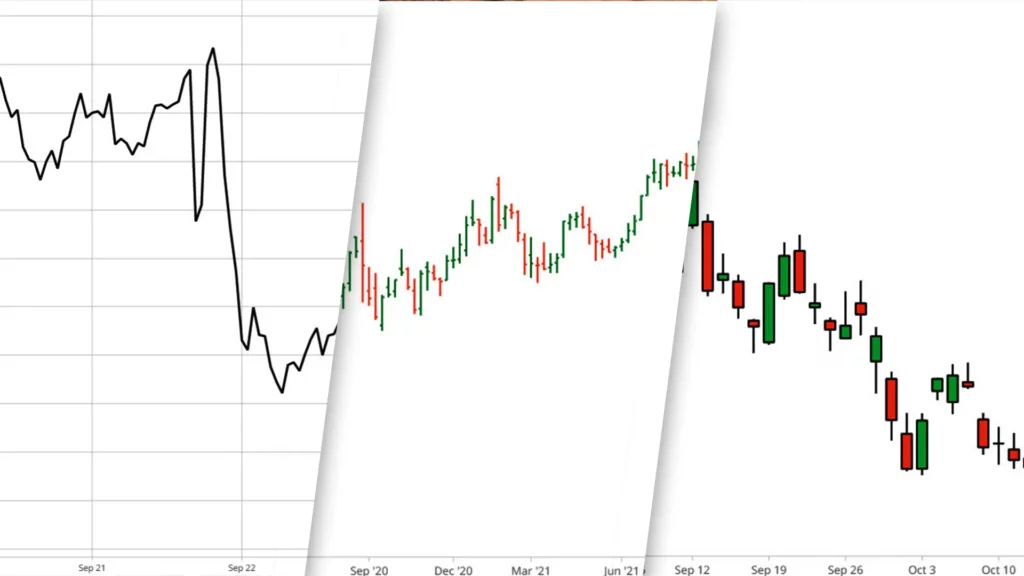
Price charts serve as the bedrock of Technical Analysis, offering a visual representation of historical price movements of currency pairs over specific timeframes. Among the commonly used charts are candlestick and line charts.
Candlestick charts present a wealth of information, revealing open, high, low, and close prices within a designated timeframe. On the other hand, line charts provide a simplified view, showcasing only the closing prices. Understanding these charts enables traders to spot patterns, trends, and potential turning points in the market.
source: Britannica Money
Timeframes
Mastering different timeframes is essential for traders to adapt their strategies to various market conditions.
Timeframes vary from ultra-short periods, such as seconds or minutes, favoured by intraday traders seeking rapid profit opportunities, to longer-term perspectives like daily or weekly, preferred by investors aiming to capture substantial trends.
Analysing price action across multiple timeframes offers a comprehensive view of market behaviour, facilitating well-timed entries and exits.
Support and Resistance
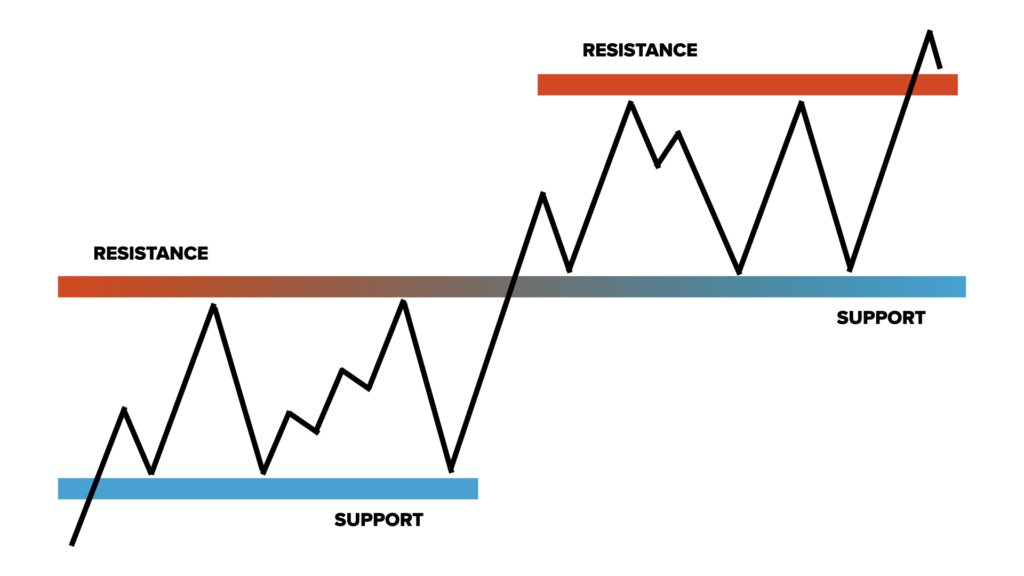
The concepts of support and resistance levels are invaluable tools for traders seeking to identify crucial price levels in the market.
Support refers to price zones where demand is strong enough to halt a downtrend, acting as a price floor. Conversely, resistance denotes areas where supply is abundant enough to prevent an uptrend from continuing, creating a price ceiling.
Recognising these levels empowers traders to make strategic decisions, such as placing stop-loss and take-profit orders and enables them to anticipate potential trend reversals.
Trend Lines
Trend lines are powerful aids in understanding market direction and momentum. By drawing straight lines connecting consecutive peaks or troughs on a price chart, traders gain insights into the prevailing trend – whether it is upward, downward, or sideways.
Trend lines help traders identify key support and resistance levels, confirm trend strength, and anticipate potential breakout or reversal points. Understanding trend lines enhances traders’ ability to ride trends and capitalise on market opportunities.
Basic Chart Patterns
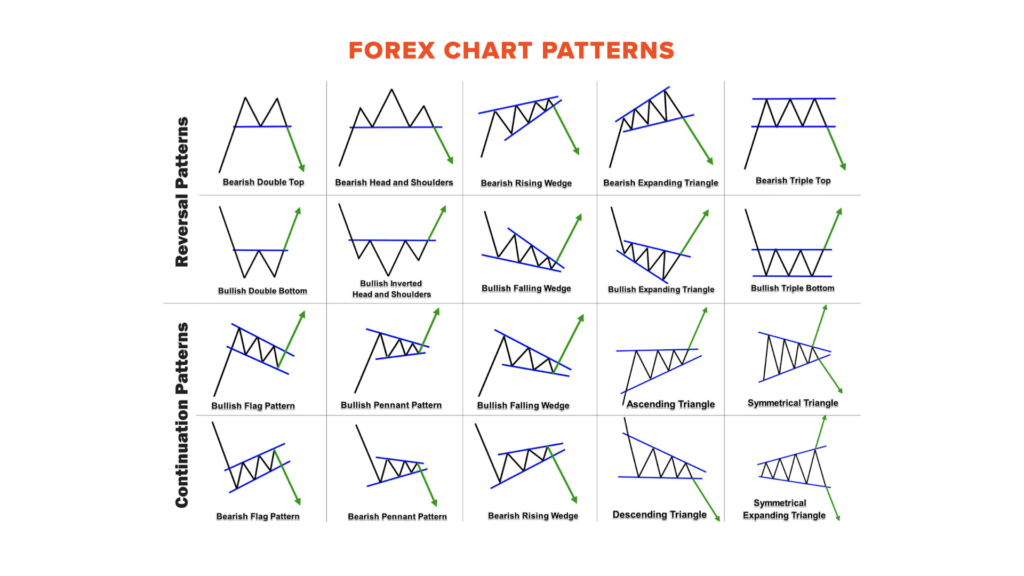
In Technical Analysis, chart patterns play a significant role in providing insights into potential market reversals or continuations. These patterns are recognised for their ability to signal shifts in market sentiment. Let’s explore some common chart patterns that traders frequently encounter:
Technical Analysis encompasses a variety of chart patterns, each carrying its own unique implications. Some well-known patterns include the Head and Shoulders, Double Tops, Double Bottoms, and Triangles. Understanding these patterns can help traders anticipate potential changes in market direction and identify trading opportunities.
The key to effective trading lies in accurately identifying chart patterns. Each pattern provides important information about the balance between buyers and sellers. By mastering pattern recognition, traders can gain insights into potential price targets and develop informed trading strategies.
Moreover, chart patterns are often accompanied by volume trends, which can serve as additional confirmation of their validity. Volume, reflecting the number of shares or contracts traded in a given period, can complement pattern analysis and help assess the strength of signals. Integrating both chart patterns and volume analysis empowers traders to make well-considered decisions when executing trades.
Technical Indicators
Technical indicators are mathematical calculations derived from price, volume, or open interest data. Their primary purpose is to aid traders in confirming trends, measuring momentum, and identifying potential buy or sell signals.
source: Britannica Money
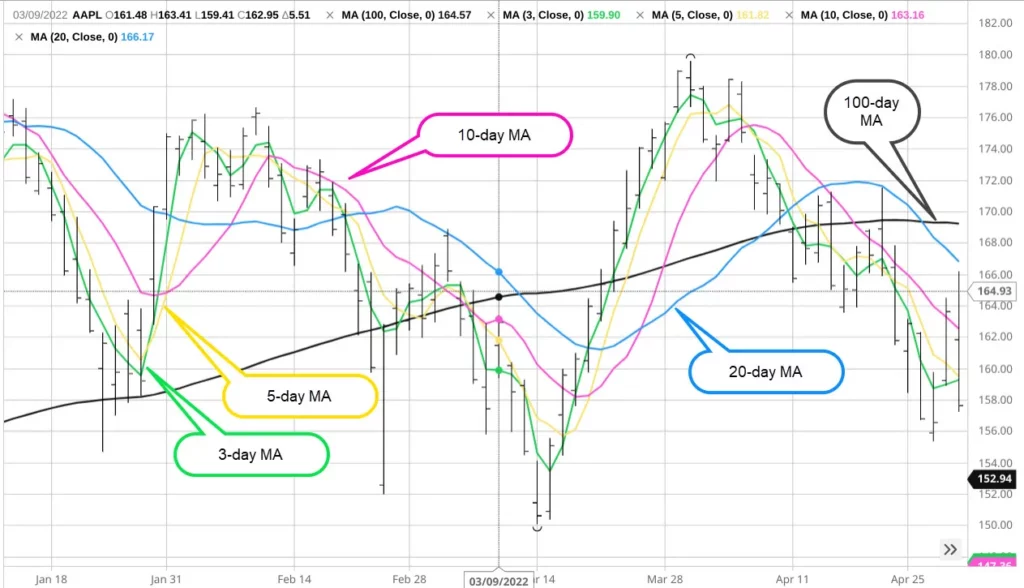
There is an array of technical indicators available to traders, each serving a unique purpose. Moving Averages help smooth out price data and indicate trend direction. The Relative Strength Index (RSI) measures overbought or oversold conditions, while the Moving Average Convergence Divergence (MACD) highlights changes in a trend’s strength and direction.
Interpreting indicators involves analysing their values in conjunction with price patterns and other relevant market factors. Divergence between an indicator and price movement can also provide valuable insights into potential shifts in market sentiment.
Pros & Cons of Technical Analysis
Mastering the art of trading involves understanding the strengths and limitations of various analytical approaches. Technical Analysis, a popular method used by traders worldwide, offers its fair share of advantages and drawbacks.
Pros:
Accessibility: Technical Analysis is renowned for its accessibility, catering to traders of all experience levels. With a wealth of educational resources available, beginners can quickly grasp its concepts and apply them to their trading endeavours.
Visual Representation: Price charts and technical indicators act as valuable visual aids, providing traders with an intuitive representation of market trends and patterns. The visual nature of Technical Analysis simplifies data interpretation and supports informed decision-making.
Wide Range of Indicators: The diverse selection of technical indicators empowers traders to customise their analyses to adapt to various market conditions and trading styles. This flexibility allows for a more personalised and adaptable approach to trading.
Cons:
Subjectivity: Technical Analysis entails interpreting patterns and indicators, making it susceptible to subjectivity. Different traders may draw varying conclusions from the same data, leading to a degree of interpretation variance.
Historical Based: Technical Analysis primarily relies on historical price data, which may not fully account for unforeseen events or sudden shifts in market sentiment. As a result, abrupt market changes can challenge the accuracy of technical predictions.
Limited Scope: Relying solely on Technical Analysis might overlook crucial fundamental factors that significantly influence currency movements. Neglecting these fundamental aspects can lead to incomplete market analyses and trading decisions.
Tips for Using Technical Analysis in Forex Trading
To leverage Technical Analysis in the Forex market effectively, follow these key tips:
Master the Basics: Understand key concepts like price charts, trend lines, and support/resistance levels.
Combine Indicators: Use a mix of indicators and chart patterns for stronger analysis.
Choose Timeframes Wisely: Select the right timeframe that suits your trading style.
Be Patient and Disciplined: Avoid impulsive decisions and wait for clear signals.
Implement Risk Management: Set stop-loss and take-profit orders to protect your capital.
Stay Informed: Keep an eye on market news and events that may impact your analysis.
Backtest Strategies: Test your strategies on historical data before live trading.
Avoid Overtrading: Stick to your trading plan and avoid excessive trades.
Maintain a Trading Journal: Record your trades and learn from your experiences.
Keep Learning: Stay updated with new developments in Technical Analysis and Forex trading.
In conclusion, Technical Analysis is an invaluable tool in the world of Forex trading, empowering traders with insights into market trends and potential trading opportunities. By mastering basic concepts, recognising chart patterns, and effectively using technical indicators, traders can make more informed decisions. However, it is crucial to combine Technical Analysis with other analytical methods and apply sound risk management practices to navigate the complexities of Forex trading successfully.
Summary:
Technical Analysis decodes the market’s language using historical data and price charts.
Core concepts include price charts, timeframes, support/resistance, trend lines, and chart patterns.
Technical indicators confirm trends and identify buy/sell signals.
Technical Analysis offers pros such as accessibility, visual representation, and a wide range of indicators, but it has cons like subjectivity, reliance on historical data, and limited scope.
Combining Technical Analysis with other methods and risk management enhances trading success.
The Dow Jones Industrial Average commenced the week with a robust surge of 1.16%, gaining 407.51 points to conclude at 35,473.13, marking its most substantial upswing since June 15. Buoyed by a nearly 4% rally from Amgen, the blue-chip index received a notable boost. In tandem, the S&P 500 climbed by 0.9% to settle at 4,518.44, while the Nasdaq Composite posted a more modest 0.61% increase, curtailed by a near 1% dip in Tesla shares following the departure of CFO Zach Kirkhorn. Both the Nasdaq and S&P 500 managed to break their four-day losing streaks.
Berkshire Hathaway exhibited a remarkable ascent of over 3%, reflecting investor contentment with the company’s financial results and robust cash reserves. Notably, shares of both A and B share classes reached unprecedented levels. Elanco, a player in the animal healthcare sector, surged by 4% after surpassing Wall Street expectations, whereas Tyson Foods faltered by 3.8% on the back of a less-than-anticipated report. In another significant development, Sovos Brands, recognized for Rao’s, witnessed a remarkable surge of more than 25% after Campbell Soup’s announcement of its acquisition of the pasta sauce manufacturer. While Campbell Soup’s shares slipped by approximately 1.8%, they settled at their lowest price in over a year. Following a challenging week on Wall Street, marked by a 2.9% slide in the Nasdaq Composite and a 2.3% dip in the S&P 500, the market rebounded with renewed vigor.
This resurgence was attributed to a stronger-than-expected corporate earnings season, with around 80% of S&P 500 companies surpassing Wall Street forecasts. According to Chris Zaccarelli, Chief Investment Officer of the Independent Advisor Alliance, the market has regained a “risk-on mode” due to the favorable earnings trend. Looking ahead, investors are poised to focus on the impending release of consumer and producer price index data for July, as these indicators hold crucial implications for inflation trends and economic well-being.
On Monday, across all sectors, the market showed a notable uptick of 0.90%. Particularly strong gains were observed in the Communication Services sector, which surged by 1.88%, followed closely by Financials with a rise of 1.36%, and Industrials, which advanced by 1.26%. Real Estate also exhibited a solid increase of 1.21%, while the Health Care sector saw a rise of 1.18%. Noteworthy gains were recorded in the Consumer Discretionary sector, which climbed by 1.10%, and the Consumer Staples sector, which experienced a respectable growth of 0.85%. Materials exhibited a modest uptrend of 0.70%. However, the Information Technology sector displayed a more subdued increase of 0.27%, and the Energy sector had a marginal rise of 0.15%. In contrast, the Utilities sector showed a slight decline of -0.02% during the same trading period.
Major Pair Movement
The dollar index initially rebounded on Monday from the previous slide triggered by Friday’s jobs report, yet it remained relatively unchanged as shorter-term Treasury yields decreased. The upcoming U.S. inflation report on Thursday could potentially affirm the belief that the Federal Reserve’s tightening cycle has concluded, increasing the likelihood of rate cuts in 2024. The recent jobs report offered conflicting signals regarding the labor market’s condition and the necessity for further Fed tightening, contributing to market uncertainty. While the labor market is gradually loosening, the exact timing of a significant shift and subsequent Fed rate cuts remains uncertain, especially considering the economy’s resilience despite substantial rate hikes by the Fed.
Market confusion persists over the necessity of tight policy, irrespective of the labor market’s status, particularly if inflation continues its trajectory towards the Fed’s target. Monday saw contrasting policy outlooks from Fed officials Bowman and Williams, hinting at a potential pause by the Fed until clearer indications emerge for a more or less restrictive approach. The impending Consumer Price Index (CPI) release on Thursday could play a pivotal role in resolving this policy divergence. In the currency markets, EUR/USD dipped slightly by 0.05%, unable to surpass Friday’s initial post-payrolls highs. The European Central Bank’s assessment of peaking underlying inflation and concerns over economic growth, amplified by Chinese economic uncertainties, could impact the probability of another ECB rate hike. USD/JPY, on the other hand, rose by 0.5% as buyers entered the market above 141.50 following post-payrolls lows. Despite the Bank of Japan’s hopeful stance on rising wages, low Japanese Government Bond yields continue to contrast with higher U.S. Treasury yields. Sterling managed to gain 0.3% after a hesitant start, supported by a rise in 2-year gilts-Treasury yields spreads and the maintenance of essential support levels following the Bank of England’s recent rate hike.
Picks of the Day Analysis
EUR/USD (4 Hours)
EUR/USD Rises Amid Weaker Dollar and Market Focus on US Inflation Data
The EUR/USD pair rebounded to 1.1000 during the American session, propelled by a weakened US dollar and improved risk appetite. While Monday brought relative calm to financial markets, attention remains fixed on the upcoming US inflation figures later in the week. Germany’s Industrial Production data for June displayed a larger-than-expected contraction of 1.5%, diverging from the projected -0.4% decline. Meanwhile, Eurozone Sentix Investor Confidence showed recovery, reaching -18.9 from -22.5. In the coming days, the spotlight shifts to Germany’s final Consumer Price Index (CPI) report for July, anticipated to reflect an unchanged annual rate of 6.2%.
Market sentiment revolves around the possibility of an impending rate hike by the European Central Bank (ECB), though the September meeting might not be the venue for such action. While the likelihood of a rate hike remains below 50% for September, odds increase to 60% for October, as indicated by the interest rate market. The EUR/USD’s trajectory continues to hinge on the performance of the US Dollar, which posted mixed results on Monday following the Non-Farm Payrolls (NFP) report-induced decline on Friday. The upcoming US inflation data release on Thursday and Friday takes center stage, with the US Dollar Index exhibiting a bearish bias in the short term, tempered by the underlying strength of the US economy.
Based on technical analysis, the EUR/USD remained steady on Monday as the market awaited upcoming US inflation data for the week, specifically CPI and PPI, while also attempting to move toward the middle band of the Bollinger Bands. Right now, the price is slightly above the middle band, creating a small gap between the upper and lower bands of the Bollinger Bands. The Relative Strength Index (RSI) is currently at 50, showing that the EUR/USD is in a phase of consolidation.
Resistance: 1.1038, 1.1121
Support: 1.0915, 1.0839
XAU/USD (4 Hours)
XAU/USD Retreats as USD Gains Momentum Amid Fed Tightening Concerns
The XAU/USD pair experienced a reversal in its recent gains as the US Dollar gained strength, trading at around $1,933 per troy ounce after the close of London’s session. Concerns over the Federal Reserve’s ongoing tightening measures in the new week led to a risk-averse shift in financial markets. While the USD’s rally paused prior to Wall Street’s opening, comments from Fed’s New York President John C. Williams provided some reassurance, emphasizing data-dependency for any future rate adjustments. As Wall Street saw upward momentum, particularly reflected in the Dow Jones Industrial Average’s rise by approximately 350 points, the precious metal faced downward pressure. In the week ahead, market attention will be focused on the US Consumer Price Index (CPI) data for July, with potential implications for USD sentiment depending on the outcome relative to expectations.
Based on technical analysis, the XAU/USD faced a small decrease on Monday, aiming to get closer to the lower band of the Bollinger Bands. Right now, the price is a bit above the lower band in the Bollinger Bands setup. The Relative Strength Index (RSI) is at 40, indicating that the XAU/USD pair has a somewhat negative outlook.
Several key market events are expected to influence the financial markets this week. Specifically, the highly awaited US Consumer Price Index and Producer Price Index will be released. In light of these crucial announcements, we advise traders to approach their trading preparations with caution, considering the potential for heightened market volatility.
Here are some key economic highlights to keep an eye on during the week:
New Zealand Inflation Expectations (9 August 2023)
Inflation expectations in New Zealand declined to 2.79% in Q2 2023 from 3.3% in Q1 2023.
The figures for Q3 2023 will be released on 9 August, with analysts expecting another decrease to 2.5%.
US Consumer Price Index (10 August 2023)
Consumer prices in the US rose 0.2% month-over-month in June 2023 after a 0.1% increase in the previous month.
Analysts anticipate a 0.2% rise in the figures for July, scheduled for release on 10 August.
UK Gross Domestic Product (11 August 2023)
The British economy shrank by 0.1% month-over-month in May 2023, following a 0.2% growth rate in April.
The figures for June are set to be released on 11 August, with analysts expecting the country’s GDP to grow by 0.1%.
US Producer Price Index (11 August 2023)
Producer prices for final demand in the US edged up 0.1% month-over-month in June 2023, following a 0.4% fall seen in May.
The data for July 2023 will be released on 11 August, with analysts expecting a 0.2% increase.
University of Michigan Consumer Sentiment Index (11 August 2023)
The University of Michigan consumer sentiment for the US was revised lower to 71.6 in July 2023 from a preliminary reading of 72.6. It was the highest reading since October 2021 due to the continued slowdown in inflation along with the stabilisation of labour markets.
Analysts expect a reading of 70.9 in the upcoming set of data, due for release on 11 August.