S&P 500 Faces Third Consecutive Day of Declines Amidst Rising Bond Yields

The S&P 500 continued its decline for a third day in a row, grappling with the impact of rising bond yields and mixed corporate earnings results. The index fell 0.25%, closing at 4,501.89, while the Dow Jones Industrial Average also lost 0.19%. The Nasdaq Composite inched down by 0.1% at the end of the trading day. The surge in the benchmark 10-year Treasury yield, reaching around 4.18% – its highest since November 2022, added pressure to the real estate sector and resulted in a spike in the Cboe Volatility index. Utilities were also impacted, losing 2.3%.

Some experts on Wall Street highlighted that the market had been overdue for a pause or minor correction, following months of bullish performance. The recent trend of eroding momentum raised concerns, although the longer-term outlook remained positive. The week’s busy earnings reports included chipmaker Qualcomm, which saw an 8.2% drop after disappointing results, and PayPal, which shed 12.3% despite posting in-line results. Meanwhile, Expedia experienced a significant plunge of 16.4% as its gross bookings fell short of expectations.

The market’s focus shifted to tech giants Apple and Amazon, set to release their earnings reports after trading hours. So far, approximately 79% of S&P 500 companies have issued quarterly reports, with around 82% surpassing expectations, but overall earnings are expected to be about 5% lower than the previous year. In the midst of these developments, the Bank of England raised interest rates by 25 basis points to tackle inflation. Additionally, Wall Street kept a close eye on economic data, including weekly jobless claims and second-quarter productivity figures, which showed slight improvements.

Explore Share CFDs with VT Markets

Data by Bloomberg

On Thursday, the overall market declined by 0.25%. The energy sector showed a notable gain of 0.95%, while consumer discretionary and financial sectors also saw modest increases of 0.34% and 0.07%, respectively. On the other hand, the real estate and utilities sectors experienced significant losses of 1.35% and 2.29%, respectively. Additionally, the information technology sector declined by 0.32%, health care by 0.50%, and industrials and materials both dropped by 0.61% and 0.60%, respectively. Communication services and consumer staples also faced minor declines of 0.17% each.

Major Pair Movement

The dollar index experienced a 0.11% decline, led by a 0.48% loss in USD/JPY, as mixed U.S. data weighed on market sentiment ahead of Friday’s employment report. The dollar’s recent recovery was interrupted due to rising Treasury yields compared to bunds, JGBs, and gilts, though it had already recovered most of its late June to July slide. The markets eagerly awaited Friday’s jobs report to gauge its potential impact on monetary policy.

During Thursday’s trading, long dollar positions were squared off, partly driven by signs that the recent surge in longer-term Treasury yields might have reached a near-term peak. EUR/USD rebounded slightly, while USD/CNH and USD/JPY experienced losses, contributing to profit-taking on long dollar positions. The sharp fall in the yen was influenced by the Bank of Japan’s decision to double the hard cap on 10-year JGB yields, raising concerns over potential Japanese selling of Treasury holdings. Sterling remained flat after the Bank of England’s 25bp rate hike, which fell short of expectations for a 50bp hike. Additionally, Brent and WTI crude oil prices rose following Saudi Arabia’s decision to extend production cuts, impacting USD/NOK and AUD/USD.

Learn Forex in our education page

Picks of the Day Analysis

EUR/USD (4 Hours)

EUR/USD Stays Steady Ahead of US Employment Data Despite Limited Market Impact

The EUR/USD remained flat during a quiet session, trading around 1.0940, as investors awaited crucial US employment data. On the economic front, Germany reported lower-than-expected June exports and imports, while Eurostat revealed a decline in the Producer Price Index (PPI) for the Euro area. The Bank of England’s rate hike initially boosted EUR/GBP, but gains were later reversed. In the US, data on initial Jobless Claims and Unit Labor Costs were released, with focus shifting to the upcoming Nonfarm Payrolls report, expected to show an increase of 200,000 jobs.

Chart EURUSD by TradingView

According to technical analysis, the EUR/USD remained flat on Thursday as the market awaited today’s US Non-farm data, reaching the middle band of the Bollinger Bands. Currently, the price is moving at the middle band, creating a narrow gap between the upper and lower bands of the Bollinger Bands. The Relative Strength Index (RSI) currently stands at 44, suggesting that the EUR/USD is back in consolidation mode. Please be aware that we expect high volatility in the EUR/USD today as the US Non-Farm data will be released.

Resistance: 1.1038, 1.1121

Support: 1.0915, 1.0839

XAU/USD (4 Hours)

XAU/USD Consolidates Losses as US Dollar Strength Persists Amid Labor Market Concerns

On Thursday, XAU/USD traded in the $1,930 price zone, consolidating losses after hitting its lowest point in almost a month at $1,929.48 per troy ounce. The decline was attributed to the continued strength of the US Dollar, which benefited from a somber market sentiment, leading to increased government bond yields and impacting equities. Market players are worried that the tight US labor market will prompt the Federal Reserve to maintain its tightening path for a longer duration than expected. Despite signaling at least one more rate hike, uncertainty prevails as tepid economic indicators suggest a possible pause. The July Nonfarm Payrolls Report (NFP) is eagerly awaited to gain more clarity on the employment situation in the US.

Chart XAUUSD by TradingView

According to technical analysis, on Thursday, the XAU/USD remained flat, with the upper and lower bands of the Bollinger Bands moving closer together. Currently, the price is slightly below the middle band of the Bollinger Bands. The Relative Strength Index (RSI) is currently at 39, indicating that the XAU/USD pair is still slightly bearish.

Resistance: $1,945, $1,963

Support: $1,930, $1,912

Economic Data

CurrencyDataTime (GMT + 8)Forecast
CADEmployment Change20:3024.6K
CADUnemployment Rate20:305.5%
USDAverage Hourly Earnings m/m20:300.3%
USDNon-Farm Employment Change20:30205K
USDUnemployment Rate20:303.6%

Fitch Downgrades U.S. Rating Sparks Tech Stocks Selloff

A selloff gripped the stock market on Wednesday as the Nasdaq Composite suffered its worst day since February. The downturn was triggered by Fitch Ratings’ decision to downgrade the long-term rating for the U.S. from AAA to AA+, citing concerns about the expected fiscal deterioration over the next three years. This move fueled risk-off sentiment, causing the tech-heavy index to plummet by 2.17% and the S&P 500 to retreat by 1.38%. Leading the declines were technology stocks, including major players like Amazon, Alphabet, and Microsoft, which saw their share prices drop by more than 2% each. The 10-year Treasury yield also surged to its highest level since November, further exacerbating the sell-off.

Despite the rating downgrade, some experts viewed the market correction as a natural part of the market cycle after an extended period of growth. The economy demonstrated resilience, and conditions were notably different compared to the last time the U.S. experienced a rating downgrade. Earnings season proved robust, with approximately 82% of S&P 500 companies reporting positive surprises. While the downgrade did impact investor sentiment, many remained optimistic about the overall economic outlook and market trends, considering the selloff as a constructive rotation rather than a sign of an imminent market downturn.

Data by Bloomberg

On Wednesday, the overall stock market experienced a decline of 1.38%. Among the sectors, Consumer Staples showed a slight increase of 0.25%, while Health Care gained 0.06%. On the other hand, the Communication Services sector suffered the most significant drop of 2.07%, closely followed by Information Technology, which declined by 2.59%. Other sectors that experienced losses were Energy (-1.34%), Materials (-1.23%), Consumer Discretionary (-1.84%), Industrials (-1.08%), Financials (-0.89%), Real Estate (-0.44%), and Utilities (-0.01%).

Major Pair Movement

The dollar index surged by 0.5% as a safe-haven response to Fitch’s U.S. credit downgrade and positive ADP data boosted investor confidence. Despite stock market losses leading to a decline in Treasury yields, traders awaited upcoming ISM non-manufacturing and employment reports, considered better indicators of economic growth and the labor market. The chances of further Fed rate hikes remained low, and the rebound in Treasury yields was driven by higher longer-term tenors due to the Treasury’s unexpected borrowing plans. Although Fitch’s credit downgrade and increased borrowing estimates created concerns, portfolio managers were less likely to exit Treasury holdings due to the continued backing of the U.S. government.

EUR/USD experienced a 0.34% decline, approaching the uptrend line from May, reflecting worries about economic weaknesses in Germany and China versus hopes for a soft landing in the U.S. Market expectations showed limited possibilities of further ECB hikes and a higher peak for the Fed’s rates. USD/JPY initially dropped on haven yen gains following the Fitch news but later recovered as JGB yields rose despite BoJ buying. Sterling faced losses earlier but recovered slightly after a poll showing lower UK public inflation expectations. A 25bp hike was favored over a 50bp one in the upcoming BoE meeting due to higher inflation levels in the UK compared to the ECB and the Fed. The Australian dollar and yuan both depreciated against the dollar due to risk-off sentiment and uncertainty about Chinese economic stimulus plans.

Looking ahead, investors were awaiting several key economic reports on Thursday, including Challenger layoffs, jobless claims, ULC, and factory orders, as a prelude to Friday’s jobs report. These data points were expected to provide further insights into the state of the economy and may impact market sentiment and the performance of various currencies.

Picks of the Day Analysis

EUR/USD (4 Hours)

EUR/USD Breaks Key Support Levels Amid Strong US Dollar Performance and Risk Aversion

The EUR/USD pair experienced a significant drop below key support levels, reaching 1.0919, the lowest since July 7, due to the US dollar’s robust performance and risk aversion triggered by Fitch’s downgrade of the US sovereign rating. Despite initial gains after the announcement, the pair resumed its downward trend as the US dollar strengthened, breaking below 1.0960. The US Dollar Index rose to a four-week high above 102.50 following positive labor market data, with private employment increasing by 324K according to ADP. More US employment data is expected, making it crucial for market sentiment. On the horizon, Germany’s trade balance data, service PMIs, Eurostat’s Producer Price Index, and the Bank of England’s decision will be critical for the Euro’s performance.

Chart EURUSD by TradingView

According to technical analysis, the EUR/USD moved slightly lower on Wednesday and reached the lower band of the Bollinger Bands. Currently, the price is slightly above the lower band of the Bollinger Bands. The Relative Strength Index (RSI) currently stands at 34, suggesting that the EUR/USD is starting to move lower, indicating a bearish mode.

Resistance: 1.1038, 1.1121

Support: 1.0915, 1.0839

XAU/USD (4 Hours)

XAU/USD Faces Volatility Amid Mixed Market Sentiment and Encouraging US Data

The XAU/USD pair experienced volatility as market sentiment fluctuated and encouraging US data supported the US Dollar. Peaking at $1,954.81 per troy ounce, the pair currently trades around $1,935. The dismal market mood, driven by Fitch’s US debt rating downgrade and debt ceiling turmoil, contributed to risk-off sentiment, leading to red global indexes and a rally in government bond yields. However, the US Dollar recovered its poise after the release of positive ADP Employment Change data, showing the private sector added 324K new job positions in July, surpassing market expectations. As the labor market remains tight, speculation grows about further monetary tightening by the Federal Reserve, impacting the XAU/USD pair’s performance amid mixed outlooks and cautious optimism.

Chart XAUUSD by TradingView

According to technical analysis, the XAU/USD fell on Wednesday and reached the lower band of the Bollinger Bands. Currently, the price is moving slightly above the lower band of the Bollinger Bands. The Relative Strength Index (RSI) currently stands at 36, which suggests that the XAU/USD pair is slightly bearish.

Resistance: $1,945, $1,963

Support: $1,930, $1,912

Economic Data

CurrencyDataTime (GMT + 8)Forecast
CHFCPI m/m14:30-0.1%
GBPBOE Monetary Policy Report19:00 
GBPMPC Official Bank Rate Votes19:007-0-2
GBPMonetary Policy Summary19:00 
GBPOfficial Bank Rate19:005.25%
GBPBOE Gov Bailey Speaks19:30 
USDUnemployment Claims20:30226K
USDISM Services PMI22:0053.1

节假日可交易时间变更通知 – 2023年08月02日

尊敬的用户:

您好!

受到国际节假日影响,VT Markets 部分产品交易时间将有所调整,详情请查看如下:

注:”-” 符号表示正常交易時間。

以上时间为MT4/5服务器时间,其他产品交易时间不受影响,在极少数情况下,以上信息可能会因流通性供应商的调整而变化,具体请以MT4/5实际交易时间为准。

以上时间为系统时间(GMT+3)

如您有任何疑问,我们的团队将十分乐意为您解答。
请留言或发邮件至 [email protected] 或联系在线客服。

Starting August Market: Mixed Earnings Impact S&P 500

Starting in August, the S&P 500 experienced a 0.27% decline, with the Nasdaq Composite also dropping by 0.43%, while the Dow Jones Industrial Average gained 0.2%. Several companies reported mixed results, leading to varied stock movements. Pharmaceutical giant Merck pulled back 1.3% despite exceeding revenue expectations, while Caterpillar’s strong results boosted shares by 8.9%. On the other hand, Pfizer fell 1.2% due to declining Covid product sales, and Uber slid 5.7% on mixed earnings. JetBlue also tumbled 8.3% after reducing its guidance due to slowing domestic travel.

Market analysts attributed these fluctuations to overbought conditions, given the market’s strong performance this year and solid quarterly earnings. Despite over 160 S&P 500 constituents reporting second-quarter results, with 82% exceeding earnings expectations, analysts anticipate a 7.1% earnings decline from a year ago and a third consecutive quarter of falling profits. Economic indicators, including job openings data and manufacturing data showing a continued contraction, were also closely assessed by Wall Street.

Data by Bloomberg

On Tuesday, all sectors experienced a 0.27% decline, except for Industrials, which rose by 0.32%, and Information Technology, which saw a slight increase of 0.09%. Financials and Real Estate both dipped by 0.03% and 0.13%, respectively. Communication Services and Materials experienced greater losses, with declines of 0.29% and 0.44% respectively. The Energy sector suffered a 0.46% decrease, while both Consumer Staples and Health Care declined by 0.51%. The Consumer Discretionary sector faced the most significant setback, with a notable 1.15% decline, and Utilities also experienced a considerable 1.26% drop.

Major Pair Movement

EUR/USD is trading lower due to influences from China’s yuan and U.S. interest rates. The yuan’s recent appreciation against the dollar stalled, raising concerns about China’s economy and leading to yuan selling. Eurozone data also indicates a slowdown, potentially resulting in a less hawkish ECB stance and weighing on EUR/USD rates.

U.S. yields remain elevated, and investors expect the Fed to keep rates higher for longer, increasing the dollar’s yield advantage over the euro. Key U.S. data risks are in focus, and upbeat data could further support U.S. rates and the dollar. USD/CAD eyes cloud base support at 1.3311 amid a gloomy global growth outlook, while GBP/USD faces relentless bearish pressure as the BoE’s more-hawkish rate outlook diminishes. USD/JPY is on track to revisit June’s 2023 peak with support at 142. Resilient U.S. data and a soft landing narrative are expected to strengthen the USD.

Picks of the Day Analysis

EUR/USD (4 Hours)

EUR/USD Holds Above Support Amid Mixed Data and Resilient Dollar

The EUR/USD dropped towards last week’s lows but rebounded during the American session, staying above the crucial support area of 1.0950. The US Dollar remains resilient, but its momentum against the Euro appears to be fading. The Final Eurozone PMI showed little change, while Germany’s unemployment rate fell to 5.6% in July. However, the interest rate market indicates low odds of another rate hike from the ECB. The Greenback lost strength against the Euro following mixed US data, with the JOLTS Job Openings report and ISM Manufacturing PMI coming in below expectations. Despite the numbers, US yields saw modest increases. The market focus now shifts to upcoming US employment data, including the ADP report and Nonfarm Payrolls on Friday.

Chart EURUSD by TradingView

According to technical analysis, the EUR/USD moved slightly higher on Tuesday and reached the middle band of the Bollinger Bands. Currently, the price is still at the middle band of the Bollinger Bands, indicating that the EUR/USD is in a consolidating mode. The Relative Strength Index (RSI) currently stands at 43, suggesting that the EUR/USD is starting to move back to a neutral stance.

Resistance: 1.1038, 1.1121

Support: 1.0915, 1.0839

XAU/USD (4 Hours)

XAU/USD Rebounds on US Credit Rate Cut Amid Economic Concerns

Gold has rebounded to around $1,950 in the Asian session after justifying the United States government’s rate cut by Fitch Ratings. The metal pared previous losses, but technical indicators suggest a bearish trend in the near term. The market sentiment turned negative due to disappointing earnings from big names, leading to a surge in demand for the safe-haven US Dollar. Additionally, US data disappointed, with manufacturing PMI missing estimates. The situation remains uncertain, and investors are closely watching employment clues for further market direction.

Chart XAUUSD by TradingView

According to technical analysis, the XAU/USD fell on Tuesday and is now approaching the lower band of the Bollinger Bands. Currently, the price is moving in the middle between the lower and middle bands of the Bollinger Bands, indicating that there is still potential for Gold to move lower and reach the lower band. The Relative Strength Index (RSI) currently stands at 45, which suggests that the XAU/USD pair is in a neutral stance but slightly bearish.

Resistance: $1,954, $1,979

Support: $1,938, $1,912

Economic Data

CurrencyDataTime (GMT + 8)Forecast
NZDEmployment Change q/q06:451.0% (Actual)
NZDUnemployment Rate06:453.6% (Actual)
USDADP Non-Farm Employment Change20:15191K

Stocks Modestly Rise as Earnings Season Nears End with Positive July Performance

Stocks on Wall Street experienced a modest rise on Monday, kickstarting a busy earnings week and concluding a winning month. The Dow Jones Industrial Average climbed 0.28% to close at 35,559.53, while the S&P 500 and Nasdaq Composite registered slight gains of 0.15% and 0.21%, respectively. July’s positive performance was notable, with the S&P 500 recording its fifth consecutive positive month for the first time since August 2021, and the Nasdaq Composite marking its fifth straight winning month since April 2021. This bullish trend was attributed to investors’ growing optimism about a soft landing scenario, supported by strong economic data indicating ongoing labor market strength and cooling inflation. Better-than-expected second-quarter earnings also contributed to the market’s rally throughout the month.

Looking ahead, market participants are closely monitoring the earnings reports of tech giants Amazon and Apple, as their performance could significantly impact the market’s trajectory. Positive guidance from these companies may propel the bull market further and sustain momentum into the fall. Alongside earnings, investor focus remains on the upcoming jobs report, with economists projecting the U.S. economy to have added 200,000 jobs in July, following a 209,000 increase in nonfarm payrolls in June. These factors, along with the Federal Reserve’s recent rate hike, will continue to influence investors’ decisions and shape the market’s direction as the earnings season nears its end.

Data by Bloomberg

On Monday, the overall stock market showed a modest increase of 0.15% across all sectors. Energy stocks saw the most significant gain, surging by 2.00%, followed by real estate with a rise of 0.70%. The consumer discretionary and materials sectors also performed well, each recording gains of 0.56% and 0.52%, respectively. Financials and industrials showed moderate growth with increases of 0.44% and 0.23%, while information technology and utilities experienced more modest gains at 0.13% and 0.03%, respectively. On the other hand, communication services and consumer staples sectors experienced slight declines, both decreasing by -0.03% and -0.46%, respectively. The health care sector saw the most significant decrease, falling by -0.79%.

Major Pair Movement

On Monday, the dollar slightly declined against the euro and sterling, as these currencies rebounded from July lows following below-forecast U.S. core PCE and ECI data, which suggested a lower likelihood of further rate hikes by the Federal Reserve. Despite Chair Jerome Powell’s emphasis on data dependence, rate cuts are deemed unlikely this year. The yen weakened for a second day against most other currencies, driven by yen longs taken before the Bank of Japan’s (BoJ) meeting, where the policy shift underwhelmed expectations. The BoJ’s purchase of 10-year Japanese Government Bonds (JGBs) at 60bps, closer to its prior 50bp cap than the new hard cap at 100bps, led to renewed quantitative easing and favored the yen as a funding currency.

In the foreign exchange market, USD/JPY, EUR/JPY, GBP/JPY, and AUD/JPY all rose, while USD/CNH fell slightly as investors remained cautious about China’s renewed growth prospects. Bond yields, including Bunds, gilts, and Treasury yields, initially rose due to JGB yields’ post-BoJ meeting surge, but they later drifted lower as the month-end and key U.S. data approached.

Picks of the Day Analysis

EUR/USD (4 Hours)

EUR/USD Pulls Back Below 1.1000 Despite Eurozone’s Return to Growth

On Monday, the EUR/USD currency pair failed to maintain its gains and retreated, falling below the key level of 1.1000. The Euro initially gained momentum after Eurozone economic data revealed growth in the second quarter, but it couldn’t reclaim the 20-day Simple Moving Average (SMA) and eventually weakened. Eurostat reported that the GDP grew by 0.3% in Q2, surpassing market consensus expectations of 0.2%, while headline inflation decreased from 5.5% to 5.3% YoY in line with predictions. However, the core inflation rate remained higher than expected at 5.5%. In contrast, German retail sales disappointed, showing a 0.8% drop in June against a forecasted 0.2% decline.

The mixed data released for the European Central Bank (ECB) implies no significant shifts in monetary policy, as inflation slowed while the core rate remained elevated, and GDP experienced marginal growth. Market pricing currently suggests that the likelihood of another rate hike during the September meeting is below 40%. In the US, the Dollar displayed a mixed performance on Monday, rising against the Euro, Pound, and Yen, but weakening against the Australian Dollar, Canadian Dollar, and New Zealand Dollar, possibly indicating some risk appetite and a rebound in commodity prices. This week, market participants await a series of labor market data releases, including JOLTS Job Openings, ADP, Jobless Claims, and Nonfarm Payrolls, which could influence the currency’s movements.

Chart EURUSD by TradingView

According to technical analysis, the EUR/USD falls on Monday and reached the middle band of the Bollinger Bands. Currently, the price is moving just below the middle band of the Bollinger Bands indicating there’s a potential lower movement to the lower band. The Relative Strength Index (RSI) currently stands at 39, indicating that the EUR/USD is starting to enter the bearish moment.

Resistance: 1.1038, 1.1121

Support: 1.0915, 1.0839

XAU/USD (4 Hours)

XAU/USD Gains Momentum as Optimism Weakens US Dollar Amid Easing Inflation Signs

At the beginning of the week, XAU/USD, the gold-to-dollar exchange rate, rose higher as investor optimism led to a shift away from the US Dollar. The precious metal traded around $1,972, recovering most of its losses inspired by the European Central Bank (ECB), and further gained momentum with Wall Street’s opening as stocks maintained a positive tone from the previous week, supported by signs of easing global inflation.

Following the release of German and US inflation-related data on Friday, the Eurozone reported a decline of 0.1% MoM in July’s Harmonized Index of Consumer Prices (HICP) according to preliminary estimates, with the annual figure easing to 5.3% from the previous 5.5%. The upbeat market sentiment exerted pressure on the US Dollar, causing it to lose ground unevenly against all major rivals, with commodity-linked currencies performing the best and European counterparts performing the worst. As market participants await American employment-related figures, the focus remains on upcoming reports such as June JOLTS Job Openings, the ADP survey on private job creation, and the July Nonfarm Payrolls report (NFP) expected to show 200K new jobs created in the month.

Chart XAUUSD by TradingView

According to technical analysis, the XAU/USD rises slightly on Monday and moves above the middle band of the Bollinger Bands. Currently, the price is slightly above the middle band, indicating that there is still potential for Gold to move even higher. The Relative Strength Index (RSI) currently stands at 50, which indicates that the XAU/USD pair is moving back to the neutral stance.

Resistance: $1,979, $1,999

Support: $1,953, $1,938

Economic Data

CurrencyDataTime (GMT + 8)Forecast
AUDCash Rate12:304.35%
AUDRBA Rate Statement12:30 
USDISM Manufacturing PMI22:00 46.9
USDJOLTS Job Openings22:00 9.61M

Margin Forex Trading: How to Harness Leverage for Financial Growth

Imagine you have $1,000 and want to invest in the foreign exchange market, commonly known as Forex. Traditionally, your $1,000 would only allow you to control a small trade size. However, with margin trading, you can now control a much larger position, say $100,000, with just a fraction of your own money. This means that even small fluctuations in currency prices can lead to substantial profits or losses. Welcome to the world of Margin Forex Trading! 

The Basics of Margin Forex Trading 

Margin trading in the Forex market refers to the practice of borrowing funds from your broker to trade larger positions than what your account balance would typically allow. It is important to understand that while margin trading offers the potential for higher returns, it also increases the risk of significant losses. 

In cash trading, you only use the money you have in your account to execute trades. In contrast, margin trading allows you to leverage your positions by using borrowed money from your broker. 

One of the key concepts in margin trading is leverage. Leverage is the ratio between the amount of capital you have and the amount you can control. 

For instance, if your broker offers a leverage of 1:100, you can control a position worth $100 for every $1 of your own money. Leverage can amplify both gains and losses, making it a powerful tool that requires careful use. 

Understanding Margin 

Margin, in the context of Forex trading, refers to the collateral you need to provide to open and maintain a leveraged position. It acts as a security deposit to ensure you can cover potential losses. The margin requirement is usually expressed as a percentage and varies depending on the broker and the currency pair you’re trading. 

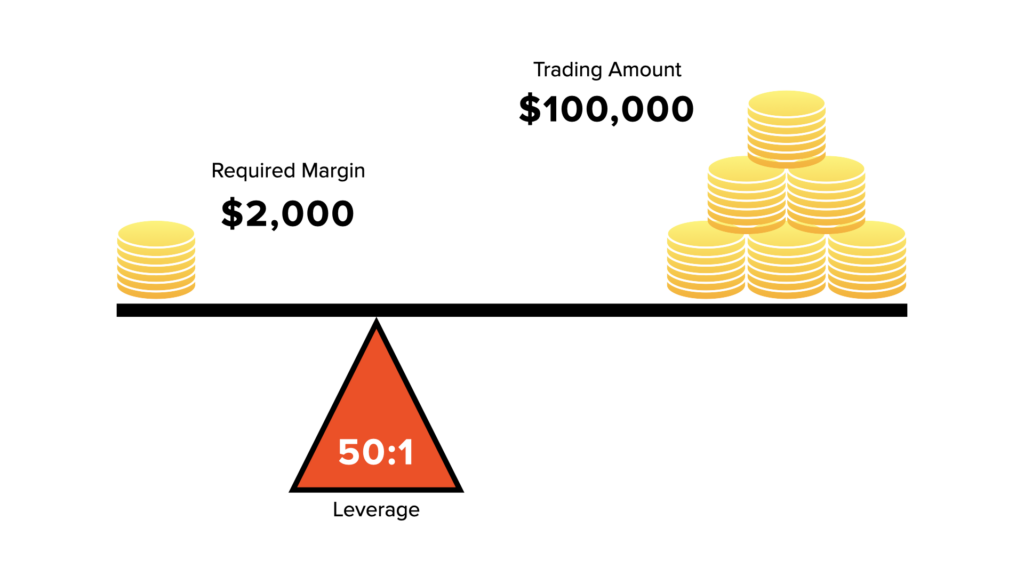
For example, with a 2% margin requirement, to control a $100,000 position, you would need to have $2,000 in your account. This means you are leveraging your account 50 times (100,000 / 2,000) to control that position. 

Leverage and Margin – A Powerful Combination 

Leverage and margin are closely related. As mentioned earlier, leverage determines how much you can control relative to your account balance. The higher the leverage, the smaller the margin required to control larger positions. 

However, traders need to be aware that while leverage can lead to significant profits, it also exposes them to more substantial losses. For instance, a 1% price movement in the opposite direction of your trade can lead to a 100% loss of the margin invested. 

How Does Margin Work? 

Let’s delve into how margin is used in Forex trading. When you open a leveraged position, your broker sets aside the required margin from your account balance as collateral. As long as your trade is active, the margin remains tied up. Once you close the trade, the margin is released back to your account, along with any profits or losses. 

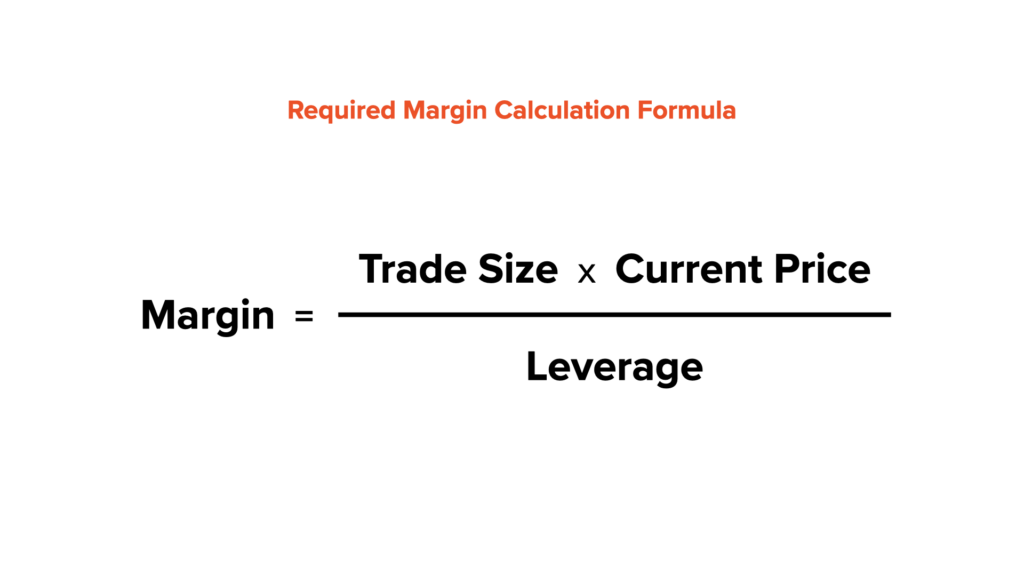
To calculate the required margin for a specific trade size, you can use the following formula: 

Margin = (Trade Size * Current Price) / Leverage 

To ensure you fully understand the margin requirements and leverage, let’s calculate them with a real-world example. Suppose you want to control a position of $50,000 on the EUR/USD currency pair with a leverage of 1:50. 

Margin = ($50,000 * 1) / 50 = $1,000 

Margin Calls and Stop-Outs: Protecting Your Investments 

In the exciting world of margin Forex trading, understanding margin calls and stop-outs is essential to safeguarding your investments and ensuring responsible trading practices. These mechanisms act as safety nets provided by brokers to protect traders from potential devastating losses. 

Margin Calls: Your Financial Alarm Bell 

A margin call is a crucial warning signal that occurs when the equity in your trading account falls below the required margin level. In simpler terms, it means that your account balance is no longer sufficient to support the open leveraged positions you have taken. 

Suppose you have a margin trading account with $5,000 and decide to open a leveraged position on the GBP/USD currency pair. The broker offers a leverage of 1:100, meaning you can control $100 for every $1 of your own money. You use your $5,000 to control a position worth $500,000 ($5,000 * 100), relying on the 1:100 leverage. 

Now, imagine that the market moves against your position, causing a loss of $4,800. As a result, your account equity drops to $200 ($5,000 – $4,800), which is now significantly below the required margin to maintain your open position. 

At this point, the broker will issue a margin call, notifying you that you need to add more funds to your account to meet the required margin level. If you fail to top up your account, the broker may automatically close your positions to prevent further losses. 

Stop-Outs: Last Line of Defence 

A stop-out is the next stage if a margin call goes unheeded. When your account equity falls further and reaches the stop-out level, the broker will automatically liquidate your positions to protect your account from going into negative territory. 

To continue with our previous example, let’s assume that despite the margin call, you didn’t deposit additional funds to meet the required margin level. The market continues to move against your position, and the losses worsen. As your account equity drops below the stop-out level, your broker will intervene and close your position automatically to prevent your account from incurring more losses. 

In our example, let’s say the stop-out level is set at 20% of the required margin, which would be $1,000 (20% of $5,000). When your account equity falls to $150 (3% of $5,000), which is below the stop-out level, the broker will execute the stop-out and close your position. 

Understanding the significance of margin calls and stop-outs is vital in maintaining your financial well-being while engaging in margin Forex trading. It is crucial to be vigilant about monitoring your account’s equity and ensuring that you have sufficient funds to support your open positions, especially during periods of high market volatility. 

Opening a Margin Trading Account 

If you’re interested in margin trading, you’ll need to open an account with a reputable Forex broker that offers leverage. For example, you can open a margin trading account with VT Markets, a trusted broker known for its user-friendly platform and up to 500:1 leverage option. 

When opening a live trading account, you’ll typically need to deposit an initial amount of funds, which will serve as your trading capital. 

Pros and Cons of Margin Trading 

Margin Forex trading offers exciting opportunities and potential rewards, but it also comes with inherent risks that traders should be aware of. Let’s examine the pros and cons of engaging in margin trading: 

Pros: 

  • Increased Profit Potential: Leverage allows controlling larger positions with a smaller investment, leading to higher potential profits. 
  • Diversification Opportunities: Traders can spread capital across multiple currency pairs to explore various market opportunities. 
  • Access to Larger Markets: Even small retail traders can access the vast Forex market due to leverage. 
  • Trading Flexibility: Leverage enables adopting different trading strategies based on risk tolerance and market analysis. 
  • Hedging: Margin trading allows using hedging strategies to protect against losses in volatile markets. 

Cons: 

  • High Risk of Losses: Leverage increases the risk of significant losses with small price movements. 
  • Margin Calls and Stop-Outs: Traders need to monitor and maintain sufficient margin levels to avoid forced position closures. 
  • Emotional Challenges: Margin trading can be emotionally taxing, leading to impulsive decisions. 
  • Increased Market Volatility: Leverage magnifies the impact of market volatility on the account balance. 
  • Overtrading: High leverage may tempt traders to overtrade, resulting in higher transaction costs and potential losses. 

Margin Trading Tips for Beginners: Navigating the Forex Market Safely 

Margin trading can be enticing for beginners, but it’s essential to approach it with caution and a solid understanding of the risks involved. Here are some valuable tips to help newcomers navigate the world of margin Forex trading safely and responsibly: 

  • Educate Yourself: Learn about Forex markets, leverage, margin requirements, and risk management. 
  • Start Small: Begin with a small account and low leverage to gain experience. 
  • Practice with Demo Accounts: Use virtual funds to practice before trading with real money. Try a risk-free Demo account by VT Markets. 
  • Understand Leverage and Margin: Know how leverage works and calculate margin requirements. 
  • Set Realistic Goals: Aim for steady progress and avoid chasing quick gains. 
  • Use Stop-Loss Orders: Implement stop-loss to limit potential losses. 
  • Avoid Emotional Trading: Stick to your plan and don’t let emotions drive decisions. 
  • Manage Risk: Risk only a small percentage of your capital on each trade. 
  • Stay Informed: Keep up with news and events affecting currency prices. 
  • Avoid Overtrading: Trade with discipline and avoid excessive transactions. 
  • Review Your Strategy: Regularly assess and adapt your trading approach. 
  • Be Prepared for Losses: Accept losses as part of trading and learn from them. 
  • Keep a Trading Journal: Record trades and analyse for insights. 

In conclusion, margin Forex trading offers the potential for substantial profits, but it also carries significant risks. Aspiring traders should approach margin trading with caution and always prioritise continuous learning and risk management. By understanding the concepts of margin, leverage, and risk, you can navigate the Forex market with greater confidence and success. 

Summary: 
  • Margin trading in Forex allows controlling larger positions with a small investment, amplifying both profits and losses. 
  • Understanding leverage and margin is essential, as higher leverage requires less margin but increases risk. 
  • Margin calls occur when account equity falls below required levels, while stop-outs liquidate positions if equity drops further. 
  • Pros of margin trading include increased profit potential and market access, while cons involve higher risk and potential for emotional challenges. 

Diversifying Beyond Volatility: How to Trade Bonds? 

Imagine this scenario: The stock market is experiencing wild fluctuations, cryptocurrencies are in a rollercoaster ride of ups and downs, and investors are feeling a sense of unease. 

However, in the midst of this turbulence, bondholders remain unfazed, enjoying the steady and predictable returns from their bond investments. 

Just like a lighthouse guiding ships to safety during a dark and stormy night, bonds can act as a reliable guiding light for investors seeking a secure harbour for their hard-earned money. 

source: BoredPanda

Bonds represent one of the most favoured financial assets, but if you haven’t explored their nature and functionality, you might be deterred by their reputation for complexity and limited returns. 

In reality, bonds are extensively traded assets that can fortify your portfolio’s risk-return profile and provide diversification without subjecting you to excessive volatility. Although they may offer lower returns, they come with reduced risk, making them a secure option for investors. Additionally, their inverse correlation to interest rates presents lucrative opportunities for trading bond CFDs

This article aims to provide a comprehensive breakdown of bonds, their various types available for trading, and how you can effectively integrate them into your investment portfolio to diversify beyond traditional stocks. 

Understanding Bonds 

Bonds can be best described as a type of debt instrument. While individuals typically approach banks or credit unions for loans, companies and governments raise capital by seeking investors, who then become bondholders within the organisation. 

These bondholders receive interest on the asset, known as a coupon rate, until the bond reaches its maturity date, at which point the initial loan amount (referred to as the principal) is repaid. 

Bonds are generally considered less risky than other highly volatile assets, but they still carry certain risks related to interest rates, credit quality, defaults, and prepayments. Various types of bonds exist, issued by different organisations, companies, or institutions, and all are rated based on their investment grade. 

Exploring Bond Types: From Government to Corporate and Beyond 

Bonds come in two categories: secured and unsecured. 

A secured bond provides protection to the bondholder by using assets as collateral, reducing the risk of issuer default. Mortgage-backed securities are an example of secured bonds. 

On the other hand, unsecured bonds, also known as debentures, lack collateral and are considered riskier assets since both the interest payments and principal amount are guaranteed solely by the issuing company or organisation. 

There are four main kinds of bonds

Government bonds 

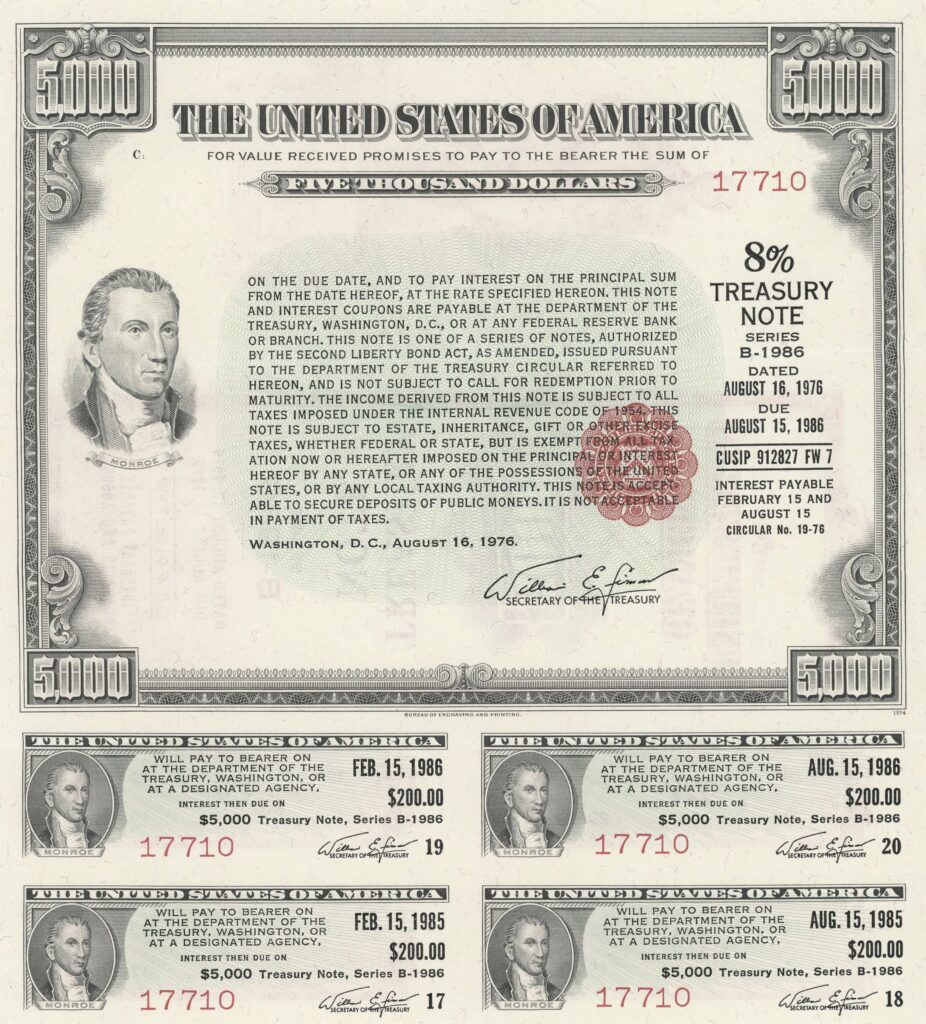
Some government-issued bonds are unsecured, but they are still considered among the lowest-risk investments, particularly when coming from stable governments with a solid track record of no bond defaults. In the US, they are known as Treasuries, while in the UK, they are called gilts. 

Government bonds can be issued with fixed interest rates or variable coupon payments tied to inflation. In the UK, inflation-linked bonds are referred to as index-linked gilts, while in the US, they are known as Treasury Inflation-Protected Securities or TIPS. 

source: Wikipedia.com

Corporate bonds 

As the name suggests, corporate bonds are issued by corporations to raise funding. The risk level associated with these bonds depends on the size and established nature of the company. 

Corporate bonds are generally riskier than government bonds, but bondholders receive more protection from loss compared to ordinary shareholders. In the event of company bankruptcy, liquidated assets are used to pay bondholders ahead of shareholders, a concept known as a liquidation preference. Corporate bonds may be secured and are rated by agencies such as Standard & Poor’s, Moody’s, and Fitch Ratings, which assess their overall investment grade. 

Municipal bonds 

Similar to government bonds, municipal bonds (munis) are issued by municipalities, councils, cities, and other local governments. They often come with lower interest rates and are considered less risky than some other bond types. 

Municipal bonds may also appeal to investors because they are not subject to taxation in the US. 

Agency bonds 

Agency bonds are securities issued by government-backed enterprises or federal government departments other than the US Treasury. Mainly prevalent in the US, they can be backed by the US government, as is the case with government department-issued bonds, or not, as with those issued by government-sponsored enterprises (GSEs). 

The Fannie Mae National Mortgage Association and the Freddie Mac Federal Home Loan Mortgage bonds are examples of GSE bonds. 

How Do Bonds Work? 

Bonds are straightforward debt instruments that facilitate the process of lending money, known as the principal or face value, from a bondholder to a public or private institution, known as the issuer.  

The issuer then repays this amount on an annual, semi-annual, or monthly basis, as specified in the bond’s terms. Upon reaching maturity, which is the bond’s expiration date, the principal is returned to the bondholder. 

Being negotiable securities, bonds can be bought and sold in a secondary market, much like stocks. However, it’s essential to note that stocks and bonds function differently. While some bonds are listed on the stock exchange, the majority of bond trading occurs through Over-the-Counter (OTC) products like Contracts for Differences (CFDs), traded through brokers. 

Interest rates play a significant role in determining bond prices. Generally, when interest rates rise, the demand for bonds decreases as investors seek better rates elsewhere. Conversely, when interest rates decrease, the demand for bonds rises, resulting in an increase in their prices. 

Bond Characteristics 

Bonds possess distinct features that differentiate them from other assets and debt instruments. These include maturation and duration, credit rating, face value and issue price, and coupon rates and dates. 

  • Maturation and Duration: While often perceived as interchangeable, maturation and duration have distinct meanings. Maturation refers to the active term of a bond, representing the time until it expires and its final payment is made. Duration, on the other hand, encompasses both a timeframe and a measurement of a bond’s price sensitivity to interest rate changes. The Macaulay duration measures the actual time required to repay a bond’s principal, expressed in years. Calculating a bond’s modified duration using the Macaulay duration allows us to understand its vulnerability to fluctuations in interest rates. 
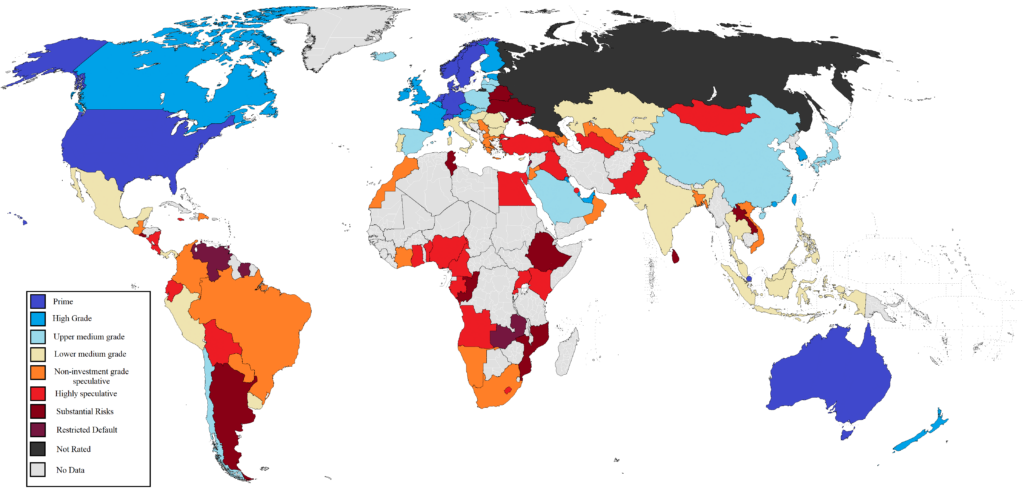
  • Credit Rating: Credit ratings serve as a grading system that assesses the creditworthiness of bonds. Ratings agencies like Standard & Poor’s and Fitch Ratings assign these grades. Credit ratings play a crucial role in attracting investors by showcasing a bond’s attractiveness to issuers. For potential bondholders, credit ratings are valuable tools for gauging a bond’s risk level. Bonds with the highest creditworthiness receive the AAA rating, while those considered below investment grade are rated from BB+ (often referred to as junk bonds). 
Fitch credit rating for every country 2022
source: reddit.com
  • Face Value: Also known as the principal, the face value is the amount the issuer agrees to pay the bondholder, excluding any coupon (interest) rate payments. Typically, the face value is paid as a lump sum upon the bond’s expiration and remains fixed from its initial setting. However, there are exceptions, such as TIPS (Treasury Inflation-Protected Securities), which are adjusted based on inflation figures. Theoretically, the issue price should match the bond’s face value since both represent the full loan value. Nevertheless, the issue price can differ in the secondary market, where it may fluctuate significantly. 
  • Coupon Rates and Dates: The coupon rate, also known as the interest rate, refers to the interest paid to bondholders, usually on an annual or semi-annual basis. It is also referred to as the nominal yield, calculated by dividing the bond’s annual repayments by its full face value. Coupon dates determine the intervals at which coupon payments occur, which can be monthly, semi-annually, annually, or quarterly, as specified in the bond’s terms. 

Factors Influencing Bond Prices 

The prices of bonds are influenced by several key factors, including demand and supply dynamics, inflation rates, the credit rating of the bonds, and their proximity to maturity. 

As we have discussed, there exists an inverse relationship between bonds and interest rates. When bond prices rise, interest rates decline, and vice versa. Consequently, the demand for bonds is contingent on prevailing interest rates, attracting investors with low interest rates or enticing them with better opportunities during higher interest rate periods. If interest rates become overly high, issuers might reduce the supply of bonds to align with demand. 

Credit ratings serve as a robust indicator of a bond’s overall risk, with cheaper bonds generally carrying higher risks of default. Traders must decide how to manage this risk, and credit rating agencies offer valuable guidance in identifying bonds that represent sound investments. 

As a bond matures, its price naturally gravitates back to its face value, reaching its initial loan amount. Additionally, the number of coupon payments yet to be made influences the bond’s price. 

How to Start Trading Bonds? 

To start trading bonds, follow these steps: 

  1. Choose the type of bonds you want to trade, such as government bonds or corporate bonds, and consider bond CFDs for greater flexibility. 
  1. Decide on your bond trading strategy, considering either hedging or interest rate speculation. 
  1. Open a bond trading account, such as the ones offered by VT Markets, either in live or demo mode to practice your strategy. 
  1. Initiate and monitor your first bond trading position using a reliable trading platform like MetaTrader 4 or MT5. 

In conclusion, understanding bonds and their trading process offers a stable investment option with predictable returns. Diversifying portfolios with various bond types strengthens risk-return profiles. With knowledge of bond characteristics, credit ratings, and influencing factors, we can navigate the financial world confidently. So, let’s set sail on this rewarding journey with bonds as our guiding light! 

Summary: 
  • Bonds provide a stable and predictable investment option, offering a secure harbour amidst market fluctuations. 
  • Bonds are debt instruments where bondholders lend money to institutions, receiving interest until the bond’s maturity, when the principal is repaid. 
  • Various bond types include government bonds, corporate bonds, municipal bonds, and agency bonds. 
  • Diversifying portfolios with different bond types strengthens risk-return profiles and reduces volatility exposure. 
  • Understanding bond characteristics, credit ratings, and influencing factors helps make informed investment decisions. 

Week Ahead: Markets to Focus on US Jobs Reports, RBA Rate Statement, and BOE Rate Statement

This week’s economic calendar features key events that will have a considerable impact on the markets. Major events include the US jobs reports, the Reserve Bank of Australia (RBA) rate statement, and the Bank of England (BOE) rate statement. Traders are advised to carefully prepare for potential market volatility triggered by these announcements and adapt their strategies accordingly. 

Here are some notable highlights coming up over the next week:

Reserve Bank of Australia Rate Statement (1 August 2023)

After raising its interest rate by 25 bps in June, the Reserve Bank of Australia announced during its July meeting that it has maintained its interest rate at 4.1%. This represents a total increase of 400 bps since May 2022. 

The central bank will announce the next interest rate adjustment on 1 August, with analysts expecting an increase of 25 bps to 4.35%.

ISM Manufacturing PMI (1 August 2023)

The ISM manufacturing PMI in the US fell to 46 in June 2023 from 46.9 in May 2023. 

The figures for July are scheduled for release on 1 August, with analysts expecting the index to increase to 48.

Switzerland’s Consumer Price Index (3 August 2023)

Switzerland’s CPI increased by 0.1% in June 2023 from the previous month. 

Analysts anticipate a 0.1% decrease in the figures for July, which will be released on 3 August.

Bank of England Rate Statement (3 August 2023)

The Bank of England raised its policy interest rate by 50 bps to 5% during its June meeting, marking a 13th consecutive hike. 

Analysts expect the next rate hike to be another 25-bps increase to 5.25%.

US ISM Services PMI (3 August 2023)

The ISM services PMI rose to 53.9 in June 2023. This mark, which is well above the 50 seen in May, points to the strongest growth in the services sector in four months. 

The ISM’s data for July 2023 is scheduled for release on 3 August, with analysts anticipating a decrease in PMI to 52.

Canada Employment Change (4 August 2023)

The Canadian economy saw 59,900 jobs created in June. This increase was driven by the rise in full-time jobs and marks the highest number of jobs created in five months. However, the unemployment rate also rose to 5.4% in June from 5.2% in May, the highest since February 2022. 

The figures for July are set to be released on 4 August, with analysts predicting the creation of 20,000 additional jobs. However, the unemployment rate is also expected to remain at 5.4%.

US Jobs Report (4 August 2023)

The US economy added 209,000 jobs in June 2023, lower than the 306,000 seen in May. The unemployment rate in the country decreased slightly to 3.6%, which is also lower than May’s seven-month high of 3.7%. 

The data for July 2023 will be released on 4 August, with analysts predicting the creation of 190,000 additional jobs. However, the unemployment rate is also expected to remain at 3.6%.

Dow Jones Ends Historic Winning Streak Amid Economic Data and Rate Hike Uncertainty

The Dow Jones Industrial Average’s extraordinary winning streak of 13 consecutive gains came to a halt as investors opted to take profits, leading to a 0.67% decline, with the index closing at 35,282.72 points. The historic run, dating back to 1897, would have tied the record if it had gained for a 14th day. The bullish momentum had been driven by promising economic signs, such as evading a recession, decreasing inflation, and strong corporate earnings. However, the recent surge in the 10-year Treasury yield above 4% and uncertainty surrounding the Federal Reserve’s rate hike decisions caused market sentiment to waver. With upcoming data releases in sight, traders are closely observing the economic indicators, speculating on the Fed’s potential response, as the central bank’s actions may have a significant impact on market trends.

One contributing factor to the Dow’s previous gains was the robust performance of companies like Meta Platforms, whose shares surged 4.4% due to impressive quarterly results and promising guidance, fueled by a rebound in advertising revenue. Additionally, the latest gross domestic product (GDP) reading for the second quarter indicated a 2.4% rise, surpassing economists’ expectations. Notably, the report suggested that price pressures were easing, with the personal consumption expenditures price index rising 2.6%, lower than anticipated. Despite the Fed’s recent rate hike, investors remained relatively optimistic, believing that Federal Reserve Chair Jerome Powell’s commitment to data-driven decision-making could potentially prevent further aggressive monetary tightening. However, the Dow’s remarkable winning streak came to an end, prompting caution among investors and heightened attention to forthcoming economic data releases.

Data by Bloomberg

On Thursday, all sectors in the market experienced a general decline, with the overall market showing a decrease of 0.64%. The Communication Services sector was an exception, bucking the trend with a gain of 0.85%. However, the Information Technology sector saw a slight dip of 0.34%. The Energy sector also experienced a modest decline of 0.54%, while the Materials sector faced a drop of 0.67%. Health Care and Consumer Staples sectors both declined by 0.77% and 0.81%, respectively. The Industrials and Consumer Discretionary sectors had larger losses, both falling by 0.82% and 0.87%, respectively. The Financials sector showed the most significant decrease, experiencing a notable drop of 1.29%. The Utilities sector followed closely with a decline of 1.73%, and the Real Estate sector suffered the largest loss, plummeting by 2.12%.

Major Pair Movement

On Thursday, the forex market witnessed a volatile session, with the dollar initially retreating after the Federal Reserve’s data-dependent stance but later rebounding. The yen surged higher following a report that the Bank of Japan (BoJ) would discuss tweaking its yield curve control at an upcoming meeting. This led to a significant impact on currency pairs like EUR/USD, which fell 0.9% to its lowest level since July 11. Additionally, USD/JPY faced fluctuations, initially rebounding but later dropping as the BoJ’s potential policy changes raised concerns about a stronger yen. The outcome of the BoJ meeting on Friday is closely watched, as any indications of a shift towards less accommodative policies may further strengthen the yen.

Furthermore, other factors influenced currency movements, such as surging Treasury yields, which contributed to the broader rise of the dollar and caused declines in currencies like Sterling, AUD/USD, and yuan. Traders are now awaiting several economic indicators scheduled for release on Friday, including Tokyo CPI, euro zone regional CPIs, U.S. core PCE, ECI, and Michigan sentiment, which could drive further market volatility and impact forex trends.

Picks of the Day Analysis

EUR/USD (4 Hours)

EUR/USD Plunges Amid Strong Dollar Surge After ECB Meeting and Upbeat US Data

The EUR/USD experienced a sharp decline on Thursday following the European Central Bank (ECB) meeting, driven primarily by the strength of the US dollar, which soared across the board due to encouraging US economic data. The data showed that the US economy surpassed expectations in the second quarter, with Initial Jobless Claims dropping to their lowest level in five months and Durable Goods Orders surging over 4% in June. This evidence of a healthy US economy overshadowed the ECB’s expected 25 basis points policy rate hike, as no further rate hike announcements were made, leaving all options open for the next meeting. The potential pause in monetary policy divergence between the US and the Eurozone could impact the EUR/USD exchange rate. Inflation data will play a crucial role in limiting the Dollar’s rally, with the focus shifting to the US Core Personal Consumption Expenditure Index, the Federal Reserve’s preferred measure, and the preliminary July Consumer Price Index releases from France, Spain, and Germany.

Chart EURUSD by TradingView

According to technical analysis, the EUR/USD falls on Thursday and creates a push to the lower band of the Bollinger Bands. This movement has also resulted in a wider gap between the bands. The Relative Strength Index (RSI) currently stands at 32, indicating that the EUR/USD is starting to enter the bearish moment.

Resistance: 1.1038, 1.1121

Support: 1.0915, 1.0839

XAU/USD (4 Hours)

XAU/USD Slide Amid Stronger US Dollar and Higher Yields, Reflecting Optimistic US Economic Data

Gold prices experienced a significant drop of more than $30 during the American session, largely due to a stronger US dollar and higher US Treasury yields. The yellow metal faced technical pressures as well, hitting a low of $1,942 before a modest rebound. US economic data showing unexpected acceleration in the second quarter, with real GDP expanding at 2.4%, coupled with positive Jobless Claims and Durable Goods Orders figures, supported the notion that the economy could withstand monetary policy tightening. Consequently, the US dollar rallied, and yields surged, prompting a sharp reversal in gold prices. The European Central Bank’s rate hike and potential pause in September, along with reports of the Bank of Japan considering tweaks to its Yield Curve Control policy, also influenced market sentiment. The outlook now suggests the possibility of further short-term losses in metals given the context of higher yields and a stronger US dollar, as the US economy shows resilience and lower inflation indicators compared to European countries.

Chart XAUUSD by TradingView

According to technical analysis, the XAU/USD falls on Thursday and has created a push towards the lower band of the Bollinger Bands. Currently, the price is slightly higher, but it remains near the lower band, indicating that there is still potential for Gold to move even lower. The Relative Strength Index (RSI) currently stands at 41, which indicates that the XAU/USD pair is starting to enter a bearish stance.

Resistance: $1,954, $1,975

Support: $1,938, $1,920

Economic Data

CurrencyDataTime (GMT + 8)Forecast
JPYBOJ Outlook ReportTentative 
JPYMonetary Policy StatementTentative 
JPYBOJ Press ConferenceTentative 
EURGerman Prelim CPI m/mAll Day0.3%
CADGDP m/m20:300.3%
USDCore PCE Price Index m/m20:300.2%
USDEmployment Cost Index q/q20:301.1%
USDRevised UoM Consumer Sentiment22:0072.6

Dow Jones Extends Historic Winning Streak Amid Federal Reserve Rate Hike and Earnings Reports

In a remarkable show of strength, the Dow Jones Industrial Average experienced its best winning streak since 1987, advancing for 13 consecutive days. The 30-stock index added 82.05 points, or 0.23%, reaching 35,520.12, and is now on the cusp of matching the longest streak ever recorded dating back to June 1897. The market’s optimism was fueled by a Federal Reserve rate hike, pushing rates to their highest level in over 22 years. However, Fed Chief Jerome Powell’s comments about the possibility of a pause in future rate increases left traders uncertain, impacting Treasury yields. While some companies, like Google-parent Alphabet and Boeing, reported strong earnings leading to stock gains, others, like Microsoft, experienced declines due to slower cloud revenue growth.

Overall, the market’s mixed sentiment reflects the delicate balance between economic indicators and the Federal Reserve’s data-dependent approach in determining future monetary policies. Traders eagerly await the Fed’s decision on rates in September, hoping for signs that the economy can avoid a recession if the central bank chooses to remain on hold. The ongoing corporate earnings season is also influencing market movements, with companies like Alphabet and Boeing showing strength, while Microsoft’s performance was met with some disappointment. As the market continues to digest these factors, investors are keeping a close eye on the Dow Jones as it seeks to extend its historic winning streak.

Data by Bloomberg

On Wednesday, the overall market experienced a slight decline of 0.02%. Among the sectors, Communication Services stood out with a significant increase of 2.65%, while Industrials and Financials also showed positive gains of 0.66% and 0.65% respectively. Real Estate and Consumer Staples sectors also saw modest growth, rising by 0.34% and 0.21% respectively. However, Utilities, Consumer Discretionary, and Health Care sectors faced marginal declines, with drops of 0.05%, 0.06%, and 0.08% respectively. Energy and Materials sectors experienced somewhat larger losses, declining by 0.09% and 0.28%. Information Technology, on the other hand, took the steepest hit with a significant drop of 1.30%.

Major Pair Movement

On Wednesday, the dollar index weakened as investors focused on Federal Reserve Chair Jerome Powell’s dovish comments, overshadowing slightly improved economic growth language in the FOMC statement. While Treasury yields and the dollar initially rose after the statement mentioned the economy growing at a “moderate” pace, Powell’s news conference suggested that the end of rate hikes might be approaching. Market attention now turns to the upcoming policy announcements from the European Central Bank (ECB) and the Bank of Japan (BoJ) on Thursday and Friday, as well as crucial U.S. data. Thursday’s GDP and claims data, along with Friday’s personal income, spending, core PCE, employment cost index, and Michigan sentiment figures will be closely monitored ahead of the August Jackson Hole symposium and the September Fed meeting. Investors are also closely watching the ECB’s potential rate hike and the outlook for the EUR/USD pair, which rose after Powell’s comments, despite concerns about deteriorating euro zone economic data and the ECB’s dovish stance.

Meanwhile, USD/JPY fell as the market awaits the BoJ’s decision on whether it will tighten its policy on Friday. Governor Kazuo Ueda’s indications that policy will not be tightened are being scrutinized, but speculation about a possible rise in the JGB yield cap persists based on economic projections from the meeting. In the UK, the sterling rose after coming off earlier highs, with the possibility of a 50bp Bank of England (BoE) rate hike in August remaining slightly less favored compared to a 25bp increase. However, nearly 1% of further increases are still priced in due to the UK’s high inflation rate and the risks associated with managing it. On the other hand, the Australian dollar and the yuan faced declines after Q2 Australian inflation came in below forecasts, and doubts arose about the impact of Chinese stimulus plan promotions.

Overall, the global currency markets remain highly sensitive to central bank decisions, economic data, and policymakers’ statements, with investors assessing each currency’s strength based on a complex interplay of economic conditions and monetary policies.

Picks of the Day Analysis

EUR/USD (4 Hours)

EUR/USD Rises Amid Dovish Fed Comments, ECB Policy Announcements Awaited

The EUR/USD pair saw gains as Federal Reserve Chair Jerome Powell’s dovish remarks outweighed slight improvements in the FOMC statement on economic growth. Traders are now focused on upcoming policy announcements from the ECB along with key US economic data. Although Treasury yields and the dollar initially strengthened, Powell’s comments suggested a growing possibility of the end of rate hikes. Market participants await crucial GDP, claims, personal income, and other data before the Jackson Hole symposium and the September Fed meeting. The euro faces challenges from weakening eurozone economic data and a dovish ECB member. Uncertainty persists about whether EUR/USD has already peaked post-pandemic, with relative economic risk possibly favoring the US. Staying updated on central bank policies and economic indicators is vital for shaping the EUR/USD exchange rate.

Chart EURUSD by TradingView

According to technical analysis, the EUR/USD pair is experiencing a higher movement on Wednesday, leading the price to reach the upper band of the Bollinger Bands. This movement has also resulted in a closer gap between the bands. The Relative Strength Index (RSI) currently stands at 53, indicating that EUR/USD is back in neutral stance.

Resistance: 1.1121, 1.1208

Support: 1.1022, 1.0950

XAU/USD (4 Hours)

XAU/USD Prices Surge as Fed Raises Interest Rates, US Dollar Weakens

Gold prices have surged to weekly highs above $1,974 following the Federal Reserve’s decision to raise interest rates by 25 basis points. The increase in rates has led to a weakening of the US Dollar and an increase in market volatility. Market participants are now closely watching for any signals from the Fed that this could be the last rate hike, which could trigger a rally in bonds and drive Treasury yields lower, further benefiting the price of gold. However, the risk of a sharp reversal remains as the Fed is expected to maintain a hawkish tone until inflation shows clear signs of moving towards the target. The outcome of the Fed meeting will determine the direction of gold, and volatility is expected to persist with the European Central Bank’s decision and US economic data releases later in the week.

Chart XAUUSD by TradingView

According to technical analysis, the XAU/USD pair initially experienced a higher movement and created a push to the upper band of the Bollinger Bands. Currently, the price is still pushing the upper band of the Bollinger Bands which shows there’s still a strong higher movement for Gold. Furthermore, the Relative Strength Index (RSI) currently stands at 65, indicating that the XAU/USD pair is starting to create a bullish trend.

Resistance: $1,985, $1,992

Support: $1,969, $1,955

Economic Data

CurrencyDataTime (GMT + 8)Forecast
EURMain Refinancing Rate20:154.25%
EURMonetary Policy Statement20:15 
USDAdvance GDP q/q20:301.8%
USDUnemployment Claims20:30234K
EURECB Press Conference20:45 
Back To Top
server

您好 👋

我能帮您什么吗?

立即与我们的团队聊天

在线客服

通过以下方式开始对话...

  • Telegram
    hold 维护中
  • 即将推出...

您好 👋

我能帮您什么吗?

telegram

用手机扫描二维码即可开始与我们聊天,或 点击这里.

没有安装 Telegram 应用或桌面版?请使用 Web Telegram .

QR code